Declining enrollment, a strained budget. Does Richland 1 have too many schools?
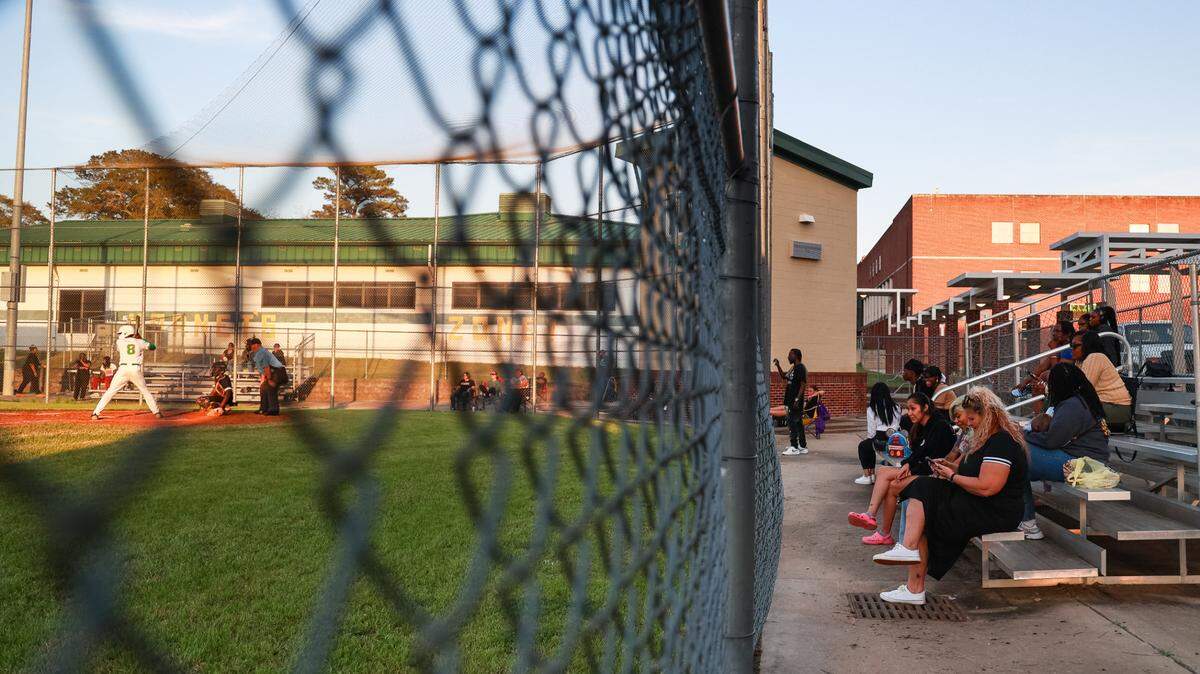
Does Richland School District 1 have too many schools?
Columbia’s inner-city district has 45 traditional public schools, and nearly half are smaller than every other such school in Richland and Lexington counties. Of the more than 140 traditional public schools in the two counties, the 18 smallest are in Richland 1, according to the state Department of Education.
A 2017 report said that many of Richland 1’s schools were underutilized, with as many as 22 — nearly half — operating under capacity. At least 16 were deemed “inefficient,” when capacity exceeds enrollment by more than 30%. The report predicted that many would be further underutilized by 2019.
Findings suggested that the district should examine whether it has excess space, and consider redrawing attendance lines or limiting enrollment in some schools. The district is currently working to update these findings.
Since 2015, Richland 1’s enrollment has dropped 10.2%.
School districts across the country and the South have moved to close or merge schools in order to save money. In Jackson, Mississippi, the school board voted to close 11 schools and merge two others in 2024 as part of an “optimization” plan for district resources. In South Carolina, Berkeley County officials announced plans to merge two schools last summer, in hopes of saving $1.5 million.
Similar debates over “rightsizing” public school operations are taking place across the nation.
But closing or merging schools is nearly always controversial. Though it may cut costs in theory, the efforts anger communities who fear losing community hubs, eviscerating local school pride, and creating transportation problems for students and parents. The drastic changes during developmentally-important years can be devastating for students.
Studies also indicate that closures are often made at the expense of low-income, racially-diverse schools in areas already suffering from divestment.
Richland 1 leaders say closing or consolidating schools hasn’t been discussed. And district attendance lines have remained the same for decades.
School board member Jamie Devine, a former board chair, said that during his 16 years on the board, the district has never discussed closing or consolidating any schools. The district routinely employs a demographer to analyze school populations, Devine said, though it’s been several years since the last analysis was conducted.
Fellow board member Richard Moore, a retired Richland 1 teacher and principal, expressed skepticism that merging schools would be a helpful solution.
“My belief is that community schools … smaller schools, help with a sense of community,” Moore said. “Teachers have the opportunity and the administration has the opportunity to get to know students and families a little bit more intimately when it’s at that level, and possibly tailor what you’re doing in a school to fit the local community.”
Education is about relationships, said Moore, a graduate of the district’s C.A. Johnson High School.
“Those relationships are better fostered in those smaller schools,” he said.
Several Richland 1 schools are in isolated areas. Whether underenrolled or not, closing these schools would create long bus rides for students. But an analysis by The State found four clusters of neighboring Richland 1 schools that are under capacity and have dwindling student populations. With one exception, every school in each of the clusters is 3.5 miles or less from the others.
Eau Claire High School and C.A. Johnson High School, with 532 and 328 students, respectively. They’re the two smallest high schools in the two counties.
W.G. Sanders Middle School with 486 students and W.A. Perry Middle School with 321 students.
J.P. Thomas Elementary School, A. J. Lewis Greenview Elementary School, Arden Elementary School and Burton-Pack Elementary School, each with 360 students or less.
Edward E. Taylor Elementary School with 199 students and Hyatt Park Elementary School with 296 students.
But enrollment in these areas has hardly been in the hands of the district.
The students didn’t just vanish, said J.T. McLawhorn, president of the Columbia Urban League.
The Columbia Housing Authority demolished several public housing developments in the late 1990s and early 2000s, including Saxon Homes, Jaggers Terrace and Hendley Homes. That resulted in the loss of nearly 800 homes, whose families were zoned for many of these underenrolled schools. In 2021, Allen Benedict Court with its 250 apartments was also razed.
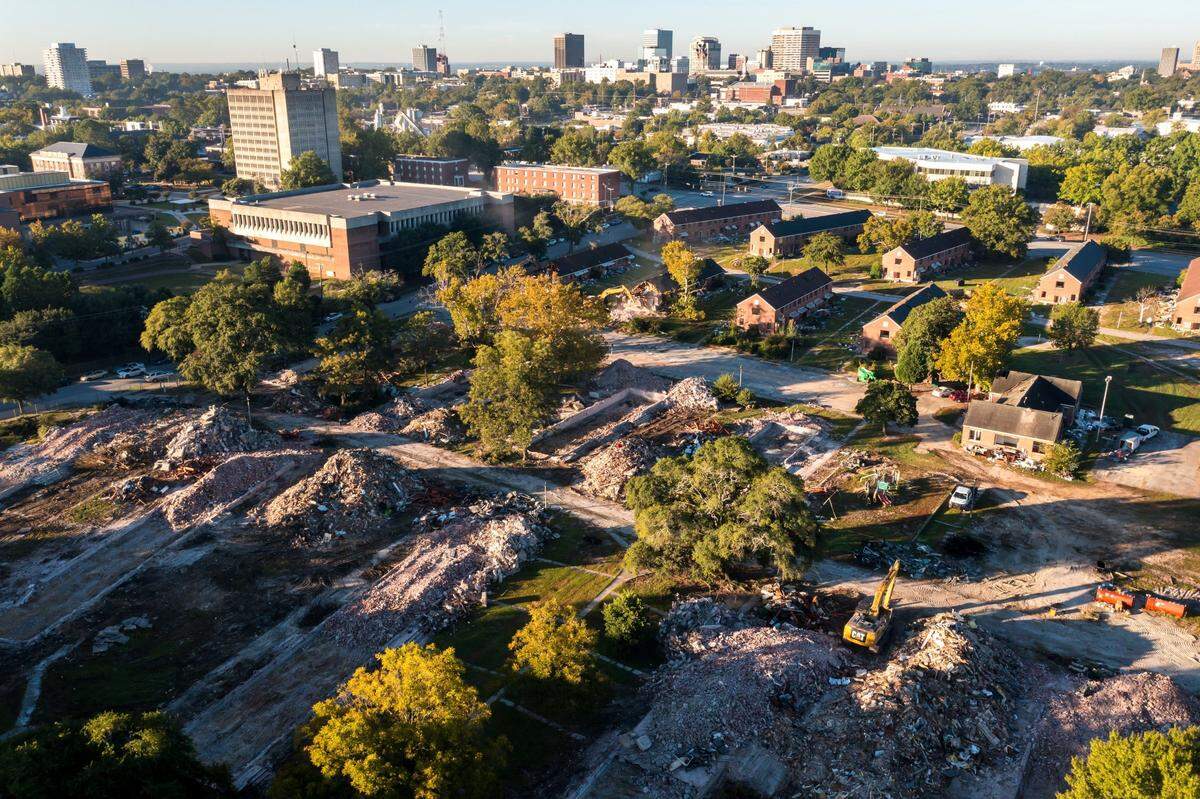
McLawhorn said it was a significant loss for the district — families with children who had once attended Richland 1 schools received housing vouchers for developments in the neighboring Richland 2 and Lexington-Richland 5 school districts.
“It was unfortunate for the school district ... people want to blame the school district,” McLawhorn said. “I think someone owes the school district a apology.”
Richland 1 Superintendent Craig Witherspoon was not available for an interview about this story, district spokesperson Karen York said, nor was any other administrator. While enrollments have changed, York said the district has added specialty programs, which can have smaller class sizes and impact capacity calculations.
“The district is committed to providing experiences, exposure, options and opportunities for our students as we prepare them for college and careers based upon their interests and needs,” York said. “This community has long valued neighborhood or community schools.”
Is it time for Richland 1 to consider closing some schools in the face of declining enrollment, rising costs and recent staffing struggles? Or would such a dramatic measure foster more problems than solutions?
Here’s a closer look at the four clusters of small schools identified by The State.
C.A. Johnson and Eau Claire high schools
Richland 1 has seven high schools, the most of any district in the two counties, with a combined enrollment of 5,787 students. High schools in the Richland 2 and Lexington 1 districts each have combined enrollments of more than 8,000 students, yet both districts have five high schools.
Eau Claire and C.A. Johnson, Richland 1’s smallest high schools, are no more than 3.5 miles from one another in northeast Columbia. Each has a strong alumni base and community pride spanning generations.
C.A. Johnson High School — founded in 1949 while South Carolina schools were still segregated by race — is the only historically Black high school still operating in the city and one of the only ones left in the state. Originally built for junior and high school students to relieve overcrowding at the now-closed Booker T. Washington High School, C.A. Johnson was desegregated in 1969. It was 15 years after Brown v. Board of Education, the landmark U.S. Supreme Court case that ruled segregated schools unconstitutional.
Theresa Muldrow went to C.A. Johnson and graduated in 1969. A former member of the school’s choir and cheerleading squad, she maintains a strong sense of pride in her alma mater.
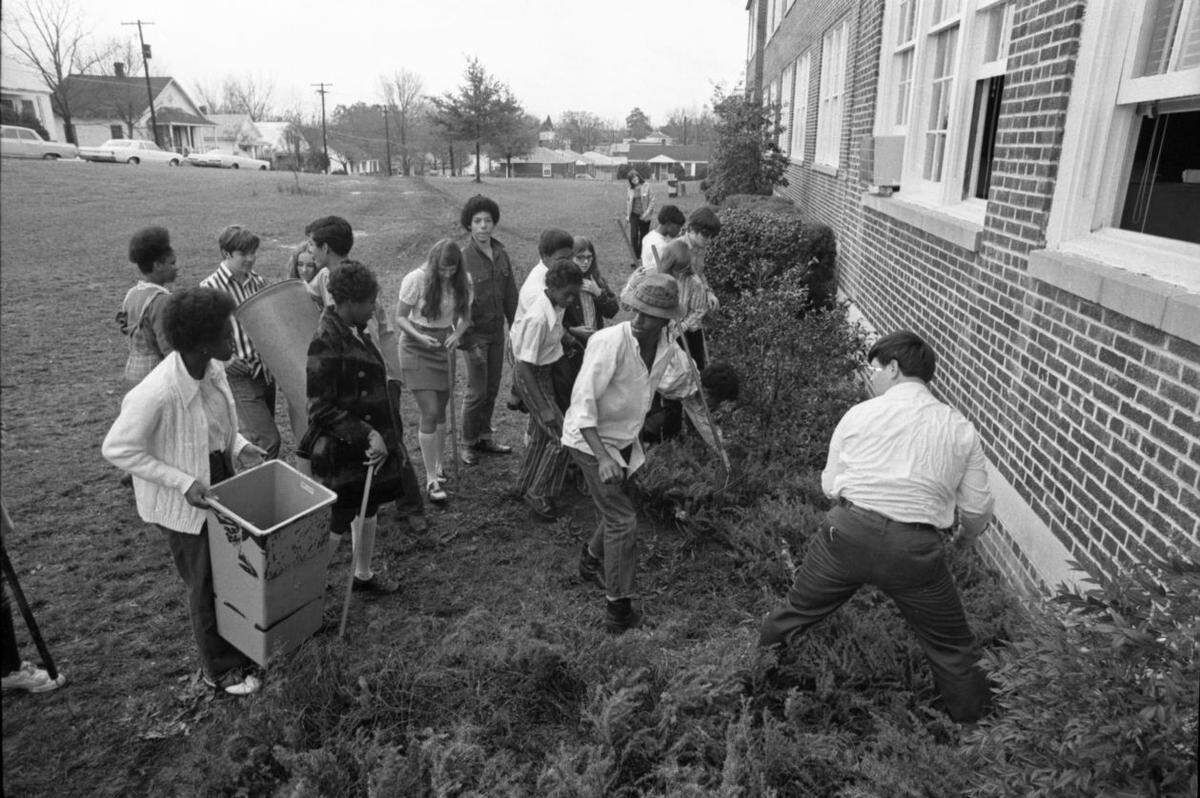
It was the premiere Black school, she said.
“They gave us a superb education. The atmosphere was just awesome. We just had a great time,” she said. “We had a lot to be proud of ... and the neighborhood was really supportive.”
A beacon of Black excellence, C.A. Johnson was built with the capacity for at least 700 or 800 students. Today, its enrollment is half of that. C.A. Johnson — with 328 students — is smaller than every other school in neighboring districts in Richland and Lexington counties, including all of the elementary schools.
Alumni remember C.A. Johnson for its academics and athletics. The school, which taught the likes of NFL player Mike Jones and former astronaut and former NASA Administrator Charles Bolden Jr., celebrated its 75th anniversary last fall.
Families, sometimes five and six generations back, have attended the school, Muldrow said, and there are students who specifically choose C.A. Johnson to maintain that legacy.
If it closed, Muldrow said, it would be “devastating.” A “great loss.”
Muldrow said that members of the C.A. Johnson Alumni Association, for which she is a secretary, feel that the district wants to close the school, perhaps in favor of turning it into an administrative building, though district officials haven’t come right out to say that.
She said school supporters are in favor of redrawing attendance lines, which Richland 1 says it has not revisited in over 30 years. C.A. Johnson has the smallest attendance zone, which touches every other zone in the district except Lower Richland’s. A.C. Flora and Dreher, considered the district’s premiere high schools, are nearly at capacity with enrollments of 1,304 and 1,130 respectively.
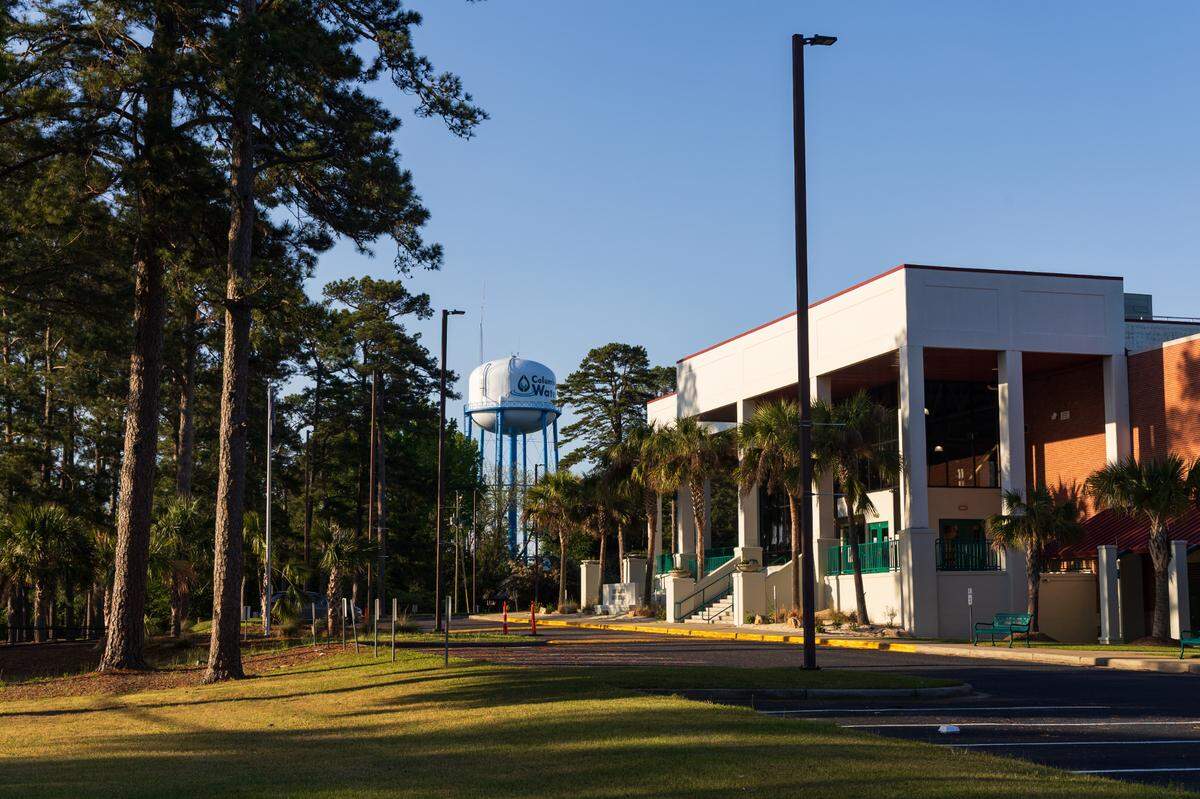
Eau Claire was opened in 1949 and served only white students, before it was desegregated in 1965.
It is the alma mater of former NBA players such as Joe Rhett and Jermaine O’Neal. O’Neal became the youngest person to play in the league at the time when he was drafted straight out of high school in 1996. Eau Claire was at one time a basketball powerhouse, and is tied for the third-most state basketball championships, with seven titles, three of which were consecutive.
A 2002 bond referendum allowed the district to renovate the school, adding art, athletic and instructional wings, new science labs, an auditorium and a gym. Eau Claire, which has room for 1,246 students, is at about 43% capacity today, with 532 students enrolled.
Both Eau Claire and C.A. Johnson are now located in majority-Black Columbia neighborhoods, and many students are from low-income families. The schools receive funds through Title I, a federal program aimed at allocating more funding to support and improve academic achievement.
While both of the high schools are smaller, they may be near the perfect size, according to one report. Some of the country’s best have between 400 and 500 students, Forbes Magazine reported.
Those with intentionally smaller enrollment tend to see higher student involvement because each student might benefit from more personalized attention, Forbes reported. And the schools tend to be more efficient, more responsive and create a better school environment.
Middle schools off Two Notch Road
Less than two miles from one another, W.A. Perry Middle School and W.G. Sanders Middle School are situated in Columbia near the edge of Forest Acres just off of Two Notch Road.
W.A. Perry, built in 1956, has the capacity for 661 students. Sanders, built in 1961, has the capacity for 1,119. They enroll 321 and 486 students, respectively. According to the district’s 2017 facilities study, Sanders had been the most underutilized school in Richland 1. The campus was the previous site of W.J. Keenan High School, before the district opened the new Keenan on Pisgah Church Road.
Elementary schools in north Columbia
Richland 1 has 28 elementary schools, with the capacity to serve more than 14,000 students, according to the latest available data. Enrollment widely varies across the district, from smaller campuses with less than 200 students, to those with nearly 800.
In the northeast part of the city, four elementary schools with less than 360 students each are situated in proximity to one another: J.P. Thomas Elementary School, A.J. Lewis Greenview Elementary School, Arden Elementary School and Burton-Pack Elementary School. Burton-Pack and Greenview are 4.1 miles apart; otherwise, all are within 3.5 miles.
J.P. Thomas, built in 1955, has the ability to serve 557 students. Arden, built in 1951, can serve 351. Greenview, built in 1965, can serve 672. The newest of the bunch, Burton-Pack, opened in 1999. It can serve 727.
Hyatt Park Elementary School and Edward. E. Taylor Elementary School are neighboring, underenrolled schools in the northwest.
Hyatt Park, built in 1975, enrolls 296 students. It has the capacity for 515. E.E. Taylor, built in 1952, enrolls 199 students. It has the capacity for 440.
The pros of closing schools
Richland 1 spends more per pupil than all but a handful of rural districts in South Carolina. The district’s $22,000 in annual per pupil spending is about 40% higher than the state average of just over $16,000, according to the state Department of Education. And it tops the national average of about $18,000, according to the National Center for Education Statistics.
When the district asked Richland County Council for an extra $22 million last year, council members said no. That left the district with a multi-million dollar budget gap, remedied by cuts to academic programs. The district has made a similar request in 2025.
Some studies have determined that closing schools can save money. And saving money could be key in a district that is looking for more funding.
The Edunomics Lab, a research center dedicated to education finance at Georgetown University, found that closing 1 of every 15 schools could save about 4% of a district’s budget. Those savings are mostly from eliminating the need for labor, with “nominal” savings made in facilities costs.
Researchers Marguerite Roza and Aashish Dhammani wrote that maintaining under-enrolled schools drains funds from all the district’s schools, not just the underenrolled ones.
“Spending on principals, librarians and nurses in one or more half-empty schools means spending less on something else. …For schools, that means they’ll start to see cutbacks to music, electives, AP courses, athletics and other supports as the district uses its limited funds to prop up the under-enrolled campuses.”
The research acknowledged the difficulty school districts face when deciding to close schools, but said that it is the responsibility of leadership to be good stewards of funds and to ensure all students are well-served.
Furthermore, some suggest that students often rebound quickly from school closures, with minimal effects on their academic progress. If students are moved to a higher-performing school than their previous one, they actually may be more successful. But there’s no guarantee.
Richland 1’s Moore said it’s tough to know what to do, balancing the district’s economic efficiency with serving every individual student.
“When you think about combining schools, you have to think about the fact that you’re actually combining communities,” Moore said. “It’s not just a bunch of kids coming together, it’s communities that are coming together that are going to have to work together.”
The cons of closing schools
Other experts are wary. They say shuttering schools is a high-risk, low-gain solution, according to a policy brief by the National Education Policy Center, a strategy that doesn’t necessarily “hold promise” for student achievement, and can fail to deliver on economizing a budget.
“It causes political conflict and incurs hidden costs for both districts and local communities, especially low-income communities of color that are differentially affected by school closings,” the brief read. The cost of managing consolidation — like securing unused buildings — and additional transportation can negate supposed savings altogether.
School closures are usually discriminatory, studies have found. They almost always affect underserved communities first, often unfairly. Shutdowns, by and large, disproportionately affect already disadvantaged, high-poverty schools or schools that serve a majority of minority students.
Majority-Black schools, which account for about 10% of schools in the United States, are three times more likely to close than schools that are not majority-Black, according to research by Stanford University. Closings are often justified by financial factors, enrollment issues and poor performance. But those factors, education scholars say, fail to account for disparities.
“In the African American communities across this state … (it is) historically Black schools that have been closed. Or predominantly Black schools that have been closed have basically just been forgotten about,” Darlington school board member Charles Govan told a local news station in 2022. “And there’s a real concern about that in this community.”
The Darlington County School District voted to close two schools in 2022.
Closing Black schools isn’t anything new, especially in formerly-segregated states like South Carolina. When federal courts ordered districts to fully-integrate, attendance lines changed or busing students were used to achieve it. Many Black schools, which often served as the heart of Black communities since post-Civil War Reconstruction, closed as a result.
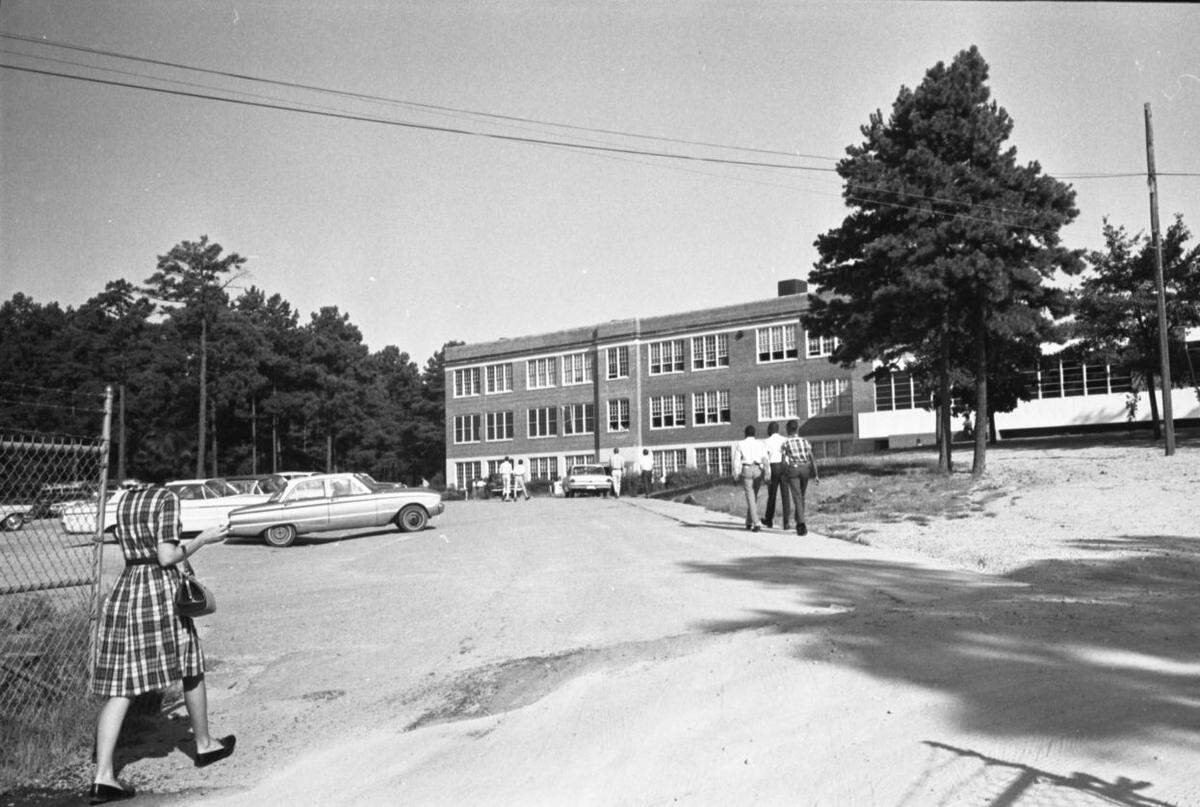
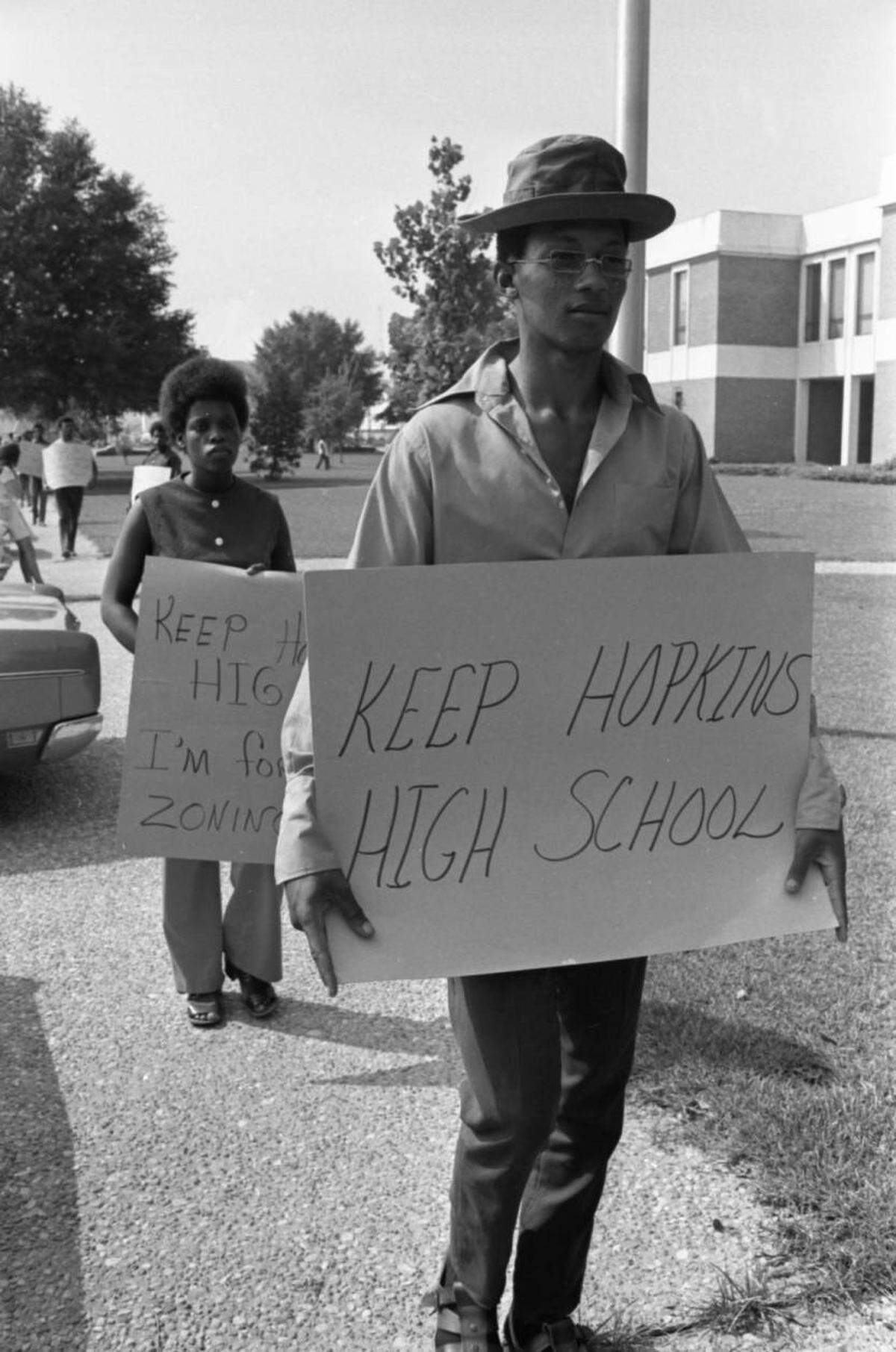
In 1971, the historically Black Hopkins High School was merged with the predominantly white Lower Richland High School as part of a districtwide school integration plan. All students in grades 10 to 12 attended Lower Richland, and Hopkins became a junior high school with eighth and ninth graders. There was an outcry among Hopkins students, The State newspaper reported.
Today, Hopkins is a middle school.
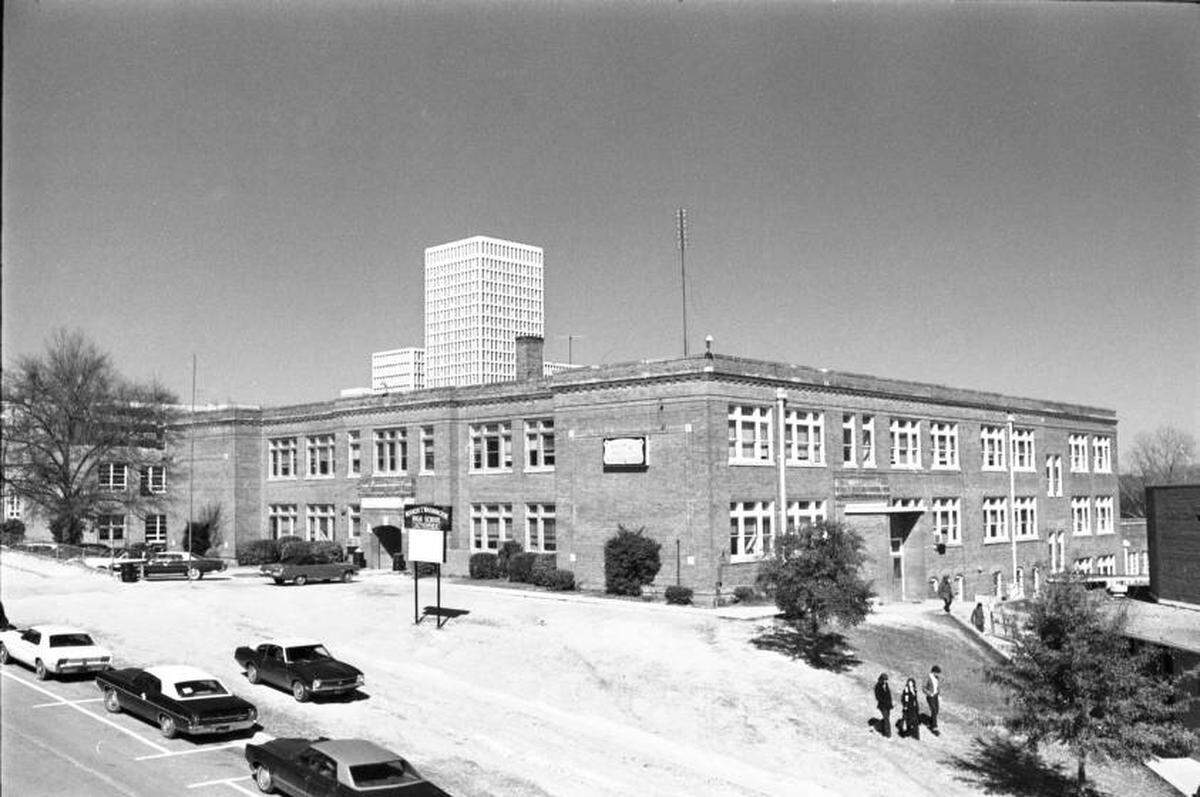
The historically-Black Booker T. Washington High School was closed in 1974 and bought by the University of South Carolina.
As recently as 2018, the Sumter School District came under fire by the NAACP Legal Defense Fund when the school board voted to consolidate an elementary and middle school in the midst of a budget deficit, the Sumter Item reported. The schools were both predominantly Black and located in the state’s “corridor of shame,” a string of poor, rural schools along Interstate 95 known for a lack of resources and poor achievement.
The schools, which were targeted for low enrollment, were closed in hopes of saving the district $2.4 million.
“Our understanding is that white flight, in part, contributes to today’s low enrollment and over-concentration of low-income Black students in these schools,” the NAACP said at the time.
Studies suggest that school closures don’t just alter the education system, but are “emblematic” of the “racial reimagining” of cities that displaces communities of color. Research found that once a school closes in a Black neighborhood, the community is far more likely to experience either disinvestment or gentrification.
Plus, it can be “extremely” difficult for districts to sell surplus school properties, the Philadelphia Research Initiative found in an examination of closures within several urban areas.
And no matter how smoothly a school closure or merger goes, people will still be upset.
A ‘complicated issue’
Richland 1 is shrinking. While enrollment across South Carolina defied national trends and increased by nearly 50,000 students over 10 years, Richland 1’s student population decreased. But the district is unlikely to close or merge schools anytime soon, according to some school board members.
“I can see some situations in which it might become necessary to take that kind of action, but it couldn’t be undertaken lightly,” Moore said.
Any hasty decision could cause problems down the road — McLawhorn said as quickly as enrollment dropped, it could surge once again in a few years time. He’s seen more families seem to move into north Columbia neighborhoods like Barhamville Estate, which falls into C.A. Johnson’s attendance zone. And Richland 1 officials have said they expect growth near that area too, along with Lower Richland.
“I wouldn’t necessarily panic,” McLawhorn said. “... schools may get repopulated quicker than we think.”
With a new superintendent, Todd Anthony Walker, beginning this summer, the district will have to sort through its priorities under new leadership.
“It’s a really complicated issue and we’d have to take the time to include everybody in the process,” Moore said. “It’s not as easy as looking at a list of schools.”
Editor’s note: The figures for this story come from the 135-day count compiled by the state Department of Education for the 2024-25 school year, which was posted in April. Our ranking of the smallest schools in Richland and Lexington counties does not include the Swansea Freshman Academy in Lexington District 4. The academy has 278 students, making it the 10th smallest traditional public school in the two counties. We did not include it in our ranking because it serves one grade.
This story was originally published June 12, 2025 at 5:00 AM.