S.C. Department of Education censors racially inclusive education, new federal lawsuit says
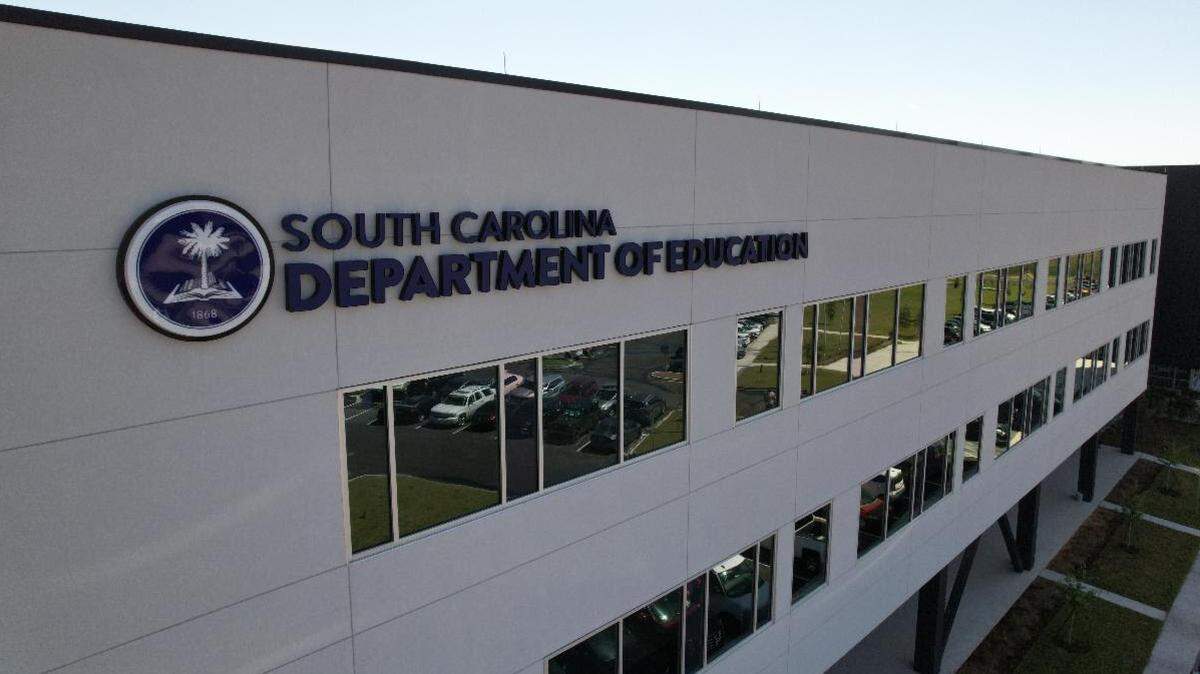
The South Carolina Department of Education is censoring a racially inclusive education for all public school students in violation of the U.S. Constitution, according to a lawsuit filed Monday.
The Legal Defense Fund and Tyler Bailey, Columbia attorney and city councilman, have filed a federal civil rights lawsuit on behalf of the South Carolina NAACP, South Carolina educators, students and author Dr. Ibram X. Kendi, challenging a state budget proviso that prohibits school districts from using funds from the state Department of Education for “partisan” instruction, including materials about racial and gender inequities.
Another plaintiff is Mary Wood, a Chapin High School Advanced Placement language arts teacher whose use of Ta-Nehisi Coates’ memoir was temporarily shut down in spring 2023 by the Lexington Richland 5 school district.
According to the Legal Defense Fund, the proviso severely restricts teachers and staff from sharing information and knowledge in South Carolina schools about the history and experiences of Black people, and prohibits access to books about the history of racial discrimination and white supremacy in the United States.
In the Palmetto State, that history runs deep.
The lawsuits points out that South Carolina was the site of the largest slave rebellion in the British North American colonies. The Civil War began here. South Carolina is also where white supremacy led to racially-motivated violence when a man shot and killed nine people at Mother Emanuel AME Church, one of the oldest Black churches in the South, in 2015.
The proviso, which the lawsuit calls “racially and politically” motivated, was in response to local and worldwide protests demanding racial equity following the murder of George Floyd at the hands of Minneapolis police in 2020. It is the latest example of South Carolina’s history of suppressing accurate teaching in public school classrooms about racism and discrimination against Black people in the United States, the lawsuits says.
First introduced in 2021, the proviso came as communities across the country splintered over critical race theory taught in classrooms. Though it followed the nationwide trend, Bailey emphasized that the lawsuit was about the future of South Carolina.
“There may be other things going on across the country, but this lawsuit is about our kids here, about our educators here, our libraries and our public schools,” Bailey said in an interview with The State.
Since the proviso initially passed, schools have removed a book about racism by Black authors and censored a high school’s argumentative writing lesson on equity and systemic racism, according to the lawsuit. It was the basis of a lawsuit filed by state lawmakers that led to dozens of public schools eliminating diverse language arts curriculum. It was also cited by the state Department of Education when in June it denied students the opportunity to AP African American Studies course offered through the College Board.
The proviso violates the First and Fourteenth Amendments of the U.S. Constitution, the lawsuit says.
The Legal Defense Fund, founded in 1940, is the nation’s first civil rights law organization, according to its website. It was founded by the NAACP but has been a separate group since 1957, the website says.
President Brenda Murphy of the South Carolina NAACP, one of the plaintiffs named in the suit, said in a news release the proviso is a “grave disservice to South Carolina students,” an “egregious” attempt to ease the history and lived experiences of the Black community.
“Let’s be clear: political attempts to distort history and truth only perpetuate ignorance, division, and hate,” Murphy said in a news release. “This censorship measure poses a significant, chilling threat to comprehensive education for all students at a time where the teaching of cultural understanding and inclusivity in our classrooms is needed more than ever.”
South Carolina, according to the Legal Defense Fund, is one of more than 20 states that have adopted laws and policies to restrict discussions around race and gender inequalities in the classroom.
“We must provide an education that prepares them as citizens to read widely, think critically, and understand that complex issues have multiple, varied perspectives,” plaintiff Ayanna Mayes, the Chapin High School librarian, said in a news release. South Carolina “is muzzling and tying the hands of the brilliant, highly trained educators it has certified and dis-serving its bright, talented students.”
One listed defendant is Ellen Weaver, state superintendent of education.
“African-American history is our shared history. South Carolina’s commitment to teach both the tragedies and triumphs of America’s journey remains unchanged, as outlined in our long-standing instructional standards,” Jason Raven, a spokesperson for the department, said. “This meritless lawsuit does not diminish our dedication, nor does it identify any shortcomings or legal defects.”
The Lexington-Richland 5 school district and the Lexington District 3 school district are also defendants. The State has reached out Lexington 3. The Lexington-Richland 5 school district declined to comment.
Two other plaintiffs are Black students at Spring Valley and A.C. Flora high schools in Richland County.
This story was originally published January 27, 2025 at 3:02 PM.