In a time of political division, new USC center aims for civil discourse
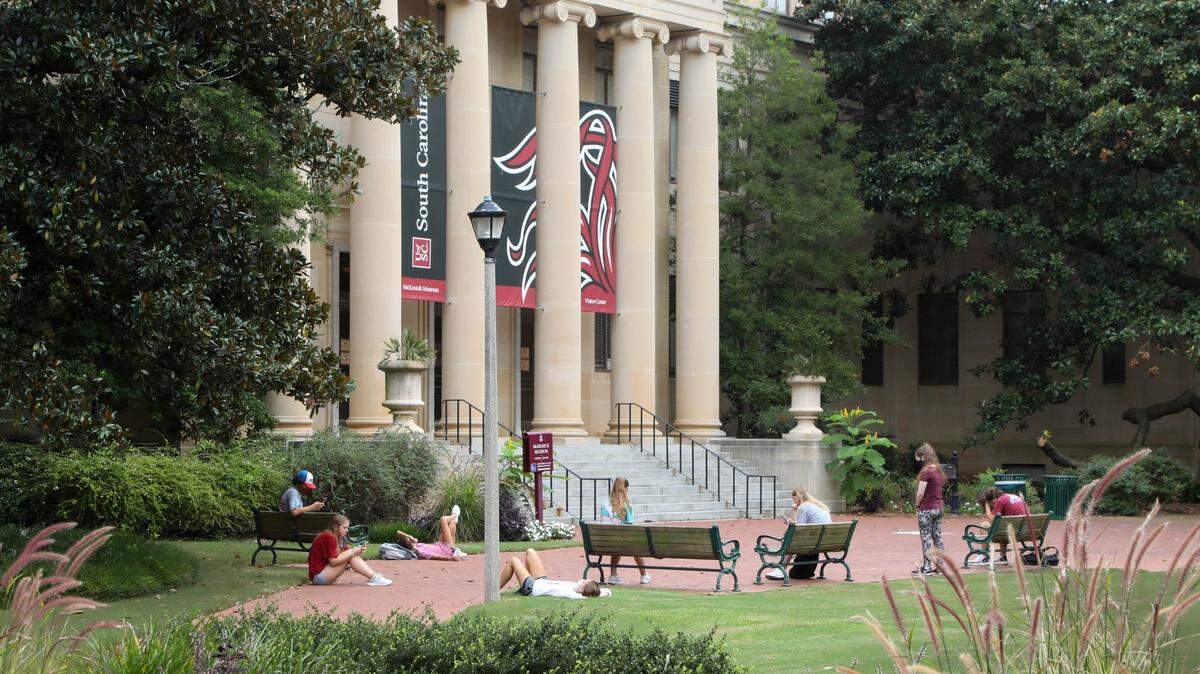
Ahead of America’s 250th birthday — its semiquincentennial — in 2026, the University of South Carolina is creating an academic center in hopes of promoting the ideals, the history and the government of the United States.
It will be called the Center for American Civic Leadership and Public Discourse.
“Studying the American civic order and teaching our students to be good citizens should be a core function of higher education in America,” Thad Westbrook, chair of the USC Board of Trustees, said in a news release. “This is a great opportunity for the University of South Carolina to ... lead the way in our state in educating South Carolinians in America’s founding principles. Over the past few years, we have strengthened our policies supporting free speech on campus, and we believe this center will elevate that work with a renewed focus on civil discourse.”
Officials said the center, approved last month by the USC Board of Trustees, is meant to contribute to the national dialogue on issues in American democracy, and is the result of the “growing need for civil discourse, cooperation across partisan lines, and a greater understanding of the core ideals and values that shaped America.” According to a news release, studies and surveys show that Americans have less trust in government and each other than in the past.
Liberty, democratic self-governance, rule of law and unalienable rights are among some the topics the center will explore through bipartisan discussions with national and state leaders, scholars. community members and USC students, faculty and staff.
“The value this new academic center brings is its focus on equipping students with the knowledge, perspectives, and reasoning skills for meaningful interactions as citizens and community leaders,” USC President Michael Amiridis said in a news release.
Christopher Tollefsen, a USC philosophy professor who studies ethics and natural law, was named the center’s interim executive director. Other USC faculty affiliated with the center will include scholars of history, political science, sociology, law and education, according to a news release.
USC has also created a board of external advisors: Robert P. George of Princeton University, Cornel West of Union Theological Seminary, Julia Mahoney of the University of Virginia, Paul Carrese of Arizona State University and Mary Keys of the University of Notre Dame.
The center’s first public event is scheduled for Sept. 12, when USC will welcome advisory board members George and West, who are “well-known for their collaboration and friendship, despite their disagreement on many issues.”
On Sept. 17, John Witte, an Emory University legal scholar, will give a Constitution Day lecture about religious freedom.