
New USC brain center aims to reverse SC’s history of inadequate neurological care
A state-of-the-art cognitive care center opening soon in downtown Columbia will expand access to neurological services that have historically been unavailable to many South Carolina residents.
The University of South Carolina’s new Brain Health Center, located near Prisma Health Richland Hospital in the burgeoning Bull Street District, is equipped to provide advanced diagnostics, treatment and support services for patients with Alzheimer’s disease, dementia and other complex cognitive conditions.
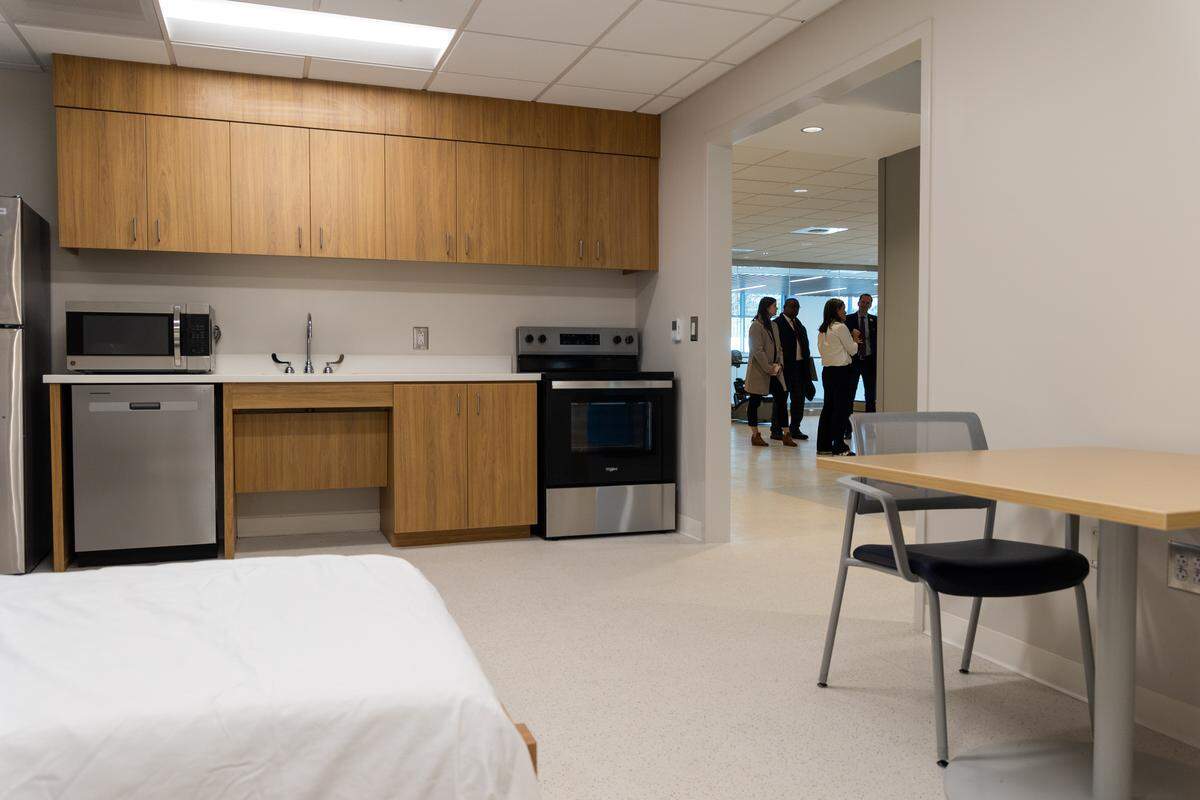
The 65,000-square-foot outpatient facility, which combines clinical services, imaging, infusion therapy, rehabilitation and research under one roof, will serve as the centralized hub in a network of brain clinics the university has been opening in rural areas across the state.
The need for high-quality neurological care is especially acute in South Carolina, which has high rates of Alzheimer’s disease, vascular dementia and stroke, but has struggled to deliver timely, top-notch brain care to its rapidly aging population.
Patients who need the degree of specialized care the Brain Health Center will offer have historically had to travel out of state — if they had the means — or wait up to a year for an appointment, USC’s Vice President for Research Julius Fridriksson said.
“The typical waiting time, even in Columbia, even in Charleston, between seeing a primary care physician and seeing a specialist … it’s usually between nine and 12 months,” he said.
The university’s brain center, which is tentatively scheduled to open in mid-to-late April, will be operated in partnership with Prisma Health.
The $30 million facility has 16 exam, testing and treatment rooms; an eight-bay infusion suite for early-stage Alzheimer’s patients; and dedicated areas for physical, occupational and speech therapy.
It also boasts two powerful MRI scanners for brain imaging — a wide-bore 3-Tesla scanner that’s about twice as powerful as a standard MRI machine and an ultra-high-field 7-Tesla scanner for especially high-precision imaging.
The 7-Tesla scanner, which can take much higher resolution pictures of the brain than a standard 1.5-Tesla or even 3-Tesla scanner, will be the only one of its kind in South Carolina and one of only a small number of such scanners in the entire Southeast, Fridriksson said.
The 25-ton behemoth, which should be operational sometime in June, will enable earlier detection of subtle brain abnormalities and assist university researchers conducting neurological research at the center.
“These MRI scanners, especially the 7-T, are like keys our researchers will use to unlock the secrets of the brain,” Fridriksson said. “They will place USC Brain Health at the forefront of patient diagnostics and enable us to expand access to clinical research initiatives in South Carolina.”
.jpg "MRI image.pdf (1).jpg")
Because the center will integrate research with clinical practice, patients from across the state will also soon have the ability to participate in cutting-edge clinical trials that had not previously been an option.
“For patients in rural areas of South Carolina right now, it is almost impossible to get into clinical trials,” Fridriksson said. “And a lot of times, patients that do enroll in clinical trials are cured, because these are the treatments of tomorrow.”
Building a brain health network
The opening of the downtown medical center is a key milestone in the university’s effort to transform neurological health care in South Carolina through the creation of a statewide network of brain health clinics.
Launched in January 2024, USC’s Brain Health Network currently consists of seven outpatient clinics that provide cognitive screenings, evaluations and community-based support services to patients in rural South Carolina, where brain specialists are few and far between.
Four of the clinics are operated in partnership with Prisma Health, two in partnership with HopeHealth and one with Lexington Health. In the coming years, USC hopes to open eight additional clinics throughout the state, Fridriksson said.
The Brain Health Network’s goal is to expedite neurology care by partnering with local providers in underserved areas to bridge the gap between primary and specialty providers.
In order to do that, local nurse practitioners or speech language pathologists provide initial cognitive assessments and pass that information along to a centralized neurologist for review, Fridriksson explained.
The neurologist then diagnoses the patient and creates a treatment plan that is conveyed back to the patient’s primary care physician, who handles the actual care.
Community health workers, who answer questions for patients and their families and ensure they’re following the prescribed treatments, also play a crucial, albeit under-appreciated role in the process, Fridriksson said.
“This seems like a simple thing, but it isn’t,” he said. “We think we’re the only network in the country that does it this way. And it works like wonder.”
Rather than waiting up to a year for a specialist’s insight, as had previously been the norm, patients at the rural clinics are now receiving diagnostic care in three-to-four weeks, he said.
The innovative approach, which was developed with input from primary care physicians, has allowed the network to serve nearly 3,000 patients in the past two years.
While most of the rural patients don’t need specialized treatment, those who do require greater attention can now seek advanced care at the new center in Columbia.
“We expect that will be a small proportion,” Fridriksson said. “But when you’re pulling in from the whole state, it means a lot of people will be going to the Brain Health Center.”
USC’s planned neurological hospital
If all goes to plan, a specialized hospital that will offer neurological treatment, surgery and rehabilitation — a first of its kind in the Southeast — will join the Brain Health Center on USC’s developing Health Sciences Campus as soon as spring 2029.
The $350-million standalone facility, which USC Board President Thad Westbrook has described as “the most impactful project in the history of the university,” will be located on USC’s 16-acre health campus, right next to the new medical school and down the street from the Brain Health Center.
When it’s completed, the hospital will have 115 beds for patients with complex neurological conditions that require high levels of care, as well as designated clinical research space, laboratories and training sites for USC students preparing for careers in the health professions.
This story was originally published March 19, 2026 at 9:48 AM.