
5 unexpected places to see wild alligators in Columbia and the Midlands
One of the great treats (or terrors) for visitors to or residents of the Carolina Coast is the occasional alligator encounter.
Be it a gator on a golf course, on a hiking trail, beside a lake or, God forbid, in your swimming pool, the chance encounter with Alligator mississippiensis, or the common American alligator, can be exhilarating.
But you don’t have to drive to the Lowcountry to see an alligator in the wild. They’re here in the Midlands, just not as many of them. And you have to know where and when to look.
The Midlands — particularly Columbia, and Richland and Lexington counties — straddles the fall line separating the coastal plain from the Piedmont. That line is best delineated by the rocky shoals of the Saluda River just north of Riverbanks Zoo.
Alligators, like Spanish moss, love the coastal plain (the lower and wetter the better). The higher and rockier terrain of the Piedmont? Not so much.
So while the Congaree Swamp in Lower Richland has gators, the bucolic waters of Lake Murray are dang near gator free.
“Occasionally they will make an excursion above the fall line,” said Will Dilman, assistant chief of wildlife for the state Department of Natural Resources. “But it’s usually just one looking for food.”
But as far as Lake Murray?
“Never say never,” Dilman said. “But that would be a very rare sighting.”
The best time to see an alligator is on a warm day in the early spring or late fall, when the cold-blooded gators leave the water to bask in the sun on the bank.
But even then, the sightings can be rare around here.
“When you compare the numbers here with the numbers on the coast, we don’t have that many,” said Bill Stangler, the Congaree Riverkeeper. “They are around, and it’s a big deal when people see them, but there are way more on the coast.”
So, where are the most likely places around Columbia for gator sightings? We’ve located five.
1. Clemson Sandhill Research and Education Center, northeast Richland County
Perhaps the easiest place to view alligators in the wild, oddly enough, is at this research facility across the street from Village at Sandhill. Not only is it a stone’s throw from a mall, it is also right at or above the fall line in the sand hills.
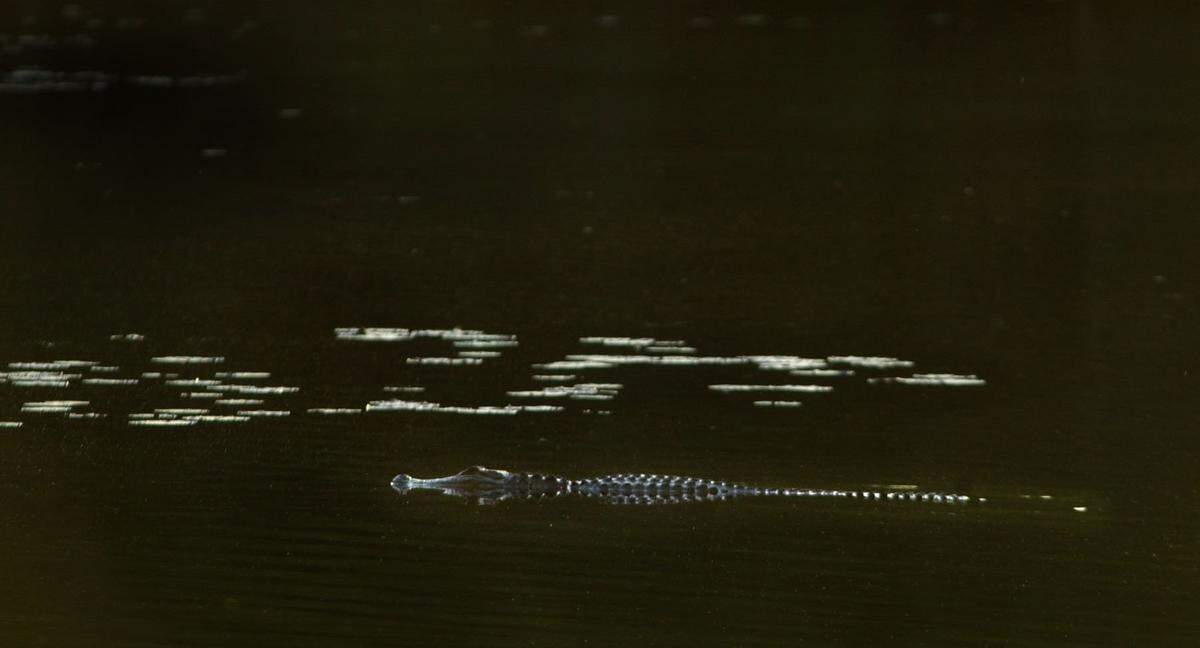
Cory Heaton, a Clemson Extension Service wildlife specialist, said he has seen as many as three at one time lounging near the facility’s three research ponds. How and when they got there is a mystery, but why they stay is obvious, he said.
“They have great habitat,” he said. “The three lakes on site and their surrounding woodlands provide a safe refuge ... that comes with well-stocked fish ponds, countless frogs, turtles, snakes, waterfowl and mammals to dine on. They truly have a buffet here, (and) the buffers around the ponds provide excellent protective cover where they can rest and bask.”
People are invited to come see the alligators, but they can be reclusive. It helps to bring binoculars, Heaton said.
“They disappear during the busy parts of the day, leading me to believe they are hiding from people,” he said. “It is very important to the safety of the gators and the visitors that this relationship remains this way. Gators that become habituated to people can be a serious threat.”
2. Timmerman Trail, Cayce
Part of the Cayce Riverwalk and the Congaree Creek Heritage Preserve, the Timmerman Trail has a warning sign about alligators at the trail head.
Congaree Creek winds through the area. The tributary of the Congaree River is a favorite hangout for alligators. And sometimes they come a little too close to the trail.
“The Cayce folks will shut (the trail) down if they see them lounging around,” said Mike Dawson, executive director of the River Alliance, which helps plan the regional Three Rivers Greenway, of which the Cayce Riverwalk is a part.
The trail can be accessed from the 12th Street Extension at SCANA Parkway or behind the Cayce Tennis Center at the 12,000 Year History Trailhead.
As an aside, the Timmerman trail also gives access to impressive Confederate earthworks from the Civil War that line Congaree Creek.
3. Guignard Clay Quarry, Cayce
Also part of the Congaree Creek Heritage Preserve, the quarry, more commonly known as the Guignard pits, is a unique man-made labyrinth of clay ponds dug by the Guignard family to make the bricks that built downtown Columbia back in the day.
A narrow-gauge railroad once connected the pits to the Guignard brick works on Knox Abbott Drive. They are the large beehive-looking buildings near the Blossom Street Bridge.
The series of man-made ponds are perfect gator habitat. And they also might be the scariest place to meet a gator.
There are narrow causeways between the ponds. If you meet a gator on these narrow strips of land, keep your distance and back away slowly.
Stangler noted that the same gators that hang out in Congaree Creek can show up on either the Timmerman Trail or the Congaree pits. But the experience is quite different.
4. Congaree National Park, Hopkins
Located 18 miles south of the capital city, the Congaree Swamp would seem to be a haven for gators. Well, yes and no. There are gators in the swamp, but not as many as you would think.
Occasionally, a gator will trundle into Weston Lake on the park’s boardwalk. This year, in fact, one took up residence and may still be there, according to Scott Teodorski, the park’s chief of interpretation.
But your best shot at an alligator encounter is farther south in the park.
Bates Old River between U.S. 601 and the Wateree River, an “ox bow” lake formed when the Congaree River changed course, is home to gators. And Cedar Creek, which runs through the center of the park and connects to Weston Lake, also hosts alligators.
Stangler, the riverkeeper, said he also has seen gators at the U.S. 601 boat ramp at the Congaree River.
5. Riverfront Park, Columbia
Although sightings are rare, the occasional gator does wander into the Columbia Canal from the Congaree River from time to time.
Thousands use the linear park to hike, bike and jog, so the sightings are usually pretty public affairs.
As on the Timmerman Trail, warning signs keep visitors on their toes. The park also features the world’s first fully electrically operated textile mill and Columbia’s first hydroelectric plant (in continuous operation 1896-2015) at the south end, and an old lock, spillway and fish ladder at the other.
Be careful
FYI, while alligators can be dangerous, there have been only 11 reported alligator bites to humans in South Carolina since 1948, according to DNR. None were fatal. (Pets, on the other hand, are gator delicacies.)
Alligators, it seems, aren’t very aggressive if you don’t mess with them, try to feed them or disturb their nests. So keep your distance (60 feet is what DNR recommends). If a gator does charge, he or she is only good for a short burst, so run fast.
For the record, feeding an alligator carries a fine of up to $150 and up to 30 days in jail. Injuring a gator carries fines of up to $2,500 and 30 days in jail.
But if push comes to shove and there are no gators to be found in the wild, you can always motor over to Riverbanks Zoo and see Little Boy, the American alligator that hangs out in the pond below Tuskers Restaurant.
This story was originally published August 16, 2018 at 4:31 PM.