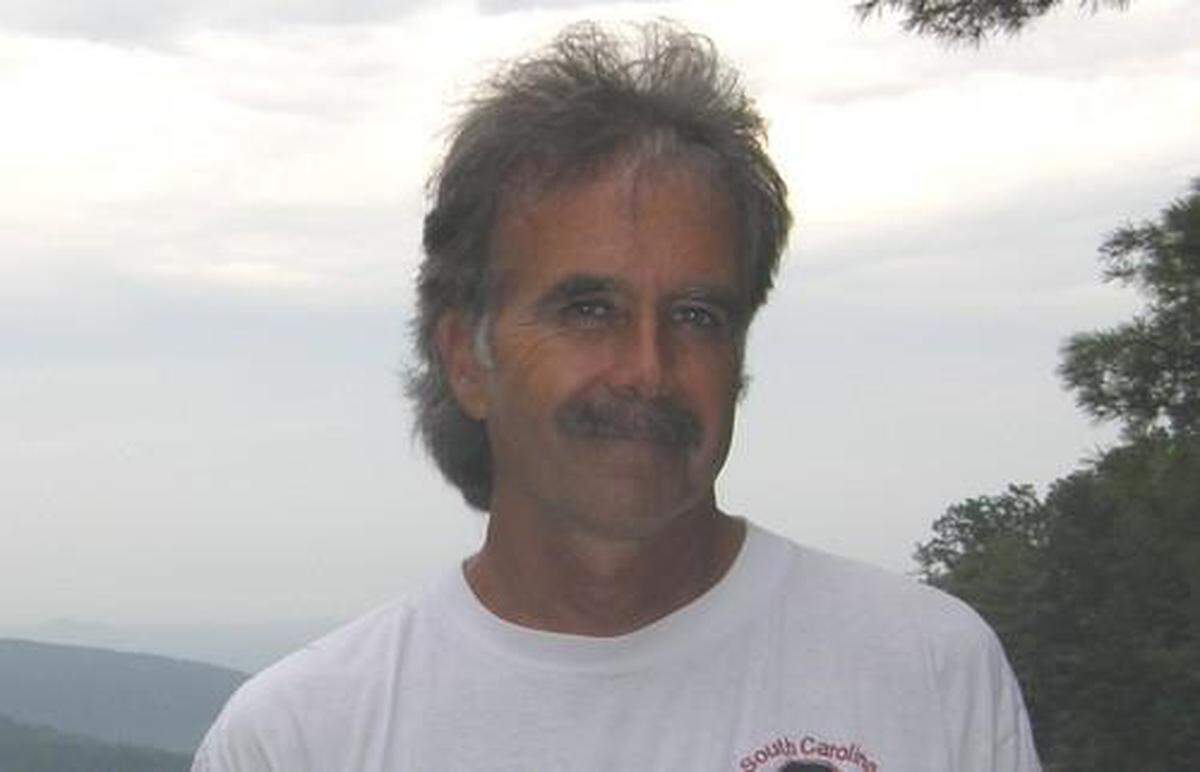
Death and despair. How the feds refused to help a nuclear worker’s family in SC
Every time Jerry Bolen came home from a construction job at the local nuclear weapons complex, he took off his dusty coveralls before stepping into the house he shared with his wife and children.
It was a precaution against tracking hazardous, radioactive materials into the family’s home in rural Barnwell County, says his widow, recalling how she would gingerly place the contaminated garment into the washing machine.
But while the effort protected the couple’s three kids, Jerry Bolen suffered. The long days he spent working at the Savannah River Site, exposed to chemicals and radiation, eventually killed him, his widow says.
Now, an exasperated Carolyn Bolen has sued the U.S. Department of Labor following a 13-year battle with the government over whether the family should receive compensation for the cancer that took Jerry Bolen’s life in 2006.
“I know in my heart my husband did get it out there,’’ she said of Jerry Bolen’s illness. “Maybe this is the wrong answer, but I think he deserves this.’’
Her story is a familiar one. Many people who worked at SRS have complained for years that a federal compensation program for sick workers and their families is a bureaucratic morass that takes too long to maneuver and often doesn’t provide the benefits they were promised.
In Carolyn Bolen’s case, however, she was turned down so many times for benefits through the federal program that she exhausted all her appeals, prompting the federal lawsuit, she and her lawyers say.
The Nov. 20 suit against the labor department is among a handful of cases in South Carolina by ex-SRS workers and their families who were denied benefits in recent years through the federal compensation program, said Bolen’s lawyers, who specialize in helping sick workers.
Bolen’s attorneys said the labor department ignored overwhelming evidence that her husband became sick from working at SRS. They are seeking $275,000, the maximum she can get under the program. Other suits are expected as more workers or their loved ones are turned down by the government, said attorneys Warren Johnson and Josh Fester.
The federal government launched the compensation program two decades ago after conceding that employment at nuclear weapons sites during the Cold War likely made some of the workers ill.
To receive compensation, workers or their families must show that radiation on the site was as likely as not to have caused cancer or a handful of other ailments. Or, in some cases, they must show that people worked on the site during times when records of exposure are difficult to find.
The nuclear compensation program provides benefits to sick workers, but in some cases, covers their families after the person has passed away, such as with Bolen.
Unfortunately, the system has become hard to navigate, with the government often fighting tooth-and-nail against the workers they were supposed to help, Johnson said. Taking legal action to force federal compensation shouldn’t be necessary, said Johnson and Fester.
“This was supposed to be a way to make up for, or show our gratitude to these patriotic workers,’’ Johnson said of the compensation program. “They gave their health for our sake for the Cold War. We can at least offset the burden, by giving financial security, knowing they aren’t leaving a burden on their wives and children.’’
Officials with the U.S. Department of Labor, which administers the bulk of the sick workers program, declined comment on Bolen’s lawsuit. But a spokeswoman said Friday the compensation program has provided benefits to thousands of weapons site employees since its inception.
The department oversees the process of screening claims to make sure only legitimate requests for compensation are approved, because the program is expensive for American taxpayers. Critics of awarding ex-workers compensation have said cancer and illnesses can be caused by an array of factors, and the program is a gravy train for thousands of people. But there also is little dispute that radiation and chemical exposure can make people sick.
Statistics on the labor department’s website indicate the government has paid out $18 billion in compensation nationally to workers and their families for medical bills and other needs. More than $1.5 billion of that has gone to those who worked at SRS near Aiken, the Department of Labor said Friday.
The government has approved compensation payments in more than 94,000 cases nationally, the department said. Of that, payments have been made in 6,990 cases at the Savannah River Site, according to an email Friday from the labor department.
In 2015, the labor department told The State and the McClatchy Co. the program had approved more than 40 percent of the claims made by nuclear workers and their families, far more than the 25 percent the government anticipated when the program launched in 2001. The labor department said Friday the approval rate nationally is now more than 50 percent.
Even so, many claims don’t get approved and the wait for answers can be time-consuming. More than 2,200 workers had spent five years or more going through the exhaustive claims process, according to McClatchy’s 2015 “Irradiated’’ series. Some workers who filed for benefits died while awaiting decisions from the government, McClatchy found.
Earlier this month, a federal panel considered a proposal, advocated by Johnson, that could make it easier for thousands of workers and their families to receive benefits. But the board put off a decision until next year.
Jerry’s plight
As bureaucrats and lawyers wrangle, Carolyn Bolen says she misses her husband and needs help.
The compensation she would receive could pay some of her doctor bills — she has rheumatoid arthritis — and fill other financial gaps left by her husband’s death. Bolen lives alone in a small farmhouse miles from a major city, dependent on Social Security and the goodwill of her three children to help out.
On a recent winter day, Bolen, 72, stood in her grassy yard and reflected on all the things she loved about her late husband.
She met Jerry Bolen during a dance at a roller skating rink in Orangeburg when she was 15, and as she got to know him, began to realize that he was more kind and compassionate than she initially thought. More than six feet tall with a full head of dark hair, Bolen also was the best looking guy she’d ever met.
He persuaded her to marry him several years later.
Known as “Little Mac’’ to his friends, Jerry Bolen didn’t have much education but he used his skills as a construction worker to feed and clothe his children during the 1960s and 1970s. He toiled in extreme heat and freezing weather, often driving a bulldozer or working as a steel employee.
Sometimes that meant working seven days a week until a construction job was finished. And sometimes, that meant working for subcontractors at the Savannah River Site. Affidavits the family has obtained show that he worked there for years in the late 1960s, early 1970s and 1980s with his brothers, who owned construction businesses.
But he never complained about the long hours or said much about hazardous conditions at the site. That was important to the federal government because, during the Cold War, much of the work on the Savannah River Site needed to be kept confidential, family members say.
Tim Bolen, his son, said he never knew his father worked at SRS until just a few weeks before his death. But Carolyn Bolen did.
She remembers the days her husband came home with his coveralls coated in “white stuff’’ that she says came from the Savannah River Site. Bolen never knew what the material was, but she was always wary of the potential danger. And her husband occasionally offered clues that the white material came from SRS, she said.
“He said it was just where he worked out there,’’ she said.
It’s difficult to know for sure where the white dusty substance came from or, if it was from SRS, whether it was hazardous to the Bolens.
The site, a 310-square-mile complex, contains an array of nuclear production areas with some of the most toxic substances in the world.
Among them is a tank farm, which houses nuclear waste deadly enough to rapidly kill a person directly exposed to it. Carolyn Bolen’s lawsuit says her husband worked for a while in the tank farm area and another section where radioactive material is used.
The Savannah River Site, located near the Georgia border outside Aiken, was part of the national effort to produce atomic weapons between World War II and the early 1990s. Nationally, the effort employed some 600,000 people, according to the U.S. Government Accountability Office.
Even though it has nuclear hazards, SRS also contains non-nuclear areas and vast stretches of unspoiled land that attract an array of wildlife. Not all work conducted at the site occurred in areas with radioactive material.
After working periodically at SRS through the years, Jerry Bolen began to feel an uncomfortable sensation in the late 1990s that he couldn’t shake.
Something was wrong with his bladder. During trips to the bathroom, bloody urine flowed into the toilet and a sharp sting caused him to gasp. The pain was so bad, at times, that Carolyn Bolen could hear her husband’s cries throughout the house.
“He just screamed for mercy,’’ she said.
The discomfort sent him to a doctor, where the family learned the man who had faithfully kept a roof over their heads and food on the table was gravely ill. He had bladder and prostate cancer.
At first, doctors used treatments and pain medication to ease his discomfort, but eventually, that didn’t work.
“You could hear him hollering, and you know, I’d get up to see about him and have to give him some more pain medicine,’’ she said.
Doctors eventually removed his bladder, providing some relief but causing Bolen to use a bladder bag for the rest of his life. He grittily fought through the discomfort, enjoying visits from his grandchildren and sometimes taking trips to the Tennessee mountains, which Bolen loved.
But most days weren’t like that, and it became increasingly difficult for Carolyn Bolen and her husband.
During Jerry Bolen’s nine-year fight with cancer, she developed rheumatoid arthritis, a condition that made it hard to use her hands. Sometimes, she was in pain as she emptied her husband’s bladder bag after returning home from her factory job late in the afternoon.
“I tended to Mac ‘til I lost him,’’ she said. “It wasn’t nothing easy.’’
In August 2006, Jerry “Little Mac’’ Bolen died at the age of 60, leaving his wife and family wondering how the once robust man could slip from their world. It didn’t seem right that a man so young and energetic had become so sick, family members say.
“My dad was the toughest individual I ever knew, and he just kind of withered to nothing,’’ Tim Bolen said.
Carolyn Bolen filed for survivor benefits in March 2007, less than a year after her husband died.
Missing records
Jerry Bolen’s time at SRS, and his devotion to his family, haven’t impressed federal officials who have considered whether his family is eligible for benefits through the labor department’s sick worker compensation program. They’re skeptical an award to his widow is warranted, saying they need more evidence.
An obstacle some workers face is gaining access to records that could show there is at least a 50 percent chance radiation caused cancer they developed after working at the Savannah River Site, a complex developed in the early 1950s.
Many records either can’t be located, are inaccurate or don’t exist, meaning workers can’t prove how many days they worked on site, or the amount of radioactive material they might have been exposed to.
That’s a particular concern for subcontractors like Bolen, who did not work directly for the government or for the major contractors hired by the U.S. Department of Energy to run the site. Subcontractors often were local construction companies brought in to do specific jobs.
Johnson and Fester said records of subcontractors often are harder to find than those for energy department workers.
In Bolen’s case, the labor department turned down the family’s claim for benefits because “the submitted documentation does not establish covered SRS employment for the employee,’’ according to the federal lawsuit Carolyn Bolen filed. In declining comment on the Bolen case, a Department of Labor spokeswoman said Friday that claims can be turned down for a variety of reasons.
“These include, but are not limited to, establishing survivorship, establishing covered employment, difference in exposure evidence, the physical location at SRS, their work process, etc. Each claim is evaluated on a case-by-case basis,’’ the statement said, noting that the program “does everything it can to help claimants meet their burden of proof. ‘’’
Bolen’s lawsuit, however, said the labor department simply dismissed credible evidence that would prove the case. Jerry Bolen, for instance, worked with acquaintances or for his brothers’ construction businesses in the late 1960s, 1970s and 1980s, according to five affidavits filed in Carolyn Bolen’s federal lawsuit last month.
Those affidavits, provided by family and friends who worked with Jerry Bolen, were combined with SRS identification badges issued in his name, and records of radiation doses the family ran across in his belongings. Some material was unearthed and provided to the government after the labor department had initially denied requests for compensation.
Despite the evidence, the Department of Labor ruled against the Bolen family’s request for reconsideration this past summer. Her case had been turned down at least three times before 2020.
“The department simply ignored additional evidence that Mr. Bolen was present at the site before 1968 and after Jan. 24, 1969,’’ the lawsuit said. “Mrs. Bolen’s request for reconsideration further asserts the department misapplied the law in determining covered employment by holding Mrs. Bolen to an impossible burden of proof.’’
While the Bolens have been turned down repeatedly in seeking compensation, Johnson and Fester are hoping the lawsuit will succeed. Fester said one of the five other cases the firm has filed resulted in a verdict that would have required payment to a sick worker. But the worker died before benefits were dispersed.
In the meantime, Fester and Johnson are pushing the federal government to approve a proposal that could open up benefits to thousands of people who worked at the Savannah River Site.
Under federal law, the government can acknowledge that it is too difficult to find records during certain years that would prove a person’s case for compensation for radiation-related cancer. As a result, the government can declare periods of years free of the need to provide records showing that a person likely got cancer from working at SRS.
The government already has done that for the time from 1953 to fall 1972. Some ex-workers at SRS, who were employed there for at least 250 days between these times, are eligible for benefits without producing extensive documentation about exposure to radioactive materials.
Now, a federal advisory board is considering whether to extend that to cover up to 1990 for some types of workers at SRS. It’s clear that Jerry Bolen worked well above 250 days between 1972 and 1990 at the site, so it’s possible his family could gain compensation if the time period is expanded to 1990, Johnson and Fester said.
A decision, under consideration for years, could be rendered as early as February if the federal advisory board recommends expanding the period. Such a decision ultimately would be made by the U.S. Department of Health and Human Services, the labor department said Friday.
Carolyn Bolen said a favorable decision — and her lawsuit — would mean a lot to many people who need help after they or their loved ones got sick at SRS.
“There are a lot of poor people in this world, and they don’t have the money like the president or the people in the White House,’’ she said. “I ain’t just talking about myself. There are people with needs.’’
This story has been updated with information provided Friday Dec. 18, 2020 by the U.S. Department of Labor.
This story was originally published December 18, 2020 at 5:00 AM.