Could North Carolina’s fight against global warming cost South Carolina ratepayers?
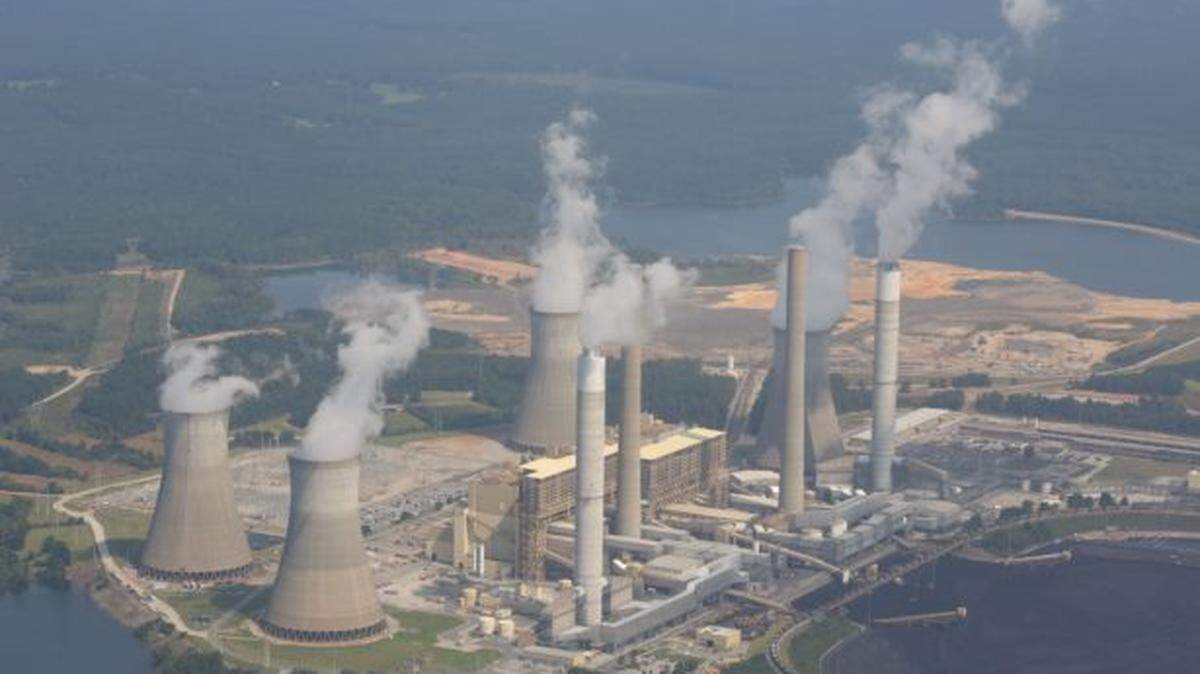
A North Carolina law intended to attack climate change by reducing a powerful greenhouse gas has generated concerns in South Carolina that it will increase costs for ratepayers in the Palmetto State.
The North Carolina law, approved last year, requires Duke Energy to substantially cut carbon dioxide emissions by 2030 and again by 2050. But the law is expected to cost the utility money as Duke decreases the use of coal-fired power, a major source of greenhouse gas pollution.
As a result, the company could seek to raise utility rates on customers in North Carolina and South Carolina to pay for the changes. Duke, which serves both states, has about 800,000 customers in South Carolina, mostly in the Upstate and Pee Dee regions.
Duke wasn’t saying anything this past week about raising rates, but S.C. state Rep. Bill Sandifer, R-Oconee, and Republican S.C. Attorney General Alan Wilson’s office expressed reservations about the North Carolina law’s impact on South Carolina.
Wilson’s office issued a non-binding opinion Jan. 18 saying a proposed joint session by both states’ public service commissions to discuss the North Carolina law was legally questionable. The opinion also said it’s questionable whether the S.C. Public Service Commission has authority to tell Duke’s South Carolina customers to pay for the North Carolina law.
In issuing the opinion, Wilson’s office mentioned the possibility of rate increases
“We fail to see the benefit to South Carolina customers in applying a North Carolina statute to the development of a carbon plan and imposing that plan upon South Carolina ratepayers,’’ the legal opinion said. “Rather than a benefit, such a plan, using North Carolina law, may well result in a rate increase upon Duke’s South Carolina customers.’’
Sandifer, a veteran lawmaker who chairs the House Labor Commerce and Industry Committee, had asked Wilson whether holding a joint meeting between the two public service commissions was legal. He also asked whether the state Public Service Commission could require Duke’s South Carolina customers to pay for a North Carolina law.
In November, Duke filed a petition with the S.C. Public Service Commission seeking the joint meeting to discuss a plan for addressing the North Carolina law. Sandifer said in a letter that the petition seeks “to impose the costs of a greenhouse gas tax on Duke Energy South Carolina ratepayers through a North Carolina legislative mandate.’’
Sandifer said in an interview Friday that he has concerns about the legality of the commissions meeting jointly to discuss the North Carolina law.
Asked if he thinks Duke should charge South Carolina customers for compliance with the Tar Heel state law, Sandifer said: ”No, I don’t. And I think that that was one of my overriding concerns.’’
North Carolina’s carbon reduction law was intended to reduce emissions in the Tar Heel State that are contributing to climate change. The law was targeted at power companies, and because of Duke’s size, affects the utility almost exclusively.
The impact of the law is that many coal-fired power plants could be replaced in North Carolina by other forms of energy, such as natural gas, solar and wind. Utilities in South Carolina already have shut down many coal plants because of lawsuits and the cost of running the power plants.
Worldwide, carbon dioxide from power plants and other sources has stayed in the atmosphere, trapping heat and causing the earth to warm. That has resulted in an array of problems, ranging from rising seas that are flooding coastal property, to heat-related illnesses.
Sandifer, who has in the past supported South Carolina’s major utilities, said he does not think a carbon reduction requirement like the one adopted in North Carolina is right for South Carolina.
“I don’t think there’s a lot of merit to it,’’ Sandifer said, noting that the North Carolina carbon law comes with a cost. “I think that this is an overreaction.’’
Duke did not say Friday whether it would raise rates for customers across the Carolinas to comply with the new North Carolina law. But in its November filing with the PSC, Duke said it wanted the South Carolina commission to confirm that the power company’s plans “and associated costs for the transition to be undertaken under the carbon plan will be fully shared and embraced between the states, consistent with historic planning practices.”
In a statement issued Friday, Duke said it has the best interests of South Carolina at heart.
“Duke Energy comes to this discussion in the spirit of how best to advance South Carolina’s objectives, such as reliable energy, low costs for customers, and continuing the state’s economic development momentum,’’ according to the statement.
The statement said the company was assessing the opinion by Bob Cook, the solicitor general with the S.C. Attorney General’s office.
The request to the South Carolina agency notes that Duke wants costs shared among customers in both states because costs have always been shared.
A company executive noted that costs were shared among customers in both Carolinas during construction of the Oconee nuclear station near Seneca, S.C., decades ago.
“Had Duke Energy Carolinas been a standalone utility in South Carolina, it is doubtful that we could have undertaken a project of this magnitude,’’ according to a 2021 PSC hearing transcript that quotes Duke Energy’s South Carolina president Michael Callahan. “But with the support of both states, we made this a realty, and our customers in both states have benefited greatly.’’
This story was originally published January 22, 2022 at 1:33 PM.
CORRECTION:
Michael Callahan is Duke Energy’s South Carolina state president. An earlier version of this story gave an incorrect title.