
They stink and destroy. If you cut down Bradford pear trees, Clemson will reward you
If you’re waiting for those beautiful white blooms to unfold on the Bradford pear tree in your yard this spring, tree experts have a message for you:
Cut that tree down.
It’s a message they’ve been circulating for years, and one, state foresters say, is starting to resonate. This year, they’ll even give you a free gift if you get rid of those stinking Bradfords.
The tree is not native. It came from China and Vietnam, and landscapers back in the 1950s thought the Bradford pear was the perfect tree.
Easy. Pretty, even. Resisted disease. Didn’t spread. And they could grow anywhere. Cities embraced them.
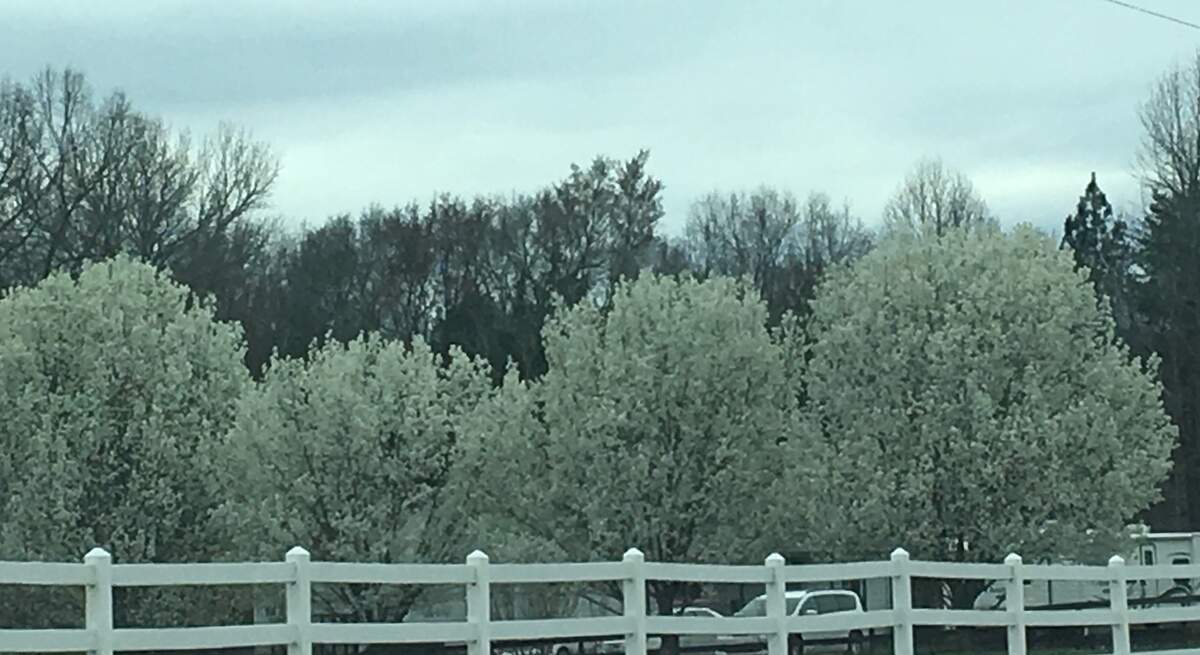
Then, in that crazy way that nature does what it wants when man tries to improve on nature, the tree thought to be unable to reproduce did. In trying to create a better Bradford pear, a new type was introduced that could cross- pollinate. Birds helped, too, as they ate the berries and then flew off to do what we all know they do. Shall we call it droppings?
So, here we are, with Bradford pears spreading into forests and choking out native trees. Choking out those trees that can be harvested for wood products, unlike the pears, which are spindly and break easily.
Foresters say Bradford pears are the ultimate nuisance trees. And sometimes they stink. Like rotting fish. They don’t actually grow fruit.
They have thorns, sharp enough to puncture tractor tires. Imagine what that would do to your boots as you hike through the woods. And your foot.
Cities that loved them now hate them and are tearing them out. Columbia, Greenville, Spartanburg, all have programs to replace Bradford pears, said Dena Whitesides, the urban planner for the South Carolina Forestry Commission.
The trees will be banned in South Carolina by 2024.
The South Carolina Forestry Commission and Clemson University Extension Service have an offer they hope you can’t refuse.
Cut down your Bradford pear, and they’ll give you a native tree in return. For free.
Whitesides said the effort has been under way since 2019 and they usually give away between 200 and 400 3-gallon trees such as several types of oaks, cypress and black gum.
Here’s all you have to do:
Pre-register online at www.clemson.edu/extension/bradford-pear/registration.html. (You must be the property owner to participate.) Cut down the tree. Take a selfie with your cut tree. You didn’t think they’d just take your word for it, did you?
Bring your selfie to one of three exchange events — Feb. 26 from 8 a.m. to 11 a.m. in Sumter’s Swan Lake Iris Gardens; March 5 from 8 a.m. to noon at 200 Laurel St. in Conway; and March 19, 8 a.m. to 11 a.m. in Nettles Park in Clemson.
Clemson calls this the Bradford Pear Bounty Program. The trees are paid for through grants and sponsorships from businesses such as Duke Energy.
Kinda like weeding out the bad actors in the Old West.
This story was originally published February 11, 2022 at 1:31 PM.