Stinking SC paper mill fights neighbors in court. People complain of sickening fumes
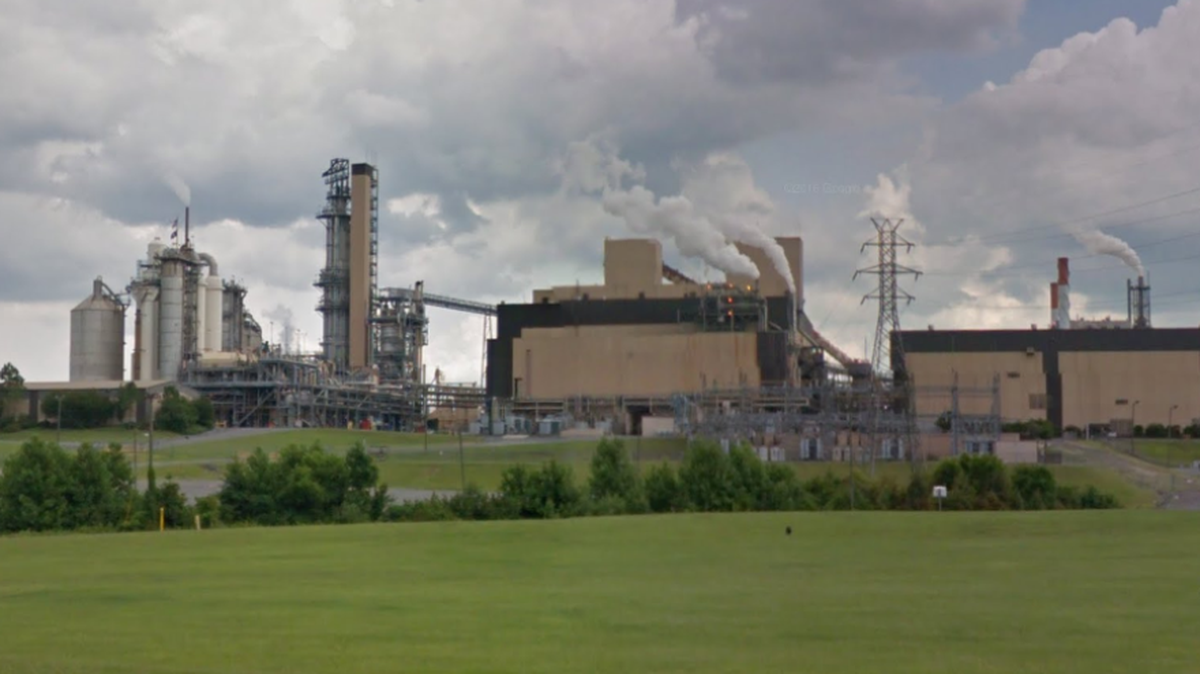
A South Carolina paper mill blamed for producing nauseating odors that sickened its neighbors near Charlotte is pressing a federal court to toss out a lawsuit by those who want compensation for troubles they’ve suffered from the stinking air.
A team of attorneys for the New Indy paper company was in federal court Wednesday, arguing that the class action lawsuit is unjustified and not worth the court’s time.
During a two-hour hearing in Columbia, they challenged assertions that the stench from the York County mill has affected people within a 20-mile radius and on both sides of the state line. They also questioned claims about illnesses and injuries people say they have suffered from breathing the powerful odors.
The New Indy lawyers included former U.S. Attorney Peter McCoy and representatives of the Morgan, Lewis and Bockius law firm, a company with offices around the world.
Scott Schutte, an attorney with Morgan, Lewis and Bockius, called claims that people have been harmed by the odors “intentionally vague.’’
People living within 20 miles of the plant have not proven their injuries, he said during the hearing before U.S. District Judge Sherri Lydon. That echoed legal filings made earlier this year that said neighbors “have not stated any viable claims.’’ The lack of proof should justify dismissing the case, legal filings show.
Lawyers representing area residents against New Indy disputed that, noting that plenty of people have been hurt and that the odor is one of the biggest issues the attorneys have dealt with in the southeastern United States.
“We are unaware of an air case of this type’’ in the area, said Chase Brockstedt, a Delaware lawyer whose firm has experience in odor issues involving industrial facilities.
Wednesday’s arguments by New Indy’s attorneys didn’t go over well with Kerri Bishop, a South Carolina resident who said the mill is making people sick and ruining the quality of life for thousands of suburban Charlotte residents.
“I’m just surprised they think it’s not plausible the pollution could go 20 miles out; I’m a little shocked,’’ she said after the hearing. She has led a citizens effort against New Indy.
But Bishop said she was encouraged by Lydon’s questions during the hearing, saying the judge seems “interested in hearing the truth.’’
Lydon was skeptical of arguments that New Indy’s parent corporation, a California company, was not potentially liable for the air pollution.
The New Indy Catawba paper mill is accused in court documents of cutting out pollution controls that then caused odors to stink up communities in both Carolinas for more than a year. The problems occurred after New Indy Catawba bought the plant in 2018 and switched the manufacturing process from bleached paper to brown containerboard.
Lydon said New Indy’s parent company — New Indy Containerboard — appeared well aware of changes made to the plant that have been blamed for causing overpowering smells. Attorneys representing New Indy Containerboard said the parent company should not be liable because it had not planned to operate in South Carolina, as opposed to its subsidiary, New Indy Catawba.
“Containerboard ran the company,’’ Lydon said, noting that it made an array of “day-to-day decisions.’’
Lydon did not rule Wednesday, but what she decides has substantial implications for New Indy. If New Indy Containerboard is not included in the case, it could substantially weaken efforts to gain compensation for residents affected by the pollution.
The parent company, owned partially by New England Patriots owner Robert Kraft, could be forced to pay multiple millions of dollars — beyond what it already is paying attorneys — to compensate residents who say their lives have been disrupted by the plant odors.
Neighbors are pursuing what’s known as a class action lawsuit, one that could allow a wide array of people to file legal claims if they show the New Indy plant hurt them with its air emissions. The judge has yet to decide whether to certify the class.
Neighbors say as many as 625,000 people could be affected — a claim that New Indy calls inaccurate and overstated. Officials with New Indy Catawba say alleged odors were not spread evenly around the plant, as neighbors contend. The company issued a statement Wednesday saying it had “made substantial progress on odor remediation’’ and has upgraded the plant.
New Indy has been on the hot seat since early 2021, when neighbors began to complain to state regulators about a rotten egg stench that permeated communities on both sides of the state line.
While paper mills often produce unpleasant smells, the ones from New Indy were alleged to be far more powerful than anything produced by Bowater, the plant’s former owner. The smell was believed to be from excessive hydrogen sulfide releases.
New Indy acquired the former Bowater plant in 2018, then switched manufacturing processes. But in doing that, the mill bypassed several key pollution control processes as it switched from making bleached paper to brown containerboard, records show.
New Indy’s troubles with neighbors not only have generated lawsuits against the company, but state and federal regulators also have stepped in.
Late last year, the US Environmental Protection Agency fined the company more than $1 million and ordered the company to correct problems that contributed to the odors. The S.C. Department of Health and Environmental Control is waiting to hear whether a federal court approves the fine or orders tougher penalties before the state agency files its own enforcement case.
Wednesday’s hearing was packed with lawyers on both sides of the issue. They included Schutte and others from the Morgan, Lewis and Bockius law firm representing New Indy.
Headquartered in Philadelphia, Morgan Lewis has attorneys across the United States and in foreign countries. It also has had a long-standing client relationship with the Kraft family and has participated in a pro bono legal service with the New England Patriots, according to a 2013 Boston Business Journal article. The firm’s website shows that its clients include about two-thirds of the Fortune 500 companies.
Lawyers representing citizens against New Indy include firms associated with state Sen. Dick Harpootlian, D-Richland; and Reps. Tommy Pope, R-York, and Leon Stavrinakis, D-Charleston. David Hoyle represented the prestigious Motley Rice firm from Charleston, which has extensive experience in pollution and personal injury cases.
The Baird, Mandalas, Brockstedt, Federico and Cardea firm of Delaware and Maryland also is representing citizens. The Baird Mandalas firm recently won a $205 million groundwater contamination settlement for a Delaware community affected by a chicken processing company’s pollution. The case also was made over odors.
This story was originally published June 1, 2022 at 5:45 PM.