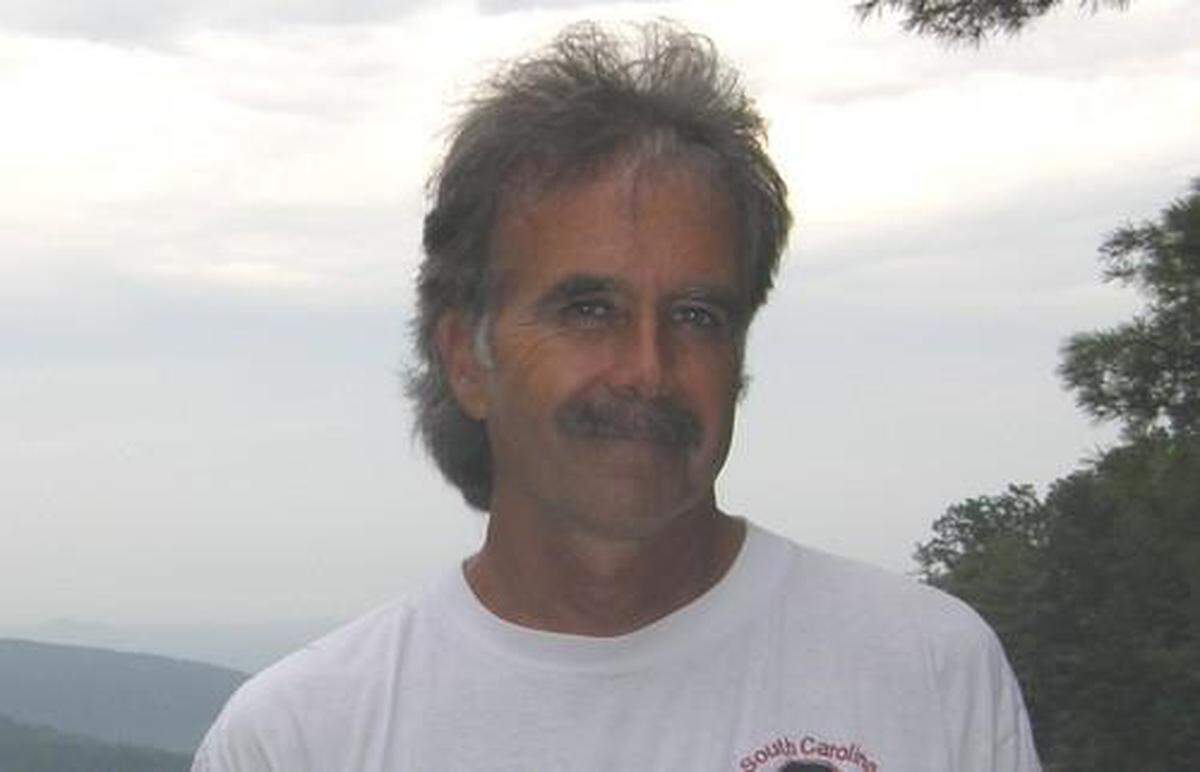
Senator’s rise in SC politics coincides with help for wealthy seaside property owners
About eight years ago, with then-state Rep. Stephen Goldfinch seeking election to the S.C. Senate, a wealthy property owner agreed to hold a fund-raising reception in a grand beach house along Georgetown County’s eroding seashore.
The handsome stucco home, a 6,000-square-foot structure with a tiled roof and sweeping views of the Atlantic Ocean, was being threatened by the rising sea. A wall built long ago on the beach shielded the house and about two dozen others from the relentless waves.
But the seawall had begun to crumble. And property owners in the exclusive Debordieu community worried that their homes would flood if the government did not let them rebuild the structure, even though a new seawall could worsen erosion of the public beach and send damaging ocean water perilously close to unprotected homes hundreds of yards away.
The property owners also knew that Goldfinch had visited the seawall in 2014 and spoken publicly about helping them in the Legislature. So a fundraiser showing their support couldn’t hurt.
In 2016, aided by more than $180,000 in campaign contributions from an array of boosters that included Debordieu property owners, Republican Goldfinch won the Senate seat after four years in the House of Representatives.
Since that time, no other South Carolina lawmaker has been more outspoken than Goldfinch about what he says are undue burdens on property owners and developers facing oceanfront building restrictions.
His stances have drawn criticism from people who say the senator’s views are limited mostly to the interests of those owning land on the oceanfront — instead of protecting the beach for the public at a time of rising sea levels. Even Gov. Henry McMaster has questioned Goldfinch’s efforts, vetoing two coastal measures the senator pushed that would have short-circuited part of a 1988 beach protection law.
Goldfinch, a lawyer who also represents oceanfront landowners in legal cases, generated harsh words from one state senator who clashed with him on the floor of the upper chamber earlier this year.
He “has a history of trying to undermine what would be good for the public in the beachfront management act,’’ outgoing Republican Sen. Sandy Senn, a sometimes critic of the Georgetown County lawmaker, said in an interview with The State.
Goldfinch, however, has shown little interest in backing down.
He is particularly critical of South Carolina’s coastal agency, which he contends has become overzealous in its regulation of beachfront land. He says the state is seeking to limit construction in areas of the beach it has never paid attention to before.
“I do start from the default position that most of the time, bureaucrats are wrong, and especially, when we’re talking about depriving someone of their property rights,’’ Goldfinch told the Senate this year. His comment came as he was pushing for changes that detractors said would make enforcing state coastal laws more difficult and expensive.
Goldfinch’s efforts are appreciated on the oceanfront. The landowner who agreed to hold the fundraiser for Goldfinch noted that without state help for those who owned beach houses, their homes at Debordieu could wash away over the next several decades.
A hard-driving conservative with deep roots in the development-friendly Myrtle Beach area, Goldfinch has sponsored or supported at least seven major legislative initiatives to help oceanfront landowners since his election in 2016, according to records reviewed by The State.
His efforts include:
- Sponsoring two state budget provisos this year that could have curtailed enforcement of certain coastal rules at taxpayer expense
- Seeking in 2017 to delay a ban on new beach development beyond a state building restriction line.
Leading the charge in 2018 to abandon the state’s decades-long policy of beach retreat, an effort to steer new development back from the seashore.
- Pushing in 2019 to allow certain types of oceanfront seawalls, known as wingwalls, that some scientists say can worsen beach erosion
- Chairing a Senate subcommittee in 2024 that agreed to ease some rules for oceanfront property owners.
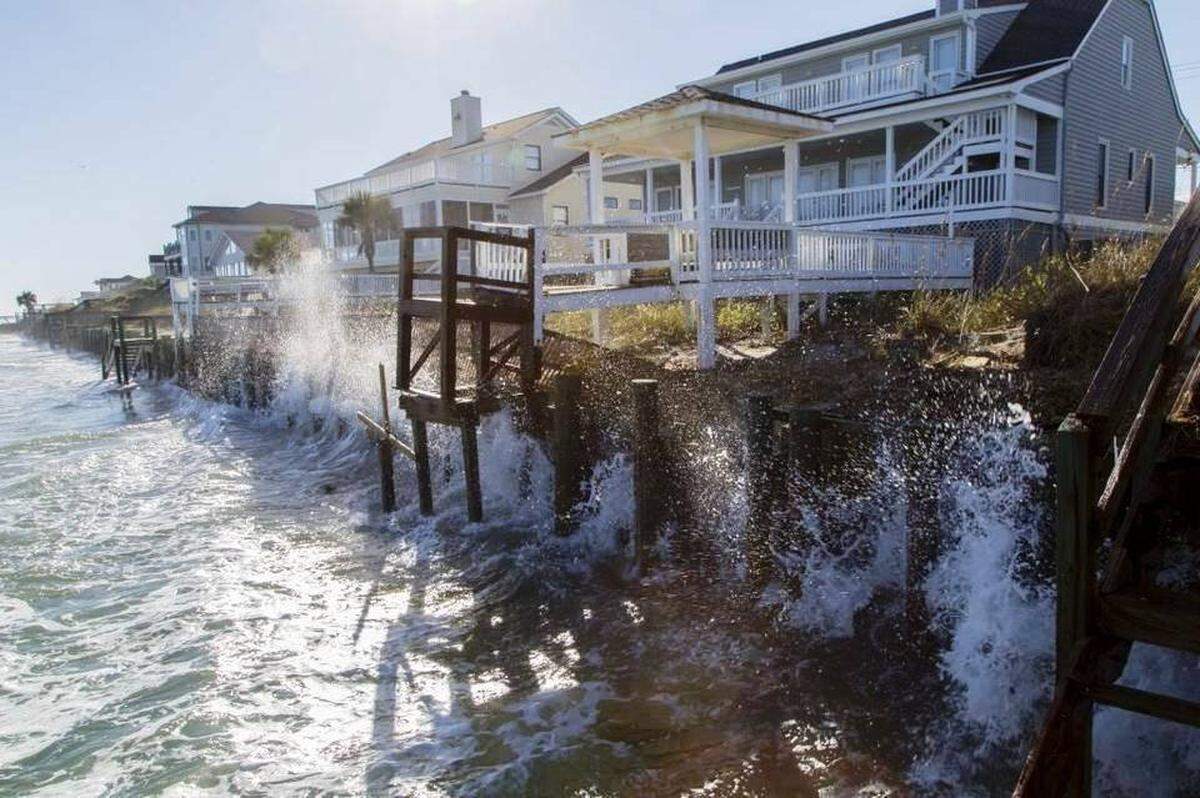
Although much of Goldfinch’s push in the Legislature has focused on helping landowners in his Senate district, the measures have broader implications. Changes in policies for one area could affect South Carolina’s entire 190-mile long coast, some lawyers and environmental advocates say.
Goldfinch’s efforts also extend beyond his duties as a legislator. As a lawyer, he has represented seaside landowners, including some who have given him campaign contributions, in at least two major legal cases involving the state’s coastal protection agency.
Generally, the state ethics law allows legislators to represent clients in contested cases before state boards. It also allows for lawmakers to benefit from their legislative efforts, as long as the legislation affects a broad class of people who do the same kind of work. Goldfinch operates within the law and is an ethical person, supporters say.
Nevertheless, Goldfinch’s efforts as both a lawyer and a legislator have raised a question of whether he should battle oceanfront restrictions in both the legal and political arenas. State legislative watchdog John Crangle said there is an appearance of a conflict of interest between Goldfinch’s duties as a public servant and his efforts as a private lawyer..
”It doesn’t look good,’’ Crangle said.
Goldfinch, a Republican whose relentless political style has made some people reluctant to openly criticize him, did not make himself available to answer questions about his efforts at the State House, his legal work for property owners and other issues, despite repeated attempts by The State.
The newspaper made six phone calls and sent four texts to Goldfinch from July 15 until this month seeking comment. The State also talked with a Goldfinch staff member, who said she had relayed a message for him to call. The newspaper separately sent Goldfinch an email with questions.
Goldfinch has often gotten his way on beachfront issues because the state’s beach law is complicated and many legislators either have other priorities or don’t understand the law. Some don’t want to get into public disputes with him. For the most part, lawmakers have heard Goldfinch explain how property owners are being treated unfairly and deferred to his wishes.
Sen. Greg Hembree, a North Myrtle Beach Republican whose district includes miles of developed oceanfront in Horry County, thanked Goldfinch during a legislative hearing this year for “making yourself the expert on this and helping us kind of wade through’’ the latest issue.
Sen. Wes Climer, a York County Republican whose district is more than 150 miles from the beach, said Goldfinch knows the rules. Climer said he also supports Goldfinch’s efforts to make changes on behalf of landowners. Climer chairs the Senate Agriculture and Natural Resources Committee, which handles many proposed changes to environmental laws.
“Stephen makes a good point that the government has essentially engaged in taking of property, and as a supporter of property rights, I believe in some measure of redress for those takings,’’ Climer said, noting that Goldfinch “works his tail off to take care of his constituents.’’
But coastal geologist Rob Young, who has served on several South Carolina beach policy advisory panels, said complaints about government regulators taking property are off-base. State officials are simply enforcing the 1988 beach management law, which was intended to protect the seashore for the public, he said.
“The rules have not changed, but the people in the Legislature have changed,’’ Young said.
Young and others expect more attempts to loosen beach development rules when the Legislature returns in January and as the state considers whether to tone down tougher jurisdictional lines that would limit building across the coast.
Goldfinch, who faces no Democratic opposition in this year’s general election, would be an influential force in future beach debates because he is a member of both the Senate agriculture and finance committees, the latter of which is one of the most powerful in the General Assembly.
“I absolutely think there’s going to be more of this next year,’’ said Young, one of the nation’s top coastal erosion experts, who heads the Program for the Study of Developed Shorelines at Western Carolina University.
Seawalls and beach erosion
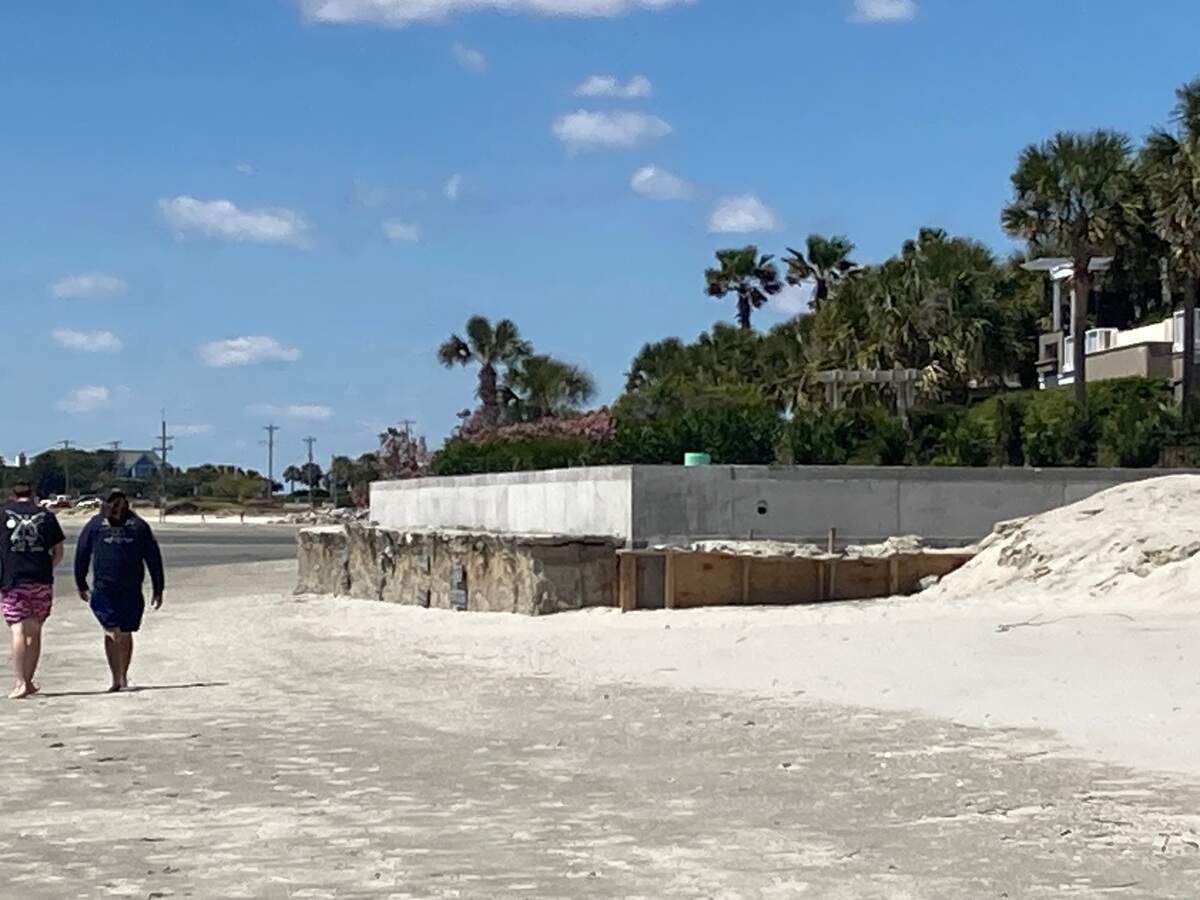
While the debate over loosening coastal regulations would affect construction of hotels or homes along the oceanfront, building seawalls is at the center of the issue. These hard walls are considered destructive forces on eroding beaches. They prevent the seashore from moving inland, as it would naturally as seas rise. And when the walls are hit by waves, the impact of the water speeds up erosion.
But seawalls also can provide a solid defense for property owners against the ocean, at least until sea level rise becomes too great.
Thousands of homes, condominium buildings and hotels line the oceanfront from North Myrtle Beach to Hilton Head Island, and more keep coming. Developers constructed more than 100, 000 individual housing units, which includes houses and condominiums, from 1990 to 2017 in census tracts touching the ocean, according to a 2019 analysis for The State by the National Historical GIS System.
A key issue to be resolved in the Legislature centers on how far state jurisdiction goes and whether the state will continue to prohibit seawalls on beaches. The Legislature outlawed new seawalls on the beach more than 30 years ago. One property owner at the Isle of Palms is in a legal dispute with the state over a seawall regulators say he built illegally. The property owner has said he has the right to protect his home.
In the Debordieu case that involves more than two dozen property owners, they never rebuilt the seawall after environmentalists sued them.
But with Goldfinch’s help, the property owners received special permission from the state coastal agency to bolster the existing seawall with huge sandbags, which critics said could erode the beach the same way seawalls do. The wall also was covered with sand during a beach widening project.
Some of the homes that were behind the most vulnerable parts of the old seawall were purchased after 2013, long after it was known that sea level was rising, the wall was deteriorating and erosion was getting worse.
Senn, the Charleston County lawmaker, said it’s wrong to set policy based on the wishes of a limited number of oceanfront property owners. Millions of tourists who visit South Carolina come here for wide, unobstructed beaches, she said.
She and Goldfinch clashed on the Senate floor this past spring over his efforts to insert the two amendments in the budget that could have chilled enforcement of beachfront management rules and potentially sparked more lawsuits. Budget amendments, known as provisos, are effective for one year and are sometimes controversial because they create policy outside the normal legislative process, which requires more public scrutiny.
Young, the Western Carolina geologist, said Goldfinch needs to understand that the beach law is supposed to protect beaches, not the private property rights of oceanfront homeowners.
“I would hope he would really think about the larger implications of some of the changes he wants to institute,’’ Young said. ”In the Legislature in general, some folks are viewing things through a very narrow lens, that of individual oceanfront property owners who are struggling with coastal erosion.’’
Beach erosion has been a concern in South Carolina for more than three decades, but it is becoming a greater issue as seas swell due to the changing climate.
Overall, since 1970, the sea level along parts of the South Atlantic coast has increased eight inches, federal scientists in Charleston say. But six inches of that rise occurred after 1990, according to the National Climate Assessment.
Another 10 to 11 inches of sea level rise is forecast by 2050, based on the most likely rise scenario. Coastal flooding is expected to occur up to 10 times more frequently in 2050 than in 2020 in many locations, if action is not taken to address the changing climate, the assessment says.
Who is Stephen Goldfinch?
Goldfinch, 41, is a Conway native who lives in Murrells Inlet, a community south of Myrtle Beach that is known for its panoramic salt marsh and extensive row of seafood restaurants.
His family is among the most respected members of the Myrtle Beach community. His relatives have run a successful funeral business for decades in the Myrtle Beach and Conway areas, and like them, Goldfinch is active in the community.
A burly outdoorsman and Second Amendment advocate, Goldfinch attended Conway High School and has both undergraduate and graduate degrees from The Citadel. In 2010, he received a law degree from the Charleston School of Law.
He has served in the Army National Guard as a legal officer and a search and rescue diver. In 2023, he was injured while on duty in Africa, although circumstances of the injury are unclear.
He and his wife, former College of Charleston board member Renee Goldfinch, like to travel to southern Africa, where he hunts big game. Pictures of his hunting exploits in Africa are posted on a wildlife group’s Facebook page. Several photographs show Goldfinch kneeling next to dead animals.
Goldfinch also co-hosts a podcast that focuses on hunting, fishing and wildlife issues, as well as some statewide political matters. His guests have included arch-conservative rock star and hunting advocate Ted Nugent and moderate state Sen. Thomas McElveen, D-Sumter.
In Columbia, he serves on a Senate fish and game committee that examines issues ranging from setting the wild turkey hunting season to improving the countryside for game animals.

Sometimes, Goldfinch is at odds with state natural resources officials over his advocacy for sportsmen.
In 2019, he offered a Senate budget amendment that would have kept the state Department of Natural Resources from preventing hunting on parts of the Tom Yawkey wildlife preserve, a vast coastal area where hunting has long been prohibited. Goldfinch, whose father had been ticketed after a hunting party killed an alligator on the preserve in 2013, said after The State reported on the proviso that he was not trying to open the preserve for hunting, only to maintain public access to certain areas.
Goldfinch also caused a stir several years ago when he proposed a so-called “Yankee tax,’’ a plan to add extra fees for people who move to South Carolina.
His fights as a lawyer for clients and as a legislator for voters follow some of his own personal legal troubles.
Goldfinch, who formerly ran a biotechnology business in Mt. Pleasant, was charged by the federal government in 2013 with misbranding drugs in connection with the distribution and sale of stem cells by his company, according to a criminal information document. Stem cells derived from umbilical cord blood are used to treat multiple diseases.
The distribution and sale had not been approved by the U.S. Food and Drug Administration, according to the criminal information document, which was filed Nov. 26, 2013 by federal prosecutors in Texas.
But the matter was never presented to a grand jury and federal prosecutors, in 2017, dropped the charge of misbranding drugs, according to a motion to dismiss. Goldfinch reportedly made $5 million off the business, court documents show.
Goldfinch also had trouble with a business partner that resulted in a lawsuit 11 years ago.
Texas marine salvage operator William “Billy” Kenon said Goldfinch approached him about working together in a business to recover sunken boats. A lawsuit the Texas man filed said Goldfinch told Kenon he was an “influential state legislator’’ whose connections could make a difference in gaining approvals for some salvage operations.
The deal turned sour after Kenon questioned an incorporation agreement Goldfinch had structured for the partners. An email included in the federal court file reflects the frustration between the two men.
“You’re a liar and a cheat and I have very little use for you after today,’’ the email from Goldfinch to Kenon said, noting that if things didn’t work out to the lawyer’s advantage, “I’ll make sure everyone in this industry knows the truth about you.’’
The case was ultimately settled for an undisclosed sum.
Threatened seashore
Goldfinch’s involvement in limiting coastal development rules is the latest chapter in South Carolina’s decades-long debate over how tightly beach property should be regulated.
While many say the state needs to move new development away from the beach as sea level rises and flooding increases, those who live or own coastal property say homes, hotels and condominium buildings collectively contribute millions of dollars in tax revenue that pumps up the state and local economies.
It’s unrealistic to leave the structures vulnerable when seawalls and other measures allow people to maintain the property, they say.
“I don’t think there is anybody here that wants to do or see anything done on any kind of large scale that is going to be harmful to other people,’’ said Goldfinch supporter Dick Rose, a former homeowners’ association president at Debordieu. But Rose said people who worked hard enough to afford beach houses want to protect them. “They’ve been able to fulfill a dream of having a place at the beach.’’
Beach communities Goldfinch represents are mostly south of Myrtle Beach, including Garden City, Pawleys Island, Litchfield Beach and Debordieu, all of which were packed this past summer.
The effects of erosion were obvious on some of the beaches, weeks before Tropical Storm Debby rolled into South Carolina in early August.
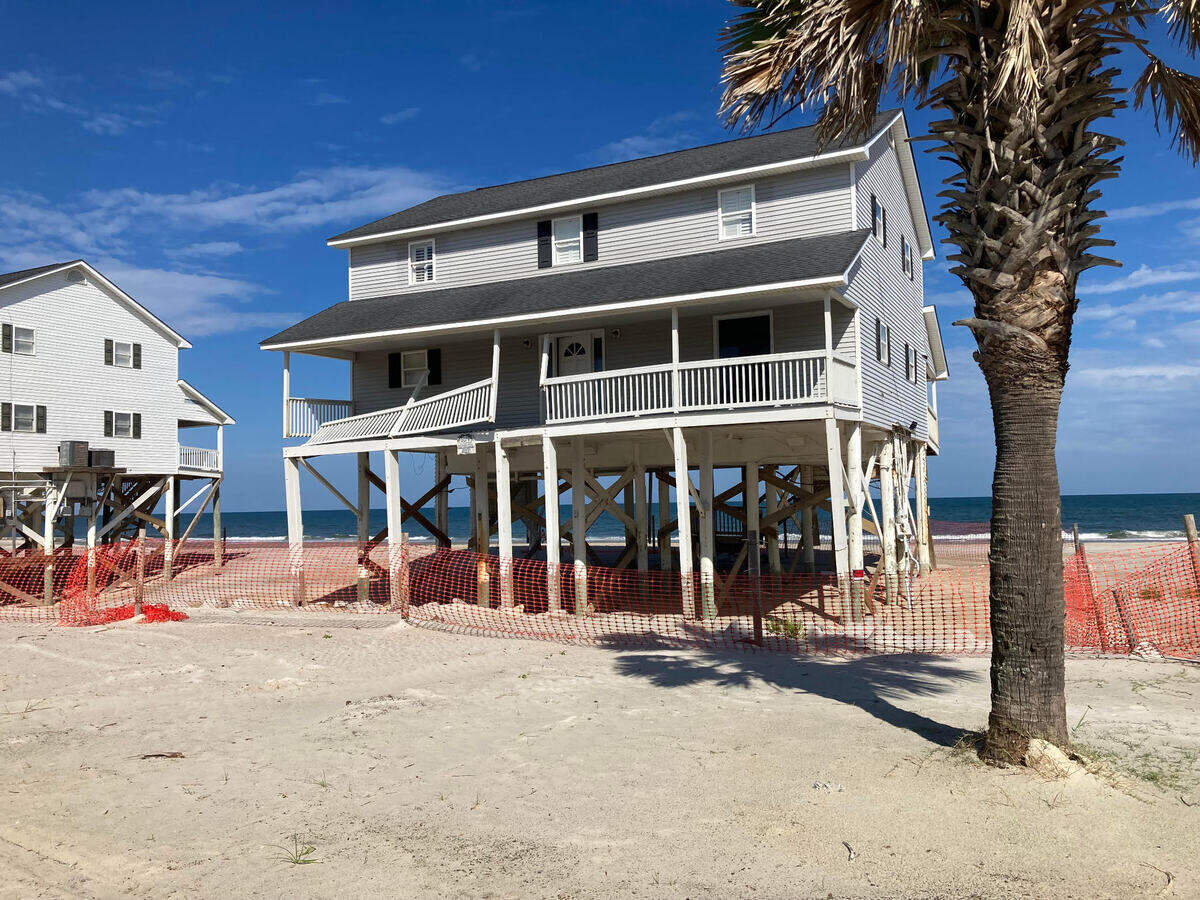
At Garden City, two oceanfront houses on the southern end of the beach had been undermined by the sea and were uninhabited. Other property owners in the area depended on seawalls to hold the ocean back. Some nearby lots had houses under construction.
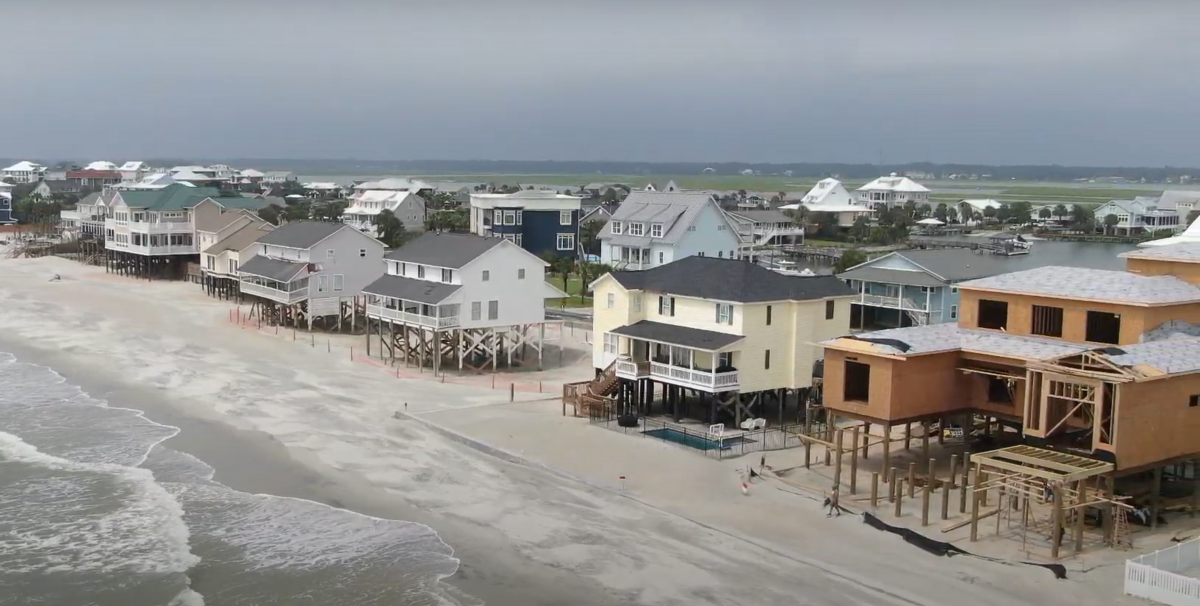
The S.C. Department of Environmental Services told The State earlier this year that five oceanfront properties in that area of Garden City were under investigation for construction of protective seawalls, a violation of state law.
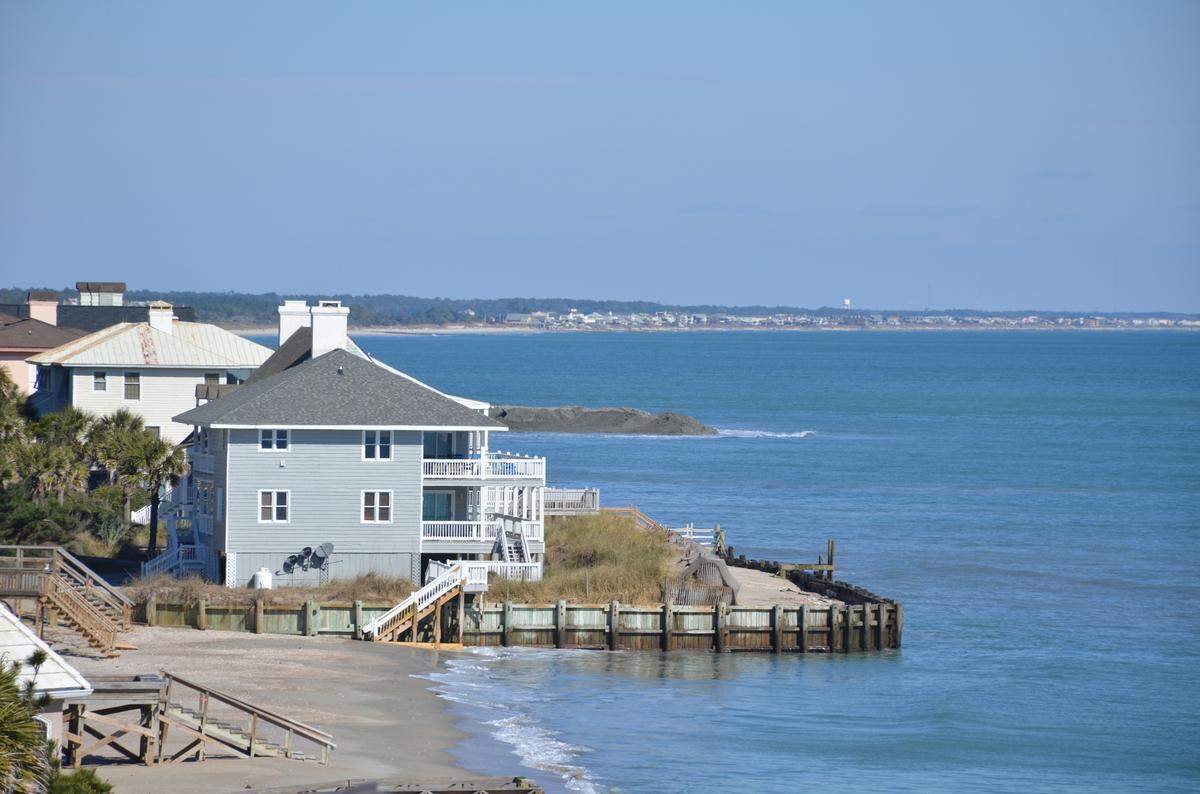
At Debordieu, the seashore is wider than it was several years ago because it has been renourished privately with extra sand, which today covers the aging seawall that property owners were worried about when Goldfinch was elected in 2016.
Even so, erosion is still occurring and the gated community’ is projected to eventually lose much of the sand protecting houses in the area — potentially exposing the seawall.
“I do think it will wash away,’’ geologist Young said.
Relentless
Goldfinch’s efforts in favor of beachfront landowners haven’t always been successful, but he keeps trying.
This past spring, Goldfinch persuaded the Senate to approve the two budget provisos he had introduced, despite Senn’s objections.
The provisos would have for the next year allowed some people to keep or build seawalls in areas where the structures have been banned, and also would have required the state to pay property owners who successfully challenged enforcement cases against them.
That could have cost state taxpayers up to $2 million to pay about 100 coastal owners who stood to benefit from the plan.
Only a veto by Gov. McMaster prevented the provisos from taking effect. Republican McMaster criticized the provisos as an ill-considered way to manage beaches.
At about the same time Goldfinch was working on the budget provisos, he also was chairing a Senate subcommittee that planned to recast state beach management regulations. The subcommittee met about a half dozen times between December and June, said Climer, who chairs the full Senate committee.
During discussions, Goldfinch said he had “red-lined,’’ or marked up, copies of proposed changes to the regulations for coastal officials to consider. A marked-up copy, obtained by The State, shows multiple proposals that could ease restrictions on beachfront landowners.
Those included allowing oceanfront property owners to more freely use sandbags when erosion threatens their homes, an effort that ultimately was approved in the final regulations.
Goldfinch said the state coastal agency actions to enforce the law on what it considers sandy, tidally washed beaches have been too harsh. He argued that the Bureau of Coastal Management has begun limiting development on sections of the beach that had never been regulated before. The bureau was formerly called the Office of Ocean and Coastal Resource Management.
“You begin construction of a home, spend a half million dollars getting the foundation up, and the pilings and invest a lot of money in it, and OCRM comes in and says ‘Wait, stop work, that’s active beach,’ ‘’ Goldfinch said in arguing for the budget provisos during a Senate finance committee meeting.
Coastal agency officials and environmentalists say the state’s efforts are legal — and necessary.
The area Goldfinch referred to is eroding and has become sandy beach, making it subject to state regulation. State law allows South Carolina’s environmental agency to limit development on the seashore because seawalls and buildings make erosion worse.
Two years after he was elected to the Senate, Goldfinch was involved in the biggest overhaul of South Carolina’s beach management law since it was established in 1988. The law had been adopted to gradually move new development back from the ocean over 40 years, a policy known as “retreat.’’
In 2018, the Legislature voted to abandon the retreat policy, instead opting for a policy of beach preservation, a term touted as a way to keep everything in place, rather than move development back over time.
Sen. Chip Campsen, a leader in the fight over the bill, said Goldfinch was a major supporter of changing the retreat policy.
“Sen. Goldfinch is the one who proposed the amendment from retreat, the language from retreat to preservation,’’ Campsen, R-Charleston, said.
Walking the ethics line
Since his election in 2016, Goldfinch has walked the line between his part-time job as an elected state official and his full-time job as a private attorney.
In the past five years, he’s represented coastal property owners before South Carolina’s environmental protection agency, a department whose budget the Legislature approves.
Those clients included landowners accused by regulators of building illegal seawalls at the southern tip of Litchfield Beach, as well as those accused of installing sandbags illegally at the southern end of Debordieu. Sandbags, like seawalls, can worsen beach erosion. The concern is whether the Debordieu bags, which were stacked up in rows, would act like a hard seawall when hit by waves.
Among Goldfinch’s clients at Debordieu were Price Sloan, a lawyer and nationally prominent banker, who agreed to hold the political fundraiser for Goldfinch and now state Rep. Lee Hewitt, in the beach house at 1425 Debordieu Blvd.
Hewitt, who posted notice of the fundraiser on his website, said he couldn’t remember details of how the event came about but said “I got asked to join the joint fundraiser with Stephen. I’m like ‘OK. Sure. ‘ ‘’
Debordieu property owner James Christian, who does not live on the oceanfront, said he remembers a “good crowd’’ at the fundraiser he attended.
Sloan, who has served as an executive vice president of TD Bank, was not available for comment. Efforts to reach Sloan in recent years have been unsuccessful. A woman who answered the door at his Debordieu beach house in July said he was out-of-town and she would give him a message. A later effort to reach him also was unsuccessful.
In a 2017 court transcript Sloan said he was one of three people heading efforts to rebuild the seawall.
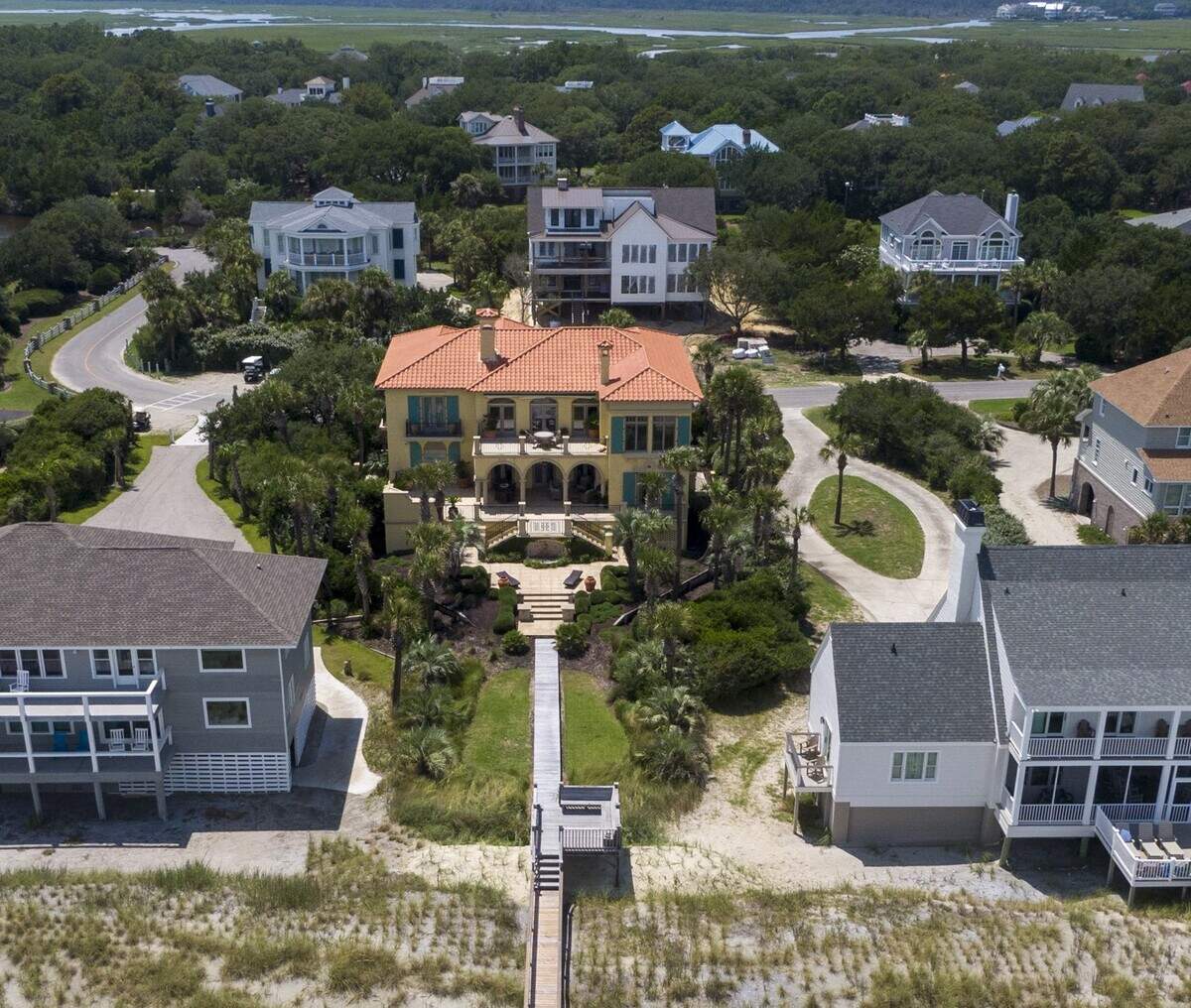
Sloan, who previously lived in Pennsylvania and lists a home address in Charlotte, bought the seaside house for $2 million in the fall of 2014, years after the public learned about high erosion in the area — and just months after Goldfinch visited in the spring of that year.
The transcript of Sloan’s court testimony did not mention Goldfinch, but Sloan said in the transcript that he and others had paid another person, a lobbyist, $7,000 to help the property owners get approval from the Legislature to fix the seawall. Lawmakers approved budget provisos in 2014 and 2015 that would have allowed reconstruction of the wall.
“I don’t need to be a scientist to know when water, ocean water goes crashing into a house, it’s not a good thing,’’ Sloan said in the transcript. He noted that he had read studies that Debordieu consultants had provided. “They predicted, in, I think 20 years, that all the houses in the erosion zone … would be gone absent those protections.’’
Environmentalists sued to stop reconstruction of the wall, and property owners eventually abandoned the effort, in favor of renourishing the beach, adding sand trapping groins in the surf, and bolstering their homes with giant sandbags.
But the sandbags also generated trouble — and Goldfinch was there to help Sloan and the other Debordieu landowners.
Staff at South Carolina’s coastal agency said the sandbags had been installed illegally and ordered them removed. Sandbags are supposed to be temporary protection from high seas during a storm and are not to be left buried on the beach, state officials said.
After Sloan and other Debordieu property owners hired Goldfinch, he and co-counsel Randy Lowell pleaded with the then-S.C. Department of Health and Environmental Control to let property owners keep the row of huge sandbags.
In a 2022 hearing before the DHEC board, Goldfinch said he wasn’t particularly interested in what the agency’s staff had to say. The senator said he knew the law well.
“I do not appreciate a staff member telling me what the legislative intent of the act was,’’ Goldfinch told the DHEC board at its January 2022 meeting. “I just don’t. And I don’t think you should either. It’s just not right.’’
Board members, whose appointments by the governor had to be approved by the state Senate, voted to overturn the staff’s decision that would have forced the Debordieu property owners to remove the sandbags.
Today, the board’s action has allowed the sandbags to remain in place and sand to cover the seawall in an attempt to shield houses from the ocean. DHEC’s board has been abolished since the 2022 decision and a new agency, the Department of Environmental Services, was created.
It isn’t known how much Goldfinch was paid for representing the property owners, but overall, he had a substantial income at about the same time he was working for them. Goldfinch collectively earned hundreds of thousands of dollars for legal work in 2021, according to an Ethics Commission economic interest statement.
Campaign support
Four Debordieu property owners Goldfinch represented before the DHEC board have contributed at least $4,575 to his election campaigns since 2016, according to public campaign disclosure reports. Sloan and his wife contributed about half of the money, records show.
Goldfinch also has received contributions from others at Debordieu, including the community association’s general manager, Blanche Brown, who has supported efforts to protect and bolster the seawall. Brown has contributed at least six different times since 2016 with small amounts – $50 to $100 – to his campaign, records show.
Overall, supporters contributed more than $187,000 in 2016 to Goldfinch’s initial bid for a Senate seat, according to a campaign disclosure database from the S.C. Ethics Commission.
Many contributions were from corporations. But at least $21,000 in donations came from people and businesses with addresses in the Georgetown-Pawleys Island area, which includes Debordieu, according to campaign records analyzed by The State. From 2016 to 2024, Georgetown and Pawleys Island boosters have contributed nearly $60,000 to Goldfinch’s campaigns.
Leslie Lenhardt, an attorney who opposed Goldfinch in the Debordieu property owners case, said she hasn’t forgotten the senator’s efforts as a private lawyer.
“He sat at the counsel table at that board meeting as a senator and the lawyer, and very clearly explained that nobody needs to explain the beachfront management act to him, because he’s been involved in making changes to it,’’ Lenhardt said. “And he’s sitting there representing a property owner who is trying to take advantage of the loopholes in the state statute.’’
At nearby south Litchfield Beach, Goldfinch also has sought help from the state’s coastal agency for private clients. His clients have included homeowners’ group leaders and stock car driver Cale Yarborough, a three-time NASCAR Cup series champion who died on Dec. 31, 2023.
This past year’s efforts to pass budget provisos that could have chilled enforcement of coastal laws also have produced questions.
Had McMaster not vetoed the provisos, it could have encouraged more property owners to hire Goldfinch and other lawyers for cases against the state, critics said.
Despite those concerns, Goldfinch’s supporters say he’s an upright and ethical leader who brings a practical, every person’s view of state government. His efforts to help oceanfront property owners merely reflect that, they say.
“He shows up prepared; he’s a studious and effective senator,’’ Climer said. “He does an excellent job of translating the perspective of regulators and the perspective of property owners for senators who want to hear a fair accounting of each perspective.’’
This story was originally published October 16, 2024 at 6:00 AM.