Despite warnings, Scout Motors project repeatedly polluted creeks with mud, records show
Not long after workers began clearing land for a massive electric vehicle plant in South Carolina two years ago, project officials ran into trouble with state and federal agencies over damage being done to the environment in northern Richland County.
Wetlands had been disturbed without federal permission and land was being cleared too rapidly at the Scout Motors site, the U.S. Environmental Protection Agency and the S.C. Department of Natural Resources said in the summer of 2023.
But the problems didn’t end there.
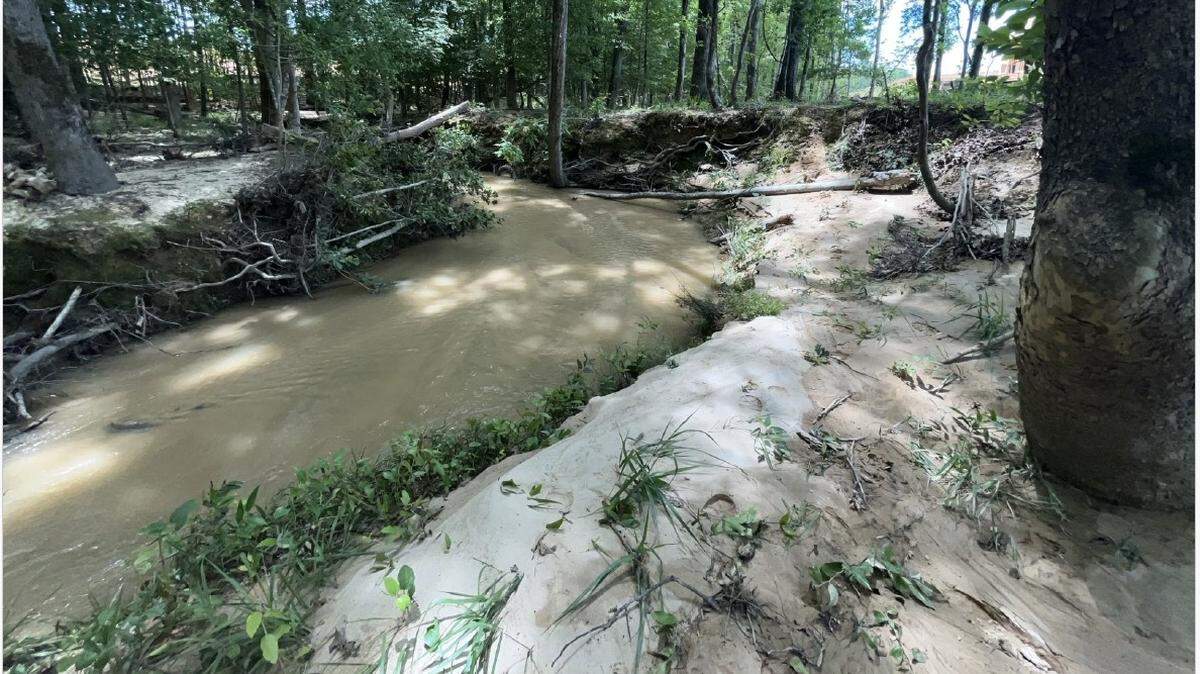
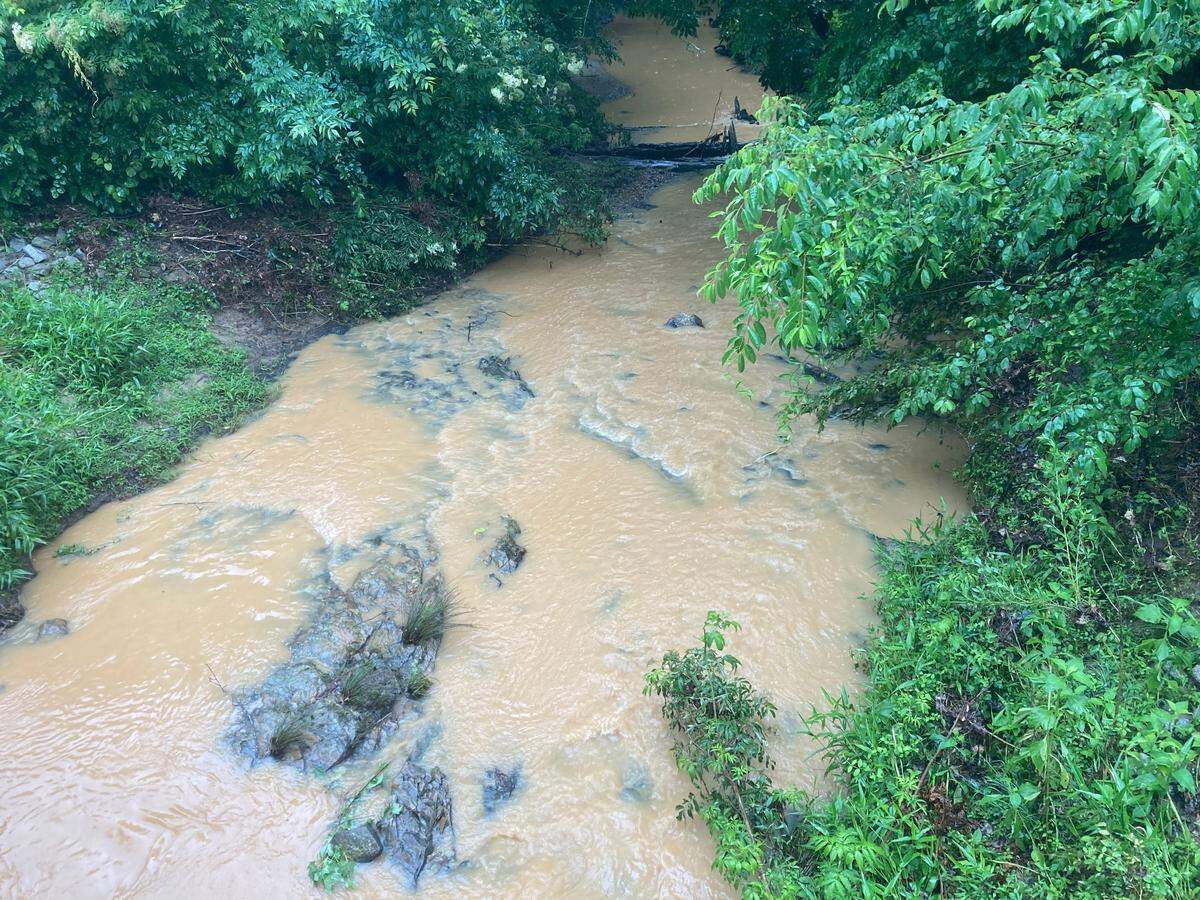
By March 2024, Richland County — in charge of clearing the site for Scout — again found itself in trouble, this time with South Carolina’s environmental protection department over silt that was turning once-clear running creeks into muddy streams, according to public records reviewed by The State.
Now, following months of violations that included troubles since March 2024, the county is facing possible fines and other sanctions over the sediment that poured from the site near Blythewood.
The S.C. Department of Environmental Services hit the county and Scout with a notice of alleged violation last July and has since been working on a formal enforcement order. An enforcement order that could carry penalties is expected to be announced soon, said three sources familiar with the Scout issues.
Last summer’s violation notice, a precursor to formal enforcement action, said both the county and Scout had broken the state’s Pollution Control Act, as well as violated permits issued for the work. The notice cited the failure to install and operate controls to keep sediment from draining off the property.
Inspection records identified an array of uncorrected problems that extended as late as July, months or weeks after they were previously found.
DES spokeswoman Laura Renwick said findings in the July 24 violation notice are subject to change before any final decision is made on formal enforcement action.
For river protection advocates and neighbors of the Scout project, something needs to be done to stop the onslaught of mud that has poured from the property.
Roger Hovis, who lives in the first phase of the Ashley Oaks neighborhood near the Scout property, said creeks turn brown after heavy rains. He said he has seen few signs that the problem has slowed down.
“What it tells me is they don’t care,’’ Hovis, a former state environmental agency employee, said of those involved in clearing the property.
Excessive sediment pollution can choke creeks, making it harder for fish to breathe and smothering the tiny organisms they feed on. It also can spread contaminants that may have been in the soil that runs off the property, Congaree Riverkeeper Bill Stangler said.
As much as anything, the continued problems controlling sediment speak poorly for a major corporation like Scout, as well as Richland County, the state Department of Commerce and site contractors, Hovis and Stangler said. Scout is owned by international auto manufacturer Volkswagen’s European arm.
Even though Scout has pledged its commitment to the environment and will be producing non-polluting electric vehicles, Stangler said that isn’t good enough.
“We are very concerned about the numerous and ongoing permit violations at the Scout Motors site and the impacts to local waterways,’’ Stangler said in an email. “The Scout project team, which includes Richland County, the S.C. Department of Commerce, and their contractors, promised to be good neighbors. But so far that hasn’t been the case. ‘’
With handsome incentives given by the state to land the Scout project, “the very least we can expect is that you’ll comply with state and federal laws,’’ Stangler’s email said.
It was unclear if only Richland County would be sanctioned or if contractors, Scout or the state Department of Commerce would also be included.
The county owned the property when it joined with the Department of Commerce to persuade Scout to build an electric vehicle plant off Interstate 77 in Blythewood.
Contractors hired through the county began clearing trees and vegetation from the site in the spring of 2023 to prepare the land for building the manufacturing plant.
Scout takes over property as portions are ready for construction of buildings, a spokesman said Monday. The company did not violate any sediment rules, he said.
“Every single deficiency involves’’ Richland County, Scout spokesman Jamie Lovegrove said.
The company said in a Feb. 25 news release that it was committed to preserving the environment. The company has said it supports efforts to preserve land as compensation for work at the Blythewood project site. The state Department of Commerce has engineered protection of 5,000 acres in Richland County to offset the project’s impact on the landscape.
In a statement Tuesday, Richland County’s economic development office said it remains “fully committed to the highest environmental standards.’’ After the county became aware last summer about continuing sediment problems at the site, county officials worked with the state Department of Commerce, hiring a third party engineering firm to help ensure laws were being followed, the news release said.
Richland County has worked for about a year developing a plan to address concerns and resolve any problems, the news release said.
“The responsible development of the Scout site remains a top priority for Richland County, and we are dedicated to supporting its continued progress in alignment with environmental standards,’’ the release said.
An official with Landmark Construction, which has handled clearing work, was not available for comment.
Kelly Coakley, a spokeswoman for the Commerce Department, said the scope and complexity of the site work “warranted adjustments.’’
Once the department learned about problems DES officials found in June of last year, “We immediately addressed those issues which could be remedied quickly,’’ according to an email from Coakley. The department has worked to address other issues since then, Coakley said.
The decision by Scout Motors to build an electric vehicle manufacturing plant in a Richland County industrial park was a major economic development win for the county and Gov. Henry McMaster’s administration.
Lured by more than $1 billion in incentives, Scout announced it had chosen South Carolina in March 2023. According to plans, the company will employ as many as 4,000 people and manufacture 200,000 vehicles annually, beginning as early as 2026. The plant will occupy about 1,100 acres of the total 1,600-acre site, according to McMaster’s office.
While there has been plenty of support for a project that some say could be economically transformative for South Carolina and Richland County, neighbors have raised concerns about how the Scout project is changing what used to be a quiet bedroom community for Columbia.
Drone footage of the site shows a substantial change to the landscape. Aerial images show almost no forest cover as a result of clearing that occurred.
A video on Landmark’s website says the earth work makes up one of the biggest projects of its kind in the southeast, if not the country. From the ground, barren land extends to the horizon.
The extensive clearing was expected, but Stangler said it’s hard to ignore the problems cited by the EPA and South Carolina environmental agencies.
The EPA’s concerns in 2023 included potential violations of federal law after the agency noted that work was being done in a creek before a federal wetlands filling permit was issued.
Work was temporarily stopped at the site in September 2023 as project officials worked to obtain a federal wetlands permit. The federal government issued the wetlands permit in January 2024 and work has been underway since.
According to public records obtained by The State, DES has issued three separate deficiency notices since the spring of 2024.
These notices provide details about the problems in controlling erosion from the site.
Among the shortcomings cited in the past year:
- Several construction entrances to the site were not paved. A lack of pavement in such spots can cause soil to erode.
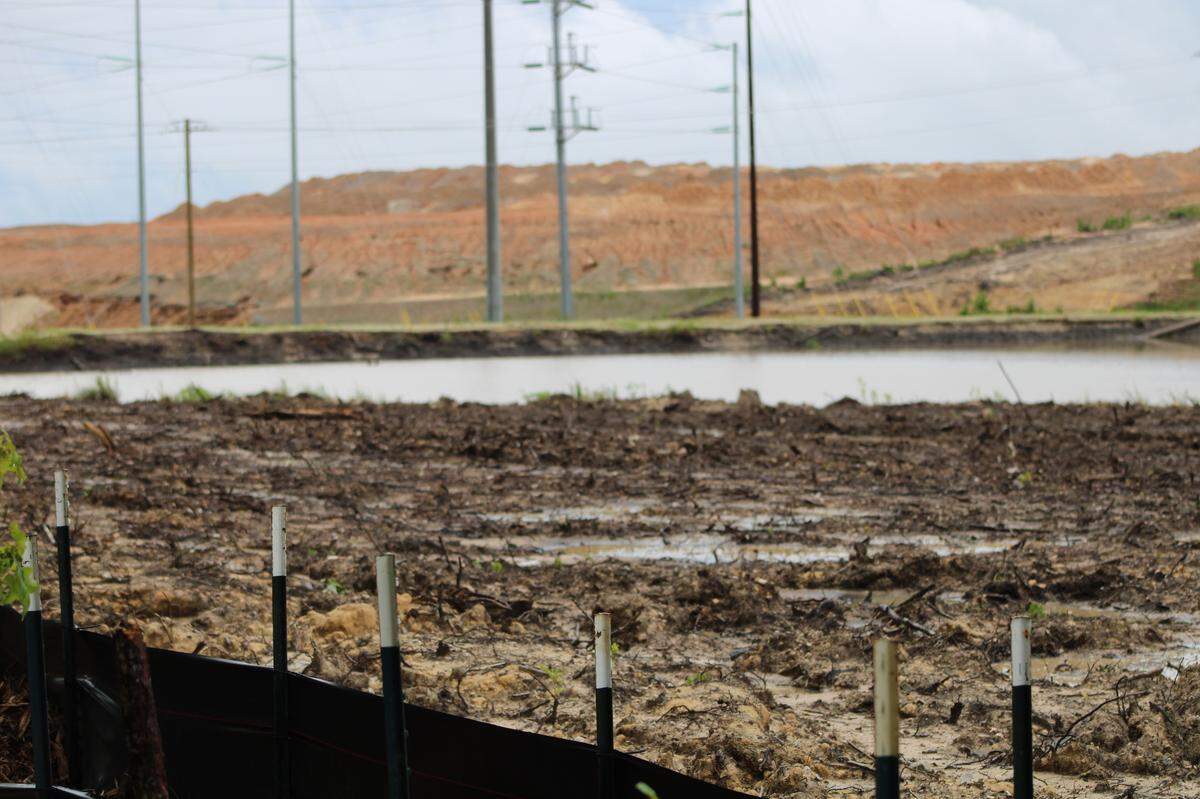
- Sediment basins, which are supposed to trap mud from leaving the property, had either not been built or not maintained, as required. In June 2024, state officials said it was “obvious’’ that many of the basins that were supposed to be constructed in the first phase of the project had not been developed, a response letter from Richland County said.
- Dams that were supposed to keep sediment in check did not do the job. In one case, “excess silt and sediment had built up below the property line’’ from a dam and sediment was “actively leaving the site,’’ a response letter from Richland County to DES said.
- Fences installed to stop dirt from escaping the site were not working, allowing “excess silt and sediment’’ to escape.
- An emergency spillway, instead of doing its job to manage stormwater, was being used as an access road by construction vehicles.
- Two sediment basins were clogged and filled to capacity, and slopes along the basins’ sides “exhibited significant erosion.’’
Many of those problems were cited from March to June 2024, but in July of last year, state officials again found violations.
They said sediment was not being controlled from running off the property. This followed assurances by a consultant that the problems were being addressed, records show. Hovis said runoff from the site hasn’t stopped.
“To me, nothing has changed,’’ he said..
“It seems to me that they just rushed the job a little bit,’’ Hovis added, noting that if everyone involved in the Scout project had moved more carefully, “they probably wouldn’t have had these problems.’’
This story was originally published March 4, 2025 at 1:59 PM.