Once rare woodpecker spotted west of Columbia, decades after species disappeared
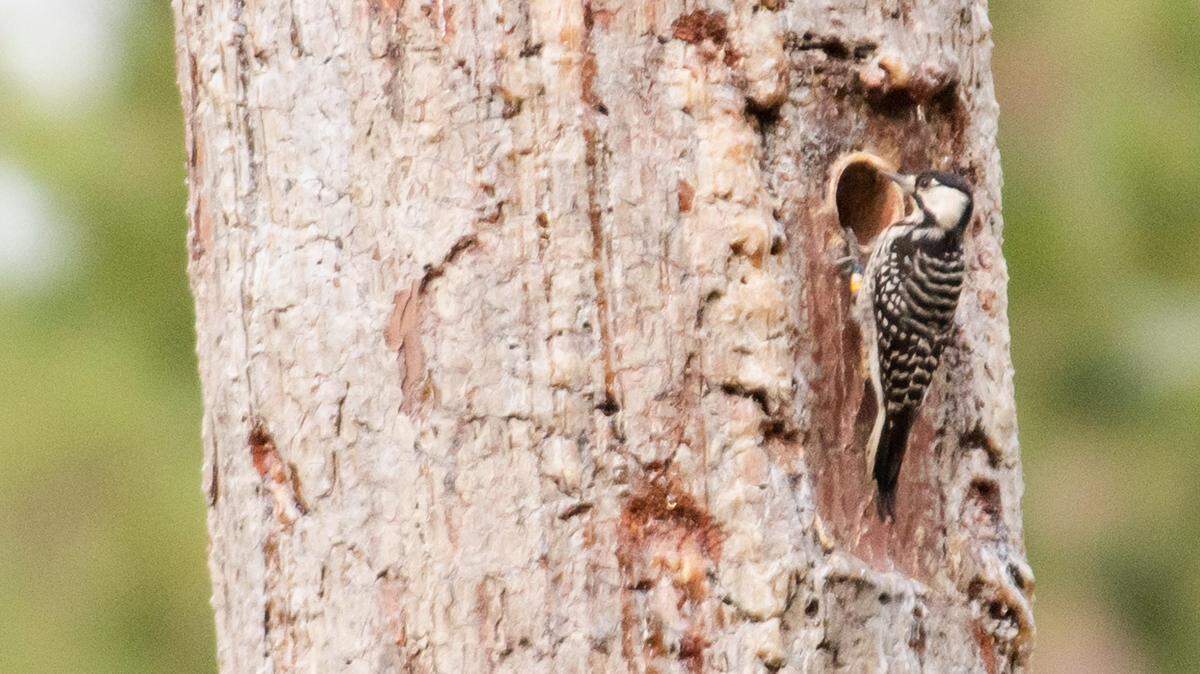
Biologists were surprised to hear recently that a once-rare woodpecker had been spotted in a forest west of Columbia for the first time in 50 years.
But in checking things out, they verified that a single red-cockaded woodpecker had settled at the Peachtree Rock Heritage Preserve, where the bird was digging a hole in a pine tree for a nest.
The bird had apparently traveled at least 20 miles, an unusual feat for red-cockaded woodpeckers, according to the S.C. Department of Natural Resources. These small woodpeckers typically stay within five miles of where they were born, biologists say.
“I think it’s awesome,’’ said Matt Lerow, a red-cockaded woodpecker expert with the S.C. Department of Natural Resources. “Most only disperse over a short distance.’’
The closest known area where red-cockaded woodpeckers live is a heavily wooded section of Fort Jackson in Columbia. The Peachtree Rock preserve is off S.C. 6 near the Edmund community in Lexington County west of Columbia.
State officials and their counterparts with The Nature Conservancy said they have been working to improve the native forest habitat at Peachtree Rock— and that may have attracted the bird. The preserve has periodically conducted controlled burns on a long-leaf pine forest to maintain the woodland’s open, parklike quality that woodpeckers thrive in. Peachtree Rock is managed jointly by the conservancy and the DNR.
“Having a threatened species move back into an area for the first time in nearly 50 years is about the best grade you can get on your conservation report card,’’ according to a recent statement from Dale Threatt-Taylor, the Nature Conservancy’s director in South Carolina.
Her statement said “nature can do amazing things when we give her the right tools.’’
Longleafs are the favored type of pine trees for red-cockaded woodpeckers. The bird populations dwindled after longleaf pine forests were chopped down, beginning in Colonial times, to make boards or to clear paths for farms and development.
Red-cockaded woodpeckers, which are about seven inches long, feed on bugs, such as roaches, spiders and ants. They are mostly black and white. The males have streaks of red on the sides of their heads, thus the bird’s name. These birds once were abundant throughout the South.
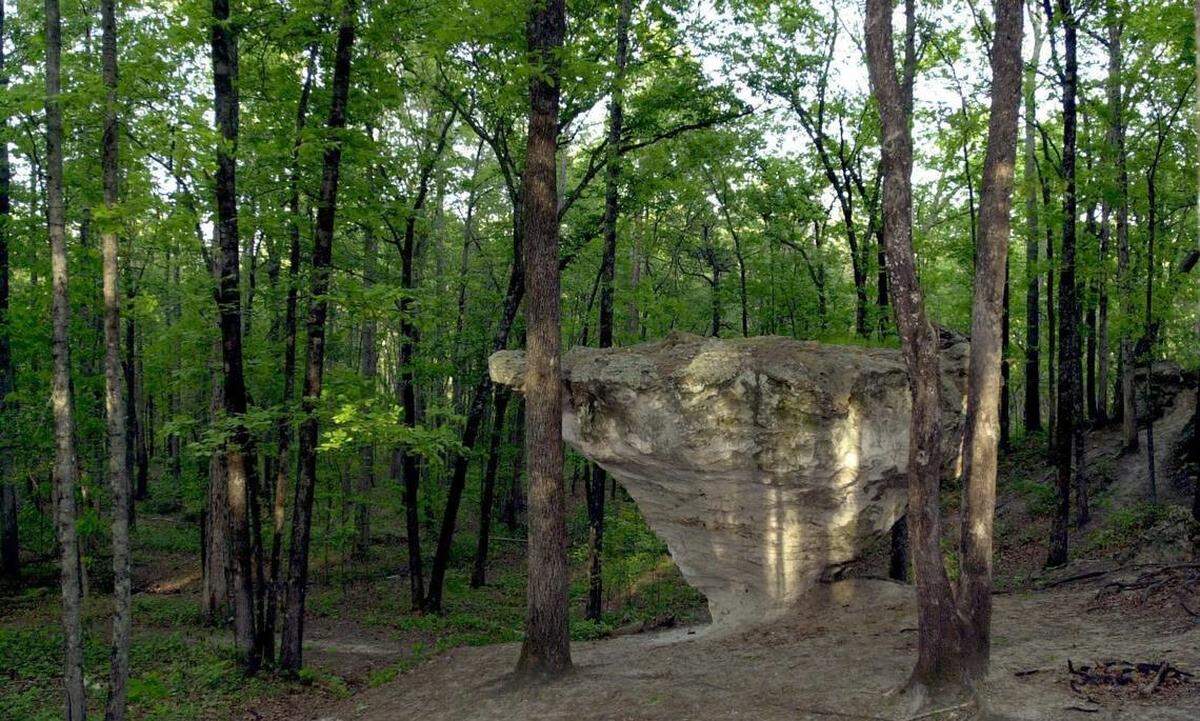
Lerow said the bird’s re-emergence at Peachtree Rock — a preserve known for a triangular shaped boulder that once balanced on its tip — might also be partially tied to the growing population of red-cockaded woodpeckers. Intensive efforts to save the birds, which included relocating imperiled populations to safer forested areas, are credited with helping to improve populations overall.
Under President Joe Biden’s administration, the U.S. Fish and Wildlife Service said the species had made such a comeback that the government was changing the animal’s listing from endangered to threatened. A threatened status still provides some protections, but they are not as strict as those for endangered species, which are considered the most critically in danger of being wiped out.
After Hurricane Hugo devastated state forests in 1989, bird populations were further set back. At the time, the state had about 650 family groups. That number has risen to nearly 2,000 groups in South Carolina, Lerow said.
That reflects a statewide trend. Red-cockaded woodpeckers have in recent years been documented breeding in places for the first time in decades, including the Sumter National Forest in Edgefield County.
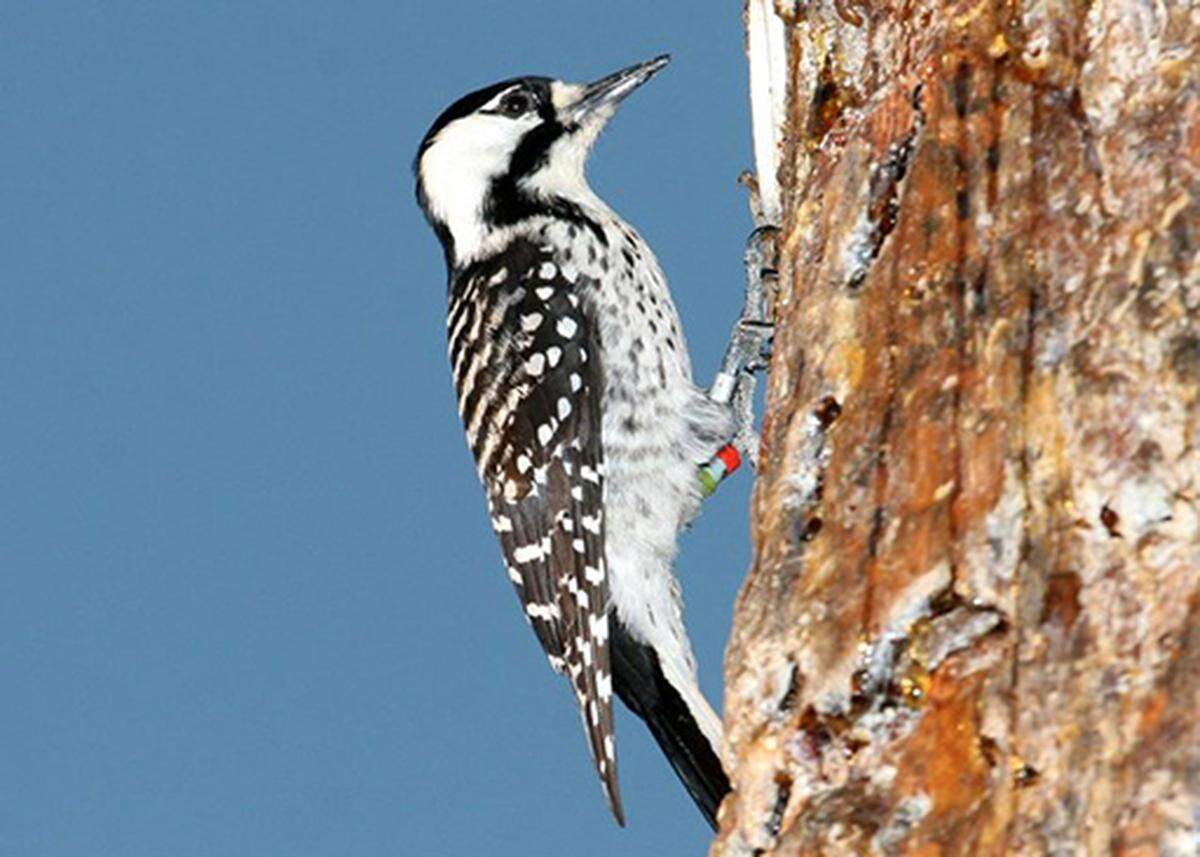
Nationally, red-cockaded woodpecker populations have risen from about 1,470 clusters in the late 1970s to about 7,800 clusters across 11 southern states from Virginia to Texas, the US. Fish and Wildlife Service reported last year.
Although the discovery at Peachtree Rock excited bird watchers and biologists, Lerow said a second woodpecker has not been found.
The DNR is considering relocating a woodpecker from a known area to Peachtree Rock so the lone bird will have a mate. The agency has installed four artificial cavities in trees in hopes of helping a pair survive.
But biologists must first check to see whether the resident bird is a male or a female, he said. Lerow said he expects to make the check this summer.
Once that is determined, “it will be able to fulfill its biological duties,’’ Lerow said. “It would be more resilient, more likely to stay if it were mated.’’
A mate could be brought in as early as this fall, he said. The birds mate in the spring and early summer.
This story was originally published June 19, 2025 at 1:58 PM.