Trees fall, taxpayer costs rise under plan to offset Scout project’s damage
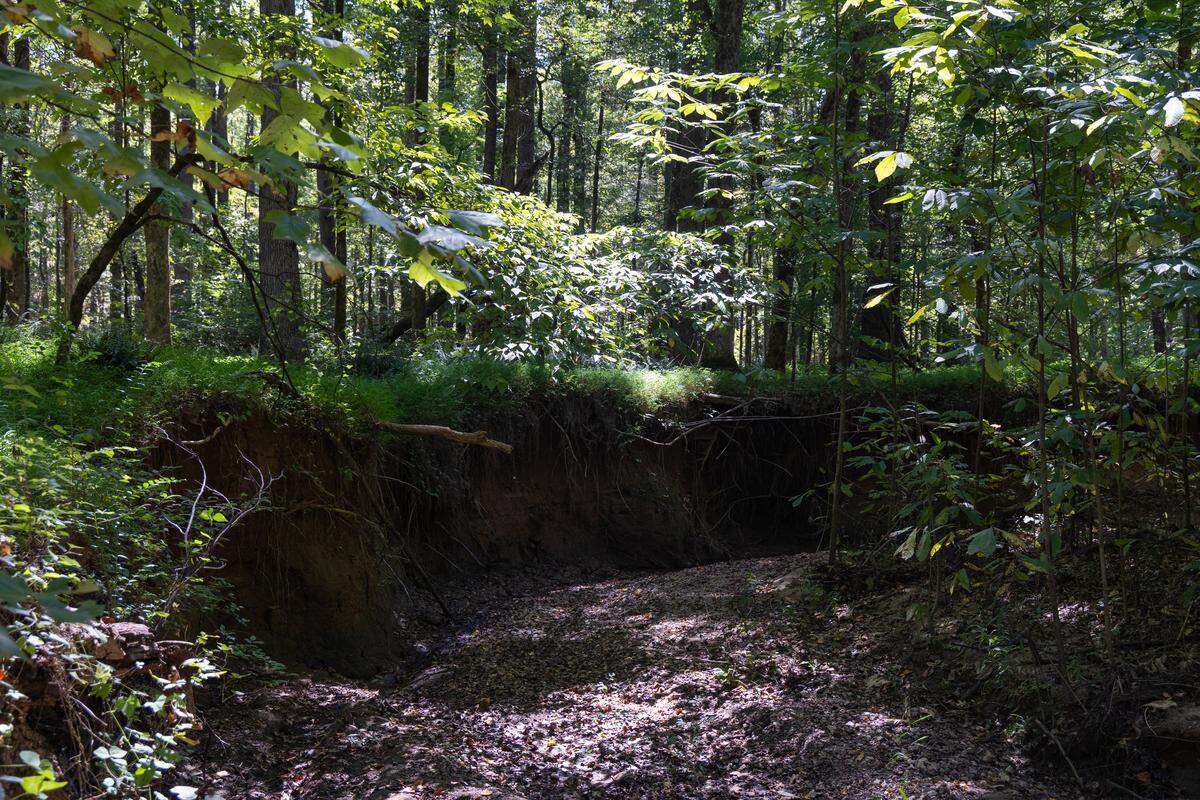
The brilliant sunlight of a late summer afternoon barely made it through the forest of hardwoods, the thick canopy of trees causing deep shade on a landscape that farmers once stripped bare to grow cotton.
Since cotton farming fizzled a century ago, trees and vegetation have sprouted from the former agricultural fields of Chester County. Many old farms are covered with a dark woodland that is part of the Sumter National Forest, a federally protected preserve.
But in recent months, heavy machinery has rumbled into the national forest as part of a project to fix stream beds damaged by erosion from farming long ago. The plan includes clearing trees and excavating land along more than 18 miles of creeks – an unusually large project that’s drawing its share of criticism.
The stream work, which began earlier this year, is expected to cost South Carolina taxpayers a minimum of $18 million, but likely more, and it will affect a forested landscape that has largely healed from the region’s history of agriculture.
Launched to compensate for environmental damage at the Scout motor vehicle construction site near Columbia, the Chester County work has raised questions about whether the state should have pursued other ways to offset Scout’s impacts on streams and wetlands, instead of the Sumter National Forest work.
“The last place I would tell you to do this would be on the national forest,’’ said Bob Perry, an environmental consultant and former Department of Natural Resources biologist.
Perry and some others involved in natural resource protection say the forest has risen impressively from the old cotton fields, and while eroded stream beds from the past aren’t hard to find, they say it isn’t worth the disruption and cost that will occur to correct past mistakes.
“It’s 88 to 89 years naturalized’’ land, Perry said. “There is a landscape of availability of streams (elsewhere) that could be restored at much cheaper costs.’’
A rival company to Perry’s consulting firm got the contract for the national forest stream work, and it says creek improvements will help the environment over the long term. The DNR, where Perry formerly worked, also supports the stream project as a way to compensate for the environmental damage at the Scout site.
Construction at the Scout plant is destroying more than 70 acres of wetlands, seven miles of streams and 38 acres of ponds for an electric vehicle manufacturing campus that will employ some 4,000 people. Much of the site has been stripped bare of vegetation. The federal government approved filling wetlands and waterways at Scout in exchange for the national forest stream work, as well as protecting land in Richland and Fairfield counties.
Like Perry, others question whether the Chester national forest plan is worthwhile, even as South Carolina benefits economically from the Scout project.
A particular concern is old growth trees that may lie in the path of the work, said Buzz Williams, who founded the Chattooga Conservancy, an environmental advocacy group. Old growth trees are larger, older species that are found in mature or maturing forests.
“The recovering old growth forest probably needs to be left alone,’’ said Williams, who has had extensive dealings with the U.S. Forest Service on federal land issues in the Sumter National Forest branch of Oconee County. “Those streams will actually heal themselves over time.’’
Even if old growth trees are not being cut, Williams said the project will affect the forest and seems unnecessary.
“This sounds like make work to me, if you want to know the truth.’’
A contractor with offices in Texas and North Carolina, Ecosystem Planning and Restoration, has been hired by the state Department of Commerce to manage the stream project. The company has, in turn, brought in a construction contractor, whose crews were hard at work recently on a small piece of the national forest creek system. Ecosystem Planning and Restoration, formed more than a decade ago, says it has extensive experience in stream restoration projects.
Both Ecosystem Planning and the U.S. Forest Service say the project is worthwhile.
The stream work is expected to reinvigorate flood plains that naturally existed before the land began to erode more than a century ago. Restoring flood plains will cut down on the mud that is clogging creek beds and washing downstream toward the Broad River, one of the state’s major inland waterways, project supporters say.
The Broad River winds from North Carolina above Gaffney to Columbia, which gets drinking water from the Broad. The area of national forest where creeks are being restored is a remote, sparsely populated region of the state near the small Lockhart community, between Columbia and the Charlotte-Gaffney area.
“This is a great project for all parties involved and we are very excited to be a part of it, and make it a successful project,’’ Ecosystem Planning executive Sonny Kaiser said in a Sept. 1, 2023, email to a lawyer for the state and Richland County. Kaiser noted that “we believe our expertise and relationships with agencies will help facilitate’’ the effort.
Three species of crayfish, five species of mussels and as many as 60 species of fish will benefit from the creek project, Forest Service spokesman Greg Cunningham said in an email. The restoration of eroded creek systems will also improve habitat for wood ducks and leopard frogs, he said.
Cunningham said fixing streams in the Sumter National Forest has been a goal of his agency for 20 years, but funding was needed. Getting money through the Scout Motors project “was critical for the Forest to plan and attempt a project of this scale,’’ Cunningham’s Aug. 11 email said.
The U.S. Forest Service, Ecosystem Planning and Restoration and the state Department of Commerce declined to say how much the stream work will ultimately cost.
The State newspaper has found expenses of about $18 million associated with the project, but one report reviewed by the paper says it could be closer to $24 million.
South Carolina’s government already has committed $11.6 million for the initial work, including paying a construction contractor $2.2 million for the first phase of the stream project. If three other sections of creek cost the same, that would bring the cost to about $18 million, records show.
Downed trees and dusty work
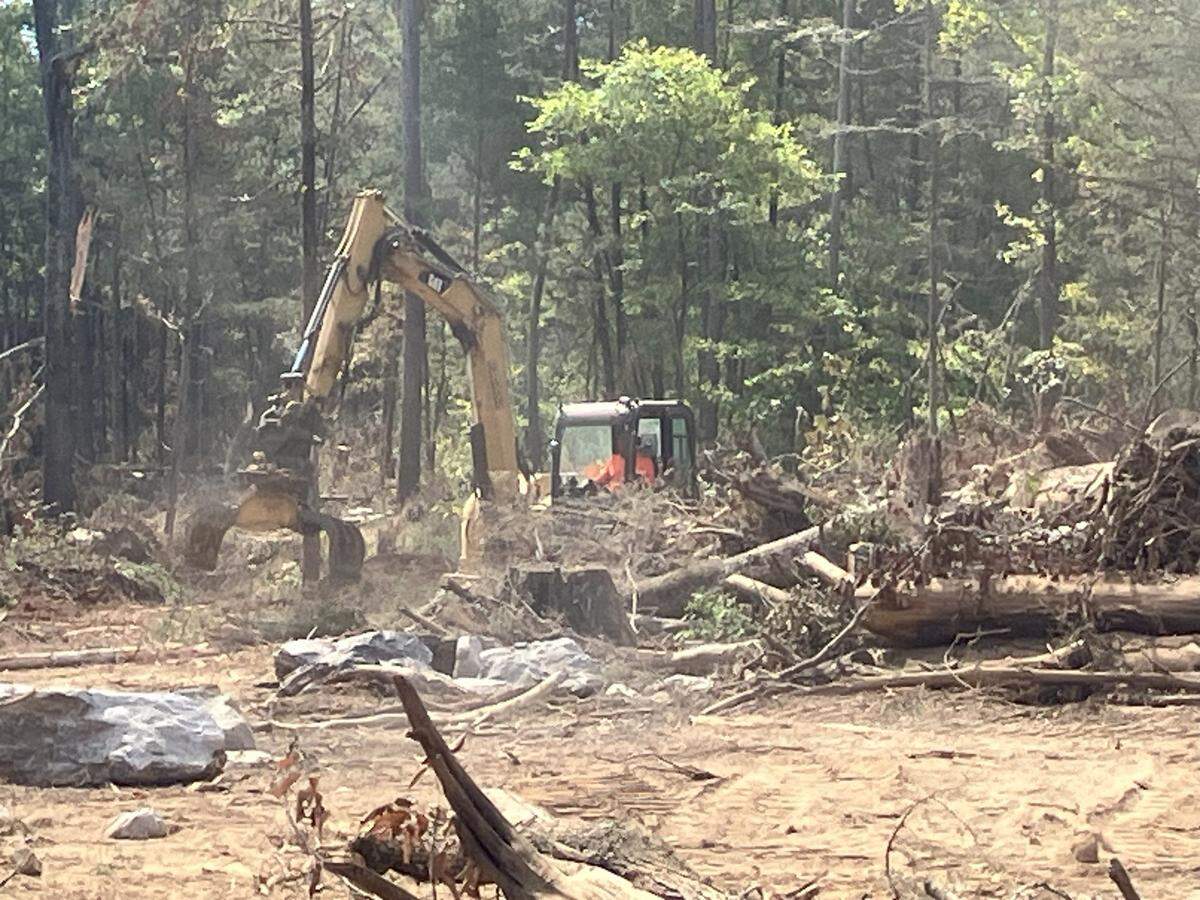
On a recent day with temperatures approaching 90 degrees, a small crew of workers toiled on the dusty land around upper McCluney Branch.
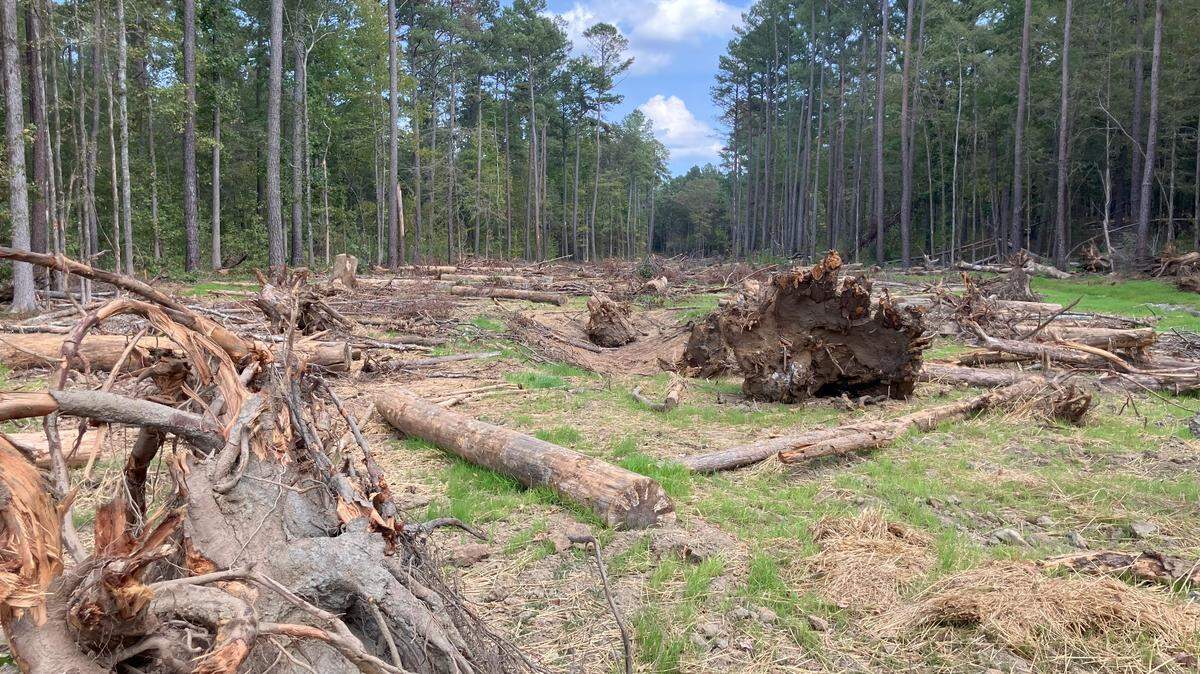
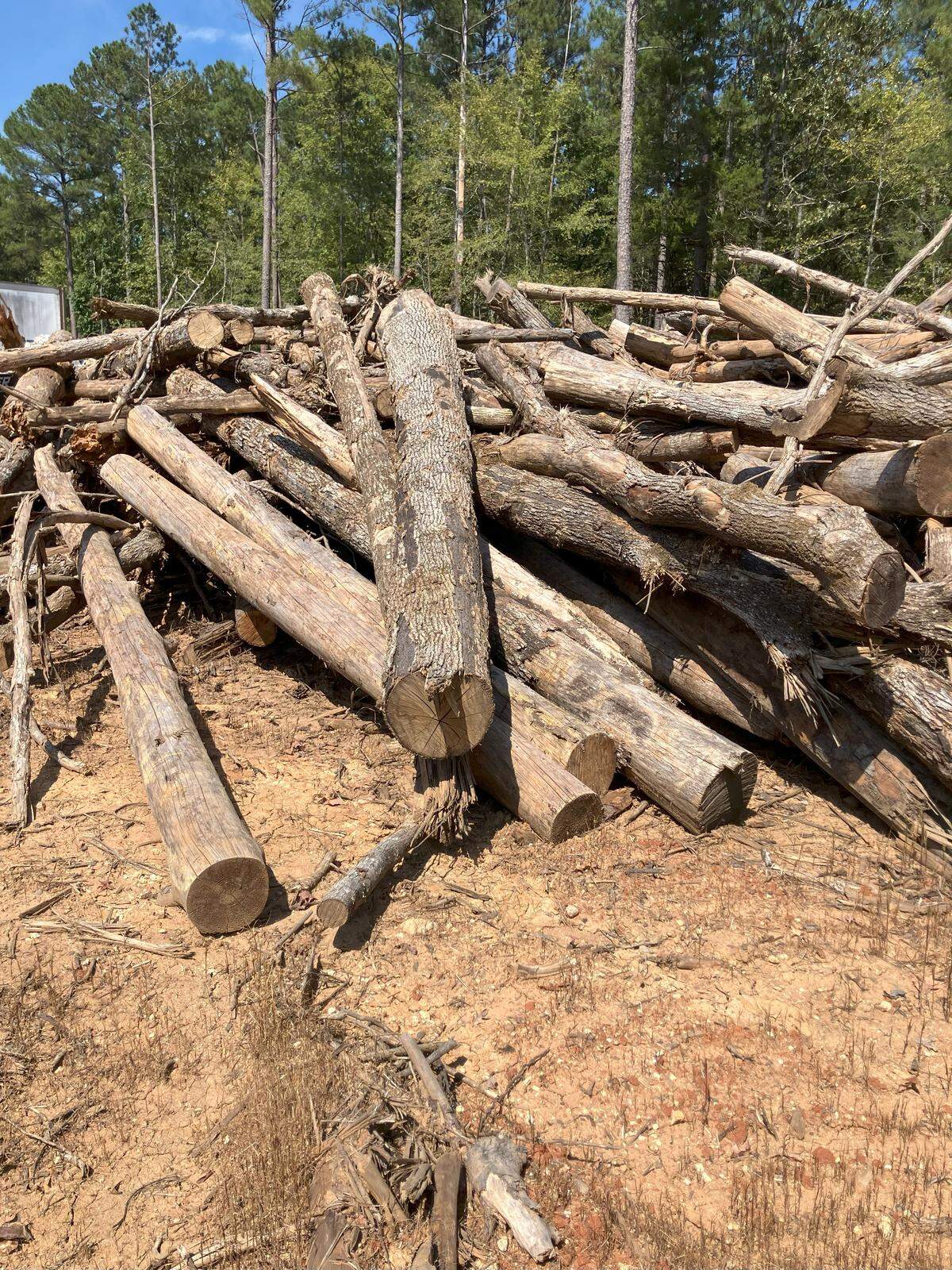
Piles of cut trees, many of them hardwoods, rose above the denuded land, in some spots 10 to 15 feet high. In other places, the ground was littered with large tree stumps and huge roots.
The Forest Service would not say how many trees were being cut, but it appeared from a visit by The State that several football fields of woodlands had been cleared.
A dirt road had been established near McCluney Branch to give workers access to the site where stream work is being done.
One worker, who declined to give his full name, told The State that crews cleared trees through the area as the project got underway.
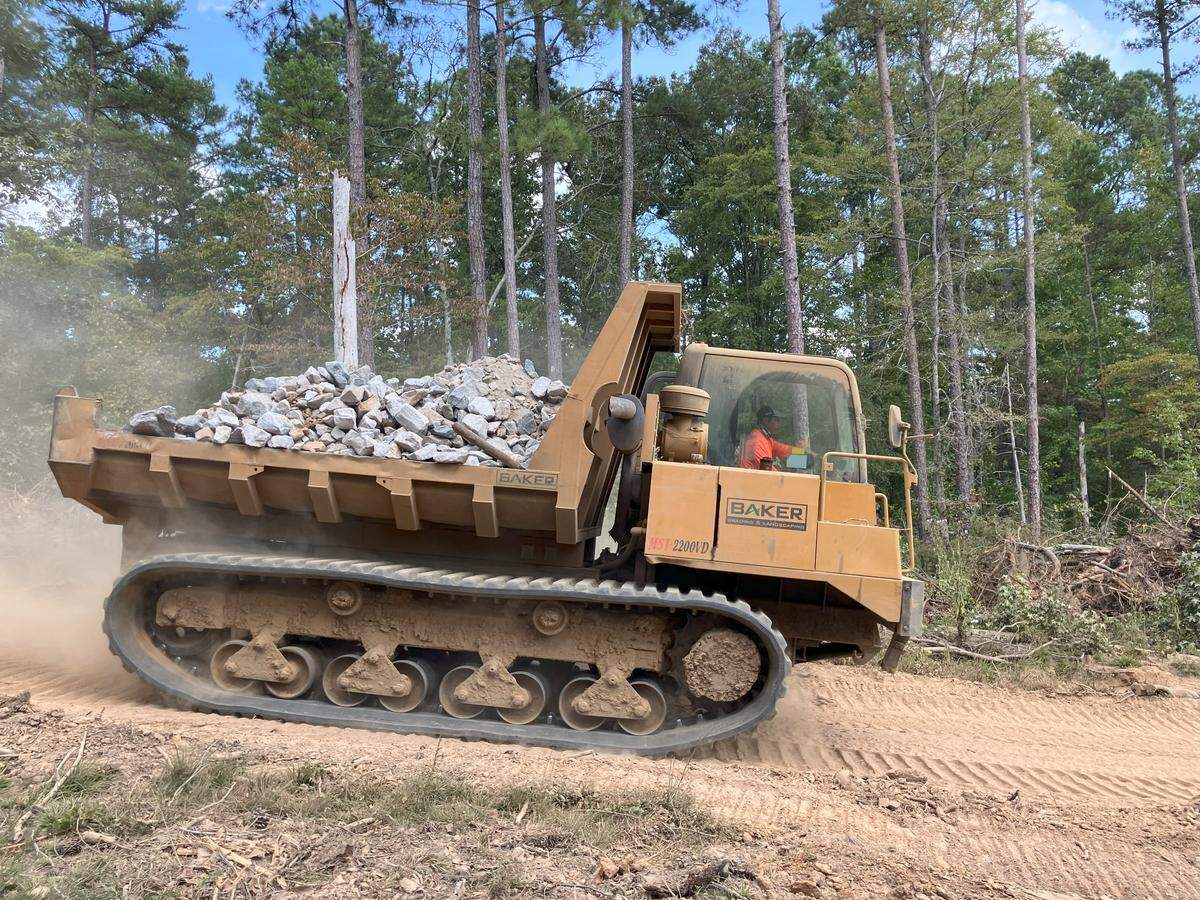
Workers, who began the construction effort in early 2025, could be seen using mechanized equipment to dig along stream beds, where they would smooth out the sides and place small boulders along the banks of creeks. A mesh material ran along the creek beds, in an apparent effort to keep the banks from eroding.
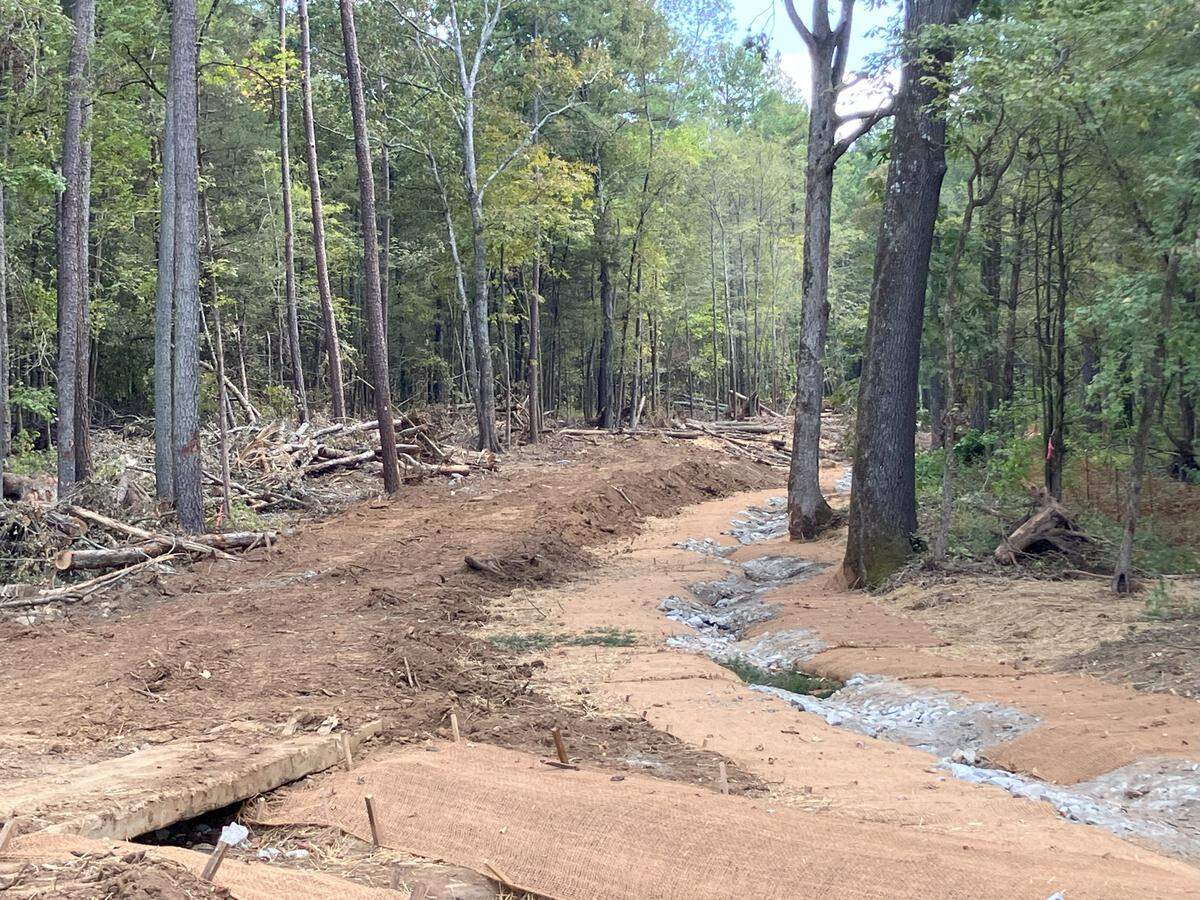
The restoration area, off Feltman Road, involves streams that come together at a larger creek.
Work was further along on one stream bed, with grass planted along the sides in an area with a field of downed trees. A wide corridor of trees had been cleared around the creek, resembling open areas like those below major power lines.
So far, other parts of McCluney Branch below where the construction crews were working remain heavily forested and untouched. All of McCluney, which ends about four miles away, is slated for stream restoration work, according to the U.S. Forest Service.
Three other streams in the national forest are also to be worked on: Little Turkey Creek, Clark’s Creek and an unnamed tributary of Clark’s Creek.
According to EcoSystem Planning and Restoration, the company is taking extra care to minimize the loss of trees. It says hardwood trees will be planted to replace those sections of forest that are cleared, with the expectation that the tree canopy will recover within three decades.
“The work will require significant earthwork and some timber clearing to repair the erosion that has occurred over the past 100 years,’’ Ecosystem Planning’s Kevin Tweedy said in a written response to questions from The State. “Timber clearing is being minimized to the extent practical to perform the necessary restoration work. Hardwood species that are being replanted can take 20 to 30 years to mature, but we have found that tree canopy is often restored in the first 10 to 15 years.’’
A statement from the S.C. Department of Natural Resources said the project’s ability to slow the flow of silt into the Broad River is an important reason the agency likes the stream restoration effort.
The Broad River has been clogged with enough silt that the DNR says some species of fish have been hurt. The agency listed nine kinds that could particularly benefit from the work by contractors, including three types of darters and two types of chubs.
The DNR said that, by one measure, the Broad has been more impacted by silt than the Mississippi River, the massive waterway in the central United States.
“Much of the sediment in the Broad is a result of poor land use practices in the early 19th century that caused degradation in many Piedmont streams,’’ the agency’s statement said. “The restoration and stabilization of the 18 miles of stream on the Sumter National Forest will help prevent future bank erosion and excessive sediment contributions to the Broad River.’’
The federal government established the Sumter National Forest in 1936 and began planting trees, leading to the rise of the forests that are there today.
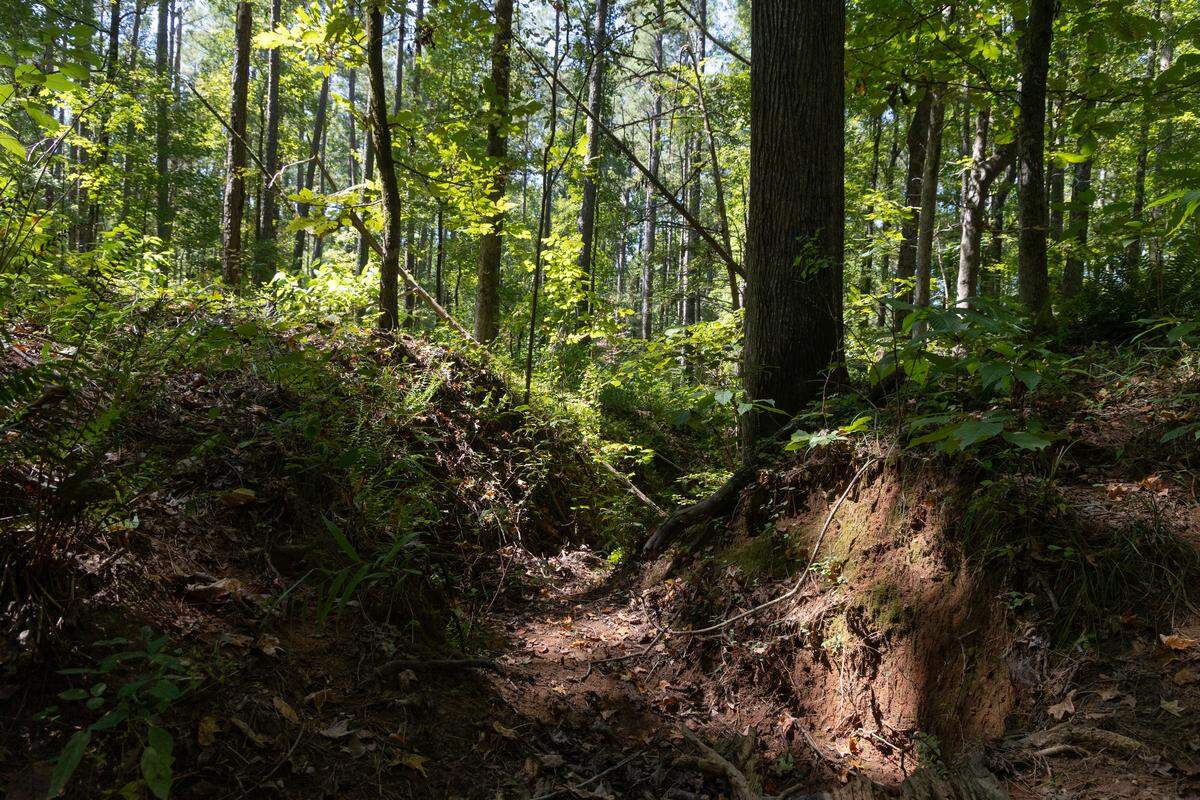
But the eroded creeks, some with sheer stream banks more than 10 feet high, remained, causing water to rush downstream carrying sediment to the Broad. The natural flood plain where the sediment had been deposited diminished or disappeared.
Today, a placard on the national forest says the old farmland before trees were planted was known as “the lands nobody wanted.’’
Cost still an issue
Some conservationists say the work, despite questions about whether the state should have prioritized other environmental work over the stream project, isn’t a bad thing because it will have long-term benefits to the landscape and for the silt affected Broad River downstream.
But the cost remains a sticking point.
One of the biggest complaints is the role of South Carolina taxpayers. The stream project is occurring on federal land and has been contemplated by the U.S. Forest Service for more than a decade. But the state is paying for most, if not all, of the stream restoration project.
A criticism is that federal taxpayers should have a responsibility to pay, if the project is important enough. The project is considered a large stream restoration effort compared to others, consultants say.
Four sources in the environmental community said the Chester stream work generated questions about whether other alternatives would be a better way to compensate for the Scout project. They asked that their names not be used because of the sensitivity of negotiations to protect undeveloped property in South Carolina.
Saving property threatened by development, rather than restoring creeks on already protected land, would have been a better use of money the state allocated to offset the losses of wetlands and creeks at the Scout construction site in Richland County, those familiar with land protection efforts said.
“If we are going to spend money, why is it on protected land?’’ one source asked.
The Chester stream restoration project wasn’t initially planned to compensate for the Scout Motors impact on the environment near Columbia.
Perry’s company, Water and Land Solutions, was among several entities that helped put together the initial mitigation plan for the Scout project. That package focused on protecting about 5,000 acres, mostly near Congaree National Park in Richland County, and a small island in the Broad River between Union and Fairfield counties.
Perry and others say the package was adequate to meet federal requirements to offset the loss of wetlands and streams at Scout. But the DNR and the U.S. Environmental Protection Agency disagreed.
Because of the type of mitigation package Perry and others offered, the state needed to add more to make sure federal requirements were met, the Department of Natural Resources said. The disagreement led to the DNR recommending a look at the national forest stream plan, which had been developed in 2014, records show.
That drove up the cost of the wetlands and stream mitigation package. The $18 million expected for the stream repairs is part of some $60 million being spent overall to offset the wetlands losses at the Scout Motors site, The State reported last week.
The 2014 plan that led to the work now occurring in the national forest was originally developed as mitigation for a proposed nuclear plant Duke Energy was interested in building in Cherokee County. But the plant was never built and the plan remained on the shelf until the disagreement over mitigation for Scout came up.
DNR officials urged consideration of the stream plan as the state Department of Commerce moved to make sure the Scout project would be built.
Commerce ultimately picked the Sumter National Forest stream work to bolster the original mitigation plan so the Scout project could move forward.
Some legislators said the state had little choice if it wanted to get the motor vehicles project going. The DNR and the U.S. Environmental Protection Agency supported additional mitigation, even though others disagreed with the additional requirements.
“I hate to be put over a barrel and be forced to do it when we didn’t think we’d have to,’’ said Rep. Bruce Bannister, a Greenville Republican who chairs the House budget committee.
This story was originally published October 13, 2025 at 6:00 AM.