Palmetto Trail hikers slowed by regulations, ‘headaches’ at Fort Jackson
Gaining access to the Palmetto Trail has proven more difficult than expected for some hikers traveling through Columbia.
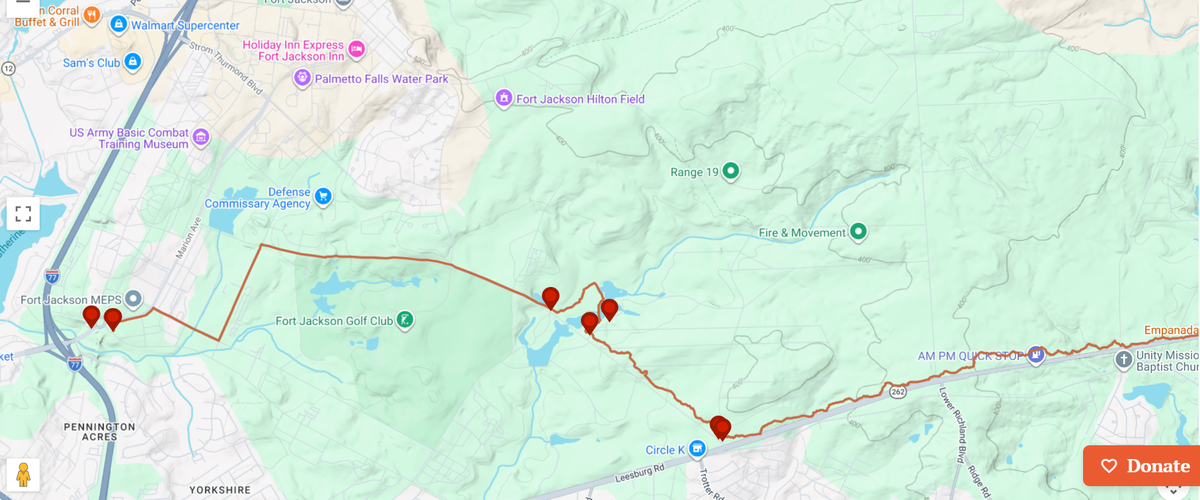
Those wanting to walk part of the trail at Fort Jackson must first present a Real ID driver’s license and undergo a background check at the base’s Forest Drive gate.
Then, assuming they are cleared, hikers must go to the Fort Jackson Boulevard gate several miles away to access the mountains-to-the-sea pathway. But gaining access there isn’t always possible. The Fort Jackson Boulevard gate is not open to visitors on weekends or holidays, according to information provided by the Palmetto Trail organization and the fort.
If a visitor wanted to walk through the fort from the gate where passes are issued to reach the trail at the Fort Jackson Boulevard gate, the base can allow that, spokesman Nathan Clinebelle said.
But the extra effort it takes to get on the trail has stirred criticism from hikers on social media from time to time, and veteran trail walker Jason Wish said he understands why.
No other stretch of trail in South Carolina has access restrictions like those at Fort Jackson – and maneuvering around the base can be a challenge, he said.
“I’ve backpacked several thousand miles in 12 different states, and this is the only case where I’ve had to go through a military base,’’ Wish said in a recent interview with The State..
Wish, who has chronicled many of his Palmetto Trail walks on YouTube, said in one video that people “have to go through the process of getting a background check and are only able to enter through certain gates at certain times.
“The restrictions kind of stink, but what do you do?’’
Some members of the Facebook Group “Palmetto Trail Hikers’’ have recounted their frustration since late 2024. One man posted that he drove nearly three hours to Columbia to hike the trail, only to be denied a pass.
Another person said that a friend arrived to get a walking pass only to be told by a fort official that the trail was no longer open inside Fort Jackson. One person on the Facebook page said a Palmetto Trail official told him the base’s leadership was not receptive to allowing through hikers.
The Facebook post did not name anyone with the fort. The current commander is Gen. Daryl O. Hood.
A base official said the fort welcomes visitors, but there are rules the public must abide by, as would be the case with any military facility.
“It’s the reality of being able to access a military installation,’’ said Clinebelle, the Fort Jackson spokesman.
“If everything clears, within just a few minutes you’ll have a day pass that will permit you to walk the trail but not permit you to go anywhere else on the installation,’’ Clinebelle said. The fort issued a statement saying the section of trail on Fort Jackson “is open to the public.’’

Mary Roe, director of the Palmetto Trail organization, said access to the trail is a courtesy from the U.S. Army and trail policies inside the fort can change, depending on Fort Jackson’s leadership.
“I don’t have a bad relationship in any way with the base, I just have to respect that there is leadership and a threshold of how he wants citizens to enter the base,’’ she said.
Asked how trail policies shift with new leadership, Clinebelle said Fort Jackson commanders can have different views on access, Commanders at Fort Jackson change regularly.
“Every commander is responsible for the safety of the installation, so it is possible one commander could have a different perspective on what that means,’’ Clinebelle said.
The stretch of trail where a pass is needed is between the base’s Fort Jackson Boulevard gate and a gate on Leesburg Road. A pass must be presented when accessing the Fort Jackson gate to walk that part of the trail toward Leesburg Road. The wooded section of trail going down Leesburg – away from the heart of Fort Jackson – does not require a pass.. That section of the trail can be accessed from a public parking lot at the Leesburg Road gate.
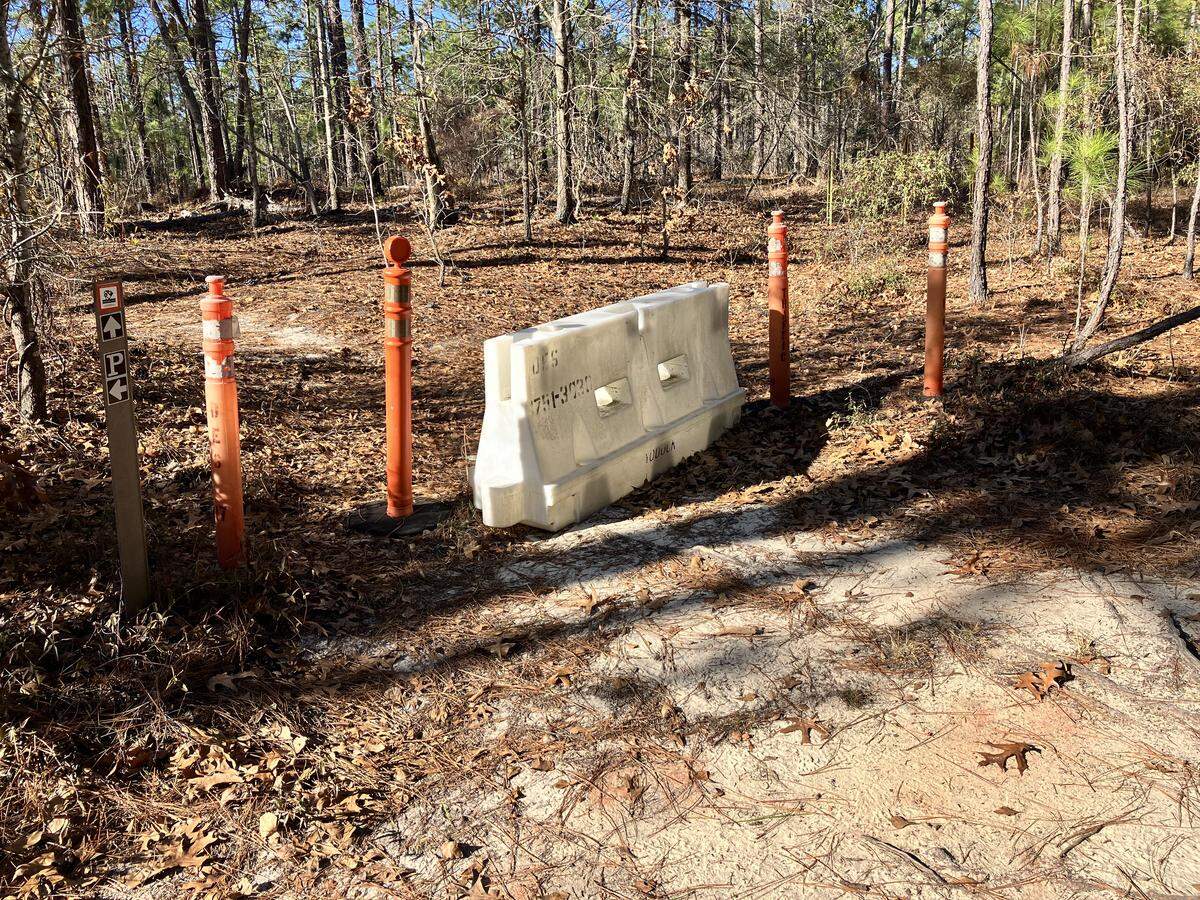
It was unclear whether visitors walking on the trail from Leesburg Road back toward the heart of Fort Jackson need a pass to access the trail near the Leesburg gate. But one section of trail along Leesburg has been blocked with a barricade. It is not known who put up the barricade or when it was installed. Clinebelle said the barrier is to prevent “non-pedestrian traffic’’ from accessing that stretch of trail. Roe said the Army did not put up the barricade, nor did her organization. She said the barricade is to be removed.
Public access to Fort Jackson was more open in the past. But after the 2001 terrorist attacks on New York City, the Army moved to restrict access on some parts of the military installation for security reasons. Fort Jackson is the nation’s largest Army training base. More than 44,000 soldiers train at Fort Jackson each year.
Roe said Fort Jackson is the only military base that includes part of the Palmetto Trail. It is the only one requiring hikers to get a pass to continue on the trail, she said.
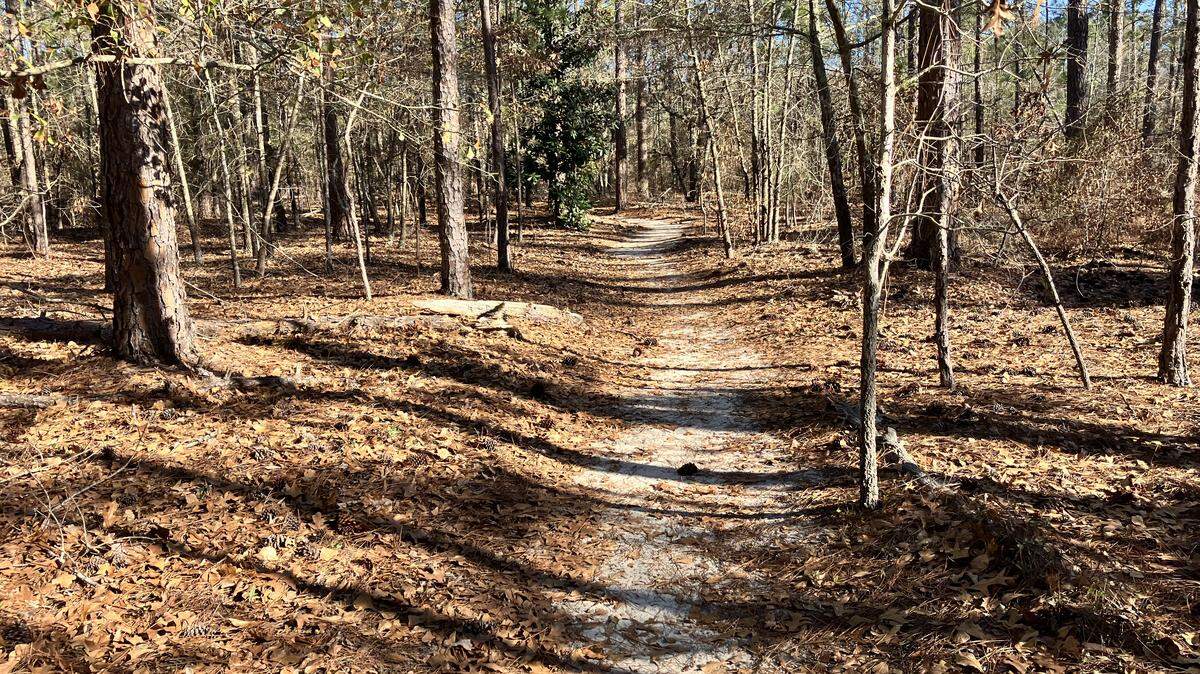
Wish said parts of the trail inside the fort are surprisingly pleasant, and he enjoyed walking in that area. The fort, known for spartan military facilities, has neighborhoods with lawns, as well as lakes and woodlands. But gaining access can be a hassle, he said.
“It’s something unique and different,’’ he said. “But then you look at ‘Is it worth it?’ I don’t know. It’s a lot of headaches and logistics to make sure you are there at the right time and going in the right direction. And are you even guaranteed you’re going to get in?’’
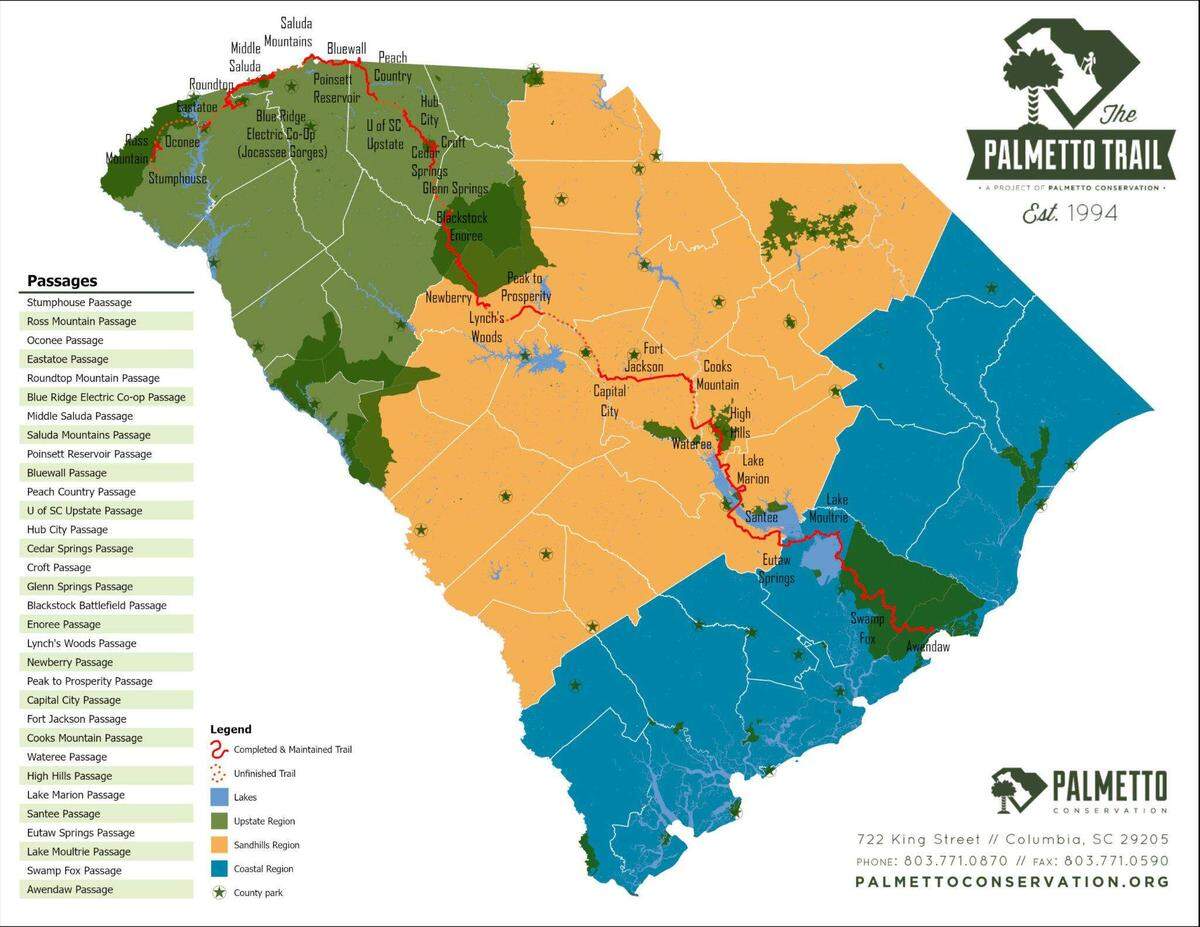
The Palmetto Trail runs from the mountains of Oconee County to the ocean in Charleston County. Much of it is through the countryside traversing wild and vacant land, as well as areas with more population and development. Many parts through Columbia are urban.
Under construction for more than 30 years, the Palmetto Trail is the first walking path that stretches across the entire state.
More than 400 miles of the trail — roughly 80 percent — have been completed, with the section from Columbia to the coast providing a continuous pathway to the sea. That section has been completed in the past three years. The only parts that have not been finished are northwest of Columbia, mostly in the Piedmont.
While Roe said she understands the need for restrictions, Wish said the fort might consider issuing a “quick pass” or hiker pass for those who want to hike through the fort quickly and move on down the Palmetto Trail.
There also has been talk of offering an alternate route around the base. The widening of Leesburg Road plays into any decision that might be made, Roe said. The road along the base is under construction by the S.C. Department of Transportation.