Whale skeleton never displayed in SC as planned 40 years ago. What happened to the bones?
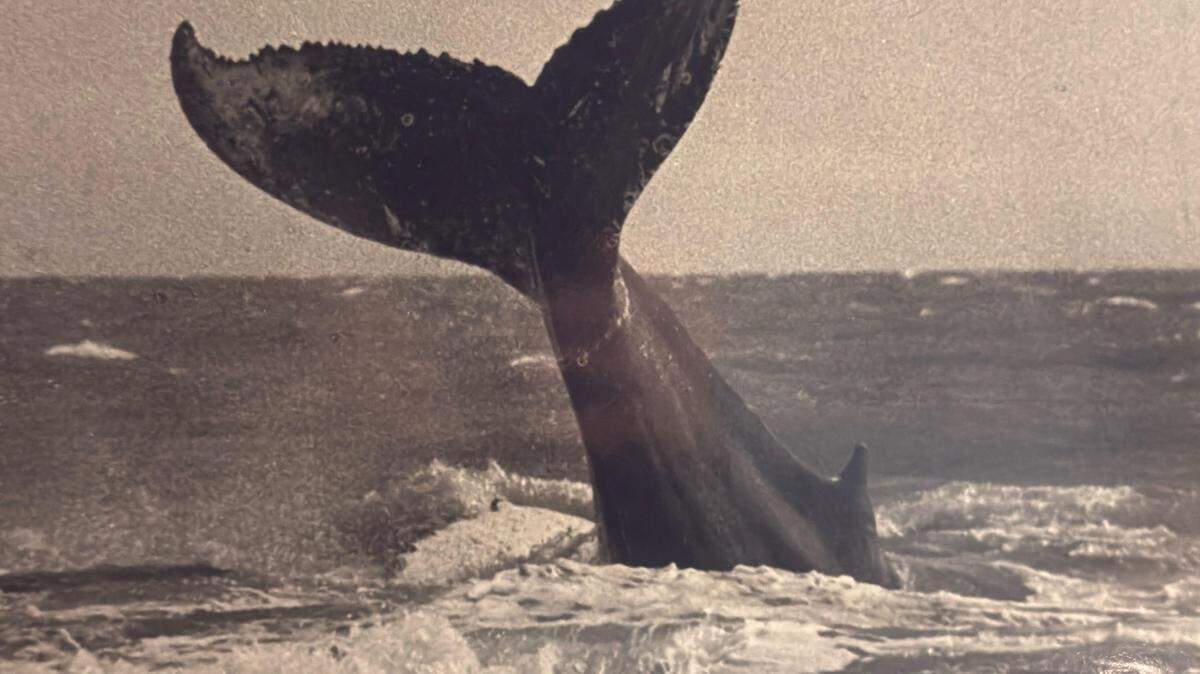
On a cold morning 40 years ago, the fins of a huge whale sliced through the surf at North Myrtle Beach, rising high above the waterline, as the animal drifted down the coast on what would become a fatal journey.
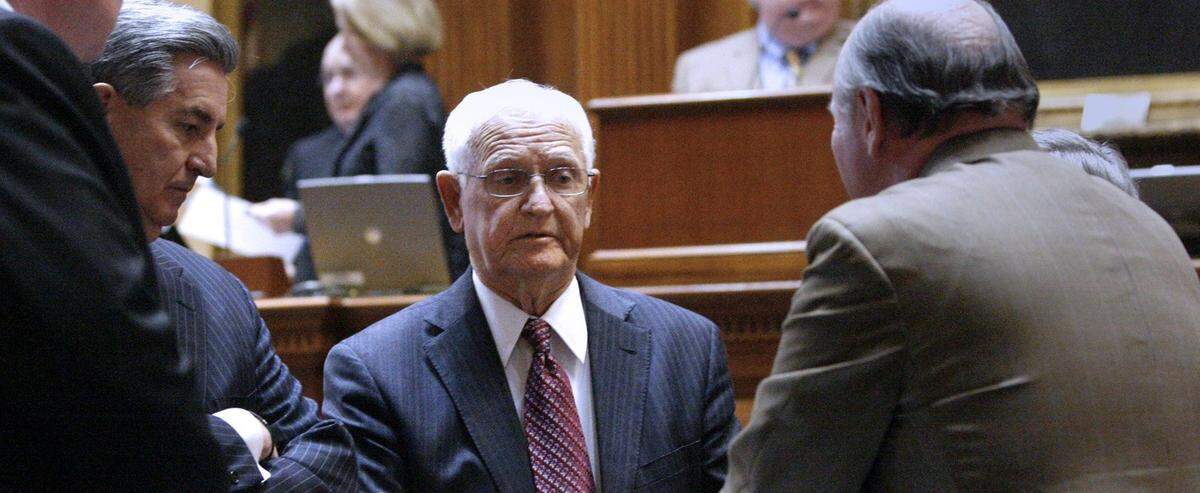
The whale’s struggle in the shallows attracted a mob to the beach that weekend in March 1986 – including one worried politician.
South Carolina Rep. Dick Elliott knew the humpback whale wouldn’t live much longer. And he knew N.C. State University was interested in acquiring the whale bones for an exhibit in Raleigh. But he wanted the skeleton displayed in South Carolina. So Ellliott moved swiftly, asking state officials to ensure the bones stayed here.
Four decades later, the whale skeleton is nowhere to be seen. The bones never went to North Carolina because of Elliott’s opposition. Nor did the skeleton wind up in a display at South Carolina’s State Museum in Columbia, as officials had planned in 1986.
What’s known is that a contractor deposited the whale carcass in the woods near Conway, where it would rot until State Museum staff could pick up the bones. In 1990, museum workers trucked the skeletal remains to Columbia.
The whale bones were then buried at Clemson University’s Sandhills research station in northeast Richland County, where they have remained for the past 36 years, current and former museum officials say.
Former North Myrtle Beach Mayor Marilyn Hatley said it’s too bad nothing has been done to feature the skeleton, considering how much attention the sick whale received when it washed onto the shore four decades ago.
“It’s very sad that we did not follow through with the intentions of displaying it in South Carolina,’’ she said. ”If (N.C. State) wanted it, and they were going to follow through, it’s a shame we did not give it to the state of North Carolina.’’
A spokesman for South Carolina’s State Museum said the agency hasn’t given up on plans to put the whale skeleton in the museum “at the appropriate time. But there is no immediate time frame for this work.’’
The museum will need ground penetrating radar to aid in collecting the bones, spokesman Chandler Mack said in a brief email. Such radar can help determine locations of buried objects.
The idea of displaying the whale in the State Museum was championed by Michael Ray, a former curator. At one point, he envisioned a type of interactive display, where children could walk through the skeleton to gain perspective. He was not available for this story to talk more about that idea.
But Overton Ganong, the museum’s director until 2001, said a whale display was not a priority during his years there.
“It wasn’t really forgotten,’’ he said of the whale. “We basically took this as far as it got taken. There was no plan active at the time to recover it and actually mount it.’’
Ganong, now retired, said getting the bones ready would have taken more work, and the job would have been expensive.
After whale bones are initially cleaned of flesh, preservationists sometimes release certain types of beetles on the skeleton to finish stripping the bones down, he said. The museum would have needed a building in which to work on the bones, and it may have needed a specialist to help reassemble the skeleton, Ganong said.
To carry out such a project is “a pretty formidable thing,’’ he said.
The humpback whale, a female that North Myrtle Beach locals nicknamed “Happy,’’, measured 36 to 40 feet long and weighed as much as 21 tons. The animal was believed to have been migrating along the Atlantic coast when it ran into trouble in the Carolinas.
Shaky bones
While the State Museum says it still may put the animal bones on display, what kind of shape are they in 40 years after the humpback died?
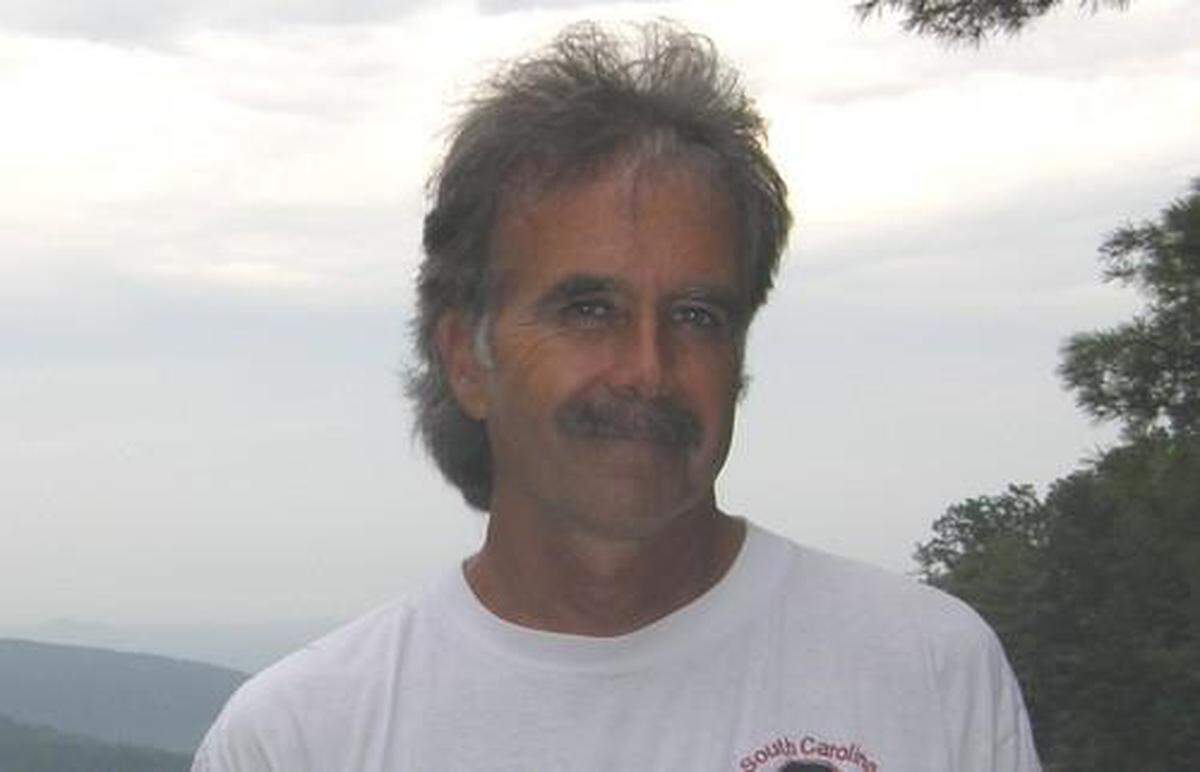
Paul Nader, a former N.C. State animal technician who was at North Myrtle Beach soon after the whale beached, said the skeleton may have decayed since 1986.
”Not to get too Biblical on you, but it’s dust to dust,’’ Nader said. “The bones could be disintegrated into their basic elements by now.’’
That, however, is not a given, he said. Archaeologists have in recent years found whale bones thousands of years old.
How long whale bones remain preserved depends on the conditions of a burial spot, such as the type of soil and the type of weather that affects the area, say experts with the Smithsonian Institution and the University of South Carolina’s archaeology institute.
Regardless of the bones’ condition today, Nader said he believes officials at N.C. State could have put the North Myrtle Beach whale skeleton on display within a few years of the animal washing ashore.
N.C. State had been looking for a dead or dying whale that could be displayed on the Raleigh campus, he said. The one that washed up at North Myrtle Beach had been spotted in North Carolina, but drifted across the state line, he said.
Elliott, a North Myrtle Beach Democrat who later was elected state senator, made sure that since the whale was in South Carolina, it would stay here. Elliott planned to call then- Gov. Dick Riley’s office, according to news reports at the time.
Ellliott died in 2014 and it’s not known what role, if any, that Riley’s office had in keeping the whale in South Carolina. But Nader, who said he remembers a South Carolina politician getting involved, said it became obvious N.C. State would not get the humpback.
The politician “wanted to get credit for this great scientific thing coming to South Carolina,’’ Nader said. “So he stepped in and said ‘The heck with N.C. State. We’re going to keep it in South Carolina.’ ‘’
Nader agreed with former mayor Hatley that the failure to display the North Myrtle Beach humpback is a loss for the public, regardless of whether it stayed in South Carolina or went to North Carolina.
Humpback whales, which get their name from their arched backs, are some of the most recognizable sea mammals along the coasts of the United States, inhabiting both the Pacific and Atlantic oceans.
They rarely wash up on Carolina beaches, but can be spotted sometimes from the shore or from boats, jumping above the water’s surface. They are more common than some whales and have some of the longest migration routes of any whale species, sometimes swimming 5,000 miles from tropical areas where they breed to northern feeding grounds, according to the National Oceanic and Atmospheric Administration.
After failing to secure the North Myrtle Beach whale, N.C. State officials found a sperm whale carcass at Portsmouth Island, N.C., later in 1986.
University workers cleaned the bones, later reassembling the skeleton for display at N.C. State’s veterinary school, according to university publications. The United Press International reported that the whale skeleton was hung from a ceiling at the school in 1988.
Nader said the university’s search for a whale to display worked out, despite the failure to get the North Myrtle Beach humpback.
Weekend of the whale
Fred Morris wasn’t thinking about reassembling a whale skeleton when the humpback appeared in the North Myrtle Beach surf the morning of March 7, 1986.,
His reaction was one of wonder and sadness. Morris, a North Myrtle Beach police officer at the time, recalls the sobering sight of the big humpback, in pain.
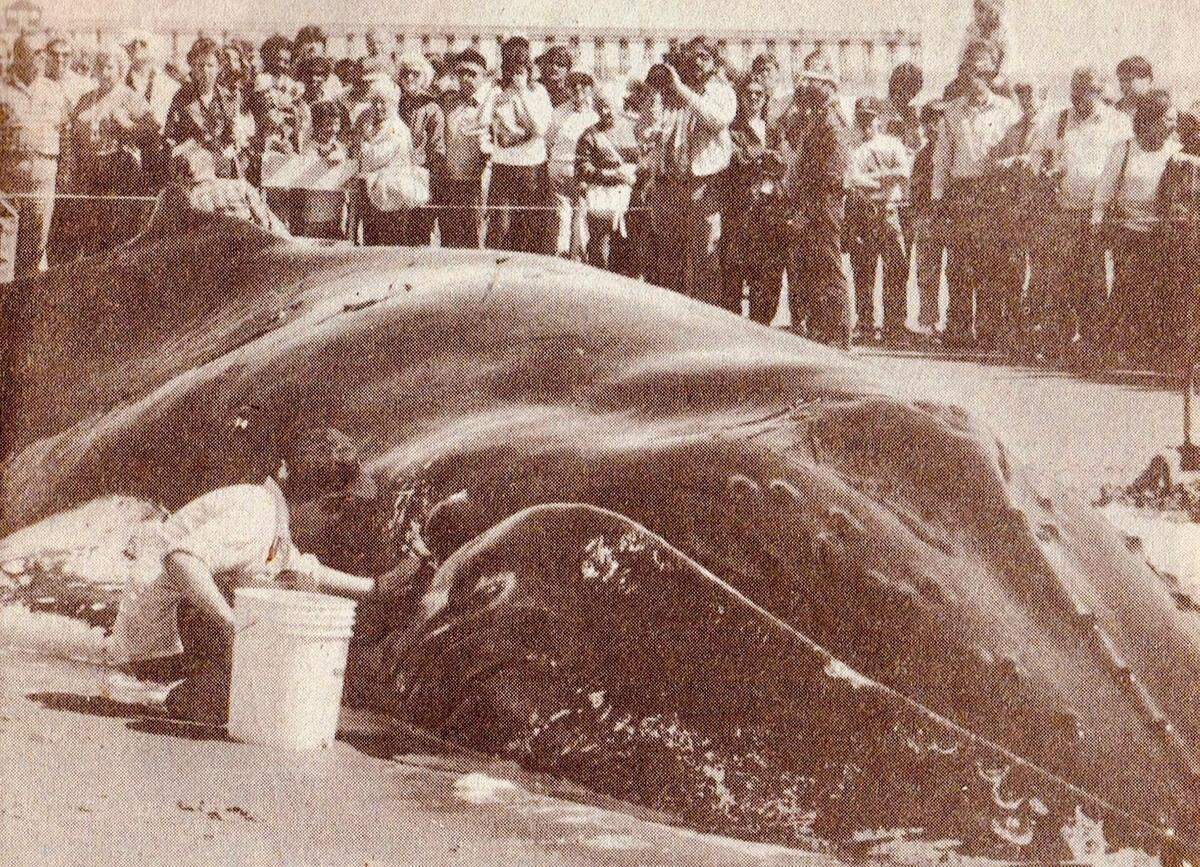
The whale had been spotted in shallow water, not far from the dry sand beach, struggling in the waves that rolled ashore in the city’s Ocean Drive section. After the animal washed onto the beach, it was making moaning sounds, Morris said.
“It cried, and that would break your heart,’’ he said. “It got sunburned – people were throwing water on it, to try to cool it down.’’
While it was still in the surf, worried bystanders urged city officials to help the floundering animal. Eventually, the owners of a Little River fishing boat agreed to tow the humpback whale back out to sea.
Volunteers looped a chain around the tail and the boat pulled the whale from shallow water into the deeper ocean. People watched, hopeful the humpback would swim to safety.
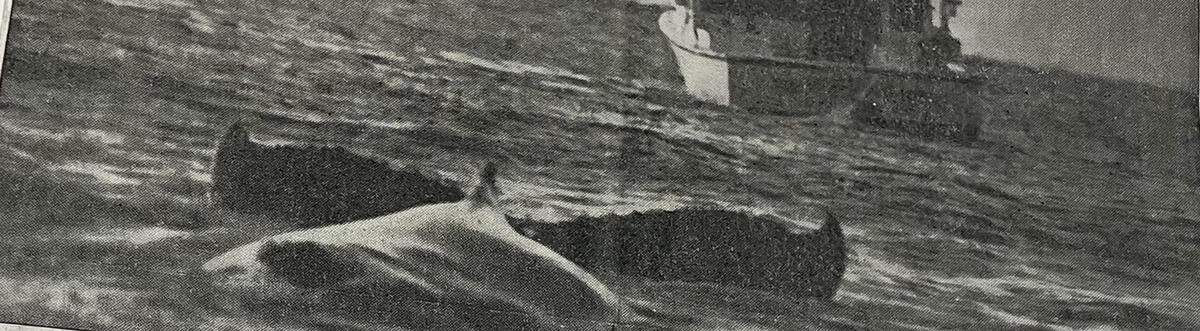
At about the same time, biologists from South Carolina’s wildlife department and Marineland of Florida had arrived to see if they could help. But they were not optimistic.
“There’s very little chance we could save it because if we get into deeper water, it would probably just swim back,’’ state wildlife biologist Dean Cain told The Sun News at the time. “It’s a natural process for a whale to beach itself when it is sick.’’
Sure enough, the animal swam a short distance down the coast before turning toward land and beaching.
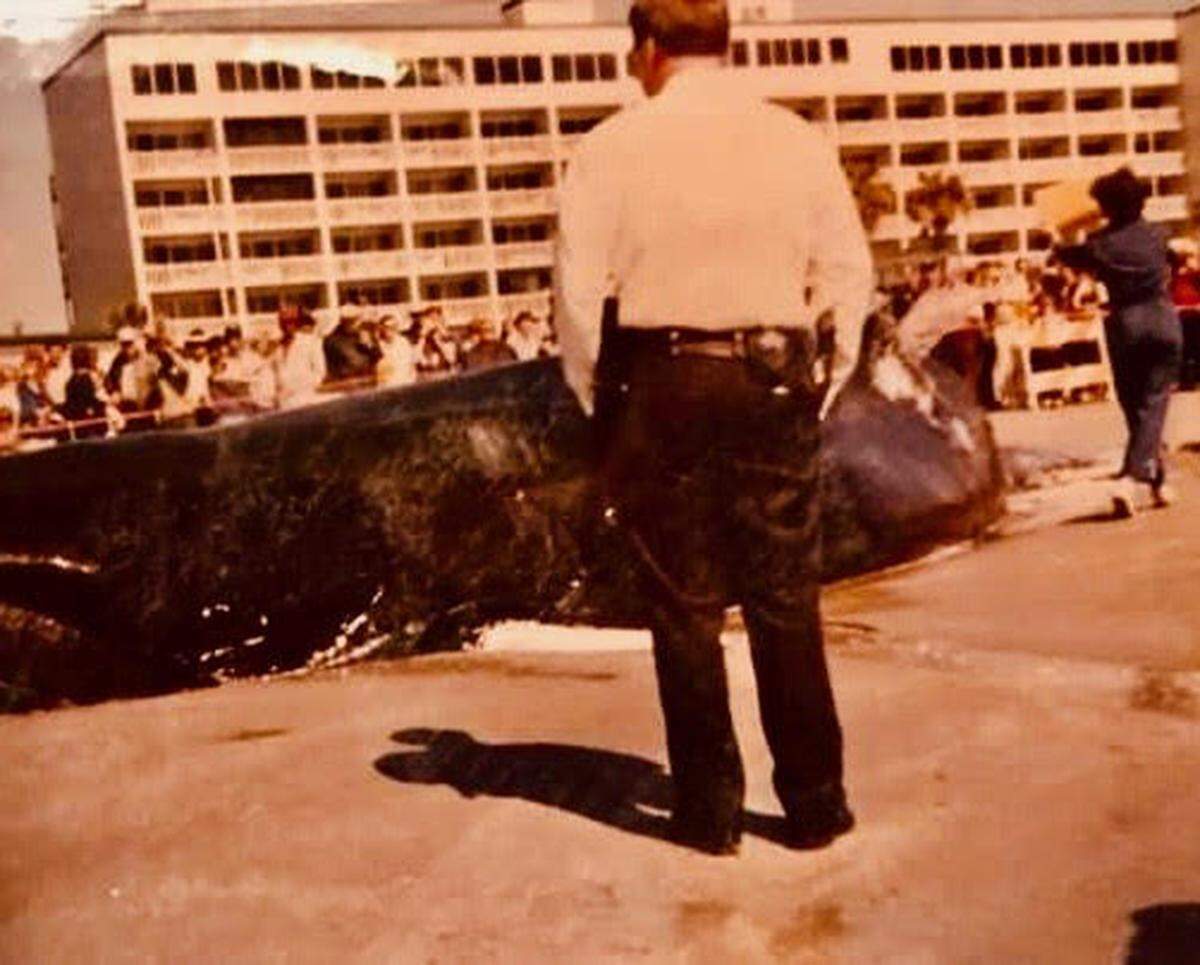
People who ventured to the seashore that weekend formed a ring around the whale after the animal became stuck in the sand. Some estimates place the number of people visiting North Myrtle Beach in the tens of thousands, possibly reaching 100,000 by weekend’s end.
It was a large crowd for that time of year, well before the summer tourism season starts and on a weekend with bitingly cold mornings.
But as many suspected, the whale didn’t make it. Sickened and clearly in bad shape, the animal was euthanized Sunday, March 9. Biologists gave the whale penicillin first to help ease its pain, then injected the animal with a lethal drug that killed it, according to news reports.
A necropsy, a kind of autopsy on an animal, did not show conclusively why the animal was ill, although there were signs of kidney disease.
Nasty job
After its death, a flatbed truck owned by a local contractor rumbled onto the beach, loaded the leviathan on the back and drove away. The contractor had offered to help dispose of the mammal for the city of North Myrtle Beach.
Bill Moss, the city manager at the time, said the sight of a whale on the back of a flatbed, rolling down a busy highway, is something he hasn’t forgotten.
“I remember it going up the road with the tail almost dragging the ground,’’ Moss said. “It was that big.’’
The whale was destined for the Myrtle Beach Air Force Base, where the plan was to place it in the woods.
But as the driver neared the military installation, he received word that the whale carcass would attract birds to the air base, which also contained Myrtle Beach’s commercial airport. The birds would make it harder for planes to take off and land.
So he carted the whale around for several hours, ultimately finding a patch of woods overseen by the state wildlife department near Conway. The whale was dumped there, a fence was put around it, and the state wildlife department agreed to keep an eye on it.
In March 1990, a team of employees from the State Museum arrived at the site where the humpback’s carcass had been left four years earlier. They hoped to pull the bones from the forest and get back to the capital city as soon as possible.
But it wasn’t that easy. The whale had not decayed as anticipated. Flesh still clung to the skeleton, forcing the museum’s team members to hack off the rotted meat so they could get to the bones. It was an all-day job, and it wasn’t pleasant.
The still decaying whale carried a powerful odor as museum workers quickly learned. The meat had hardened – one museum official said it had the consistency of “beef jerky’’ – making the job even more difficult.
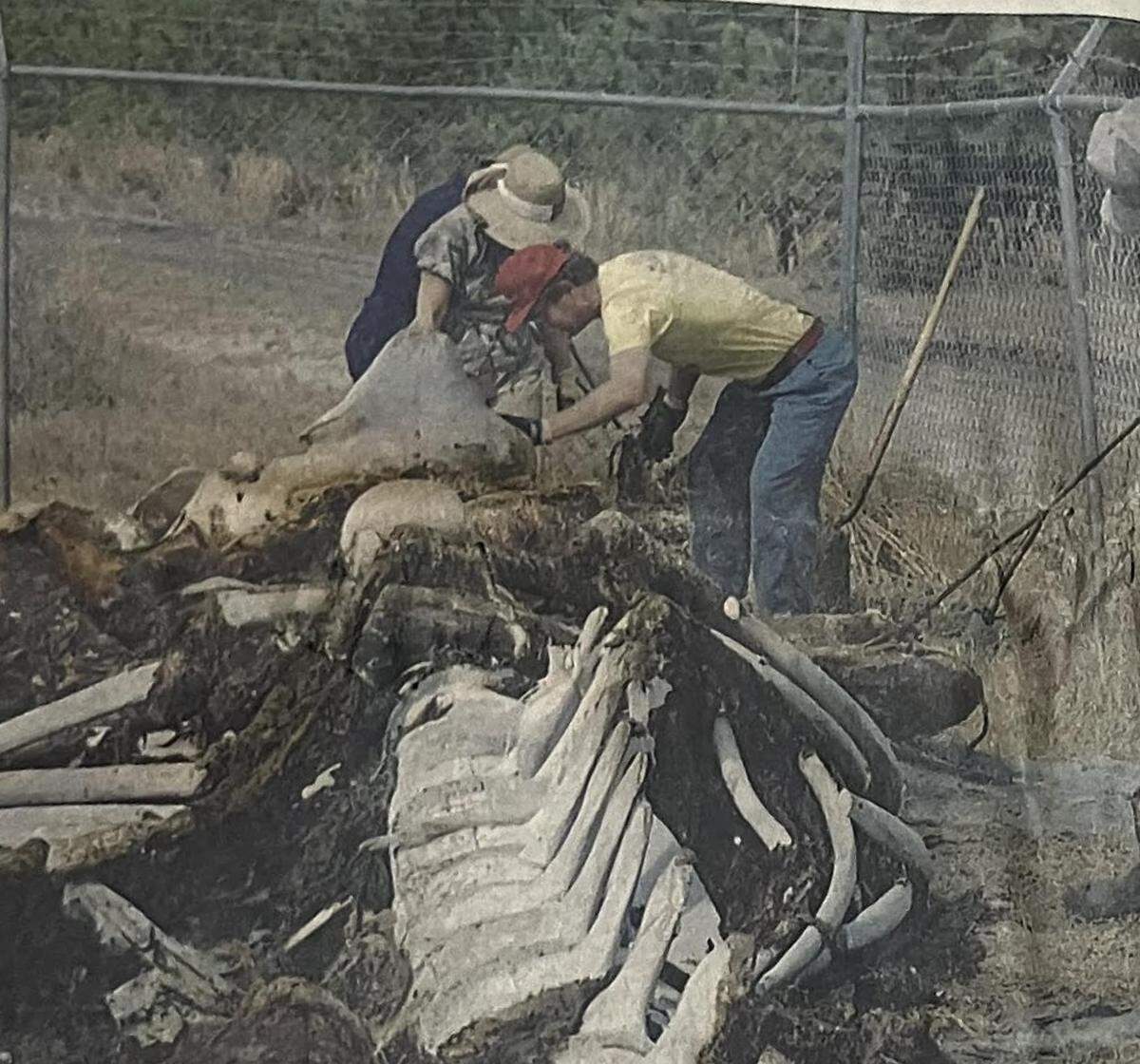
While working on the whale, museum staff discovered that rats, spiders and lizards had been living in the carcass since 1986.
“It was a stinky, rotten mess,’’ said former museum official Jim Knight, who was involved in the 1990 retrieval effort. .
Eventually, the team succeeded in preparing the bones for packing and the trip to Columbia, about 140 miles away.
Dave Cicimurri, a former state museum curator who is now working in Alabama, said he’s almost certain the whale carcass wound up at the Clemson station.
Before he left his job at the museum, Cicimurri heard about the whale’s location and visited the Clemson property in Richland County. He took coordinates and relied on LIDAR technology to see if anything lay beneath the ground.
“The coordinates are right in the middle of a 30-foot diameter depression, so more than likely it’s there,’’ Cicimurri said, noting that “unfortunately, with some delays and whatnot, we never did get to’’ complete the investigation.
A display that never was
Perhaps the biggest champion of displaying the North Myrtle Beach whale at the State Museum was Ray, the curator of natural history in the late 1980s.
Ray floated one plan to create an exhibit where visitors could travel inside the humpback’s skeleton to get a full view. He targeted opening a display by 1988.
“I would like to see a situation where children could basically walk through the whale skeleton,’’ Ray said at a March 1986 museum conference in Georgetown. Ray went on to say that whales are “something the public doesn’t get close up to that often. This tickles people’s imagination and reawakens the childlike awe in all of us.’’
Another plan was to suspend the whale skeleton from the ceiling at the state museum.
If the whale had been displayed in the Columbia museum, it would surely have taken up a lot of space. At an estimated 40 feet long, the whale’s skeleton would rival the size of any single item exhibited at the museum.
Today, one of the most noticeable features inside the museum is a massive prehistoric shark called a megalodon, hanging from the ceiling in the natural history floor.
It was installed in 1988, the year the museum opened. But the three-ton shark is a manmade feature, the product of a Columbia artist. The museum also has casts of several dinosaur skeletons.
Hatley, the former North Myrtle Beach mayor, said if the humpback skeleton remains intact and the State Museum can’t use the whale skeleton for a display, Clemson should consider taking the bones for an exhibit in a new veterinary school being established at the university.
“I’d think that would be something the new veterinary school should be interested in,’’ Hatley, North Myrtle Beach’s longest serving mayor, said. “It was the intention of the senator to display these bones.’’
This story is based on recent interviews, as well as historic accounts from The State, The Sun News, United Press International and the Associated Press. The State’s Sammy Fretwell, a former reporter at The Sun News, contributed original reporting on the whale beaching in March 1986.
This story was originally published March 5, 2026 at 9:48 AM.