Wealthy SC beach house owner won’t have to tear out disputed seawall anytime soon, if ever
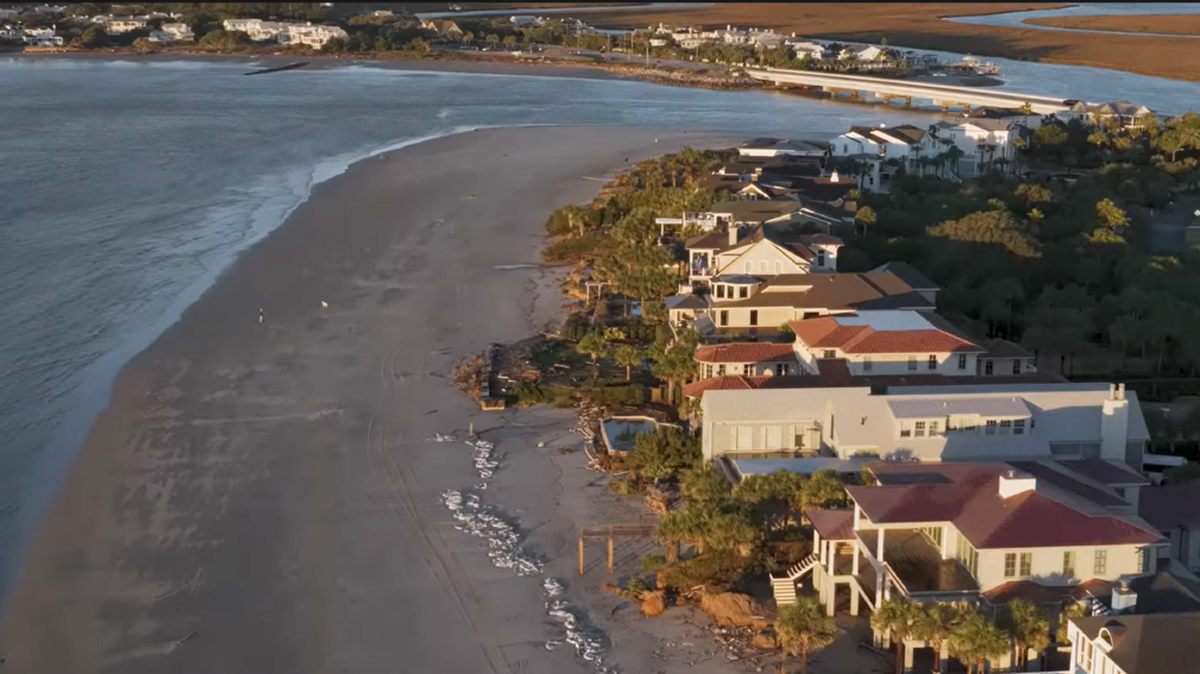
The owner of a high-end beach house at the Isle of Palms appears likely to keep his seawall in place for years, despite state arguments that the protective wall blocks public access and is eroding the beach used by vacationers and residents in Charleston County.
South Carolina Administrative Law Judge Ralph King Anderson III, who has previously said the seawall is accelerating beach erosion, agreed with property owner Rom Reddy’s arguments that removing the wall this year could expose his home to the ocean’s waves.
State regulators had ordered the wall removed and Anderson had previously upheld that, saying removal should be done as early as this summer. Now, the wall will remain in place indefinitely, protecting Reddy’s home from the ocean, while the case continues.
Reddy “argues that the erosion has worsened and that his hard erosion control structure is the only thing preventing his yard from collapsing onto the beach and taking with it the artificial turf, polypropylene pad, fabric, plants, and gravel in his yard,’’ Anderson’s order said, noting that “removal of his structure will unreasonably expose him and his property to irreparable damage.”
Anderson, a veteran judge who has been seeking a seat on the state Supreme Court, said he realizes the gravity of his decision.
“While I am remorseful that the public beach may suffer in the interim, (Reddy’s) motion must be granted,’’ the judge’s ruling said.
At issue is a dispute over a seawall ban enacted in 1988 by the Legislature along state beaches. New seawalls were banned because they can worsen beach erosion when hit by waves, even while protecting property behind them. That’s a big issue in South Carolina, which attracts millions of tourists each year for its beaches.
Reddy, a supporter of President Donald Trump who has started a political action committee to elect candidates that support his views, was ecstatic with the judge’s ruling. In a news release, Reddy said the judge made the right decision. Reddy is an outspoken property rights advocate.
“This is a great victory for property rights,’’ the release said. “Our founders in the 5th amendment to the US Constitution specifically prohibit the type of behavior exhibited by the agency state. Trying to annex private property through regulation without purchasing the property is a violation of property rights.’’
Some environmentalists have said Reddy’s challenge could undermine the state’s Beachfront Management Act, which is intended to protect the public beach. But Reddy said the law has changed.
In an interview with The State, Reddy said a 2018 state law abandoned a long-standing South Carolina policy of retreat from the beach, instead favoring preserving the beach as is. The retreat policy was adopted in an effort to gradually move new development away from the immediate oceanfront over time. He said the Department of Environmental Services coastal division has “run amok.’’
“They just picked the wrong guy, who is ready to fight back,’’ said Reddy, who represented himself at a trial before Anderson last year but is now working with the Pacific Legal Foundation on the appeal.. “I can’t tell you the number of calls I get from all over the state saying ‘God Bless you for fighting these people.’ ‘’
Conservationists and the state Department of Environmental Services have said Reddy built the wall in violation of state law in an area of the beach that is eroding and under state jurisdiction. The environmental agency fined Reddy $289,000 — a huge fine — and ordered the wall pulled out. Anderson later dismissed the fine, but said the wall must be removed.
State officials and conservationists say the agency was simply enforcing the state’s 1988 ban on new seawalls on the beach. Reddy’s multi-story home is near the end of the beach at Isle of Palms, just across an inlet from Sullivan’s Island.
Reddy, an outspoken businessman and small newspaper owner, says the wall is not in state jurisdiction, and that he’s been the victim of overzealous enforcement. He has appealed a ruling Anderson made late last year that the wall must come out. The state Court of Appeals will consider his appeal of the overall case.
The effect of the judge’s ruling Wednesday is likely that the wall will stay in place while his case works its way through the SC Court of Appeals over the next two years. It isn’t often that the appeals court overturns rulings like the one Anderson made, which is known as a “stay.’’ These orders prevent action from being taken until cases are resolved.
Conservationists said they may ask the Court of Appeals to review Anderson’s decision, but persuading the court not to continue the stay is a tall order.
“It means there is a high likelihood he won’t have to commence with the corrective action plan or removal during the entire pendency of all the appeal options,’’ said Leslie Lenhardt an attorney representing the Coastal Conservation League, which wants the wall removed.
Environmentalists remain committed to fighting to have the seawall torn out, even though Anderson’s order allows it to remain in place while appeals by Reddy are heard in court.
Unfortunately, leaving the wall in place pending a final court decision “will continue to impact public access to Isle of Palms beach for several years,’’ Lenhardt said noting that “it’s disappointing that Anderson didn’t sort of stand behind his original order.’’
This story was originally published March 11, 2026 at 6:35 PM.