Crowd rips SC agency over failure to protect farmland from sludge pollution
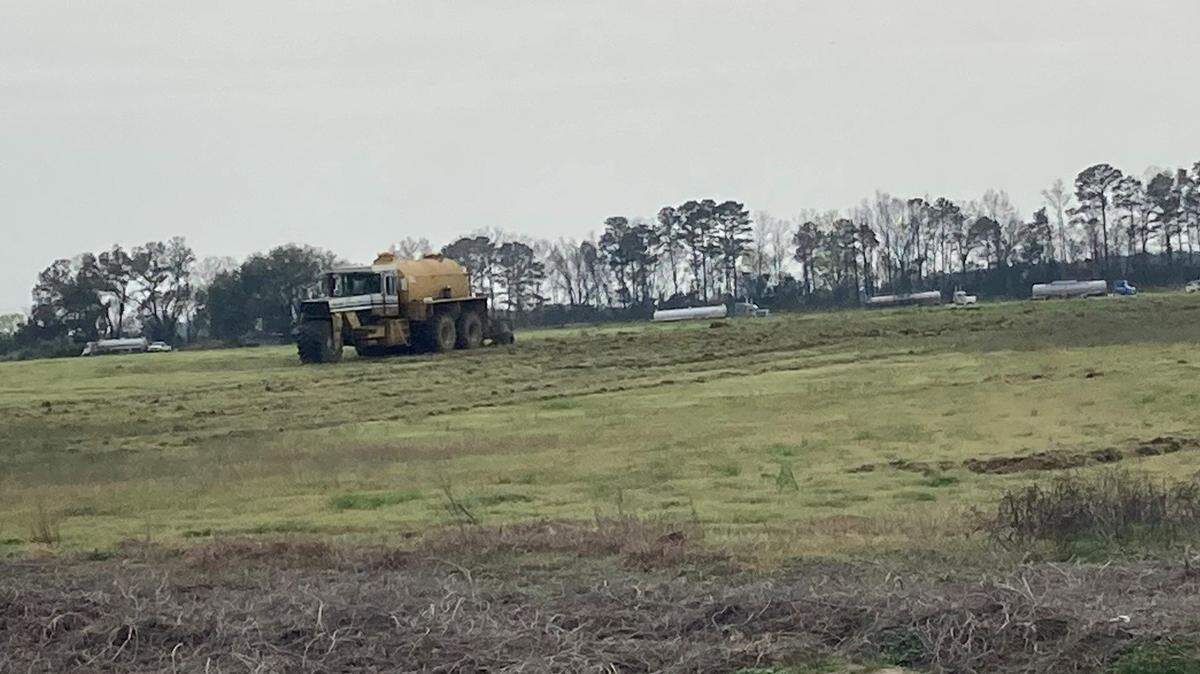
A crowd of eastern South Carolina residents expressed frustration Thursday night over the state environmental department’s failure to keep contaminated waste from being spread on agricultural fields.
At a hearing in Darlington, state regulators said they don’t have the authority to stop out-of-state chicken slaughterhouses from shipping waste sludge to South Carolina and dumping it on the land as fertilizer. Nor do they have the power to require that sludge be tested for toxic forever chemicals or deny a permit based on a company’s history of violating environmental laws, officials said.
But many of those at the hearing questioned why the S.C. Department of Environmental Services — an agency whose mission is to protect the environment — can’t do much about sludge disposal in South Carolina. Some said the department has plenty of authority to do a better job.
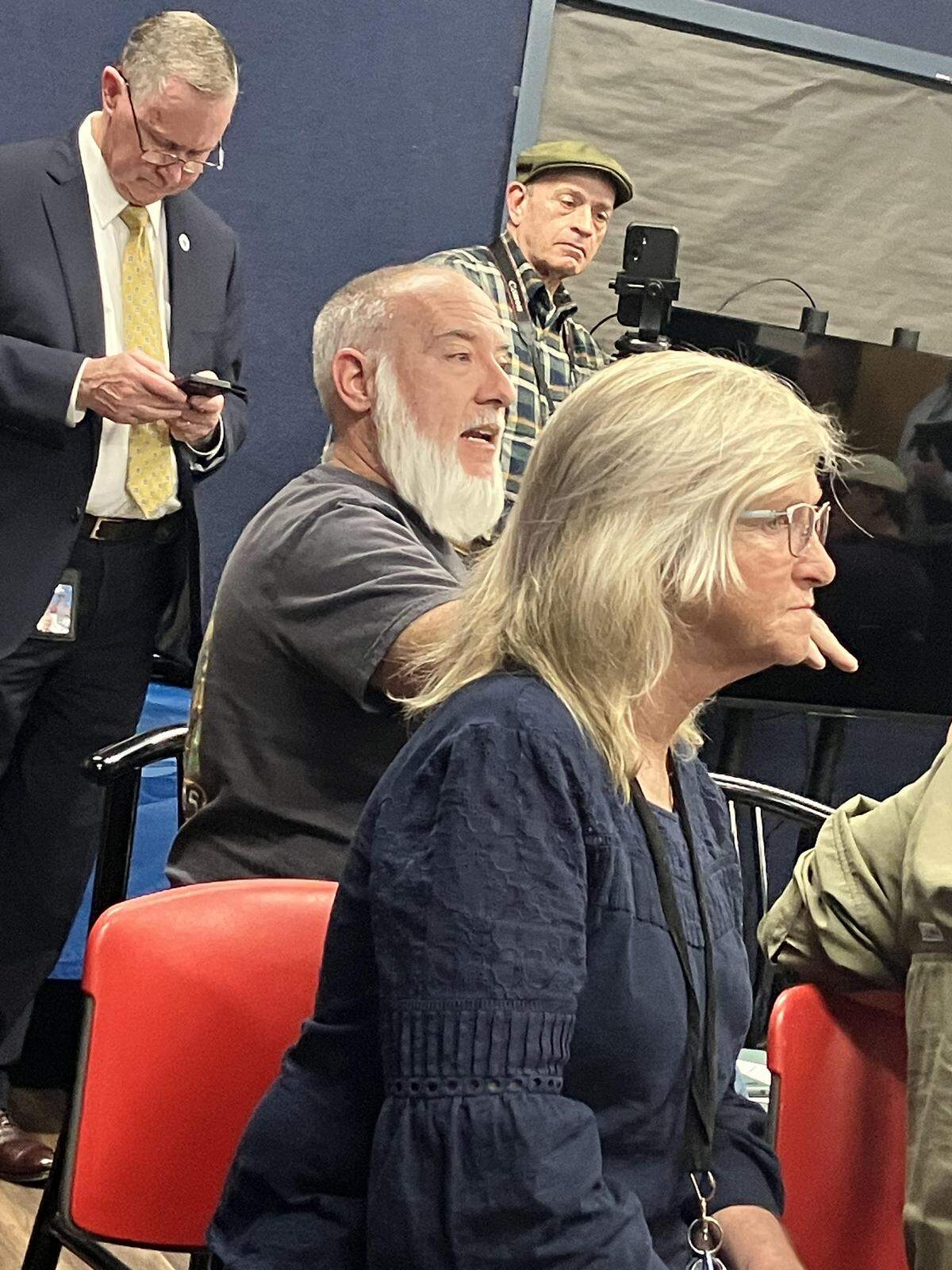
“Y’all are just turning your heads,’’ said Darlington County resident Brady Hill, who was among about 50 people who jammed a small conference room at the county library.
Hill and Darlington resident Judy Hanna said the Department of Environmental Services worries too much about how state oversight of sludge will hurt certain industries. The agency’s focus should be on protecting the land, air and water from pollution, but it has fallen short, they said.
“Are you here to protect wallets or the environment?’’ Hill asked as he recounted how a state regulator recently told him sludge is cheaper for farmers to use than manufactured fertilizer. “The price should not matter. The scope of the DES is to protect our environment. ‘’
Hill, who sported a tee shirt saying he was a candidate for Darlington County Council, said he has learned that North Carolina has tougher restrictions than South Carolina. Most of the sludge waste now coming into parts of the Pee Dee is from other states, mainly North Carolina, Chesterfield County landowner Brad Turley said.
“Why in God’s name does the county, the governor, the president, want nasty sludge that’s causing cancer and taking our loved ones?’’ Hanna asked.
Others, including a cancer survivor, spoke about what they said was a lack of information from the state on the threats from sludge application in their community.
A primary concern about putting sludge on farmland is the powerful odor left from the spreading operation, but there also are worries about forever chemicals in the gunk that could pollute groundwater or wind up in crops grown where sludge is spread as fertilizer.
Polluted sludge fields
Since the 1990s, Darlington County has been a hotbed for the application of waste sludge on agricultural land. But while the practice was first pitched as a cheap way to fertilize crops, sludge has in recent years been found to contain toxic forever chemicals, The State reported in its 2023 investigative series “Toxic Deals.’’
Forever chemical exposure can cause cancer, thyroid problems, immune system deficiencies and other ailments for people regularly exposed to the material. Exposure often comes from drinking polluted water or eating food tainted by forever chemicals, but people can also be exposed in other ways, as well.
Worries have intensified locally in light of Darlington’s experience with Galey and Lord, a now shuttered textile plant that received state approval to spread waste sludge on up to 10,000 acres of farm fields in the 1990s and early 2000s. Some fields where sludge was applied are polluted with forever chemicals and dozens of drinking water wells near sludge fields also are contaminated with the chemicals.
In one case, sludge was reportedly spread on land that later became the site of an elementary school outside Darlington, The State reported this week.
Now, more sludge is being spread in poor South Carolina communities by powerful industries, often from North Carolina, state officials were told. Much of the sludge today is coming from chicken slaughterhouses, as opposed to textile factories like Galey and Lord.
The latest sludge plan is by a national company, Terra Renewal. The company, which says sludge is good for crops, plans to put the watery mixture on more than 450 acres of Darlington County farmland. But it first needs approval from the S.C. Department of Environmental Services. The department is taking comments on the plan and has not decided whether to grant permission to Terra Renewal.
The company, headquartered in Arkansas, already uses thousands of acres in South Carolina and other states for sludge disposal. Company officials did not speak at the hearing, but have previously said sludge is good for the land.
Department of Environmental Services officials presented slides outlining what they say the agency can — and can’t do — to oversee the use of sludge on agricultural fields.
Among the things the agency can’t do is to deny a permit application because of past environmental violations. The department fined Terra Renewal $16,000 last year over discharges of food processing waste on an unapproved site. The company has also had violations in other states.
The department blamed a lack of federal guidance to explain why it does not require testing for forever chemicals in waste sludge. The agency also can’t stop the land application of forever chemicals unless the Legislature passes a law to do that, said Ann Clark, who is in charge of the Department of Environmental Services’ water bureau.
Rob Devlin, a veteran water regulator at the agency, said there are some benefits to putting sludge on land, including saving space in landfills
“We think it’s a beneficial use to put these nutrients down, as opposed to filling up landfills,’’ Devlin said, noting that the agency does check groundwater for some contaminants, such as nitrogen, that have established safety standards. No such standard has been finalized for forever chemicals, he said. The federal government has proposed strict drinking water standards for two types of forever chemicals.
While the agency maintains it does not require sludge to be tested before it is applied to the land, Devlin said he recommends farmers have tests performed. Juli Blalock, who heads the agency’s land and waste management bureau, said past court cases have prevented South Carolina from banning the import of waste to the state because of interstate commerce laws.
“This material coming from other states is considered a product; the farmers use it to help the nutrient values in the soil,’’ she said. “There were court cases years and years ago that said we could not stop materials from coming in.’’
Department officials said, however, that none of the fields proposed by Terra Renewal for sludge spreading are those used years ago by Galey and Lord. The agency previously allowed that, but has taken a tougher stance in light of knowledge about the Galey and Lord site, officials said.
When The State attempted to gain more information about why the agency no longer allowed chicken plant sludge to be deposited on old Galey and Lord fields, even though it had in the past, Environmental Services spokeswoman Laura Renwick said her agency would not answer questions from the newspaper Thursday night.
Terra Renewal, a subsidiary of Denali Water Solutions, says the material it brings to South Carolina farms is good for the soil and an inexpensive way to enrich the land with nutrients.
The company has made a point that it does not produce forever chemicals, the toxic compounds often found in sludge from municipal wastewater plants and industries. But less is known about chicken processing plants where waste sludge is generated for use on agricultural fields.
Terra Renewal already does significant business in South Carolina and its latest plan to put sludge on the more than 450 acres of Darlington County involves an amendment to a permit it already has received. The material would go on 26 farm fields, according to plans.
This story was originally published March 20, 2026 at 9:56 AM.