SC property owners upset about pipeline face legal action if they don’t cooperate
Attorneys for a company seeking to extend a natural gas pipeline through South Carolina are threatening to take property owners to court if the landowners don’t grant access to their property.
Letters were sent earlier this month to multiple South Carolina residents who have not given Elba Express LLC permission to survey their land for possible location of the pipeline, according to the letters obtained by The State.
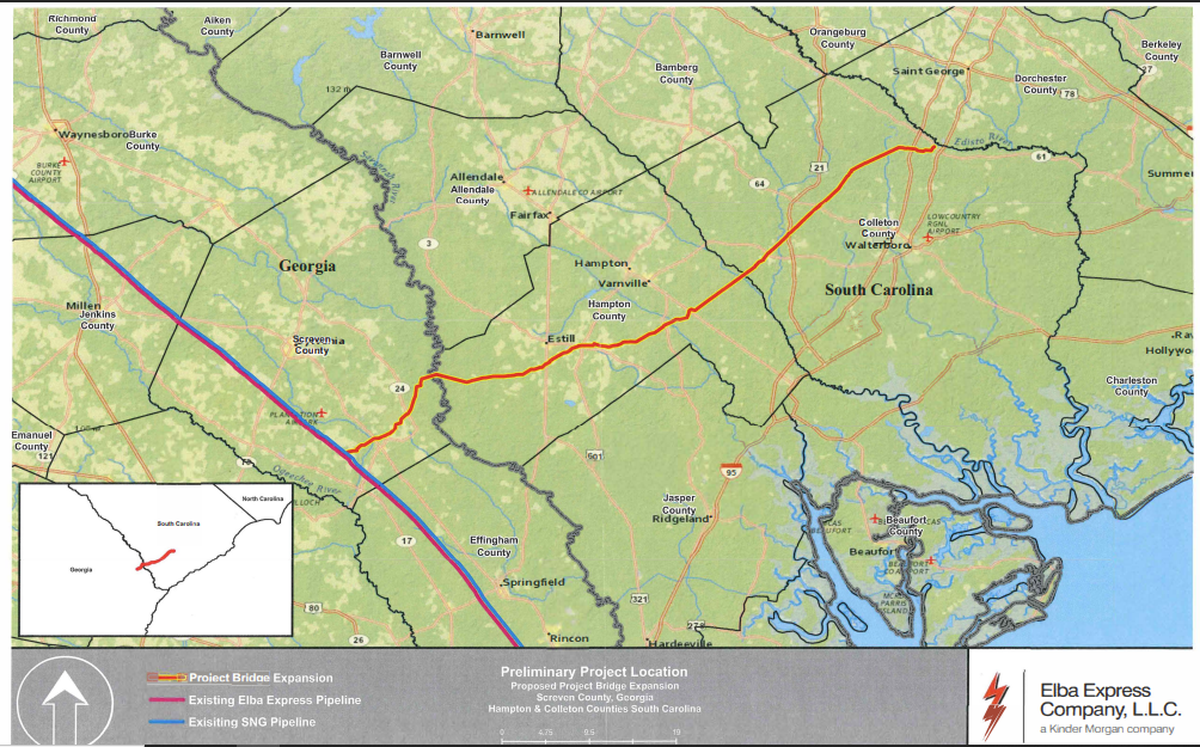
The pipeline would enter South Carolina from Georgia to serve a large new natural gas plant that state leaders say is needed to supply future energy needs. Elba Express is a division of the Kinder Morgan pipeline company.
State Rep. Weston Newton, an attorney for Elba Express, co-wrote the letters to property owners who have balked at allowing company surveyors onto their land for the $431 million project.
If Elba Express “does not receive your permission to conduct the surveys within 14 days of the date of this letter, we will be forced to initiate legal proceedings to obtain a court order granting access,’’ according to an April 9 letter obtained by The State that Newton co-wrote.
The letters went on to say the company would prefer not to go to court, but it needs to move forward with plans for the pipeline. Kinder Morgan has not begun legal proceedings, company vice president Allen Fore said.
Fore said gaining access to property for surveys helps the company decide the ultimate specific location for the pipeline. Sometimes, a visit can help the company determine whether an area of a person’s land needs to be avoided, he said.
Newton, R-Beaufort, co-sponsored a sweeping energy bill last year that opened the door for the natural gas project. Without the legislation, it would have been harder to build the plant and harder to run pipelines to the project site.
State ethics rules, which have been the subject of criticism, generally allow legislators to vote on matters that could affect their businesses, if other businesses and people might also be affected.
But Newton, chairman of the House Judiciary Committee, said he did not begin representing pipeline clients until after he voted for the energy bill.
Newton said he is careful as a lawmaker to abstain from votes that might conflict with his private work as an attorney. The letter he wrote property owners did not identify him as a legislator. Newton said part of his firm’s business is representing clients on real estate and pipeline matters.
“My law firm’s activities don’t have anything to do with me serving in the Legislature,’’ he said.
All told, several dozen property owners in South Carolina, and a like number in Georgia, have received letters about the need to access their land, according to Kinder Morgan.
Property owners who have received the letters were not surprised the company has ramped up its effort to gain access to their land. But few of them were happy about it.
Stro Morrison, a consulting forester who represents multiple Lowcountry landowners, said his clients have received other correspondence from Elba Express that threatened to condemn land through eminent domain if property owners did not cooperate.
“The very first letter our clients got, and a number of people have told me the same thing, said ‘If you don’t let us, we’re going to use eminent domain and go on your property,’ ‘’ said Morrison, who represents people and companies that own about 100,000 acres in the Lowcountry.
Eminent domain is a process in which private land can be taken for projects that benefit the public, but the property owners must be compensated for use of their land.
“This (latest letter) isn’t really something new,’’ Morrison said. “A lot of the local landowners, it really ticked them off. It really made some people upset. This is just another threat that ‘If you don’t do what we want, we’re going to do it anyway.’ ’’
Newton did not specifically mention eminent domain in the April 9 letter, but cited a South Carolina law that allows surveyors to enter private property “when voluntary permission cannot be obtained.’’
The natural gas plant that the pipeline would serve is a proposed 2,200 megawatt facility that would be built and co-owned by utilities Santee Cooper and Dominion Energy.
They say they need the energy because South Carolina is growing. But critics say the plant is too big and is part of a push by the Legislature for energy to serve data centers, operations that demand large amounts of power.
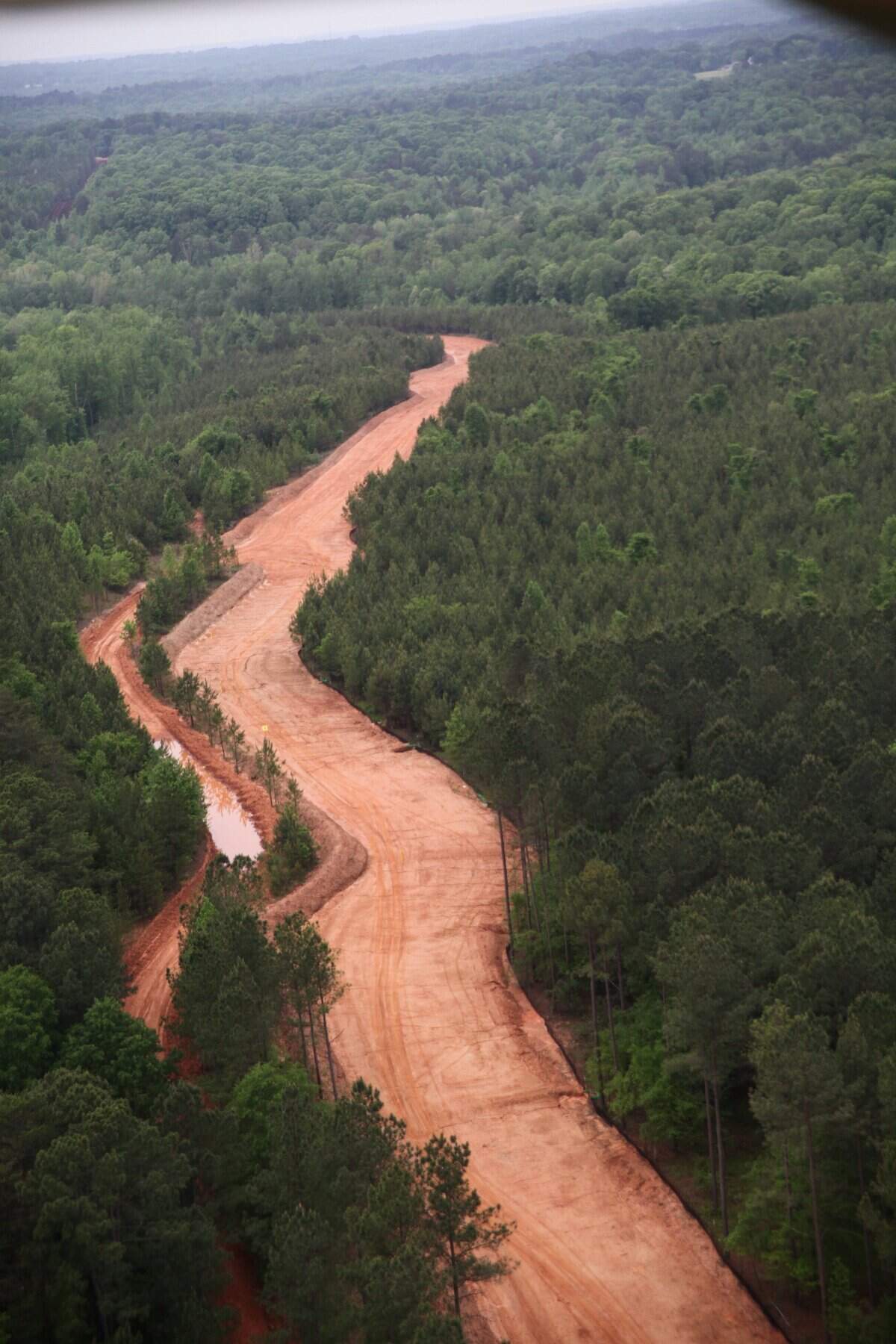
In this case, Elba Express wants permission to run the 71-mile pipeline through property in Lowcountry counties between the Georgia border and the site of the new natural gas plant in the Canadys community of Colleton County. The pipeline, which is to be buried, would originate from a pipe in Screven County, Ga. The area of South Carolina where the pipeline would be extended is between Columbia and the southern coast.
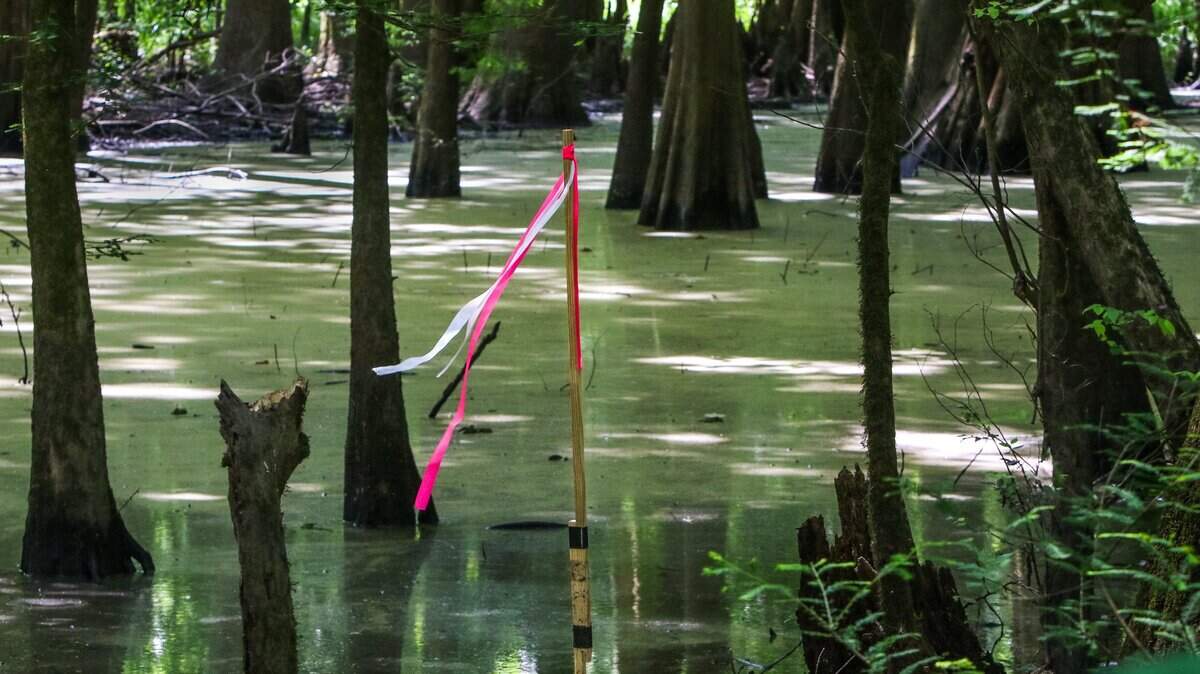
It would travel through miles of undeveloped property, including the edge of the ACE Basin nature preserve, and other land that has been preserved from development.
Key concerns about extending a pipeline across private property center on the general disruption it would cause rural landowners and companies that are growing and managing trees for sale.
Property owners, for instance, may need permission to do work on their own land if it involves the area of the pipeline.
Heavy equipment needed to fight forest fires might need to cross the pipeline, increasing chances of a break that would release highly flammable gas, Morrison said..
In an interview with The State, Fore said Kinder Morgan can make adjustments on specific parcels of land to accommodate landowners who grant permission to use their property.
The company could, for example, bury the line deeper on property where the landowner may need to use heavy equipment, he said. Or the company could avoid a special part of the land when it lays the pipeline, he said.
He’s found that property owners sometimes are more understanding once they grant access for surveys and meet company representatives. The company can often resolve misunderstandings, Fore said.
“We get a lot of eventual approvals,’’ he said noting that “there are stages to this process. The initial conversation, letters, follow-up letters, phone calls, in person meetings. This is still a negotiation process.’’
Fore said it’s notable that the company is seeking to use as much existing rights of way as possible for the pipeline , instead of running a line through virgin land.
In addition to landowner issues, there are wider worries about how disrupting the landscape will affect forests and swamps that have been set aside for conservation. A rival company of Kinder Morgan’s says the pipeline would cross both the Savannah and Coosawhatchie rivers, as well as 67 percent more wetland areas than it should.
Kinder Morgan has said it is taking environmental protection into consideration as the project moves ahead.
Jake Scott, a South Carolina saw mill operator who owns land in Allendale County, said Elba Express has not been as forthcoming as many people expect. He also has received a letter, as has a European company that Morrison represents.
“There is a lack of transparency, and that is the truth,’’ Scott said.
Newton’s letter said the company needs to survey the land, but that doesn’t mean it would use the land for the pipeline route. Newton wrote the letter along with fellow attorneys Gregory Alford and Thomas Mikell.
Elba Express must have agreements with landowners or support from the courts to use private land for the pipeline. The company just needs to look at the land to see what’s on it, the company has said.
“Granting permission to conduct surveys does not obligate you to sell or lease your property, does not constitute a taking of any interest in your property, does not authorize (Elba) to construct a pipeline on your property, does not guarantee that your property will be included in the final vote, and will not be used to imply your support for or agreement with the project,’’ the letter said.
While that might be reassuring, some property owners remain leery, Morrison said.
“You can work around these things, but it’s at an expense,’’ he said, noting that the presence of a pipeline on Lowcountry land could lower the value of the property.
This story was originally published April 25, 2026 at 10:04 AM.