Richland County pays whopping fine for environmental violations at Scout Motors site
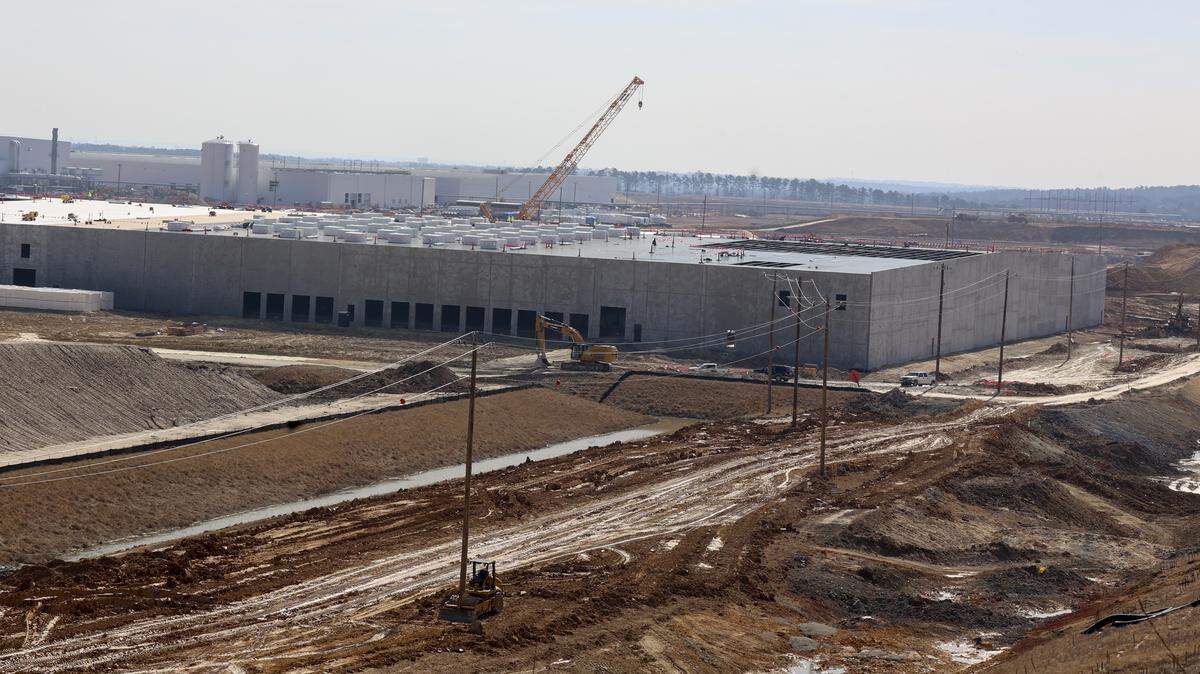
Richland County has paid a $1 million fine for failing to control sediment-polluted stormwater at the Scout motor vehicle construction site, a more than 1,600 acre tract where a plethora of environmental problems surfaced after work began three years ago.
All the monthly payments needed to satisfy the Department of Environmental Services have been made, with the final installment of $65,000 paid Wednesday, the agency said in an email to The State.
Richland County faced a fine of $3 million, but has taken steps in the past year to reduce the total penalty to $1 million, according to the environmental department.
“The county has met all of the compliance deadlines established within the order,’’ according to an email from the Department of Environmental Services.
Neither the state nor the county said what has been done to get the fine reduced.
But records show that to avoid paying the full $3 million, a variety of improvements at the construction site needed to be made. Those include cleaning out clogged sediment basins and spillways; evaluating and improving fencing to keep silt from running off the property; and improving other measures to keep runoff out of Beasley Creek, a major stream that drains off the property.
A Department of Environmental Services email Thursday indicates that Richland County could get back half of the $1 million fine from the state under a law that requires 50 percent of fine money be returned to counties where violations occurred. The other half goes to the state general fund, the agency said in Thursday’s email.
Richland County said in an email Friday night that county taxpayers will not pay the tab for problems at the Scout site. The email said the county had paid the fine, but is being reimbursed in full.
In addition to receiving a $500,000 reimbursement from the state, the county also will receive the balance needed to pay the fine from “various third parties,’’ spokeswoman Keywa Henderson said in an email to The State newspaper Friday night. Henderson’s email, sent at 6:55 p.m., did not identify the third parties. Last year, the county said responsibility for the payments was an ongoing legal matter. Richland has been largely silent on the matter since then.
The $1 million state-imposed fine is one of the heaviest – if not the largest – ever levied by the state department for stormwater and sediment violations.
Some Richland officials, including County Councilman Don Weaver, were unhappy that Environmental Services had penalized the county because work on the site was done by contractors, not county workers.
Scout Motors, as well as major contractors in charge of clearing the land, were not fined for stormwater and sediment violations. The state said it penalized Richland County because the county held permits for the site work.
Weaver said Thursday he still maintains that the blame should not be with Richland County.
“I definitely think it’s a contractor responsibility,’’ Weaver said.
The Scout site, on the edge of Blythewood north of Columbia, sent surges of stormwater into a major creek system that eventually drains into the Broad River, one of three main rivers that run through Columbia.
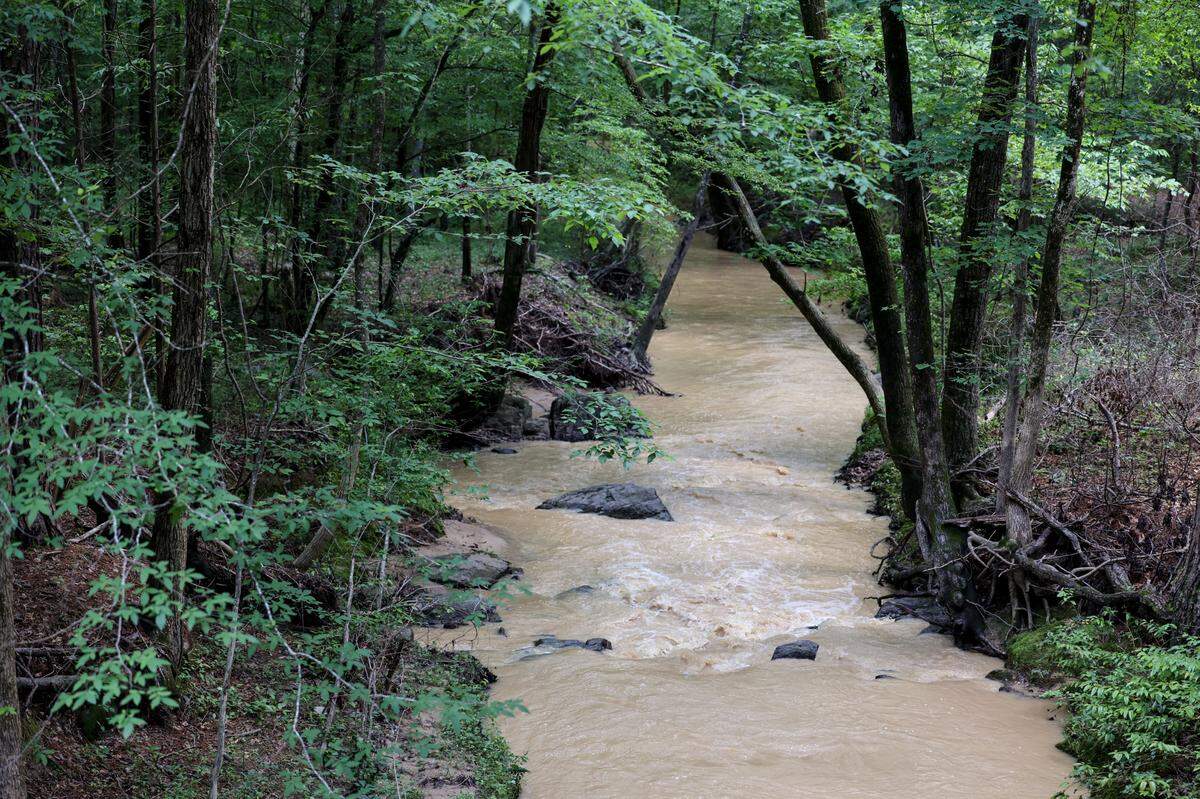
Beasley Creek was silty brown for miles below the project site, an issue of concern because excessive silt can kill fish and aquatic life. Site runoff also can spread contaminants from the land into the water. The creek system remained mud-colored for months after the work began, according to site visits by The State newspaper.
The state requires anyone clearing land for a development project to control polluted stormwater so it does not run into creeks, rivers and lakes. Such controls often include installation of ponds and rock to contain runoff to the site.
In July 2024, the state issued a violation notice against Richland County and Scout Motors over an array of stormwater issues, including allowing silt-choked water to run off the land and into Beasley Creek.
In May 2025, the Department of Environmental Services fined the county, setting up a monthly payment schedule for Richland to satisfy the penalty. The fine did not include Scout, which has said the responsibility was the county’s.
Contractors knew about problems
Records reviewed by The State newspaper show that contractors were aware of the problems for several months in 2024, before the state sent the July 2024 violation notice to Richland County.
Multiple inspection reports from March to September 2024 by Thomas and Hutton, a major site contractor, identified failing stormwater management controls and cloudy stormwater draining off the property.
Those problems were cited about a year after the S.C. Department of Natural Resources said work on the project was moving so fast it had not been able to assess significant environmental features on the property.
At the time, DNR officials urged federal authorities not to approve a required wetlands permit until its concerns had been satisfied. The U.S. Environmental Protection Agency also said wetlands violations had occurred. Those issues prompted Scout to temporarily suspend work in the fall of 2023 until concerns could be addressed. The wetlands permit ultimately was issued and work resumed.
But not all problems were resolved, as Thomas and Hutton inspection records show.
From March 2024 to September 2024, company officials cited problems with runoff and controlling stormwater in 27 of 30 inspection reports they filled out, according to documents reviewed by The State newspaper. The reports, required under the law but kept at the site, were obtained by The State under South Carolina’s Freedom of Information Act.
A Thomas and Hutton official has told the newspaper part of the problem was related to heavy rains in 2024, including a tropical storm that drenched Columbia. The excessive rainfall, and the size of the Scout project, made controlling stormwater a challenge, The State was told.
Scout’s project in Richland County has been praised for the economic impact making electric vehicles will have on the economy.
Not only will clean, non-polluting cars be manufactured, but as many as 4,000 jobs are projected to be created, boosters say. The project is a key part of the growth occurring in Blythewood, a once sleepy town that today is bustling with development.
Many people, including environmentalists, say producing electric vehicles is a plus for Blythewood, Columbia and South Carolina. But they say the runoff problems are a concern.
To bring Scout to South Carolina, the state provided the company with $1.3 billion in incentives. Now, the state Department of Commerce says it needs $150 million more to pay bills related to the project work.
A key cost is mitigation, the practice of preserving land or restoring wetlands in other places to offset the impact at a project site like the one that was cleared for development of the Scout plant.
Last year, The State newspaper reported mitigation costs of about $60 million, including buying land in Richland and Fairfield counties, and restoring a creek system in the Sumter National Forest near Chester and Lockhart.
Concerns about the cost of the Scout project recently have sparked criticism from legislators. Some are seeking a Legislative Audit Council report that includes a look at costs associated with the project.
This story was updated Saturday May 2 with a response from Richland County
This story was originally published May 1, 2026 at 9:40 AM.