
Valor in dark days of war: New book retells story of Doolittle Raiders
Seventy-three years ago, a band of Army fliers spent a few cold, muddy weeks living in tents in Lexington County, training at the Columbia Army Air Base. Two months later, they were dropping bombs on Japan to avenge the attack on Pearl Harbor.
Though the U.S. strike caused far less military damage than the attack on Pearl Harbor, the bombing run dealt a sharp psychological blow to Japan.
It was the first time in World War II that Tokyo had been bombed. The raid communicated a clear message to Japanese soldiers and citizens: If you hit us, we’ll hit you back.
The first aerial attack on Japan, the Doolittle Raid, is the subject of “Target Tokyo: Jimmy Doolittle and the Raid That Avenged Pearl Harbor,” a new book by Mount Pleasant author James Scott due to be published Friday, a day before the raid’s 73rd anniversary.
Through a narrative that roams from the White House to the decks of aircraft carriers to bomber cockpits to hellish Japanese prisons, Scott describes the planning, execution and aftermath of one of World War II’s most dangerous missions, when 80 men boarded 16 B-25 bombers and launched a near-suicidal, one-way strike on the Japanese capital and four other cities.
“Target Tokyo” also describes the role of several South Carolinians in the bombing attack, as well as the use of Columbia Army Air Base — now Columbia Metropolitan Airport — as an early training ground for the Raiders, led by Lt. Col. Jimmy Doolittle, a famed prewar aviator.
The story of the Doolittle Raid has been told before. Historians agree the attack provided an important morale boost for U.S. military forces and citizens. The bombing helped satisfy America’s thirst for revenge following Pearl Harbor and instilled fear within the Japanese top brass, who previously had regarded their homeland as invulnerable.
But Scott’s version of the story “is one of the most incredible accounts of American military valor I’ve ever read,” Lowcountry author Pat Conroy says.
“Target Tokyo” sheds new light on the raid, as Scott details the destruction left in the wake of the U.S. attack, which included civilian deaths. Through the author’s review of Japanese archives, “Target Tokyo” describes at length the embarrassment and outrage of Japanese military leaders over the raid, and how that anger led to Japanese atrocities against the Chinese, including the slaughter of 250,000 people.
Previous histories of the attack had tended to skimp on foreign perspectives, more narrowly celebrating U.S. heroism and ingenuity displayed during the raid, according to Scott.
“Until now,” he says, “the Doolittle Raid has been a one-sided story.”
Near-suicidal mission
Just as the Japanese attack on Pearl Harbor caught the United States flat-footed, the Doolittle Raid on April 18, 1942, came as a complete shock to the Japanese.
Some Japanese citizens waved innocently as U.S. bombers flew overhead, thinking they were Japanese planes. Buffered from U.S. attack by the vast Pacific Ocean, few Japanese thought the Americans could strike so close to home.
U.S. military planners did not originally think the attack could be accomplished, either. Not until the Navy devised an unorthodox plan of having normally land-based B-25 medium bombers take off from the deck of an aircraft carrier did U.S. war planners think they had a chance to strike Tokyo.
Conventional wisdom said the bombers could not take off in such a short distance. Moreover, the B-25s could not carry enough fuel for the long flight to Japan. But creative minds in the U.S. military overcame those obstacles by modifying the planes and adjusting pilots’ training.
Still, the idea carried huge risks.
To launch the raid, the aircraft carrier USS Hornet and its escorts would have to steam as close to Japan as possible without being detected by enemy ships or submarines. That way, the B-25 pilots and crew could drop their bombs on Japan and, then, fly to friendly territory in China. If Japanese scout ships spied the U.S. carrier too early, the bombers either would be too far way to attack or could be rebuffed by a Japanese military suddenly on high alert.
In the months preceding the raid, Doolittle enrolled volunteers for the secret mission. He released few details to the volunteers and let it be plainly known that some of the fliers might not return alive. The pilots and their crews prepared for the mysterious mission by practicing high-speed takeoffs on shortened runways, simulating their future takeoff from an aircraft carrier.
On the eve of their mission, Doolittle told his men that they would be attacking Japan, ideally taking off from the carrier within 450 miles of that country’s coast. In a worst-case scenario, Doolittle figured that as long as the Hornet could carry the bombers within 650 miles of Japan, they would have enough fuel to drop their bombs and continue flying to areas of China not controlled by Japanese invaders.
On April 2, 16 days before the raid, the Hornet and its escort ships left San Francisco. On board the Navy carrier was unusual cargo – 16 B-25 Army bombers and 134 Army personnel. The ships steamed across the Pacific toward Japan without incident until they encountered Japanese patrol boats more than 800 miles from Tokyo. The U.S. ships sank two boats, but they had been discovered. Radio messages from at least one of the sinking ships alerted the Japanese to the Hornet’s presence.
Even though they were nearly 175 miles beyond the maximum distance that he had established for the raid, Doolittle ordered his men to take off. With Doolittle piloting the lead bomber, the 16 aircraft took off from the Hornet within the next hour. The crews knew their planes likely would run out of fuel above Japan. The mission seemed suicidal.
Not a flawless mission
When the Raiders reached Japan, they dropped their bombs, aiming for military and industrial targets on a pre-established list.
But, as documented by Scott, not all the bombs hit their marks, with some straying and killing civilians. Aided by a tailwind, the bombers then continued toward China, flying as far as they could before their fuel ran out.
The second half of “Target Tokyo” documents the fate of all 16 crews. Some found safety in China after crash landings. Others were captured by the Japanese. One crew was interned in neutral Russia after their B-25 made an emergency landing in Vladivostok.
Scott also describes the Japanese reaction to the Doolittle Raid, including a three-month campaign to destroy airfields in China and punish citizens who helped the U.S. raiders. Referring to the journals of U.S. missionaries in China, Scott details the actions of Japanese soldiers who raped and tortured before killing thousands, including using bacteriological weapons.
Meanwhile, Doolittle and most of his Raiders were slowly making their way home, where the U.S. government and media lionized the aviators. During a ceremony at the White House, President Franklin Delano Roosevelt pinned the Medal of Honor on Doolittle, telling him the raid was a great success.
Doolittle was careful to share credit with his band of fellow Raiders.
“No group of men could have thrown themselves into a task more wholeheartedly,” he said during a radio address the night after the White House ceremony. “They did not seek the path of glory. They merely volunteered for a hazardous mission, knowing full well what such a phrase implied concerning their chances for personal safety. They followed the finest traditions of American fighting men.”
What Doolittle, or any other U.S. government official, did not mention was that three aviators died during the raid and eight had been taken prisoner, including 2nd Lt. Billy Farrow, a pilot from Darlington who later was executed by the Japanese.
Months later, when the U.S. public learned the Doolittle Raid had not gone flawlessly, costing the lives of a few Americans and many Chinese, the raid lost a bit of its sheen, at least in the eyes of some.
Syndicated newspaper columnist David Lawrence derided the raid as a “stunt – a token affair designed for its psychological effect rather than its military value.”
But others considered the raid worthwhile, even given the steep cost in Chinese lives.
Heroics and ingenuity
The question of the raid’s success today is largely a matter of perspective, says The Citadel’s Kyle Sinisi.
Americans are more likely to perceive the raid’s value than the Chinese, who purposely were not warned by the United States of the impending raid and therefore could not prepare for Japan’s brutal retribution.
“War is a nasty business,” says Sinisi.
For Americans, the professor of military history says, the Doolittle Raid demonstrated the United States effectively could challenge the Japanese during the dark days following the attack at Pearl Harbor and subsequent U.S. losses in the Philippines, Guam, Wake Island and more.
“All we had known was defeat,” says Sinisi. “This was the only glimmer of hope the U.S. had in the spring of ’42. It starts the ball rolling in the other direction.”
In the months to come, the United States would begin to gain the upper hand over Japan, winning naval battles at the Coral Sea and Midway, where U.S. forces sunk four Japanese carriers in May 1942. The Japanese had sought to seize Midway partly because of a desire to expand their defensive perimeter following the Doolittle Raid.
Ultimately, Sinisi says, the Doolittle Raid proved a testament to American capability and gung-ho effectiveness. The raid was thought impossible, but the U.S. military accomplished it with aplomb, knocking Japan’s leadership off-kilter.
“We should never forget the heroics of these crews and the ingenuity from the top down,” says Sinisi. “It spoke to adaptability, it spoke to flexibility. These are the kind of attributes that you need to win wars.”
“Target Tokyo’s” author feels similarly about the raid. Scott marvels at how a group of 80 ordinary men helped shift the balance of the war, calling the Raid the “ultimate David versus Goliath story,”
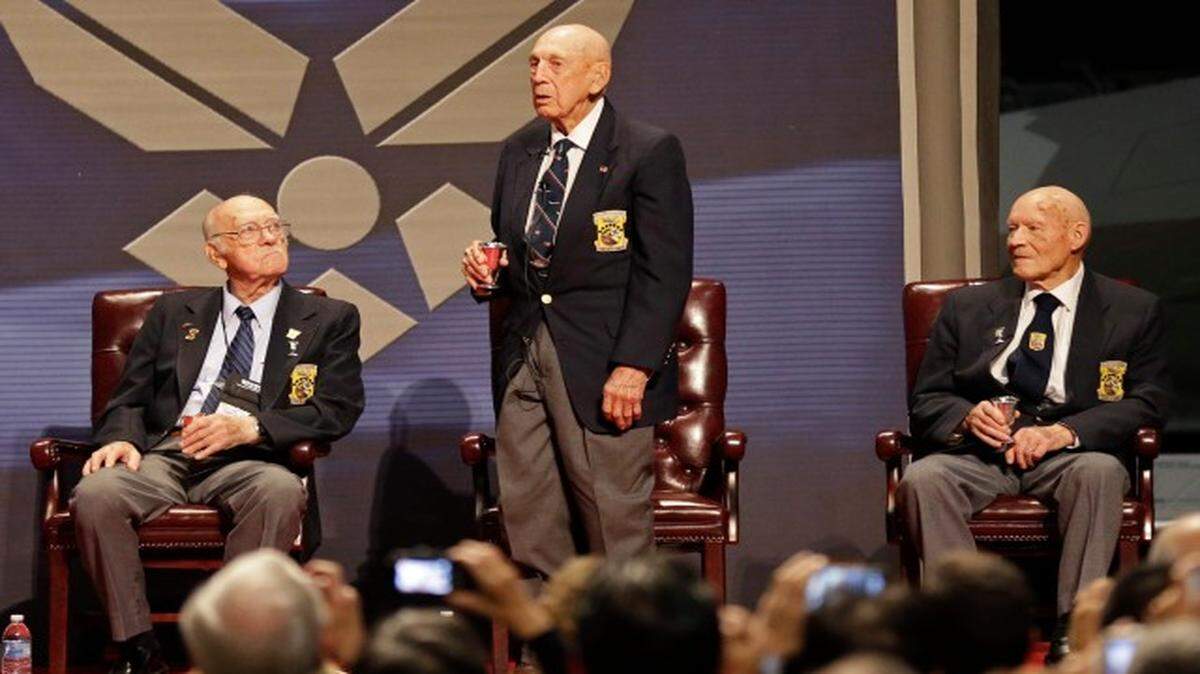
Scott interviewed a half-dozen or so of the surviving Raiders as he researched his book, though only two still are living today. This personal interaction, he said, helped him tell a more riveting story that went beyond the official reports.
“Getting the opportunity to meet these guys, to interview them… you really can’t beat that,” he says.
Scott, who has written two previous books on U.S. naval combat, attended a reunion of the Doolittle Raiders in 2013 at the National Museum of the U.S. Air Force in Dayton, Ohio. On Wednesday, he plans to be in Washington, D.C., when the Raiders receive the Congressional Gold Medal from leaders of the U.S. House and Senate.
The awarding of the medal – Congress’s highest civilian honor – recognizes the heroism of the Raiders and their leader.
“Their heroic mission served as a pivotal strategic victory and morale boost for Allied forces,” says the office of U.S. House Speaker John Boehner.
Or, as the late Nolan Herndon, a Raider from Edgefield, once said of Doolittle: “Young guys like us would go to hell and back for him. And we did.”
James M. Scott
Author of “Target Tokyo”
Home: Mount Pleasant
Education: Wofford College
Previous books: The former reporter for The Post and Courier of Charleston has written two other books on military history, “The Attack on the Liberty” and “The War Below.”
This story was originally published April 13, 2015 at 8:19 PM with the headline "Valor in dark days of war: New book retells story of Doolittle Raiders."