
Rattlesnake and pigeon have unusual encounter captured on video in South Carolina
The eastern diamondback rattlesnake is the most venomous snake in North America, and the largest of all rattlesnakes — so if you’re a small mammal or bird, it’s not something you want slithering toward you.
Video taken in the South Carolina Lowcountry captured an unusual encounter between the rarely seen eastern diamondback, and the all-too-common pigeon.
An employee of Hunting Island state park spotted the elusive rattlesnake emerge from the underbrush, and she followed, recording with her phone as it slithered soundlessly toward a pigeon in the road.
“This was the first and only time I have ever seen an eastern diamondback rattlesnake. A rare sighting,” Charlene Girten, administrative assistant at the park, told McClatchy News.
Eastern diamondbacks can grow up to 8 feet long, according to the Smithsonian Institution, though most will end up somewhere between 3 to 6 feet. Their bodies range in color from brown, and tan or to a more yellowish hue. Along the top of the snake, dark diamond-like patterns repeat down most of the body, which ends, of course, in its rattle.
“I grabbed my phone, quietly hurried outside and started to take the video, watching for incoming vehicles to stop them from running over the snake.”
While the sight of a rattlesnake might scare most people, Girten was enamored.
The pigeon, on the other hand, was seemingly unimpressed, even as the snake inched closer and closer.
“That must be the dumbest bird on the planet,” someone commented on the video Girten shared on Facebook.
Some stood up for the bird, suggesting that it may be intentionally baiting the snake in order to drive it away from a nearby nest.
“Run little dove,” another commenter wrote.
But the bird wouldn’t run, wouldn’t flap its wings or fly away.
“The dove is thumbing its beak at the snake,” commented another, suggesting that the prey was mocking the predator.
Still, the diamondback keeps moving, the bird meandering back and forth in front of it.
Though the dove pushes its luck, the snake never lunges for it — instead, it just slithers onward into the brush.
“I think they just happened upon one another,” Girten said, suggesting that the snake simply wanted to cross the road, not grab a meal. “Although, the snake did seem to slowly move toward the dove at first.”
Girten’s seen all kinds of animals while working at Hunting Island, spent plenty of time in nature, but what happened in the roadway stands out from it all.
“I was overjoyed and in awe to be so lucky to see and be able to film a snake like this,” she said.
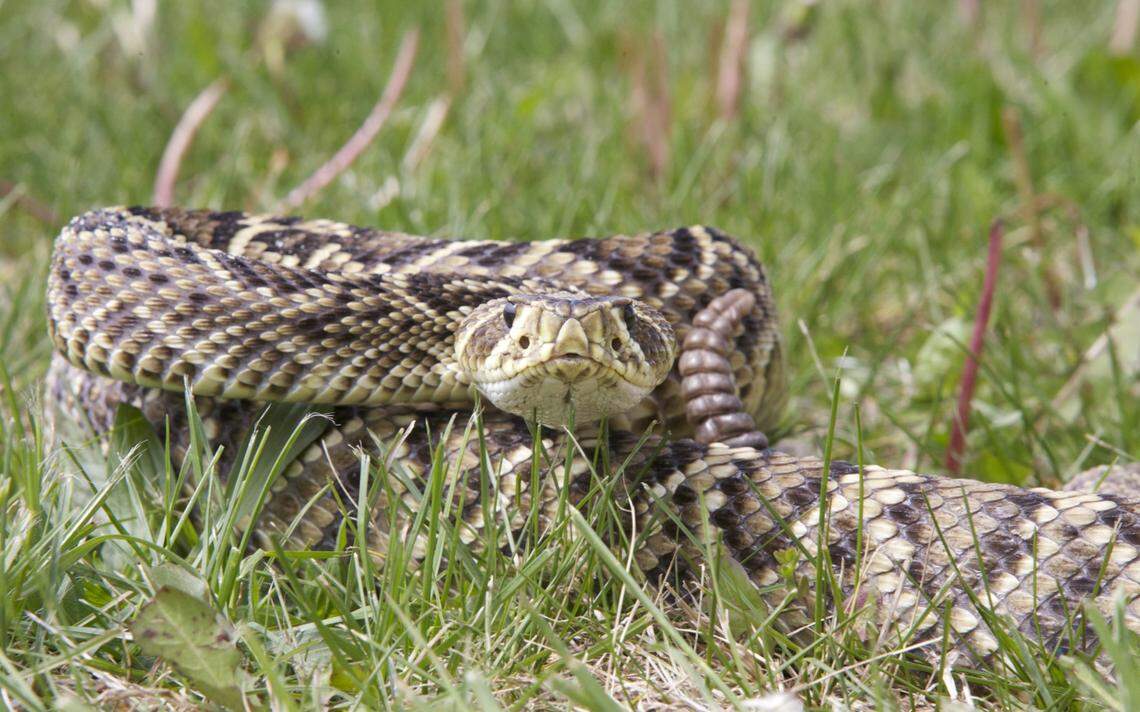
Eastern diamondback rattlesnakes aren’t protected by the endangered species act, but their numbers are dwindling, and they are considered a species of concern in South Carolina, according to the U.S. Fish and Wildlife Service.
They range from Mississippi up through North Carolina, preferring to stick closer to the coastline, according to the FWS. They can also be found across the entire state of Florida.
South Carolina wildlife organizations are concerned about the state’s eastern diamondback population, The State previously reported.
The Riverbanks Zoo in Columbia called the species’ declining numbers a danger to “our natural heritage, and a potentially important component of the long-leaf pine ecosystem.”
“It’s a very, very rare snake in South Carolina. They’re known to be found all the way up the coast through North Carolina, but now it’s virtually extinct north of the Santee River,” SCDNR herpetologist Will Dillman previously told the Island Packet.
“It’s a very unusual experience for someone to actually see a diamondback,” he said. “It’s really lucky.”
Loss of habitat and human encroachment are considered the biggest threats to the species’ survival, wildlife officials say. People intentionally killing the snakes is also a problem.
Killings are often prompted by fear of the diamondback, and snakes generally, despite being responsible for very few human fatalities.
“Eastern diamondback rattlesnakes are well known for their rattle and painful, venomous bite, which can be fatal to humans,” according to the Smithsonian. “That said, human deaths from rattlesnake bites are rare,” in part because antivenom is widely available in the areas where the snakes live.
The chances of being killed by a snake are 1-in-50 million, or about 5 to 6 deaths per year in the U.S., The State reported, meaning the reptiles kill fewer people on average than either spiders, wasps, dogs, or lightning.
This story was originally published December 11, 2020 at 2:18 PM with the headline "Rattlesnake and pigeon have unusual encounter captured on video in South Carolina."