Are EVs really reducing overall emissions? What ‘cradle-to-grave’ analysis found
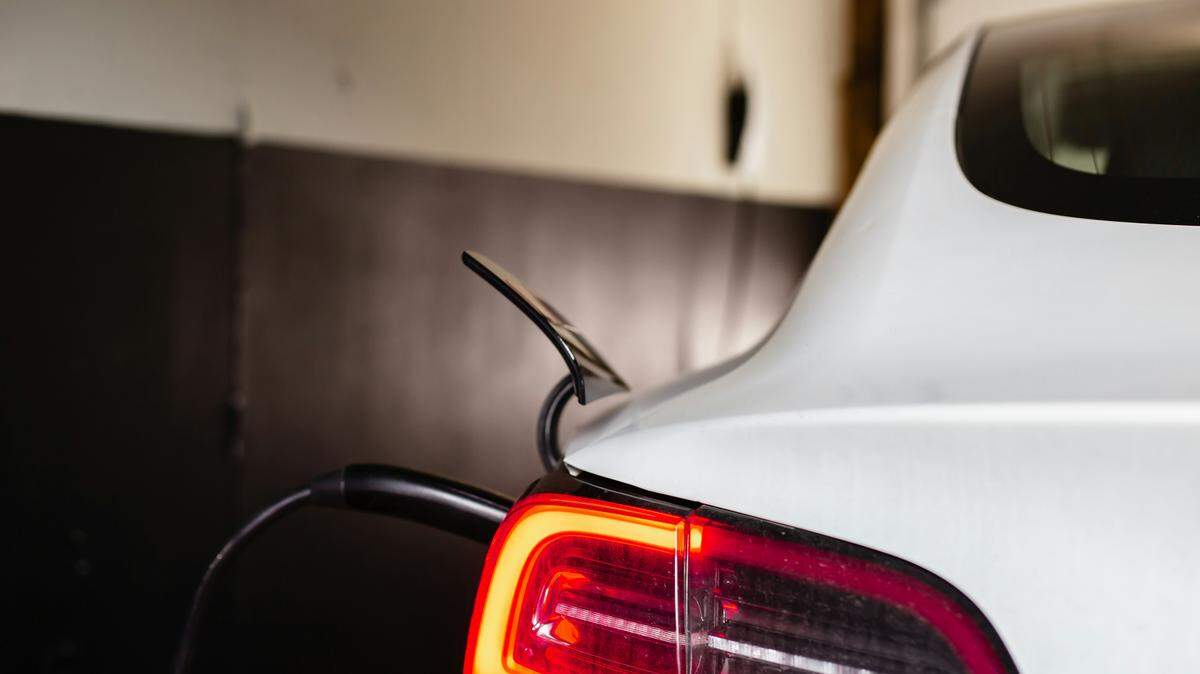
As more electric vehicles hit lots at dealerships across the country, supporters and opponents alike are considering the true impact EVs could have on carbon emissions.
While it’s accepted that electric vehicles produce fewer emissions while driving, other factors like where the EV driver lives, access to charging stations, battery production and what to do with EVs when they’re no longer operational offer additional considerations to the cars’ total impact.
EV sales have recently exploded as buyers already considering an EV raced to purchase the vehicles while a tax credit up to $7,500 is still valid, according to CNBC. A record-breaking 130,100 EVs were sold in July, the second-highest monthly sales on record.
The Trump administration is ending the Biden-era tax credit for purchasing new, used or leased EVs as part of the “Big Beautiful Bill” signed by President Donald Trump in July. The change will go into effect after Sept. 30.
The change comes, however, as one-third of Americans say they would be interested in buying an EV, a slight increase compared to 2024, according to the Pew Research Center.
Now, a “cradle-to-grave” analysis of EVs from the University of Michigan found electric vehicles have fewer emissions overall, even when considering their production and disposal.
“The government is backing off incentives, like the electric vehicle tax credit, but the original equipment manufacturers are heavily invested and focused on the technology and affordability of EVs,” study author Greg Keoleian said in an Aug. 25 news release from the University of Michigan. “EVs are becoming the dominant powertrain in other parts of the world and manufacturers recognize that is the future for the U.S.”
The study was published Aug. 25 in the peer-reviewed journal Environmental Science & Technology.
EV full ‘lifecycle’ far ahead of internal combustion engines
Researchers compared greenhouse gas emissions from different powertrains (internal combustion engines, hybrid electric vehicles, battery electric vehicles, plug-in hybrid electric vehicles and gas or diesel vehicles), different vehicle classes (sedans, SUVs and pickup trucks) as well as for different uses (utility, driving cycles, cargo loads), according to the study.
They also accounted for regional variation, which can impact temperature and gas emissions.
“In addressing all these variables in a single study, the researchers could make comparisons of emissions from different vehicles in an apples-to-apples way,” according to the release. “This enables a detailed comparison of, say, a gasoline-powered pickup in Perry County, Pennsylvania, with a fully electric compact sedan in San Juan County, New Mexico.”
Location plays a big role, Keoleian said, because battery EVs and plug-in hybrid EVs use more fuel at lower temperatures and therefore have shorter ranges in cooler regions, according to the release. Counties also have different power grids, so charging the same EV in one part of the state can release a different amount of emissions compared to charging at another station in a different county.
The researchers found that, overall, internal combustion engine pickup trucks were the highest emitters of greenhouse gasses, measuring at 486 grams of CO2 per mile.
If the same driver switched their vehicle to a hybrid — and kept other factors like utility and location the same — they could reduce their emissions by 23%, researchers said. If the driver switched to a fully electric pickup truck, that number would increase to 75%.
A major argument against electric pickups are the loss of hauling power, but researchers found that a battery electric pickup truck hauling 2,500 pounds emitted 30% less emissions than an internal combustion engine pickup hauling nothing.
Part of the research included creating a free online “Vehicle Lifecycle Emissions Calculator” that can compare the emissions of two vehicles if driven in the same area.
For example, in Broward County, Florida, a compact sedan internal combustion engine will emit 60 metric tons of CO2 over its “lifecyle,” which includes production and disposal.
A compact sedan battery electric vehicle will produce 20 metric tons of CO2 over its lifecyle in the same county.
“Climate pollution and costs (e.g. flooding, wildfires, droughts, heat stress) are increasing in intensity and frequency. This study demonstrates the magnitude of the reductions that can be achieved through vehicle electrification across the U.S. Consumers, industry and policy makers have a key role in accelerating electric vehicle adoption,” Keoleian told McClatchy News in an email.
Trump, vehicle manufacturers have disconnect
While the Trump administration may be taking a step back from promoting EV sales, manufacturers have yet to follow its lead.
On Aug. 11, Ford announced a $5 billion investment in new EV production as the company begins work on a midsize, four-door electric pickup truck with an estimated price of $30,000 assembled in Kentucky.
Plenty of other vehicle titans have their own EVs in the works — Honda is releasing the Afeela 1 and Acura RSX in 2026, Chevrolet has announced an electric Camaro expected in 2026-2027 and Jeep’s pickup, the Gladiator, will have an electric version available by 2028.
“The thing is really matching your vehicle with your needs,” Keoleian said in the release. “Obviously, if you’re in the trades, you may need a pickup truck. But you can get a battery electric pickup truck. If you’re just commuting to work by yourself, I’d recommend a sedan (battery electric vehicle) instead.”
The Trump administration previously tried to rollback investment in EV chargers as well, but that decision was later changed following legal challenges, McClatchy News previously reported.
The research team includes Keoleian, Elizabeth Smith, Maxwell Woody, Timothy J. Wallington, Christian Hitt, Hyung Chul Kim and Alan I. Taub.
This story was originally published August 26, 2025 at 1:35 PM with the headline "Are EVs really reducing overall emissions? What ‘cradle-to-grave’ analysis found."