
‘Slender’ creatures — in ‘pristine’ river — discovered as new species in China

In the Bahe River in central China, the slow-flowing water tumbles over stones and zigzags between towering hills.
The water flows into the Yangtze River, the largest and longest in the country, but its upper reaches are relatively unexplored and understudied.
Now, researchers searching the Bahe River for freshwater mussels have found there is more “cryptic” diversity in the river than previously believed — and found two species new to science.
One of the new mussels also belongs to a new genus, or a group of species that share similar physical characteristics and evolutionary history, according to a study published Aug. 8 in the peer-reviewed journal Zoosystematics and Evolution.
The genus Tongchuania, named after the ancient Chinese name for Dazhou, can be identified by its “medium-sized” shell length and its “thick, solid, glossy, yellowish-brown” exterior, according to the study.
The shells are generally “slender” with “straight blackish-green rays” and a “white” interior, researchers said.
Tongchuania mingiana measures about 2 inches long, according to the study.
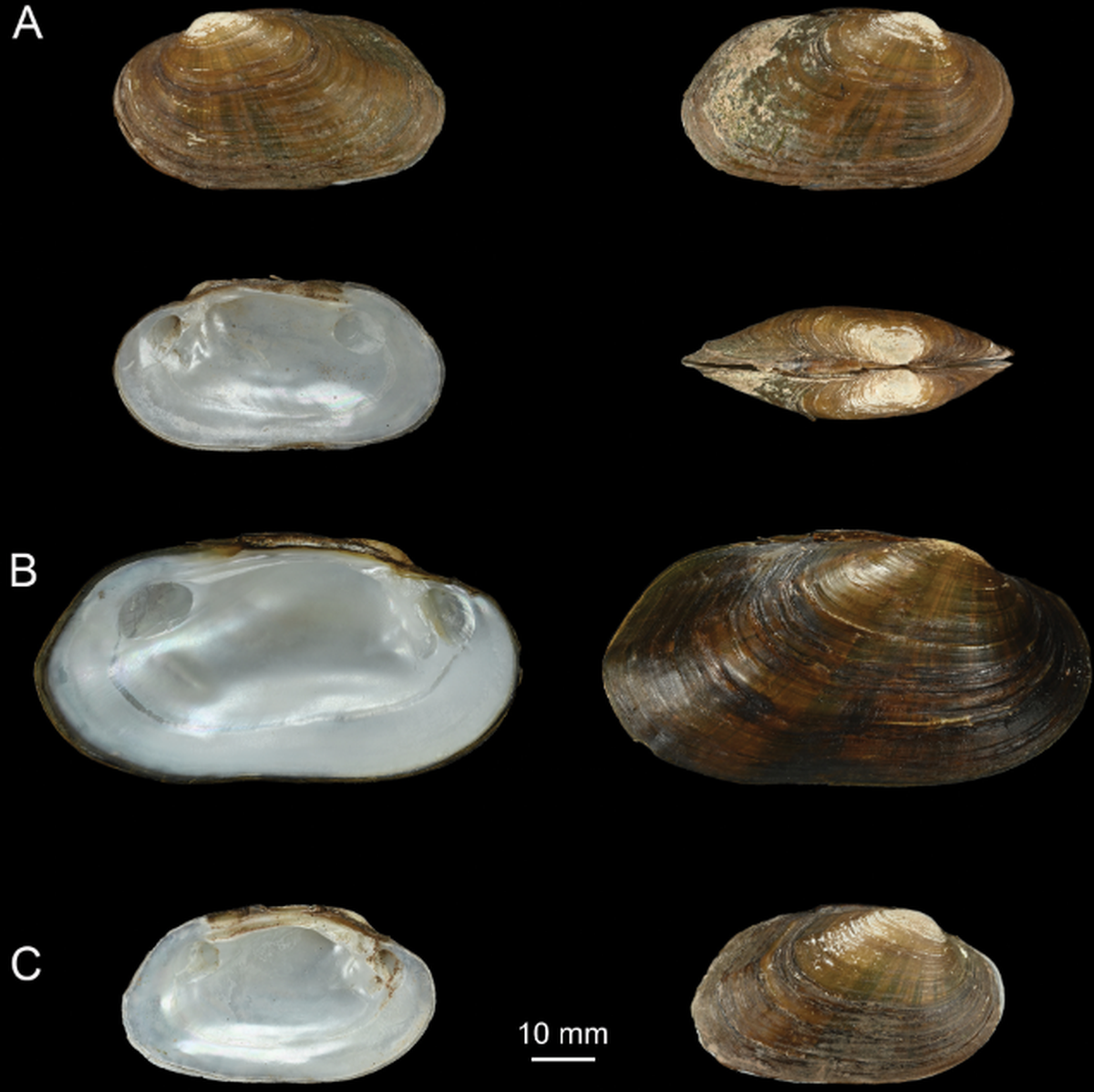
The specific name for the species, mingiana, means “bright mirror” and “refers to the highly distinctive yellow-green band on the shell,” according to the study. The “vivid” band has a “mirror-like contrast against the darker shell background.”
The mussel is commonly referred to as the brightband Tongchuan mussel in English, or ming jian tong chuan bang in Chinese, researchers said.
This mussel lives in the areas between stones and on gravel riverbeds in the Bahe River’s slow-flowing water, researchers said.
The river is only about 1.5 to 3 feet deep in areas where the brightband mussel is found, according to the study.
The second new species, Pseudocuneopsis perflora, belongs to a genus of freshwater mussels that had been identified before, researchers said.
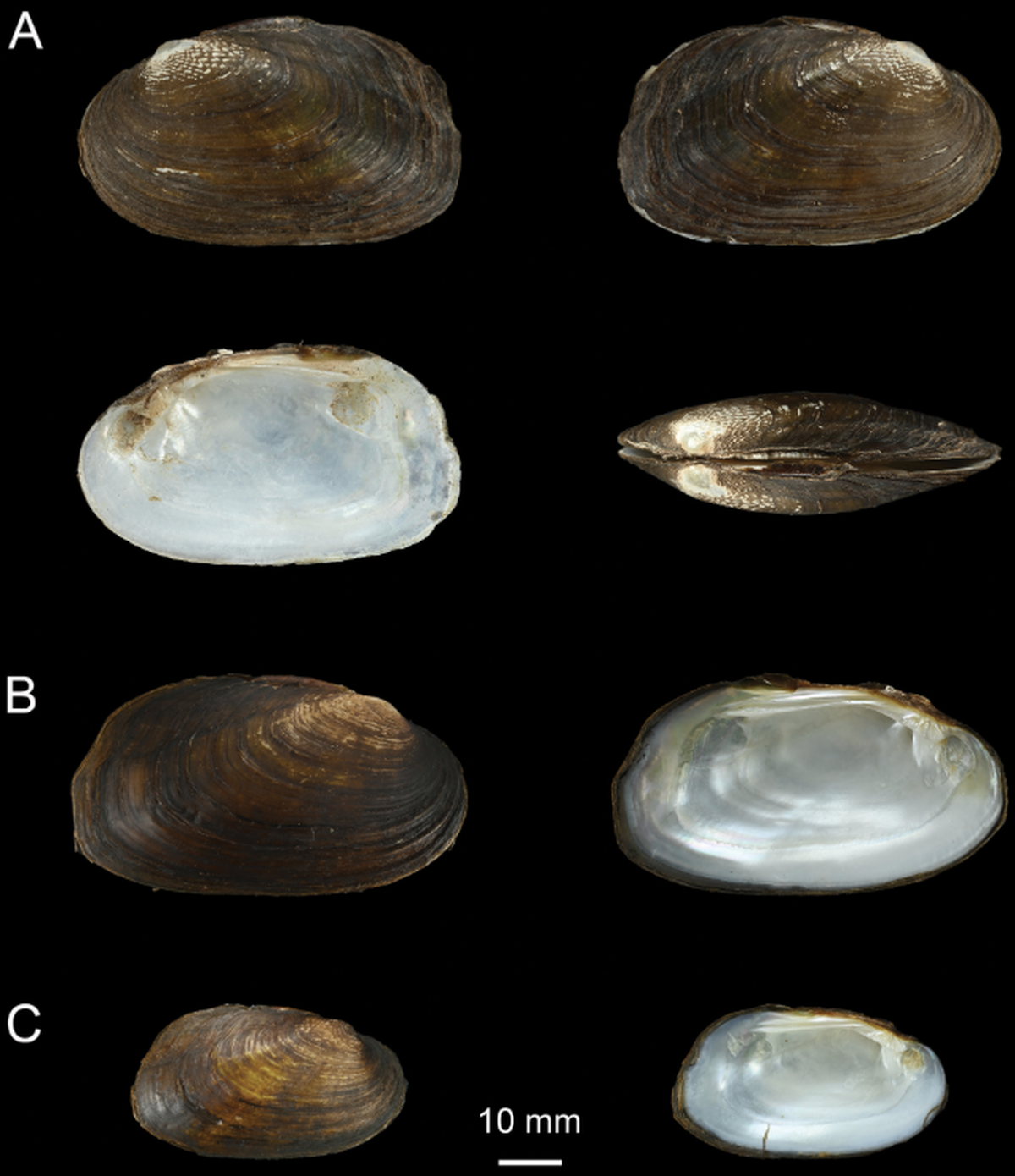
This shell is a bit longer, about 2.4 inches long, but found in the same general area as the brightband mussel, according to the study.
The exterior is “flat, thick, solid, yellowish-brown without any color rays,” while its interior is the same bright white, researchers said.
The mussel earns its name from its habitat, with references to the words “long-lasting” and “luxuriant,” according to the study. (
“The type locality (Bahe River, Dazhou City) maintains pristine aquatic conditions, and the name conveys a wish for the species’ persistent prosperity,” researchers said.
The common name for the species is the everlasting pseudo-wedge mussel, or yong sheng wei xie bang, according to the study.
The area may be a “potential hotspot” for freshwater mussels, researchers said, because the two new species were both living in an area where “freshwater mussel species are rarely found.”
Dazhou City is in central China.
The research team includes Hui Chen, Hong-Quan Xiang, Yu-Ting Dai, Zhong-Guang Chen, Yue-Ming He, Ge Guo, Xiao-Ping Wu and Xiao-Chen Huang.
This story was originally published August 18, 2025 at 6:26 PM with the headline "‘Slender’ creatures — in ‘pristine’ river — discovered as new species in China."
