‘Large’ desert creature with silver eyes found in Namibia. It’s a new species

Standing on the coast of Namibia looking out over the ocean, an ominous sound calls out from the rolling fog.
This place is known as the Skeleton Coast, and the sound starts out as pulsing notes that slow before stopping. The noises begin just after sunset and go long into the night whether it’s warm or cool.
The call belongs to a barking gecko, known as the “most vociferous” lizard — and it’s a new species.
Barking geckos, or Ptenopus, are found in southern Africa, and males make “loud advertisement calls at the entrance of their burrows to attract females and maintain territories,” according to a study published Aug. 28 in the peer-reviewed journal Vertebrate Zoology.
The calls can be heard hundreds of feet away, researchers said, and at times the chorus of “barking” becomes so loud it can “cause the traveller to change his quarters.”
During recent surveys for these noisy lizards in Namibia, researchers found five species new to science, according to the study. The geckos were found by flashlight at night by looking for the reflection in their eyes or following the sound of their calls.
Ptenopus sceletus, or the Skeleton Coast barking gecko, was one of these lizards.
Other than the gecko being found in the Skeleton Coast region, the white and gray coloration on the gecko’s head and feet “give the gecko a ghostly or skeletal appearance,” earning the new species its name, according to the study.
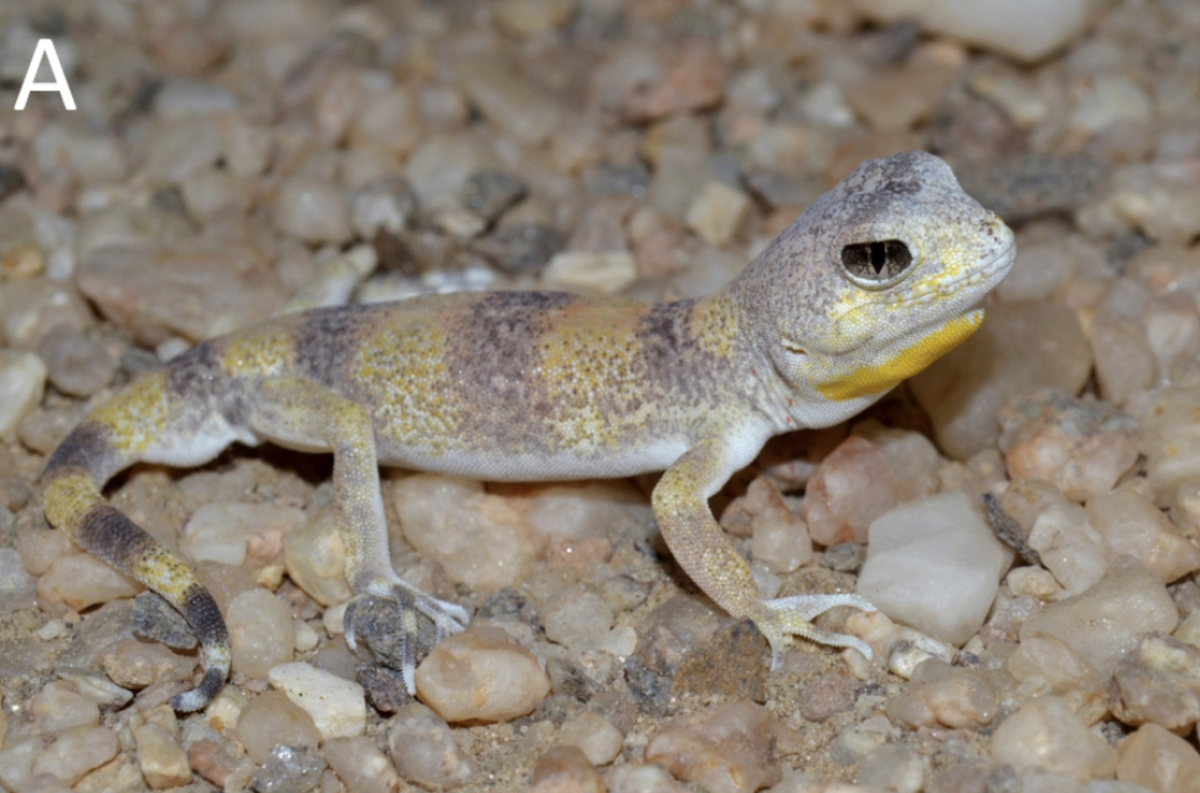
The geckos are “moderately large” in comparison to others in the same genus, according to the study, reaching lengths of 2.2 inches excluding the tail.
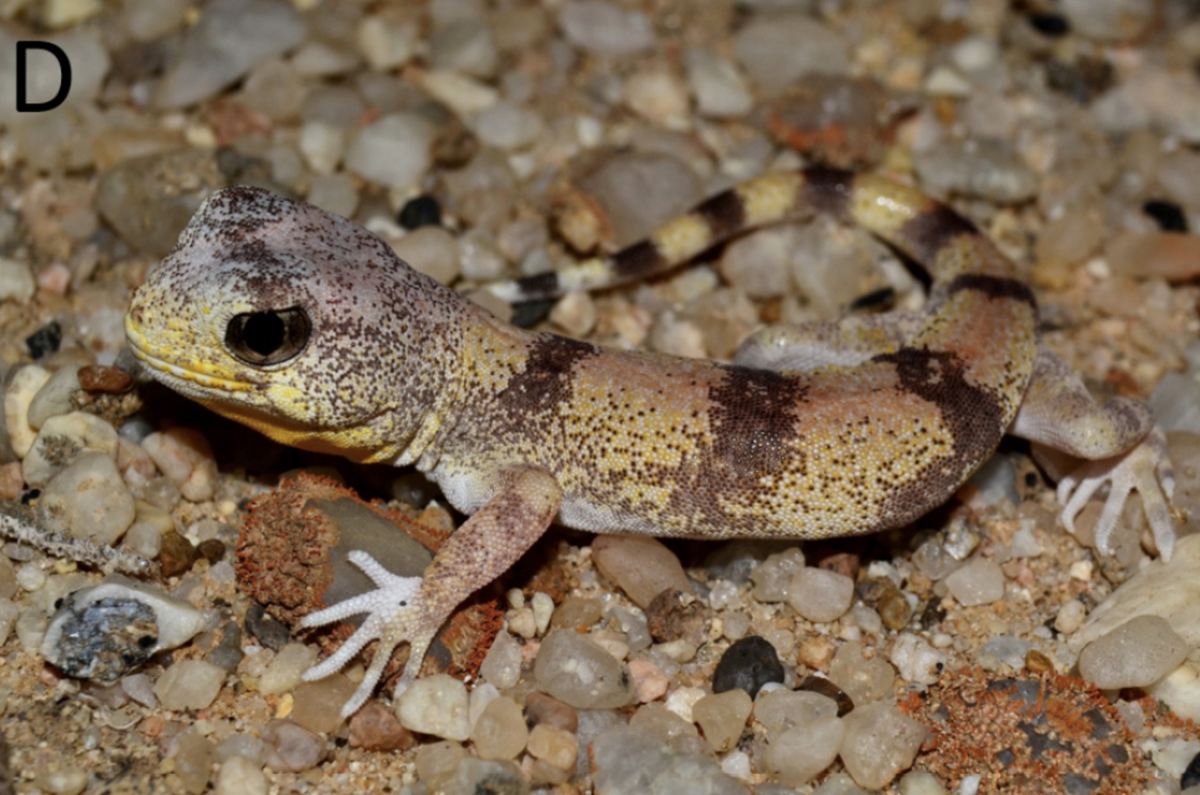
The species stands out from other barking geckos because of its banded coloration, researchers said.
The geckos are “light yellow to cream, with light orange speckles along the spine and dark purple-brown speckles or mottles all over, which coalesce to form a clearly banded dorsal colour pattern, with three dark bands on the body,” according to the study.
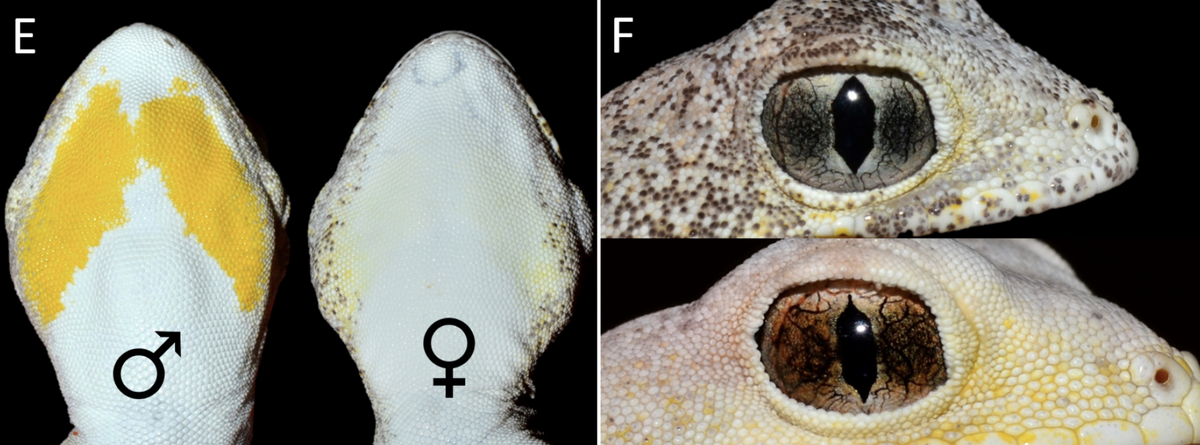
Males also have a bright yellow “gular patch” on their throats under the jaw, researchers said, and they all have a “silver” iris.
Along with its coloration, the Skeleton Coast barking gecko stands out from its cousins through its behavior.
“As with other species, P. sceletus sp. nov. calls from the burrow entrance, although it may also call occasionally while roaming,” researchers said. “This could not be observed directly, but a wandering gecko was often spotted in the area where a call was just heard — although wandering geckos are easier to detect than geckos in a burrow.”
The Skeleton Coast barking gecko doesn’t call as much as other barking geckos, and it spends more time than others far away from its burrow, or wandering, according to the study.
“It is active much later into the night than most (related species), often only emerging well after dark, and its activity is not dampened by cold or foggy conditions (as is most other species),” researchers said.
The geckos also have “shallower and simpler” burrows, built with two or three extra branches that could serve as an “escape exit,” according to the study.
“Ptenopus tend to be the most abundant lizard species in the arid areas where they occur. … Ptenopus have excellent hearing compared to other lizards and are hyper-alert at their burrow entrances — a feature that makes capturing them extremely difficult, compared to co-occurring species,” researchers said. “They are also shy, exceptionally well-camouflaged on the local substrate, and are able to efficiently attract mates from a distance and from the safety of their burrows.”
Four other new species — P. adamanteus, P. circumsyrticus, P. kenkenses and P. australis — were included in the study. The Skeleton Coast barking gecko was previously included in P. carpi, but has now been classified as an independent species. (
Namibia is on the southwestern coast of Africa.
The research team included François Becker, Graham Alexander and Krystal Tolley.
Audio captured from P. kenkenses, another species included in the study, shows the piercing call of barking geckos.
This story was originally published September 4, 2025 at 6:01 PM with the headline "‘Large’ desert creature with silver eyes found in Namibia. It’s a new species."