
Cuba leader Miguel Díaz-Canel says he would not step down despite U.S. demands
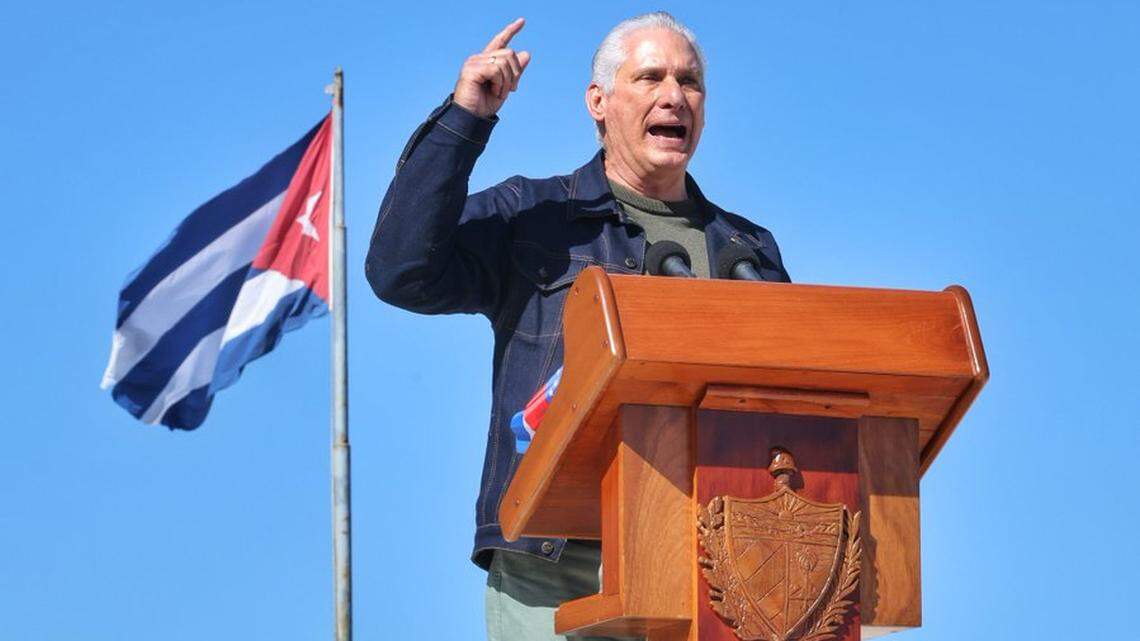
Cuba’s handpicked president Miguel Díaz-Canel flatly rejected any suggestion on Thursday that he would step down as part of a deal with the Trump administration, during a rare sit-down with NBC News in Havana.
“The concept of revolutionaries giving up and stepping down, it’s not part of our vocabulary,” Díaz-Canel told Meet the Press host Kristen Welker in what the network described as his first interview in American television.
Welker pressed the Cuban leader on whether he would consider resigning “to save Cuba”, if Washington demanded it as part of any deal. Díaz-Canel deflected repeatedly, at one point turning the question back on his interviewer.
“Have you ever asked that question to any other president in the world?” he said. “Could you ask that question to Trump?”
When Welker insisted the question reflected stated U.S. government conditions for easing pressure on the island, Díaz-Canel said the United States could not dictate who governs Cuba.
“In Cuba, the people who are in leadership positions are not elected by the U.S. government, and they don’t have a mandate from the U.S. government,” he said. “We have self-determination and independence, and we are not subjected to the designs of the United States.”
The interview, which will be published in full on Sunday online, comes as talks between Washington and Havana seem to have hit an impasse. The Miami Herald has previously reported on backchannel discussions between the two governments in which the U.S. side told people close to Raúl Castro, the 94-year-old retired general who is Cuba’s ultimate authority, that Díaz-Canel is an obstacle to reach a deal.
Secretary of State Marco Rubio also said the country needs to make dramatic economic changes and needs new leadership.
Cuba has announced some limited economic reforms, including allowing Cubans in the U.S. to own small private businesses on the island, and said it will release over 2,000 prisoners. But so far Human Rights Watch and other organizations that monitor the situation on the island, including Cubalex, Prisoners Defenders and the Cuban Observatory of Human Rights, have said no political prisoners have been freed as part of the mass pardon.
Cuba is grappling with a severe economic crisis and daily blackouts that have worsened after President Donald Trump’s actions in Venezuela cut oil supplies from that country. The administration also threatened countries supplying oil to Cuba with tariffs but has recently let a Russian tanker to deliver oil to the island.
After his military incursions in Venezuela and Iran, Trump has suggested that he could take Cuba next and has repeatedly said the communist-run nation is about “to fall.”
“The U.S. government that has implemented that hostile policy against Cuba has no moral to demand anything from Cuba,” Díaz-Canel told NBC.
In another interview with U.S. magazine Newsweek earlier this week, Díaz-Canel said that Cuba wants peace and a dialogue with the U.S., but would defend and fight back in case of an aggression.
“Cuba does not fear war,” he said. “And should we fall in battle, to die for the homeland is to live,” he added, quoting Cuba’s national anthem.
This story was originally published April 9, 2026 at 6:40 PM with the headline "Cuba leader Miguel Díaz-Canel says he would not step down despite U.S. demands."