Millions for rural roads, prisons and teachers included in proposed SC House budget
State budget writers in the S.C. House approved a spending plan Wednesday that includes more money for the state’s prisons, a $3,000 pay raise for the state’s public school teachers and $100 million for state-owned secondary and rural roads in disrepair.
Those priorities and many more are included in the roughly $10.2 billion general fund spending plan the House Ways and Means Committee is expected to approve completely on Thursday before it is sent to the full 124-member House for debate about mid-March.
The proposed spending almost entirely reflects what Republican Gov. Henry McMaster recommended the General Assembly spend in his executive budget released in January — a sign, budget leaders said, that reflects another year of collaboration between lawmakers and the state’s CEO.
“I know we’ll never have a perfect budget nor can we agree to everything,” said S.C. House budget chairman Murrell Smith, a Sumter Republican whose Ways and Means Committee gets the first crack at writing the budget every year. “But we tried our best ... and we’ll continue to work together in trying to develop a budget that’s in the best interest of the citizens of this state.”
Here are some highlights:
More money for SC prisons
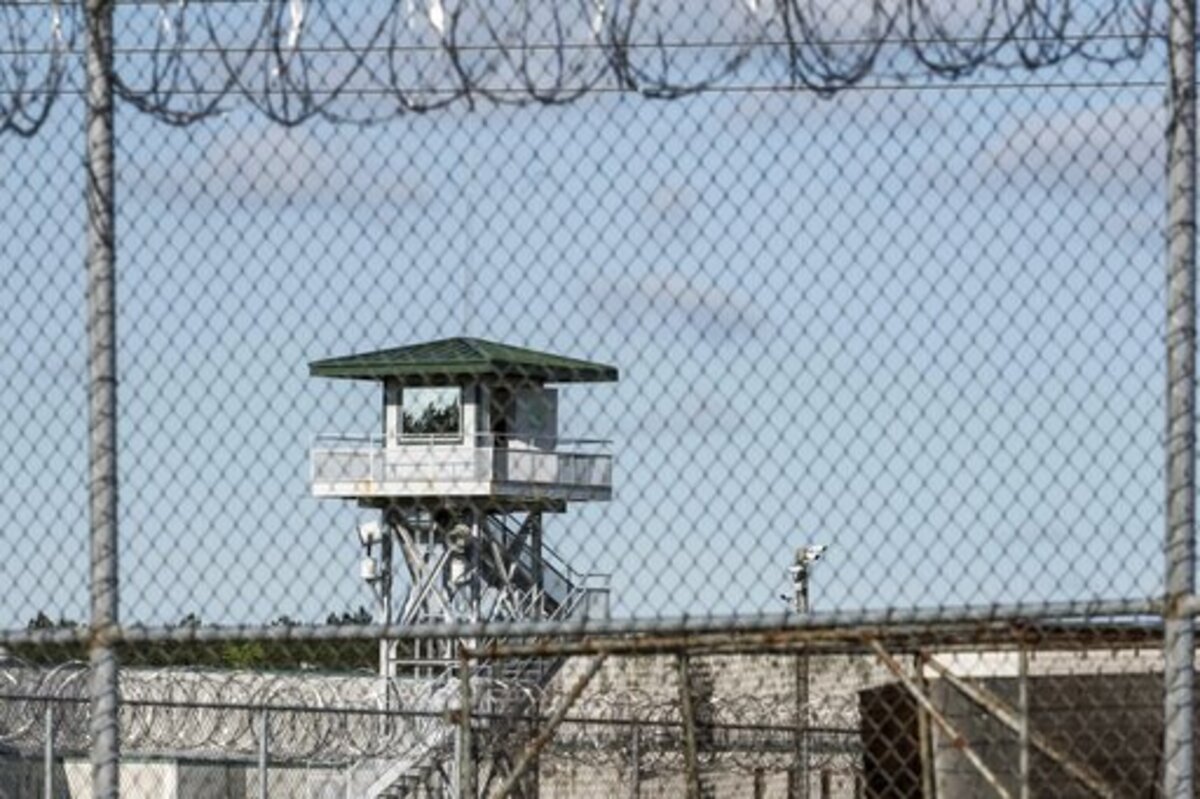
House budget writers agreed to spend $100 million on security and safety upgrades at the S.C. Department of Corrections, a direct response to years of underfunding the state’s prison system. Corrections officials have asked for more money to, in part, replace door locks, buy new safety equipment for officers and purchase equipment that can help detect cell phone usage.
Budget writers also agreed to spend on Corrections:
▪ $9 million annually to help the agency recruit and retain officers,
▪ $9 million annually for critical need health service positions, and
▪ $3 million, to reoccur annually for the expansion of a gang enforcement security team.
With more than 4,600 filled positions, Corrections is one of the largest state agencies in South Carolina. It also has about 1,475 vacancies, according to the latest data from the S.C. Department of Administration.
Under Director Bryan Stirling’s leadership, Corrections has “been building the case over the last few years of why they need to make improvements there,” Smith told The State.
In 2018, a deadly prison riot broke out at Lee Correctional Institution that claimed the lives of seven inmates, underscoring major security problems at the state’s prisons. The riot was partly blamed on inmates using illegal cell phones.
“Obviously, what you’ve seen over the years from riots, inmate violence to hostage situations, it’s obvious that in order to improve conditions at Corrections, it’s necessary for us to make prisons safer for employees as well as the inmates,” Smith said. “The only way to do that is by committing a large amount of money to improve conditions.”
The House proposal also includes more than $9.7 million to help the state Department of Juvenile Justice respond to problems at its Broad River Road facility, after the U.S. Department of Justice ordered officials to make changes or face a lawsuit.
Injection for roads
Staring down more than $1 billion in new one-time dollars to spend in the state budget, the House Ways and Means Committee voted to put $100 million of the cash toward fast-tracking work on the state’s so-called “market to farm” roads.
Those roads are mostly secondary rural roads in South Carolina — not primary highways such as Malfunction Junction, a dangerously congested corridor connecting Interstate 26 and Interstate 20.
Of that total amount, $77 million would go straight to the S.C. Department of Transportation to accelerate work on a paving program.
Another $23 million would go directly to county transportation committees to help decide which roads needs the most help.
Smith told The State this injection of money for roads is in addition to the state’s collection of an increasing gas tax, which is funding a longer term strategy to repair major roads and bridges that are deteriorating.
Pay raises
South Carolina’s teachers will see another pay raise this year should the House’s budget proposal be signed into law.
Budget writers agreed to spend roughly $213 million to help add $3,000 to the annual salary of the state’s more than 50,000 teachers.
The budget also would raise the state’s starting teacher pay to $38,000, up from $35,000 which was approved last year.
That teacher pay proposal was first announced by State House leaders and McMaster in December. McMaster said at the time that leaders chose a flat amount to give teachers, rather than a percentage, because it would have a greater impact on classrooms.
The House budget-writing committee also proposed merit pay raises across state agencies.
Ways and Means vice-chairwoman, Rep. Gilda Cobb-Hunter, told her colleagues Wednesday that she plans to ask the House to raise state worker pay by either 2.5% or 5% — floor amendments the Orangeburg Democrat has made in years prior — to help state employees on the lower end of the pay scale.
Between Wednesday and the time the budget hits the floor next month, Cobb-Hunter asked her colleagues to talk to state employees “who are making very low wages.”
More importantly, she said, “hear their pain.”
This story was originally published February 19, 2020 at 4:16 PM.