SC governor, lawmakers push 12 weeks of paid family leave for state employees
When Mary Lucas graduated from law school at age 30, she knew she wanted to start a family. But as an employee at South Carolina’s Department of Natural Resources, she knew she would need to work for the state for years before she earned enough paid leave to spend the time she needed with a newborn.
“What I didn’t realize was the amount of time it would take me to accrue enough leave to start a family,” Lucas said.
After years of hard work and saving, Lucas managed to accrue enough paid leave to take off for her first child. She and her husband went through the process again in anticipation of having a second child. But when Lucas’ toddler was hospitalized in January, she realized her years of saving wouldn’t be enough.
“I was forced in a situation where every day I stayed in the children’s hospital with my daughter, and the weeks after when she was at home recuperating, I was forced with the realization that every day I stayed home with an acutely ill child, I was losing days of paid leave to stay home with my son who is due to be born in May,” Lucas said.
South Carolina currently doesn’t offer paid leave to expecting parents who are state employees. But S.C. Gov. Henry McMaster and two Democratic lawmakers from Richland County want to change that.
Two bills, one in the House and one in the Senate, would give all state government employees 12 weeks of paid family leave after the birth or adoption of a child. The legislation would match a Trump administration family leave policy giving 12 weeks of paid leave to federal workers, which was passed by the federal government in December as part of a defense spending bill.
The bill does not affect the family leave policies at private businesses across the state. However, some employees are eligible for unpaid family leave under the federal Family and Medical Leave Act. Whether employees can use disability benefits for maternity leave depends on the employer.
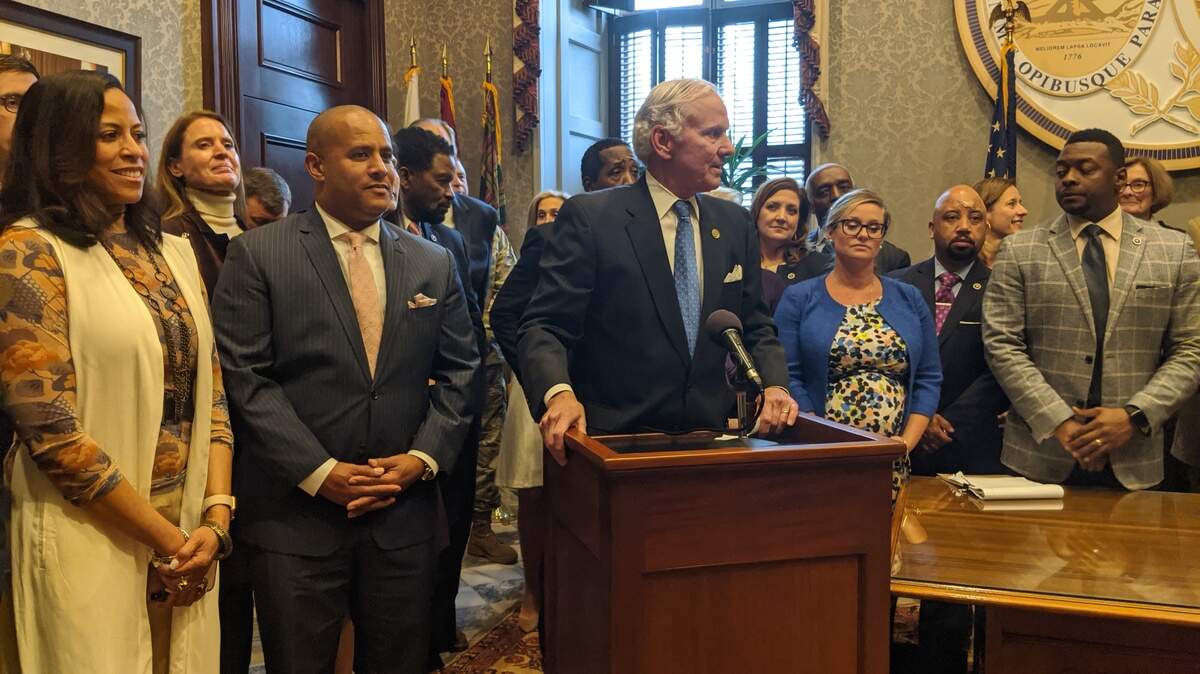
On Wednesday, McMaster gathered with House and Senate lawmakers to call for the bills’ passage, adding that this legislative session is a good time to pass the paid leave policy because of the state’s “great economic success.”
McMaster said the bills would help South Carolina’s already booming economy by giving state employees a reason not to leave their jobs because they are becoming parents. Instead, the policy would give them a reason to come back to work at their state jobs.
“We want to keep people working,” McMaster said. “We don’t want them to quit work and have to go home and take care of a child. We know that the strongest bond there is is that family child.”
“This is a big plus for our economy,” he added.
Additionally, family leave could increase morale, retention and job loyalty at state agencies, which face worker shortages.
“You (will) have happy mamas, happy babies, and more importantly, you’ll have happy children,” McMaster said.
State Sen. Darrell Jackson, D-Richland, and the sponsor of the Senate’s bill, said he was inspired to introduce the bill after an administrative assistant in his office became pregnant. Jackson said she was still working at nine months pregnant because she had to save her days off for family leave.
“I thought this isn’t fair,” Jackson said. “This isn’t right.”
Jackson applauded the fact that the bill had support from all factions at the State House.
“This is one good time where we all come together across partisan lines to do what’s right for the people of South Carolina,” Jackson said.
S.C. Rep. Beth Bernstein, D-Richland, and the sponsor of the House bill, enumerated the positive affects family leave has on families, including improving child development, decreasing postpartum depression and increasing the involvement of fathers.
“The time is so crucial after the birth of the child, the bonding time,” Bernstein said. “There are so many reasons why this bill is good.”
Lucas, who was invited to McMaster’s news conference with lawmakers, said she is “passionate” about the legislation passing.
“I feel encouraged that we have the support of the governor and that we have a bipartisan piece of legislation that hopefully can get some traction through this legislative session,” Lucas said.
If signed into law, the legislation would go into effect immediately.
This story was originally published March 4, 2020 at 4:47 PM.