DOJ officials to visit SC juvenile prison, make recommendations for reforms
Officials with the U.S. Department of Justice will come to Columbia this month to work with leaders at South Carolina’s youth prison on overhauling operations there.
The visit follows the federal agency’s release of a report in February detailing constitutional violations at a Department of Juvenile Justice youth detention facility.
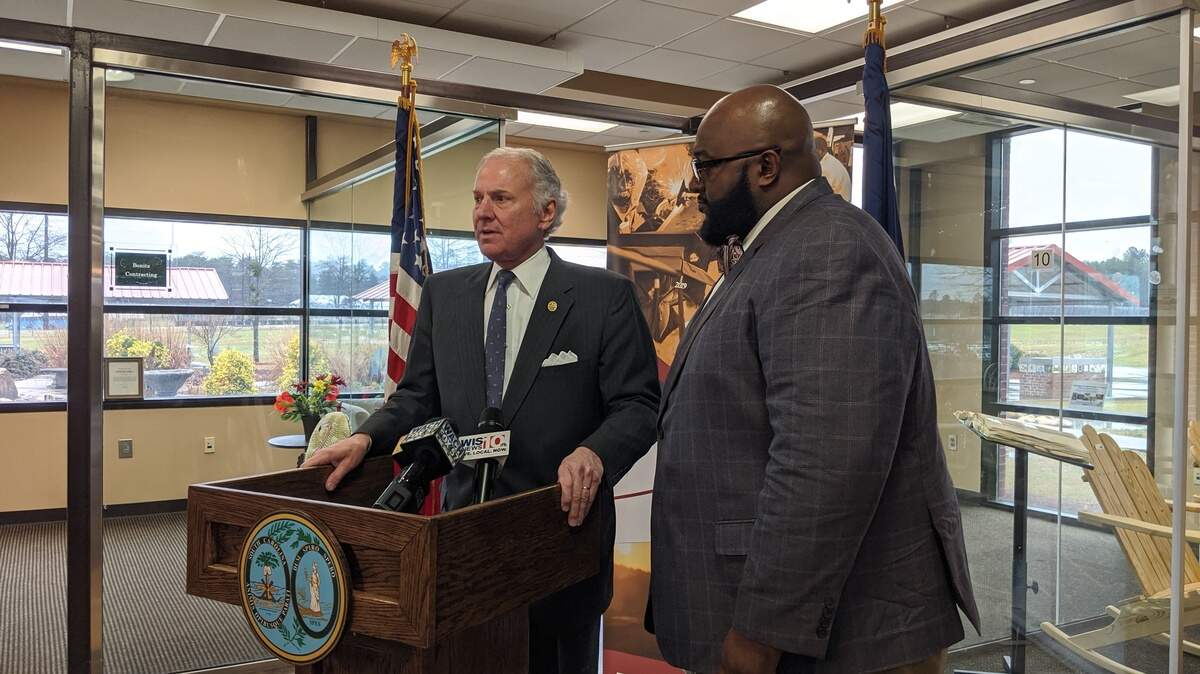
S.C. Gov. Henry McMaster on Wednesday spoke to reporters after touring DJJ’s Broad River Road facility, which houses about 130 youth inmates and was the subject of the federal agency’s report.
“It’s always a challenge (to make changes) in the prison system and the correctional system,” McMaster said. “Particularly with juveniles, it’s always a challenge to maximize those things you have and to see that we’re doing the very best job possible.”
In early February, the Department of Justice released a report detailing how officials at the Broad River Road complex endangered youthful inmates and violated their civil rights. Specifically, the report said the state agency failed to protect the children in its care from “from youth-on-youth violence and places youth in punitive, prolonged isolation.”
Officials from the Department of Justice said those failures violate children’s civil rights, and the South Carolina U.S. Attorney’s Office agreed with the assessment.
The report stemmed from a 2018 investigation into the Columbia facility.
Since the report was released, Juvenile Justice Director Freddie Pugh said he has worked to make small changes ahead of Department of Justice officials’ trip.
“We’re just trying to holistically look at the letter that the Department of Justice has sent us, and then when they arrive on campus in a week or so, we’ll take a deeper dive,” Pugh said Wednesday.
S.C. officials have tried to find an “intermediate” solution to keep children out of isolated environments for misbehaving, Pugh said. This includes creating “time out” rooms that inmates can choose to go to calm down instead of engaging in a confrontation, he added.
Pugh said he also plans on decreasing the number of inmates at the Broad River Road facility by keeping some children closer to home. This would have the added benefit of helping relieve some of the staffing issues the department has struggled with in recent years and still struggles with, Pugh said.
“If we can reduce the number of young people that are at individual locations, then our staffing ratios can adjust themselves,” Pugh said.
In addition, Pugh said he has worked with the Legislature to ensure that money for a new 12 bed facility for the severely mentally ill would open up in the state.
“We’re doing this not because we wanted to, but because we needed to,” Pugh said.
McMaster said House lawmakers have indicated a willingness to approve more than $9 million to make repairs and upgrades at the Broad River Road facility, like upgrading security cameras.
On top of the $9 million, a preliminary budget released by the House would give about $5 million to help with staffing retention and training within the department, he said.
“We have a lot that needs some work, but the good news is that the Legislature is responding this year better than before, better than ever before,” McMaster said.
McMaster said there is no deadline for when all the improvements suggested by the Department of Justice have to be made.
“The Department of Justice is interested in seeing progress, and we’re making progress,” he said.
Pugh vowed to follow the Department of Justice’s recommendations to “right the ship.”
“We’ve done a number of things since the DOJ did their investigation back in 2018,” Pugh said. “And I told the DOJ back in 2018 when I was then interim director, that if I was confirmed as director and they came back with findings that we need to work on, that we would do those things.”