McMaster wants $525M settlement to stay in 3 South Carolina counties. Lawmakers don’t
Some $3 billion worth of federal money for COVID-19 relief and the Savannah River Site settlement are pouring into South Carolina — but the state’s governor and lawmakers who write the budget don’t agree on how to spend it.
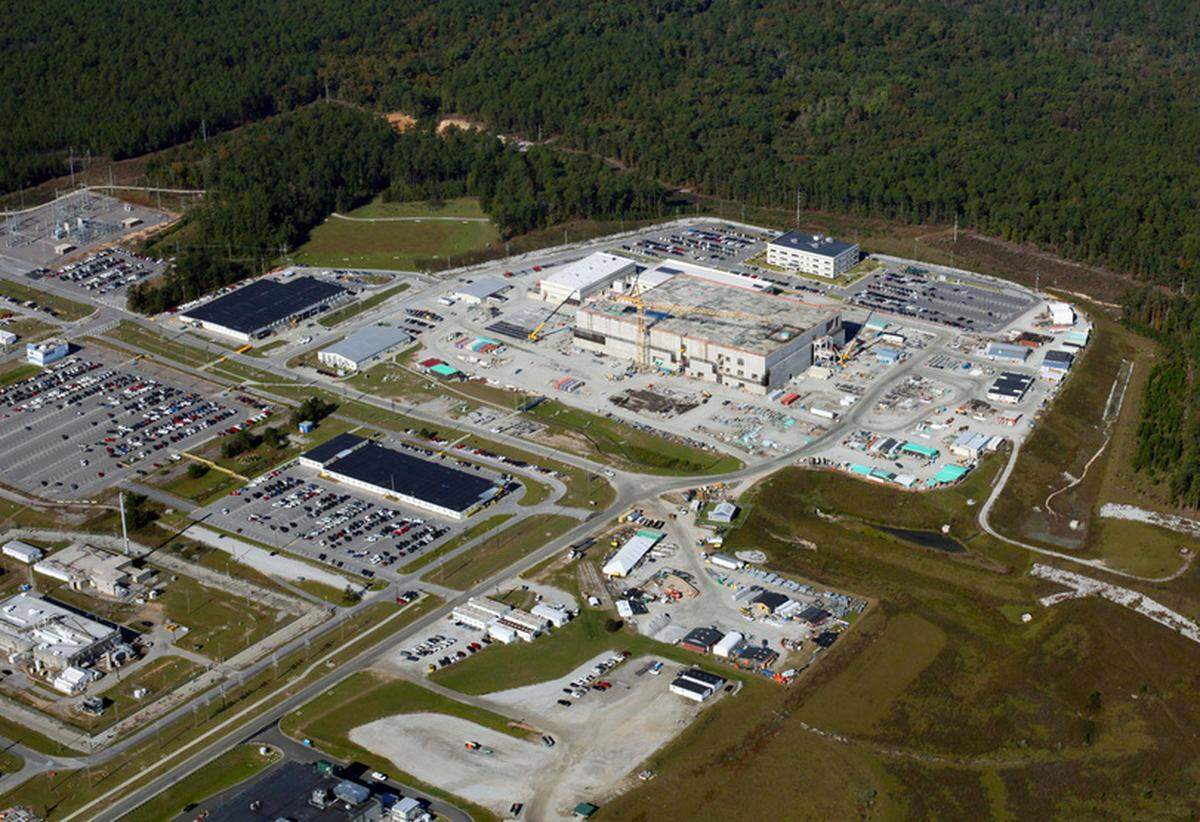
Their main disagreement is how the state should allocate $525 million from the Savannah River Site settlement, money paid to the state after the federal government decided not build a facility dedicated to converting plutonium into fuel for nuclear power. McMaster said all of that money should stay in Aiken, Barnwell and Allendale counties.
That half-billion dollars is in addition to the more than $2.4 billion in federal money available to the state from the American Rescue Plan for COVID-19 relief. Lawmakers also have to decide how to spend another $3 billion in additional state money for the upcoming budget year.
A panel of Senate budget writers said nearly two-thirds of the Savannah River Site settlement — about $341.2 million —should go to Aiken, Barnwell and Allendale counties, with the remainder being distributed around the state. The senators have not yet recommended specific projects in those three counties for which the money would be used.
The proposal calls for sending 10% of the settlement money to counties that border the three counties with the Savannah River Site: Bamberg, Colleton, Edgefield, Hampton, Lexington, Orangeburg and Saluda counties. The amount of money each of those counties would be based on how many people each county has working at the Savannah River Site.
The remaining 25% would go to county transportation committees for road projects around the state except for Aiken, Barnwell and Allendale counties.
While a majority of the money would go to the three counties, sending some money to other counties would be “a way to acknowledge there are needs in other areas of the state,” said state Sen. Thomas Alexander, R-Oconee.
House budget writers have yet to put forward their proposal for the SRS money, which still may be several weeks away.
State Rep. Bruce Bannister, R-Greenville, who is leading a group of House Ways and Means members in analyzing how to spend the dollars, said sending SRS money to the Port of Charleston, which has plans to expand barge and rail operations, may be an option.
South Carolina received the money after state Attorney General Alan Wilson sued the federal government after it nixed MOX facility project but left the plutonium stored at the Savannah River Site.
Bannister said even though the issues surrounding the plutonium directly affects Aiken, Barnwell and Allendale and their perimeter counties the most, dealing with the fallout is a statewide issue.
He added if some projects in Aiken, Barnwell and Allendale counties don’t receive money through the SRS settlement, money is still available through the budget surplus and COVID relief dollars.
But spending SRS money outside of Aiken, Barnwell and Allendale counties is not what McMaster called for.
McMaster wants all of the money used on projects in the three counties with the Savannah River Site. He proposed roughly $451.5 million worth of projects with the remaining $73.5 million kept in a reserve account for the three counties for future needs.
It is too soon to speculate what McMaster would do if lawmakers send him a plan that spends SRS money around the state, said Brian Symmes, spokesman for McMaster’s office.
“He doesn’t like seeing that significant portions are leaving the impacted areas,” Symmes said.
Federal COVID relief money
Lawmakers also may have some different ideas from McMaster on how much of the federal COVID-19 relief money from the American Rescue Plan to allocate.
A group of House budget writers has yet to propose how to spend the one-time federal money. But Bannister indicated the House Ways and Means Committee may not want to allocate all of the federal COVID-19 relief money this year, especially with the economy doing well.
“We should make a substantial investment in transformational projects but at the same time hold some of those funds for allocation later as we see how the pandemic progresses, how the economy progresses and in which direction we continue to go,” Bannister said during a recent subcommittee meeting. If the economy keeps improving, he said, “these will be funds available for future projects. If it’s down, they would be available for lost revenue or other emergencies that may arise.”
Bannister said the House proposal for the first part of COVID-relief money allocations could be finalized this week and will include money for water and sewer projects, broadband internet expansion and enough money to widen Interstate 26 between Columbia and Charleston.
A panel of senators tasked with crafting the Senate’s version of how to spend COVID dollars wants to give $453 million to the Department of Transportation to allow it to speed up its 10-year plan and $900 million for water and sewer projects. The senators also want to use $400 million on expanding high-speed broadband internet in the state.
Senators want to hold back the remaining $745 million for a later phase, similar to the way the state spent an earlier pot of COVID relief money in two separate phases.
“We continue to be involved in the pandemic and not knowing exactly what else the needs may be from that standpoint,” Alexander said.
The Senate’s proposed $900 million for water and sewer projects is higher than the $500 million McMaster proposed.
McMaster, in his executive budget, outlined $2.4 billion worth of recommendations for spending the COVID relief money, which included $360 million for widening I-26, $300 million for building out Interstate 73, setting aside $250 million for the unemployment insurance trust fund, $100 million for a new lab for the S.C. Department of Health and Environmental Control and $124 million for workforce development training, among other things.
“The governor certainly believes all the projects he included are worthy and meritorious,” Symmes said.
This story was originally published February 1, 2022 at 1:32 PM.