Could vaguely worded anti-CRT efforts threaten Holocaust education in SC?
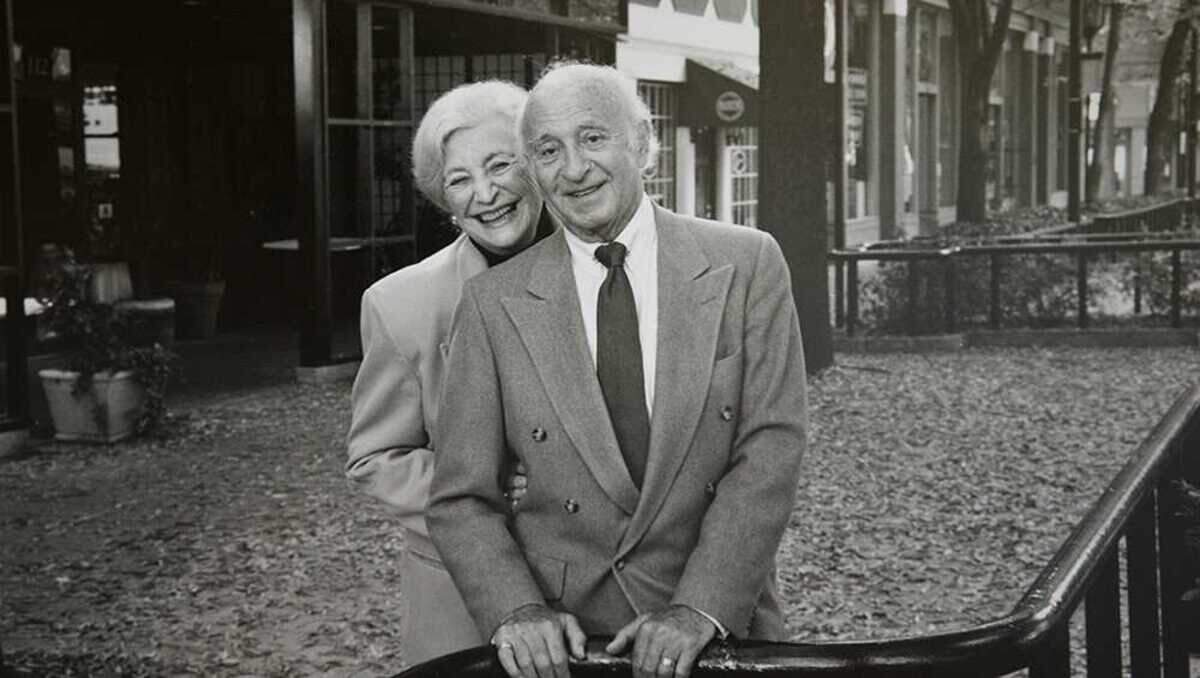
It wasn’t until Max Heller was running for mayor of Greenville, S.C., that his Holocaust survival story came into clearer detail for members of his own family.
For many years, Max and his wife, Trude, were shy to talk in much detail about their escape as Jewish people from Nazi-overrun Europe, remembers Lynne Garfinkel, one of the Hellers’ 10 grandchildren. Nonetheless, they would become champions of Holocaust education in South Carolina.
Today, Garfinkel and others worry that current efforts to reel in public education related to race, sex, religion and other topics could, perhaps unintentionally, stifle teaching the uncomfortable details of one of history’s most fraught events, the Holocaust — stories like the Hellers’ — in South Carolina classrooms. Concerns similar to Garfinkel’s already have shut down similar legislative efforts in some other states.
As proposals taking aim at the tenets of critical race theory, or “CRT,” wind through the S.C. State House, critics say the effort — which, among other things, would require “impartial discussion of controversial aspects of history” — could have a chilling effect on the ways some teachers approach difficult topics such as the Holocaust, to say nothing of the possible impacts on teaching about racism in America, from slavery to Jim Crow to current events.
“There’s a lot that’s uncomfortable in history,” said Patrick Kelly, who teaches a high school Advanced Placement U.S. government and politics class in the Richland 2 school district and is the director of governmental affairs for the Palmetto State Teachers Association. “It is not comfortable to learn about the Holocaust. ... (The wording of current legislation), to me, would fundamentally impact how I could teach about the Holocaust. ... That’s without getting to legacy of slavery or Jim Crow.”
Garfinkel, who wrote a letter of testimony to South Carolina lawmakers imploring them to rethink the anti-CRT legislation, said she worries true stories of history could get watered down to meaninglessness in schools.
“When we tie (teachers’) hands or make it so unclear about what can and can’t be taught, I think we’ll water down history in a way that isn’t helpful for anyone,” Garfinkel said. “This isn’t helpful for children, to give them a ‘Pollyanna’ or watered-down version of history.”
Those difficult stories, uncomfortable details and all, have to be told, Garfinkel says.
Max and Trude Heller’s story has to be told.
Garfinkel remembers, “A child said to my grandmother one time... ‘What do I say to my father, who doesn’t believe the Holocaust happened?’ And she said, ‘Tell them you met me.’
“And for that child who maybe would grow up in a house where he was told, ‘This didn’t happen,’ what would compel him to believe otherwise?”
Uncomfortable details of history
To Garfinkel, her grandparents’ story of escape and building a new life and family in South Carolina “was always about miracles and luck and faith and belief, (and) the goodness of man.”
Between the two of them, the Hellers lost some 90 relatives in the Holocaust. But Max and Trude were able to make it to the United States, and they married in Greenville in 1942.
Both her grandmother and grandfather, Garfinkel remembers, would tell their own stories of the particular day “when they realized everything was changing, ... the drama of when they individually realized that their world wasn’t safe.”
For Trude, that moment came when she went into a gym class and came back out to find Nazi propaganda had taken over the city of Vienna, Austria. As for Max, he told the story of “being turned on by his friends and coworkers who, all of a sudden, would call him names and spit on him,” Garfinkel said.
“Those are the stories we know in our family that I think in history get kind of generalized,” she said.
Max Heller went on to serve as Greenville’s mayor for eight years in the 1970s, being known as a key force behind the city’s downtown revitalization. He died in 2011, and his wife in 2021.

By now, most survivors and firsthand witnesses to the horrors of the Holocaust and World War II have died, making it all the more important to pass on their stories so that the details are not lost, Garfinkel said. Teachers and schools are essential to passing on those stories, she said.
But there are those who deny the truth of the Hellers’ experience, deny the existence of the Holocaust.
How long, Garfinkel wonders, before one of those deniers speaks up about lessons in a South Carolina classroom?
“I’m just waiting for that first case when a parent says, ‘This causes discomfort for my child,’” she said. “I worry, what if there is a child in a school whose parent doesn’t believe the Holocaust happened, could they jump into the curriculum? ... Could they use the vague language to perpetuate what they believe, which isn’t true?”
If discomfort were a litmus test for what’s acceptable to teach, some educators could shy away from the full picture of history, Garfinkel and Kelly say.
“You can’t inadvertently chill the discussions of what happened in the past, just because someone might have an emotional response,” Kelly said. “Part of being human is having emotions.”
‘An unintended chilling consequence’
Legislation being debated in the South Carolina State House essentially seeks to stamp out the tenets of critical race theory, which is, technically speaking, a way of thinking about the world that posits racism is embedded in social institutions. However, the phrase has evolved into a sort of catchall concept for teaching about topics concerned with race, racism and oppression.
What’s on the table in South Carolina closely mirrors proposed laws across the country — many of them hinging on the basis of “discomfort” — which have been met with mixed reception.
Amid debate, some of the controversial, vague language included in earlier versions of South Carolina bills appears to be out of play, including a stipulation concerning “discomfort, guilt (or) anguish” that Garfinkel, Kelly and others feared could open teachers to a world of criticism.
As it stands now, the focus of lawmakers in the state House has turned to a single bill dubbed the “South Carolina Transparency and Integrity in Education Act” that would, among other things:
- Prohibit teaching the concept that “an individual, by virtue of the race, sex, ethnicity, religion, color, or national origin of the individual, inherently is privileged, racist, sexist, or oppressive, whether consciously or subconsciously.”
- Specify that approved teaching and instructional materials should involve “the impartial discussion of controversial aspects of history” and “the impartial instruction on the historical oppression of a particular group of people based on race, ethnicity, class, nationality, religion, or geographic region.”
- Create an online complaint channel to report alleged violations of teaching prohibited concepts.
- The words “discomfort,” “guilt” and “anguish,” all included in earlier proposed bills, have been expunged from the language of the new bill. Neither does the new bill mention “critical race theory” by name, nor the 1619 Project, a New York Times Magazine initiative that “aims to reframe the country’s history by placing the consequences of slavery and the contributions of black Americans at the very center of our national narrative.” (A great deal of anti-CRT legislation across the country was introduced in response to the 1619 Project.)
Supporters of the legislation say it’s meant to promote transparency and integrity in education, foster a learning environment where students feel respected, and to stop schools and educators from promoting ideological biases.
“They will be teaching standards, they will be teaching pros and cons, good, bad, indifferent, on everything,” said state Rep. Rita Allison, R-Spartanburg, who chairs the House Education and Public Works Committee, where the legislation has been debated. She noted that the newest version eliminates the subjectivity of feelings such as discomfort. “I feel that the bill does allow them to teach, to teach history, social studies and all in its pure content.”
Efforts aimed at quashing critical race theory in schools have succeeded in a number of states, from Texas to Idaho to Florida.
But in Indiana, for one, state senators killed legislation that sought to ban “divisive concepts” from the classroom and give more curriculum say-so to parents, the Indianapolis Star reported.
In Ohio, Jewish leaders have called for the shutdown of another “divisive concepts” bill that would require teachers to speak neutrally about controversial historical events — wording that closely mirrors the current version of South Carolina legislation — in part because of the leeway it could open for Holocaust deniers, the Cleveland Jewish News has reported.
And in Wyoming, a Jewish lawmaker told his colleagues, “I cannot accept a neutral, judgment-free approach on the murder of 6 million Jews during World War II,” as they debated yet another similar bill earlier this year, The Washington Post reported.
Educators at at least one South Carolina college have taken a stand against anti-CRT legislation in this state. At Furman University, a private college, faculty recently passed a resolution in response to the anti-CRT legislation to “reject attempts to ban books, punish instructors, or otherwise restrict university curricula, including on matters related to equity and justice.”
“Some faculty are currently self-policing because of the toxic political climate in our state and the media that drive these irrational fears,” Furman professor Brandon Inabinet said in a statement on the university’s website announcing the resolution. “Others know their discipline might be next, as the move to suppress, censure and regulate the flow of information tends to have ripple effects. In no case should legislators without expertise attempt to define terms they clearly do not understand or limit education to what is ‘comfortable’ for all students. Robust and critical debate, discussion and dialogue are the cornerstones of education.”
Kelly, the high school history teacher, sees things similarly.
“I don’t think the intent is to stifle the teaching of authentic history,” Kelly said. “I just think some of the language would have an unintended chilling consequence.
“South Carolina teachers have a strong awareness of what’s going on in other parts of the country,” Kelly added, noting that New Hampshire, for instance, created a website to lodge complaints against teachers who are accused of violating a new law tied to anti-CRT efforts. Teachers in that state have said those efforts amount to a bounty system that threatens teachers not to talk about race or racism, television station WMUR reported. “That causes some caution.”
The South Carolina House is expected to debate the “Transparency and Integrity in Education” bill in the coming week, ensuring the bill gets sent to the Senate for further consideration. If the Senate does not act on the bill before the legislative session ends in early May, the bill will die for the year and would have to be refiled next year in order to be considered again.
“I am hopeful that what comes out is a potential statute that has tight, targeted language to address any legitimate root cause and concern, of which there were some brought up in committee, that the language targets that,” Kelly said.
In the meantime, a new Holocaust education and remembrance project dedicated to the Hellers’ memory is getting off the ground in the Upstate. The Holocaust Memorial Project, launched last month in Greenville, will combine age-appropriate curriculum with a display of historical artifacts and artwork to further the telling of Holocaust history in South Carolina.
As a part of the program, Garfinkel said, middle school-aged children will learn about a child who died in the Holocaust, and a butterfly representing each child will become part of a permanent memorial in Greenville.
Their stories are being told; Garfinkel hopes they continue to be.
Maayan Schechter contributed reporting.