SC GOP Rep. Nancy Mace votes against bill to decriminalize marijuana — an idea she supports
Late last year, on a windy November afternoon, South Carolina U.S. Rep. Nancy Mace stood on Capitol Hill and said that her bill to decriminalize marijuana at the federal level would have widespread, bipartisan support.
“There is so much in here for everyone,” Mace said at the time. “Whether you are a Republican or a Democrat, there is something here for each of you and — I think — for most Americans to like.”
But on Friday afternoon Mace voted against a Democrat-led measure that would remove marijuana from the federal schedule of controlled substances — something her own States Reform Act also sought to do.
The 220-to-204 vote was cast along mostly party lines, with only three Republicans joining most Democrats in backing the legislation. Two Democrats voted against the measure.
All of South Carolina’s six Republican members voted no. The state’s lone congressional Democrat, U.S. House Majority Whip Jim Clyburn, D-Columbia, voted yes.
Known as the Marijuana Opportunity Reinvestment and Expungement Act, or the MORE Act, the bill would federally decriminalize cannabis, impose an 8% excise tax on cannabis products and expunge the records of some nonviolent offenders convicted on cannabis or marijuana charges.
It would also require the resentencing of some federal prisoners and allow the government to offer loans to cannabis businesses through the Small Business Administration.
When asked about her vote against the measure, Mace said in a statement provided to The State newspaper that the legislation went too far.
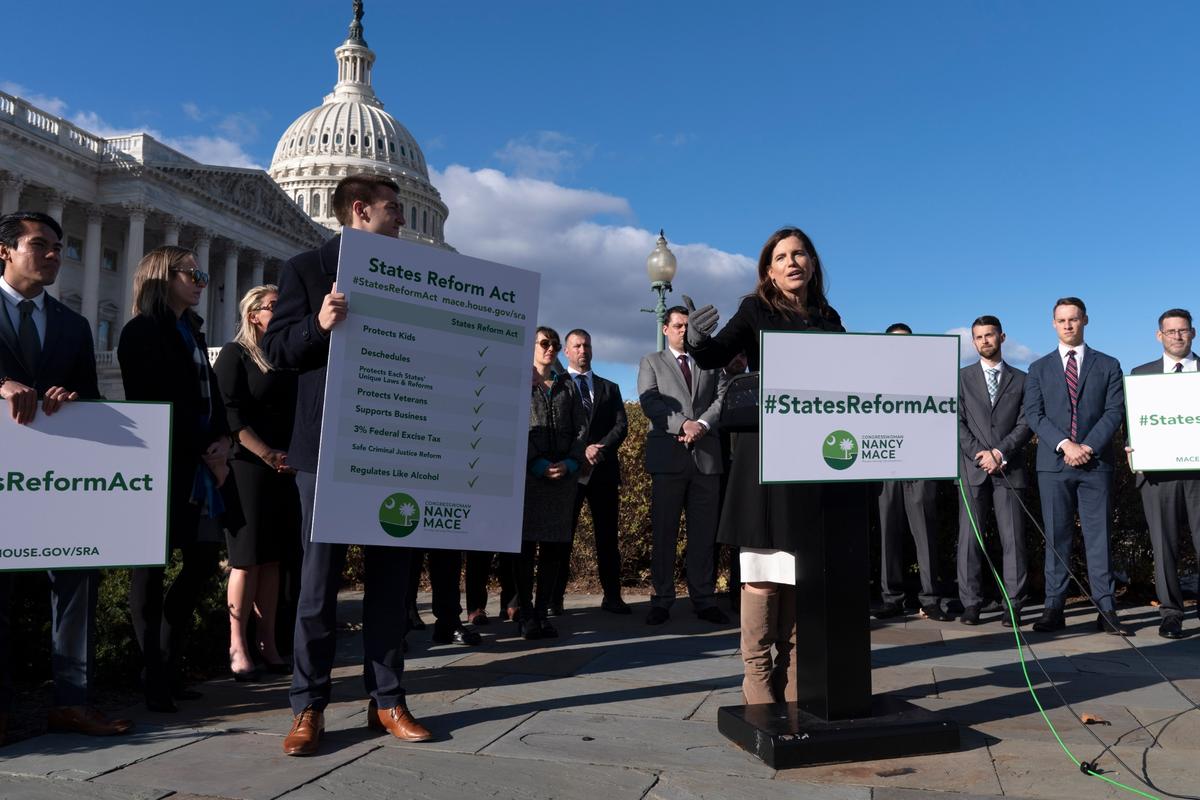
“The MORE Act forces a system on South Carolinians and other states they do not want. By comparison, my bill, the States Reform Act, removes the federal government from the equation and allows states to decide for themselves,” Mace said in explaining her vote.
She cited the ongoing medical marijuana debate in South Carolina as an example.
On Monday, a state House committee will hold its second public hearing on a bill that would allow for the use of medical marijuana in South Carolina for specific illnesses, like cancer, multiple sclerosis, glaucoma, sickle cell anemia and autism.
The bill, which has passed the state Senate, also specifies which forms of cannabis would be allowed, how patients can obtain a prescription and how much would be supplied at one time.
“This legislation,” Mace said, referring to the MORE Act, “would override that and use the heavy hand of the federal government to revoke sovereignty of our state. I hope to work towards a real solution on this issue in the future that benefits every state in America, including South Carolina.”
The MORE Act is not expected to clear the 60-vote threshold required for passage in the U.S. Senate. The issue, politically, remains a contentious topic.
After Mace introduced her States Reform Act, her legislation was immediately criticized by conservatives in her home state. South Carolina Republican Party Chairman Drew McKissick said in a statement at the time that the state GOP would “oppose any effort to legalize the use of controlled substances, and that includes marijuana.”
Mace’s support of marijuana legalization legislation has also drawn attacks on the campaign trail. One of her GOP challengers, Republican Katie Arrington, questioned Mace’s focus on the issue in a campaign announcement video where she asks, “Is Nancy Mace high?”
“Nancy Mace likes to talk a big game about getting things done, but when it came to legalizing marijuana, the issue that has been the hallmark of her political career, she flip-flopped on her position,” Arrington said in a statement Friday afternoon. “I’m not sure if she is finally realizing this isn’t a priority for the people of the Lowcountry, or if she is just trying to ride the political winds of her nonexistent base during an election year, but either way, we cannot afford another term of her self-serving leadership.”
But national polling suggests the issue of marijuana legalization is no longer a single-party issue on Capitol Hill.
A November poll by Gallup found 68% of Americans support legalizing marijuana. While 83% of Democrats support legalization, Gallup pollsters found Republicans were almost evenly split on the question, with 50% in favor and 49% opposed.
This story was originally published April 1, 2022 at 3:13 PM.