
SC veterans cemetery proposed on Santee Cooper property in Lowcountry
The South Carolina Department of Veterans’ Affairs is on the cusp of acquiring a 90-acre plot of land in Berkeley County for use as a state veterans cemetery.
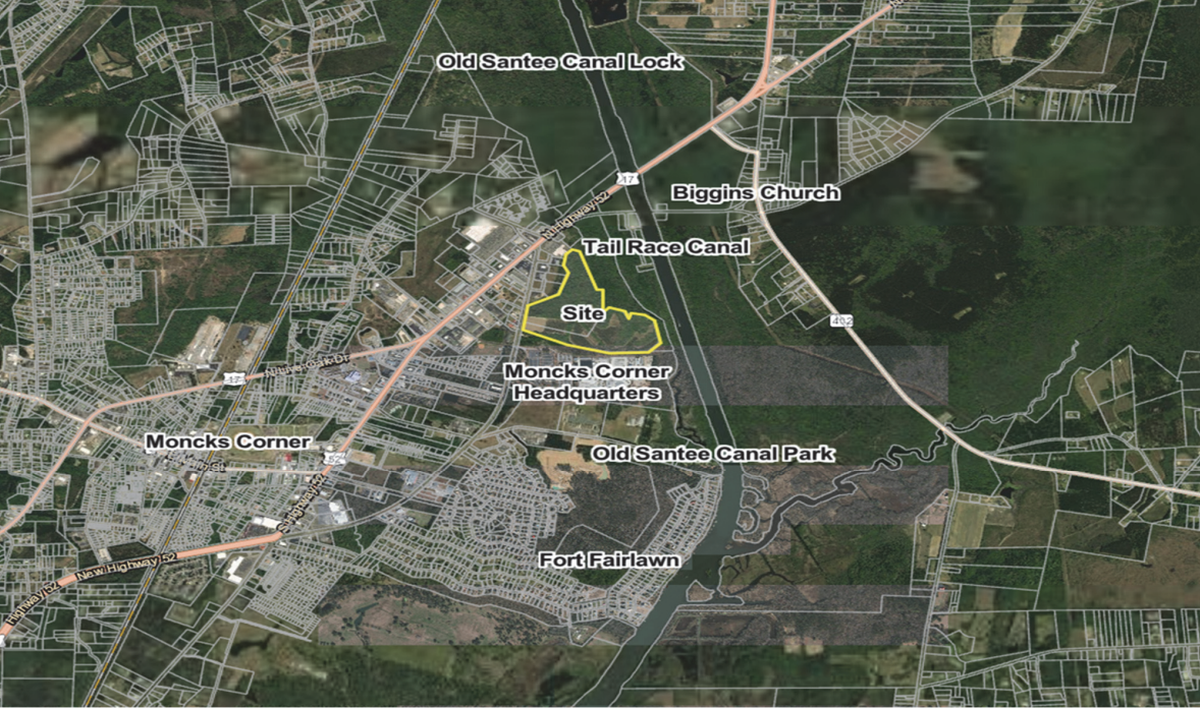
The land, adjacent to Santee Cooper headquarters in Moncks Corner and owned by the public power utility, will be donated to Veterans’ Affairs under a plan approved May 24 by the state legislative panel that oversees capital improvement projects.
South Carolina, which has one of the nation’s largest per capita veteran populations, currently has three national veterans cemeteries and one state veterans cemetery, but is looking to establish at least one more state veterans burial ground within the next decade, Veterans’ Affairs Secretary William Grimsley said.
The state is home to about 400,000 veterans — nearly half of whom are 65 or older — and eight major U.S. military installations.
While the veteran population in South Carolina is expected to decline somewhat in the decades ahead, the state should retain a higher concentration of veterans than most states in the country and thus have an advantage securing federal dollars for a cemetery project.
The establishment of one or more new cemeteries would further expand the landscape of veterans services in South Carolina, which recently opened veterans nursing homes in Florence and Cherokee counties and has another three long-term care facilities for veterans in the works.
Over the past year, the veterans department has been scouting potential burial sites in all corners of the state and currently is attempting to acquire land in several locations that meet the agency’s criteria, Grimsley said.
To qualify, a site must be easily accessible, have at least 60 acres of usable land with potential for expansion, be located more than 75 miles from any other veterans cemetery and have been donated to the state free of charge, among other conditions.
Once Veterans’ Affairs owns the land, the agency can apply for a grant from the National Cemetery Administration to cover the bulk of a cemetery project’s expenses.
If their request is approved, the federal government would pick up development, construction and future burial costs, while the state would be responsible for day-to-day operational costs, staffing and landscaping, Grimsley said. If Veterans’ Affairs does not receive federal grant approval, ownership of the property would revert back to its previous owner.
Locations under serious consideration include privately-owned sites in Bamberg and Union counties and the aforementioned Santee Cooper land in Berkeley County.
The acquisition process in Bamberg and Union is expected to be more time-consuming because the land is not currently publicly owned, but Grimsley didn’t rule out either as veterans cemetery sites and said local officials were working on land transfers.
“I wouldn’t say it’s automatically going to be in Moncks Corner,” he said of the next state veterans cemetery. “If we can get land in the other two counties, I want to submit three (grant) packets. I’d rather go big and have people tell me ‘No,’ because any of these three sites would be awesome and amenable to serving the veteran population.”
Santee Cooper land tapped for veterans cemetery
The Moncks Corner site is located along the U.S. Highway 52 bypass overlooking the Tailrace Canal and close to the historic sites of Fort Fairlawn, Stony Landing and the ruins of Biggin Church.
Santee Cooper acquired the land in 1991 for the potential expansion of its headquarters, but subsequently determined it did not need the property and has authorized its transfer to Veterans’ Affairs at no cost, according to a letter the public power utility submitted last month to the state’s Joint Bond Review Committee.
“Santee Cooper is honored to have the opportunity to play a role in bringing a veteran’s cemetery to our community,” the utility’s general counsel wrote.
The land, which currently serves as a recreation area that includes an off-road bicycle trail, has been appraised at nearly $2.2 million.
The pace of the project largely depends on the federal government’s approval process, but Grimsley said he hopes to have a new state veterans cemetery up-and-running in five to 10 years.
The Moncks Corner site would be developed in phases, roughly 15 to 20 acres at a time, but is large enough to eventually accommodate between 15,000 and 20,000 burial plots.
More than 45,000 veterans and their family members are buried in South Carolina’s four existing veterans cemeteries, located in Beaufort, Florence, Anderson and at Fort Jackson in Richland County, Grimsley said.
The Beaufort, Florence and Fort Jackson sites are national cemeteries, while Anderson is a state cemetery.
The primary distinction between national and state veterans cemeteries, as far as burial criteria, is that national cemeteries accept veterans from anywhere in the country and state cemeteries limit burial to South Carolina residents and service members who were stationed in the Palmetto State.
In addition to veterans, the grave sites will accept all eligible dependents of the veteran.
All four of South Carolina’s veterans cemeteries are active and accepting new burials, but the Beaufort and Florence national cemeteries, which were established in the 19th century, are expected to be at capacity within the next two decades, Grimsley said.
M.J. “Dolly” Cooper Veterans Cemetery in Anderson, which opened in 2007, should remain active in its current configuration until about 2050. Fort Jackson National Cemetery, which opened in 2009, won’t be full until 2070, he said.
This story was originally published May 30, 2022 at 5:00 AM.