SC has the lottery, but is there a desire to expand gambling? Governor candidates are split
When Jim Hodges ran for governor in 1998, he embraced the lottery, something Republican incumbent David Beasley opposed.
“It became a centerpiece of the campaign built around that, and I think the other piece of that is the people of South Carolina wanted the right to vote on it,” Hodges said. “They thought we should have a say on whether or not we had a lottery in the state.”
Different factors played into that 1998 race, but Hodges capitalized on the popularity of the lottery— which was legal in Georgia — to sway voters.
Twenty four years later, as Joe Cunningham seeks to become the first Democrat to win the governor’s office since Hodges, he wants to legalize an activity lawful in neighboring North Carolina that Republican Gov. Henry McMaster opposes: sports betting.
Cunningham’s call for sports betting comes as lawmakers in the State House have filed legislation to legalize betting on horse races as a way to help the state’s equine industry. Those pushing to permit betting on horse racing prefer to start with something small before any type of larger gaming move.
McMaster, however, isn’t a supporter of expanding gambling in the state beyond the education lottery, saying it runs contrary to South Carolina’s values.
Cunningham freedom agenda
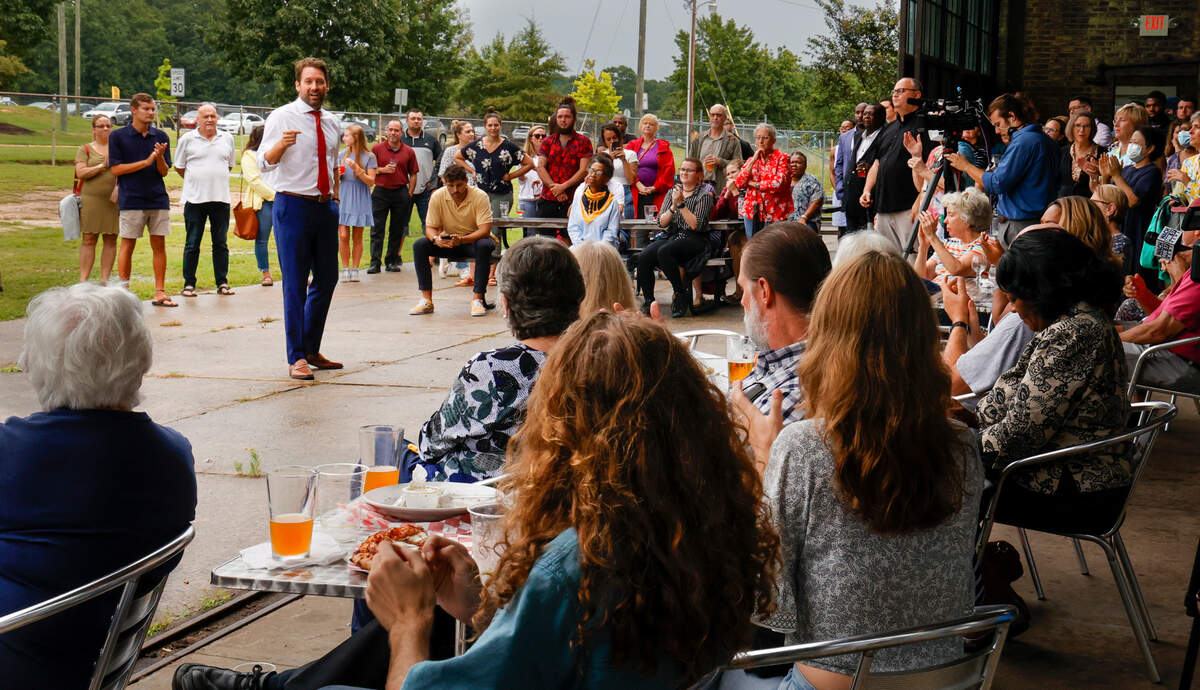
Cunningham’s push for sports betting is part of his larger “freedom agenda,” which includes eliminating the state income tax, protecting abortion access, fixing the state’s roads, raising teacher pay and calling for age limits on politicians.
“It’s not just about the revenue, it’s about the freedom to have the ability to throw a bet down on a weekend game,” Cunningham said in August. “That’s what South Carolinians want.”
Sports betting has been an option for states since 2018, when a Supreme Court ruling upheld a New Jersey law permitting the activity. As of Sept. 1, 31 states plus the District of Columbia now allow the practice, and five other states have approved the activity but aren’t operational yet, according to the American Gaming Association.
McMaster, who is seeking a second full term, opposes any type of gambling expansion in the state.
“They’re not good for us,” McMaster said, referring to Cunningham stances on legalizing sports betting and recreational marijuana use, .in August. “They’re not good for people.”
McMaster campaign manager Mark Knoop said Cunningham’s push for sports betting is nothing but a diversion from other issues, such as stances on policies coming down from the Biden administration.
“Sports betting is a distraction from the issues Joe Cunningham ducks and covers from that his own party is pushing down on South Carolina — and that any governor has to deal with,” Knoop said.
Whether to expand gambling is also an issue in the Georgia governor’s race.
Stacey Abrams, the Democratic nominee for governor in Georgia, wants to legalize sports betting and casinos and use the revenues to boost education funding in the state.
Cunningham, however, hasn’t included casinos as part of his proposal.
“I’m not sure that’s something people want in every single community,” he said. “I go across the state, and I’m sure there’s some towns and some counties that would want that. I talked to some who don’t. The consistent trend is nearly everyone’s in favor of sports betting.”
‘Freedom is important to people’
As part of Hodges’ lottery push in 1998, Democrats released a television ad that featured “Bubba,” to talk about how South Carolina residents who traveled to Georgia to buy lottery tickets that helped pay for college scholarships and pre-kindergarten programs in the Peach State.
“Here in Georgia, we aren’t worried about Beasley’s latest switch on the lottery,” the ad says. “Back in the 1994 election, he said he’d let you vote on the lottery again, too. Have you all voted on the lottery yet? Now you know why, here in Georgia, we just love David Beasley.”
The ad played off of frustration that a neighboring state had the lottery and South Carolina didn’t.
“It was aimed to reinforce the message that there were a lot of South Carolina dollars that were going to Georgia to help pay for scholarships for students in Georgia,” Hodges said. “There was no reason why we couldn’t do the same here and leave those dollars here. It was a humorous way of making that point.”

Going big on the lottery was one factor that helped Hodges win over Beasley, but other factors also played a role.
Beasley had several obstacles when he sought reelection, including his call to remove the Confederate flag from atop the State House and his opposition to video poker machines, which he called a “cancer” on the state.
Those machines, which had an addictive quality, eventually were outlawed.
But Beasley’s anti-video poker stance motivated video gaming interests to pour millions of dollars into defeating him.
“The lottery was very much a secondary factor in the outcome in 1998,” said Tony Denny, who worked as Beasley’s campaign manager. “The major factor being the millions of dollars of video poker money that swamped the state.”
The combination of factors propelled Hodges to victory in 1998. Voters subsequently approved the lottery in a 2000 statewide referendum, and it debuted in early 2002.
“I think freedom is important to people,” Hodges said. ”I think the Democrats are smart to embrace the whole idea that individuals ought to be able to make certain choices for themselves.”
A legislative push for gambling
Despite no appetite from either major party candidate to embrace casino gambling, Hodges predicted that some form of gambling would eventually show up in South Carolina, especially if its presence grows in other states.
“It’s not a question of whether it’s going to happen, it’s a question of when,” he said. “I think these election debates are often a question of whether it happens in the next few years or whether it happens in the next decade, but I don’t have any doubt it will happen at some point in our state.”
Some state lawmakers are pushing for it already. Most recently, state Rep. Russell Ott, D-Calhoun, proposed allowing people to place bets on horse races using a smartphone or computer.
Ott and state Sen. Katrina Shealy, R-Lexington, who served on a committee to study the financial impact of South Carolina’s equine industry, filed legislation earlier this year to allow horse race betting. They want to use the proceeds to improve trails, provide incentives to horse trainers and pay for equine studies programs at state colleges and universities.
Ott said wagering on sporting events already takes place in the state on websites based elsewhere.
“It’s still happening and it’s going to continue to happen,” he said. ”That’s why this is a step in the right direction. This is where we need to start and then we could continue to gauge the temperature.”
But even Ott isn’t pushing for the bigger move to allow casinos in the state. He said if South Carolina wants go in that direction, some county or municipality would first have to welcome it.
“I think it’s something people need to put some time and thought into,” Ott said. “I do believe that you can go too big too soon and lose everything.”
South Carolina is one of six states that does not have casino gambling.
The Catawba tribe, which lobbied unsuccessfully for a casino in South Carolina for years, eventually opted to start an operation in North Carolina.