Bigger raises for SC state employees? Senate budget goes beyond already proposed pay hike
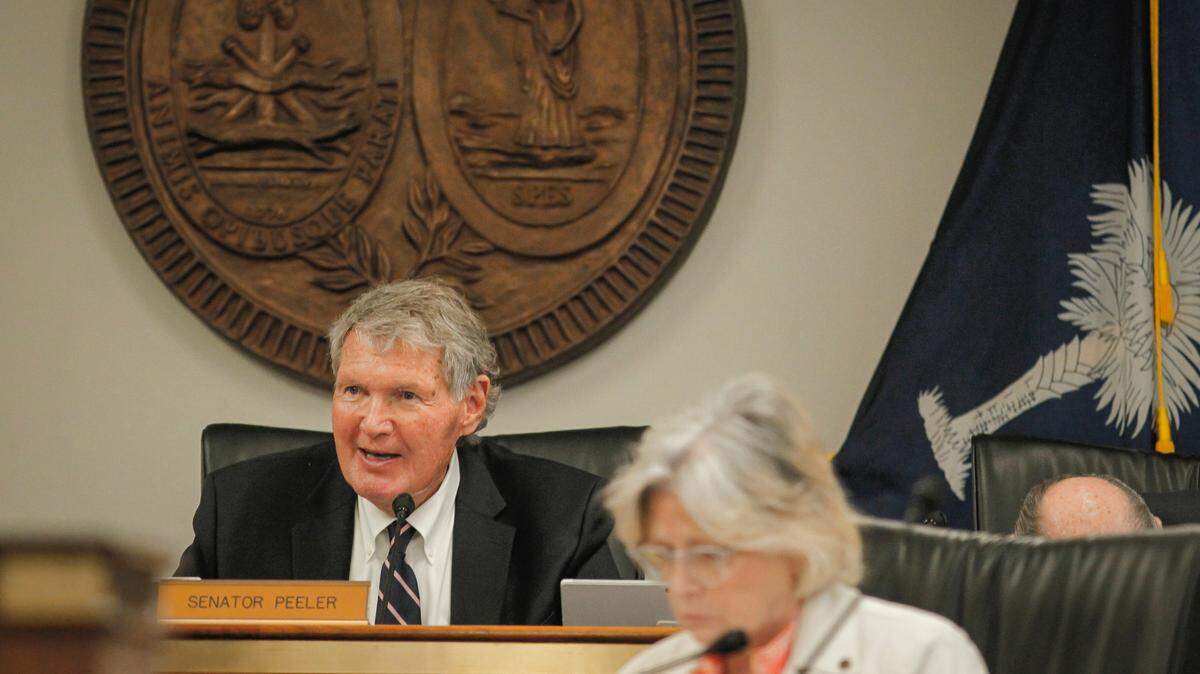
South Carolina’s state employees would get bigger raises under a $13 billion state spending plan proposal from Senate budget writers.
The Senate Finance Committee on Tuesday approved a budget that includes spending $155.6 million on state employee raises. That is $31 million more than the House budget allocated last month.
Under the Senate proposal, state employees earning less than $50,000 a year would receive a $2,500 pay hike. Those earning more than $50,000 would received a 5% raise.
The House budget plan includes $124 million for state employee raises, where those earning less than $83,000 would receive a $2,500 raise. Those earning more than $83,000 would get a 3% raise.
The approach pushed by House Ways an Means Chairman Bruce Bannister, R-Greenville, and later praised by Senate Finance Chairman Harvey Peeler, R-Cherokee, was meant to give larger percentage increases to those lower on the payroll because they are being hardest hit by the effects of inflation.
The budget proposal still needs approval by the full Senate before going to a joint conference committee with the House before being finalized and sent to the governor.
Senators agreed with the House plan to raise the minimum teacher pay by $2,500, bringing the starting pay for teachers in the state to $42,500. Each cell in the salary schedule, where teachers are paid based on experience and education level, would increase by $2,500, too, but districts have the option of paying teachers higher than the minimum.
Gov. Henry McMaster has a goal of raising the starting pay for teachers to $50,000 by 2026.
“I don’t think we’re where we need to be, I don’t think we’re where we want to be, but we are moving in that direction,” said state Sen. Sean Bennett, R-Dorchester.
The Senate Finance Committee plan, however, includes some large capital expenses, some of which were not included in the House spending plan.
Under the Senate proposal, the Department of Juvenile Justice would get $71 million for safety and security upgrades, construction of a new detention center, improvement projects and renovations to the Broad River Road facility renovations.
“This is much needed and probably even more,” said state Sen. Shane Martin, R-Spartanburg. “The current conditions of the day-to-day facilities are horrible, and that’s putting it mildly, and this funding will accelerate the process of replacing, renovating and maintaining these facilities.”
According to an updated budget request from DJJ, projects the agency wants to carry out include constructing new facilities to replace existing outdated buildings.
“Due to the natural deterioration, neglect, constant use and damage by the youth, the agency’s grounds and buildings need long overdue renovations and upgrades,” the agency wrote in a January budget request.
The proposed renovations are in line with its agreement with the Department of Justice after a five-year federal investigation of the agency.
House budget writers only proposed $25 million for facility and security upgrades at DJJ.
But senators did not include money for bridge work on state roads like the House did. The House wants to give the S.C. Department of Transportation an additional $200 million this year to accelerate its 10-year plan. The Senate Finance proposal only included $1 as a placeholder for bridge work.
“It puts us in a position and negotiate in conference committee,” said state Sen. Darrell Jackson, D-Richland. “We are definitely for bridges. This allows us to negotiate anywhere from $1 to that amount the House proposed.”
Senate budget writers also want to spend $540 million for deferred maintenance and other capital projects at colleges and universities.
This amount includes $75 million to build a veterinary school at Clemson University. The state does not have a veterinary school, which forces students to go out of the state to study to be a veterinarian.
“If they go to a veterinary college here in the state, then the majority of them are going to stay in state” after graduating, state Sen. Ronnie Cromer, R-Newberry, said.
Senate budget writers included nearly $95 million for tuition mitigation to allow schools to freeze their tuition rates.
“Primarily, what the committee was looking at this year was trying to take care of our in-state students, and for the last several years, we’ve been able to appropriate enough money that the majority of our higher education institutions have not had to increase tuition on our students,” Cromer said.
Senators also wanted to help the comptroller general’s office, which acts as the state’s top accountant, after it disclosed in February a multi-billion dollar reporting error in financial reports.
Senators who investigated the $3.5 billion financial reporting error by the comptroller general’s office that led to the resignation of Comptroller General Richard Eckstrom are agreeing to send that agency $1 million in annual money to add staff “needed to ensure optimal functioning going forward,” said state Sen. Larry Grooms, R-Berkeley.
Senate budget writers also included additional money for the South Carolina Election Commission, which wasn’t included in the House budget.
The Senate proposal includes $3.2 million for the state Election Commission to train and support county elections workers and $1.1 million to add seven new employees to help with media requests, voter education and outreach and agency administration.
The expenditures will support “the integrity, security and accuracy of elections in the state,” Grooms said.
This story was originally published April 5, 2023 at 9:28 AM.