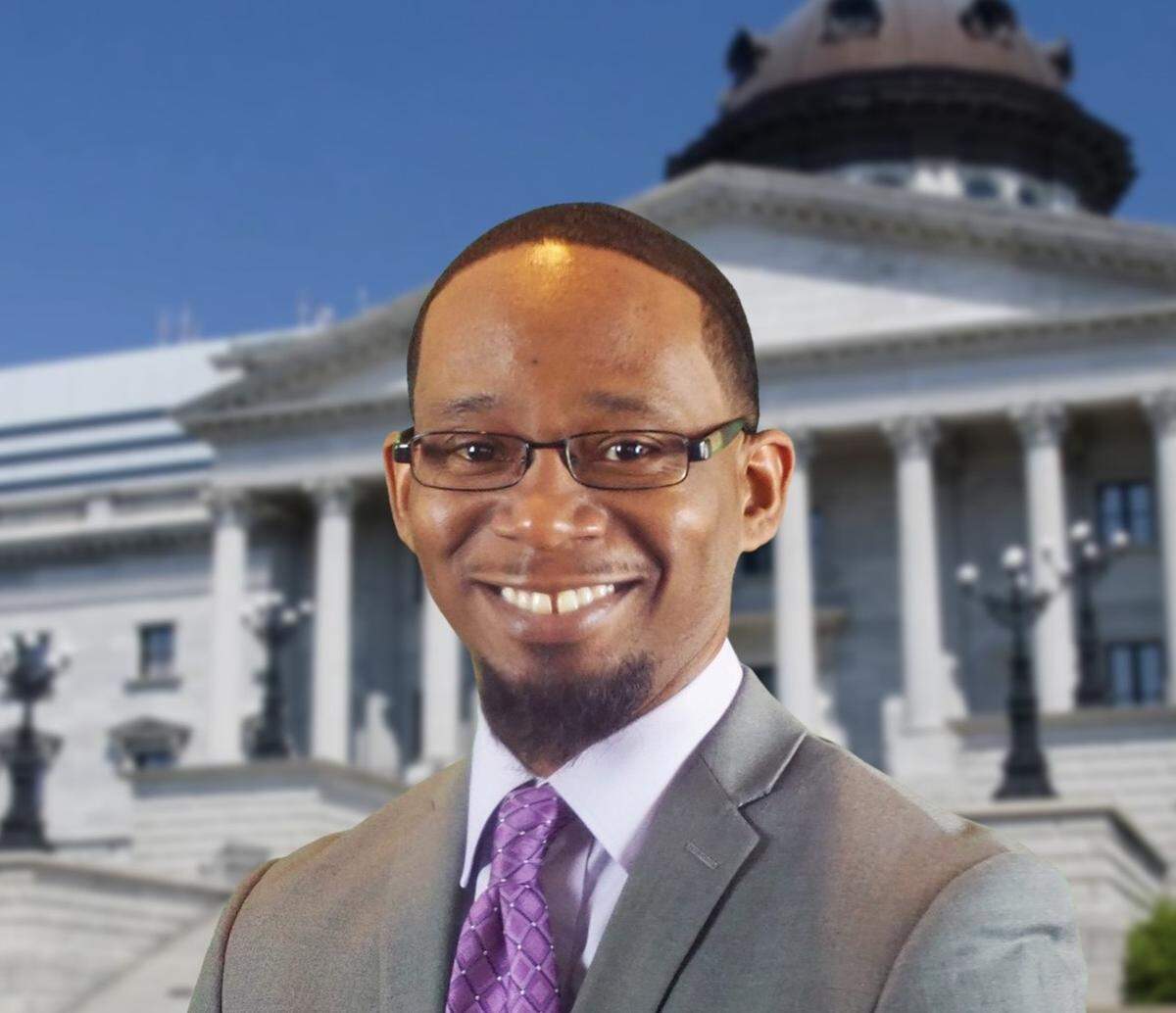
Solicitors ask SC House speaker to remove lawmaker from judge selection group
A group of South Carolina solicitors is asking two senior legislators to remove a prominent lawmaker from the commission that determines whether judges are qualified to serve in the state.
In a letter signed by nine elected solicitors, S.C. House Speaker Murrell Smith and Senate Judiciary Chairman Luke Rankin are being asked to remove state Rep. Todd Rutherford, a Richland County Democrat, from the Judicial Merit Selection Commission based on a “pattern” of Rutherford “obtaining unprecedented, and in some instances patently unlawful, outcomes in criminal matters.”
“We believe the improper appearance created by Rep. Rutherford exerting ... undue influence (on the judiciary) stems from his membership on JMSC, which allows him to pick which judicial candidates are nominated for election by the General Assembly, the letter read, which was signed by David Pascoe of the 1st Circuit, Ernest “Chip” Finney III of the 3rd Circuit, William Rogers, Jr. of the 4th Circuit, David Stumbo of the 8th Circuit, Scarlett Wilson of the 9th Circuit, David Wagner of the 10th Circuit, Rick Hubbard of the 11th Circuit, E.L. Clements III of the 12th Circuit and Kevin Brackett of the 16th Circuit.
The letter is the latest development in a saga of repeated calls for judicial reform in South Carolina, and it follows a vow by state Sen. Wes Climer, R-York, to block any upcoming judicial elections — except for S.C. Supreme Court Justice John Kittredge — at the start of next year’s legislative session, until the makeup of the state JMSC changes, namely the removal of Rutherford.
Rutherford has dismissed Climer’s assertion that he’s unfit to serve on the JMSC based on his clientele and argued that, as a criminal defense lawyer, it’s his job to represent criminal defendants and that everyone, regardless of the crime, is entitled to adequate legal representation.
“What you have is a system by which there are people with a gripe, and they are trying to air that gripe against individuals on JMSC, which I am one, to say that we have to change the entire system, even though they can’t point to a single problem,” Rutherford said earlier this month.
Smith and Rankin were not immediately available for comment following the letter from nine solicitors.
In a news conference Monday afternoon, Rutherford challenged the nine solicitors to revisit the law and highlight specific instances of his alleged impropriety that violates the law or ethical obligations.
“If they would like for the Speaker of the House to take me off of judicial merit selection, they should at least show where I’ve done something wrong,” Rutherford said. “They cannot.
“If what they’re tired of is me beating them and me doing a better job in court, then they should get used to the fact that I’m certainly a better lawyer than they are and that’s why they complaining.”
In a brewing judicial storm, numerous state officials are calling for major reforms to the way judges are selected in the state, with leaders saying the current system lacks transparency and fairness.
Smith recently announced the formation of a judicial reform study committee to thoroughly review how the state can improve its judicial selection process.
But state prosecutors are insisting that the root of the problem involves the presence of lawyer-legislators on the body charged with vetting judges, and the group of nine — out of the state’s 16 elected solicitors — is requesting a more direct and immediate change.
“Regardless of what reform package the General Assembly may pursue, it is our opinion that ALL lawyer-legislators be removed from the JMSC immediately,” the letter said. “The public is weary of JMSC members having their family and friends elected to the bench. We are writing to ask that you exercise your appointment power as Speaker of the House and Chairman of the Senate Judiciary to immediately replace the six lawyer-legislators with non-lawyer members of the General Assembly.”
Pointing to two instances in which Rutherford secured favorable and “unprecedented” outcomes for his clients, the letter alleges that Rutherford frequently engages in secret, backdoor deals — wielding his influence over the judge selection process.
In one case, where Alberto Lopez, one of Rutherford’s clients, was freed 14 years early, the justification for such a decision is, more or less, foggy.
The hearing that preceded Lopez’s sentence reduction occurred out of public sight, and all the principal documents in the case were sealed by a judge. The sparse supplemental order granting his reduction doesn’t explain why it was warranted or cite the legal mechanism used to carry it out.
The State Media Co. learned through a series of public records requests and interviews with officials involved in the case that Lopez was rewarded because he reported to police that a female corrections officer at McCormick Correctional Institution shared Jolly Ranchers, sunflower seeds and nude selfies with another inmate.
Rutherford had requested the proceedings be kept closed for Lopez’s safety, prosecutors said. The judge who granted the reduction order is a legislator’s daughter who has known Rutherford for decades and won a seat on the bench with his support.
Secrecy in criminal sentence reductions is not uncommon, The State’s review of three-plus years of S.C. Department of Corrections data found.
Nearly half of the “substantial assistance” reductions granted since 2021 were filed under seal, according to SCDC records. The reasons vary from wanting to conceal pending criminal investigations to protecting the safety of cooperating prisoners whose lives could be endangered if their assistance became known.
In a second case, writing last month in elaboration of their April decision to vacate the secret order that freed convicted murderer Jeroid Price — another Rutherford client — the state Supreme Court opined that a former Richland County judge had no authority to close the Price proceedings or seal the order that shaved 16 years off his sentence.
In their opinion, the high court identified five requirements that must be met to reduce an inmate’s sentence under the substantial assistance statute, which the Legislature passed in 2010 to incentivize prisoners to help law enforcement officials solve crimes and escape physical danger.
In the Price case, neither former Circuit Court Judge Casey Manning nor 5th Circuit Solicitor Byron Gipson “made any effort to comply with even one of the requirements,” Few wrote, calling the facts of the case “unique and remarkably egregious.”
The governor’s office took action on the matter last week.
In what it said was an effort to restore the public’s confidence in the criminal justice system, Gov. Henry McMaster directed South Carolina solicitors to give the attorney general at least 10 days notice before filing any motion to reduce a criminal sentence and asked Attorney General Alan Wilson to review all early release motions to ensure they complied with the law.
Under South Carolina law, the speaker of the House has the authority to appoint five members to the JMSC, three of whom must be members of the General Assembly and two from the general public. The chairman of the Senate judiciary committee appoints three members, who must be members of the Senate. And the president of the Senate appoints an additional two members from the general public.
In the letter, the solicitors said Rutherford was just one example of a lawyer-legislator exerting undue influence over the judiciary.
“Trust us when we say that Rep. Rutherford’s tactics are not unique,” the letter said. “Lawyer-legislators have undue influence over our judiciary. We can provide countless other instances under oath. Removing lawyer-legislators will not cure all of the JMSC’s ills, but it will eradicate one symptom and you have the authority to do it.”
Still, Rutherford, who is Black, was the only lawyer-legislator directly called out in the letter.
Notably, Rankin, who is also a member of the JMSC, is a lawyer.
“I ask any of them, if you have any allegations of misconduct, bring it, show it,” Rutherford said of the nine solicitors. Other than that, simply acknowledge that you’re not as good of a lawyer as I am, and that’s why you’re the one complaining.”
John Monk and Zak Koeske contributed reporting.
This is a breaking news story and may be updated with more details.
This story was originally published October 23, 2023 at 10:38 AM.