From DOGE to DEI to ICE. How are Trump’s pushes influencing South Carolina politics?
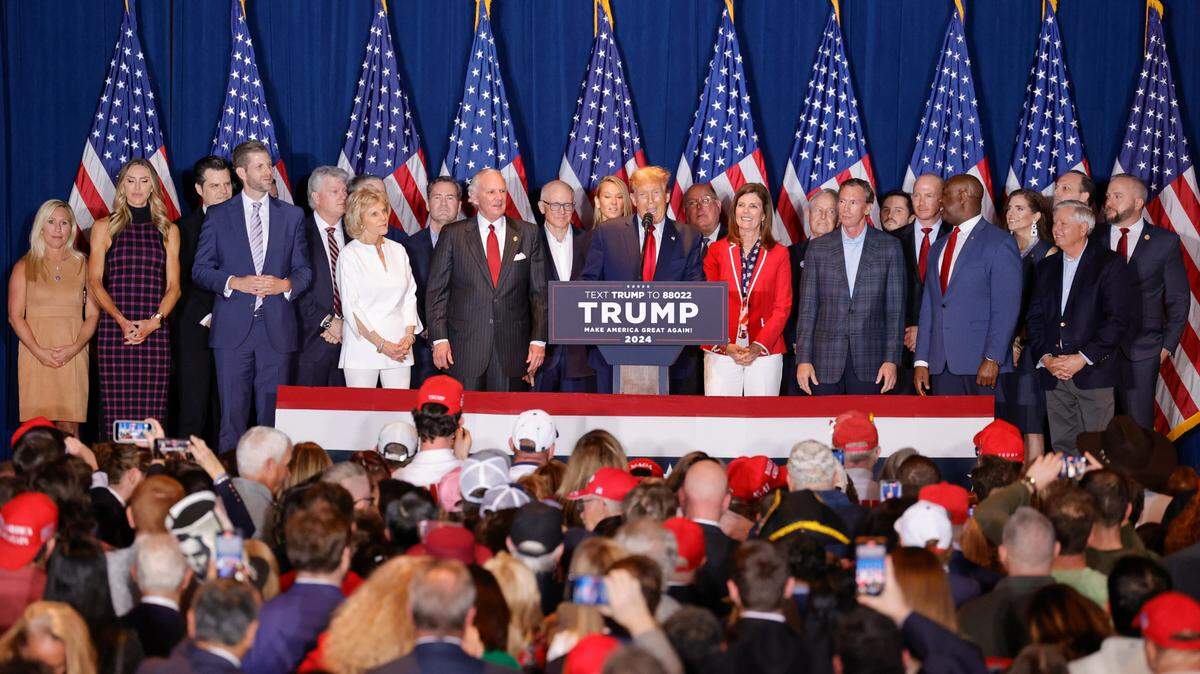
While speaking in front of the Lexington County Republican Party in early February, South Carolina Attorney General Alan Wilson previewed an anti-illegal immigration initiative he would push the next day.
Wilson would call on sheriff’s offices around the state to work with federal immigration enforcement officials through a federal program, which had become expensive and cumbersome during President Joe Biden’s administration, he said.
The call to cooperate with ICE, along with pushes to eliminate diversity, equity and inclusion program and following the lead of the president’s DOGE efforts are trickling down from the federal government to South Carolina’s state government.
With President Donald Trump’s administration now in place, Wilson called on local sheriffs to participate in ICE’s Section 287(g) program, a voluntary program where state and local law enforcement perform limited immigration enforcement functions within their own jurisdictions. The call comes as the Trump administration wanted to be more aggressive in deporting undocumented immigrants from the country.
The program “is a way for local law enforcement to support feds,” Wilson said.
Wilson said the change in administration allows South Carolina to be more aggressive.
“We’ve been involved in multiple lawsuits against the Biden administration for their failure to enforce federal law,” Wilson said in an interview. “Now that we have a federal government that’s on our side, you’re gonna see us being more proactive. Before, we were just trying to get them to follow the law, now we’re working with them to actually execute the law.”
A new push to eliminate DEI
But in addition to immigration issues, the buzz of being against DEI initiatives has led to legislative pushes in the House.
Now one universal bill to eliminate diversity, equity and inclusion that would apply through every state agency and contractor is being pushed. Previous efforts to eliminate DEI programs focused on the state’s institutions of higher education.
“We understand that the DEI experiment has failed across the country, not only South Carolina,” House Majority Leader Davey Hiott said.
When South Carolina Republicans wrote their legislation, they mirrored the bill after a Trump executive order that banned DEI hiring practices in the federal government, Hiott said.
“We believe every citizen in South Carolina should be treated the same, and that is what we’re trying to do by ending all this with our agencies, their subsidiaries,” said state Rep. Doug Gilliam, R-Union.
The bill has 77 co-sponsors and would ban state agencies, higher education institutions and businesses who have contracts with the state from using diversity, equity and inclusion hiring practices.
Expect House Democrats to be against the legislation.
“I have yet to find a state government entity that is using diversity as a methodology for hiring or as a methodology for doing anything. And so again, this appears to be a waste of money, but more importantly, it appears to be following the federal government, which operates completely different than the state,” said House Minority Leader Todd Rutherford.
Looking for waste in government
A Trump administration initiative to reduce government spending also is the inspiration for another bill Republicans are pushing.
Tech billionaire Elon Musk is running the Trump initiative called the Department on Government Efficiency, or DOGE, aimed at finding ways to cut federal government spending.
Now, state House Republicans propose creating a nine-member Commission on Fiscal Restraint and Government Efficiency to come up with recommendations on what budget cuts can be made, which state regulations can be eliminated, and identify which programs, agencies and commissions could be possibly eliminated, consolidated or restructured. It would be similar to Musk’s initiatives in Washington, Hiott said.
Legislators would not be on the commission.
A similar bill also has been introduced in the Senate.
State Sen. Stephen Goldfinch, R-Georgetown, pushed the Senate version, which would call the group the Delivery of Government Efficiency Commission, or DOGE commission.
Goldfinch said the commission would most likely find regulations that could be cut, and he seemed skeptical the group would find a lot of fraud, waste or abuse. During a discussion with Finance Committee members Thursday, he said he believes that the legislature’s two budget writing committees are responsible in “stewarding the state’s money.”
He also doubted this commission would find tens of millions of dollars that would need to be cut out of the budget, but said much of the work would be removing regulations.
“I think that’s false hope that I don’t want to give our constituents, but I do think we can save our industries millions of dollars a year by getting rid of just duplicative regulations, or overburden some regulations, or just regulations that are antiquated and out of date,” Goldfinch said.
These recommendations would come after Republicans have controlled both chambers and the governor’s office since 2003.
Goldfinch admitted it takes time to gain seniority and learn how state government works before lawmakers have an opportunity to change the way the system operates.
“If the question is, is it an admission of guilt that we haven’t done what we should have done? Yeah, the answer is yes, but I’m ready to fix it now,” Goldfinch said.
Goldfinch also admitted this is being influenced by the work in Washington.
“I’m not going to say it’s negligible. Like it or not, like the politics of it or not, like the constitutionality of it or not, they’ve exposed some stuff that everybody says, ooh, that’s kind of, that’s ugly,” Goldfinch said. “Now the federal government doing it sort of gives those of us that have that mentality a little bit of top cover sort of be who we want to be.”
A report would be due by Oct. 1, 2025, with recommendations.
None of the members would be paid under the both pieces of legislation.
“You need to have a reset every year, every few years, to just come and see are these programs still here? And that’s one thing that we’re concentrating on here in South Carolina with our regulations and also with this joint resolution,” House Speaker Murrell Smith said.
Rutherford said the anti-DEI and DOGE efforts are just attempts to mimic the Trump administration without seeing how the two levels of government differ.
“I think that people watch TV, and they have the expectation that if one does it, everybody should without the understanding of the differences in the federal government and state government,” Rutherford said.
Rutherford even points to how state government went through budget cuts amid the 2008 financial crisis and state is down several thousand employees.
“State government employees are some of the hardest working people in this state, and I don’t think that you’re going to be able to find any fat that is worth cutting that will justify the expense in creating another government agency to go after that,” Rutherford said.
The DOGE like efforts have the support of Gov. Henry McMaster.
“Anything we can do for more efficiency and accountability in state government is a good thing, and I’m for it,” McMaster said. “It would have a special purpose to do that, and we’d probably put a time limit on it.”
This story was originally published February 14, 2025 at 5:30 AM.