South Carolina private school choice program proposal gets potential compromise
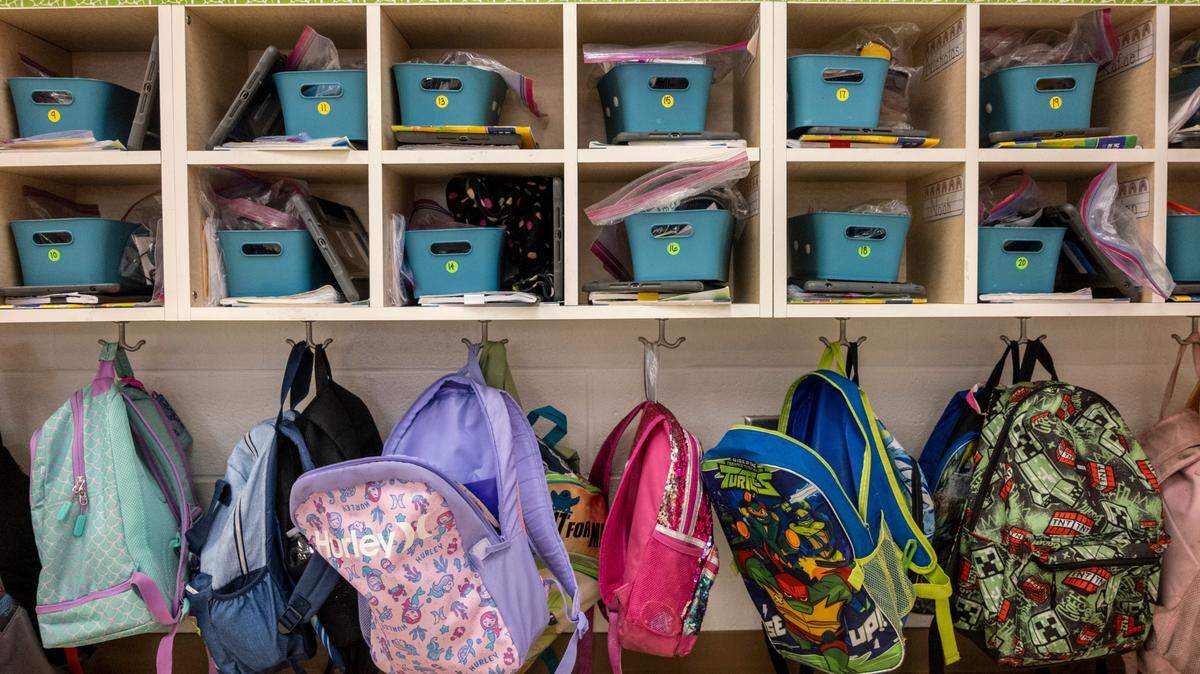
A plan to restart a program that allows South Carolina families to use tax dollars at kindergarten through 12th grade private schools may have a path forward.
The state Senate on Wednesday began debate on a potential compromise between House and Senate plans passed earlier this year aimed at restarting the private school portion of a school choice program struck down by the state Supreme Court in September.
But further debate and a vote in the Senate over the compromise is now expected to take place in two weeks, after the upper chamber finishes its budget, but when there’s only two weeks left in the legislative session.
Under the compromise, which had been closely guarded and negotiated by state Sen. Greg Hembree, R-Horry, and state Rep. Shannon Erickson, R-Beaufort, the state would use general fund money or lottery money pay for scholarships for kindergarten through 12th grade students at private schools. The money would be distributed through a trustee appointed by the Department of Education and separate from the department.
General fund money is tax dollars to the state, such as through sales and income taxes.
The Senate originally wanted to use lottery revenue, which has been a declining revenue source in recent years.
Allowing both general fund and lottery revenue to pay for the program gives lawmakers flexibility in how the scholarships will be paid for if the state Supreme Court gives a thumbs down on a certain revenue source.
“Inevitably, there will be a lawsuit. We know that’s going to happen. We know that this is going to be challenged,” Hembree said on the Senate floor. “This gives the General Assembly the authority to kind of move back and forth.”
Under the compromise, families will be able to use up to $7,500 per educational scholarship account on education related expenses, such as tuition, tutoring and transportation to the school.
The program will be open to at least 15,000 students and can increase if the General Assembly allocates additional money to the program.
To be eligible families, could earn no more than 300% of the federal poverty level in the first year. In subsequent years, the income cap rises to 500% of the federal poverty level.
The current federal poverty level for a family of four is $32,150. Three hundred percent of that amount is $96,450.
The program will give priority children from active duty military families, students in public school, children in the custody of the Department of Social Services, and students in families at 300% of the federal poverty level and lower.
The House wanted to remove income caps in later years.
“The House gave up on a lot of things, we gave up on some things and we compromised on some things,” Hembree said.
Passing the bill to restart the program was a top priority for lawmakers because September’s Supreme Court decision came after the school year started. To allow students in the program to stay at the private schools where they started the academic year, the Palmetto Promise Institute received donations from a private donors to pay for scholarships for 700 to 800 students.
In September, the state Supreme Court struck down the private school portion of the educational scholarship trust fund law because of a provision in the state constitution that bars public money from being used to directly benefit private or religious schools.
In the compromise language, dollars sent to the trustee would not be designated as funds of the state.
Students still can transfer from one public school to another public school with the state money following them.
With the effort to restart the program, both chambers have looked at spending money for it in next year’s budget, which begins on July 1.
The House set aside an additional $30 million in annual money and $15 million in one-time money for the program out of the general fund. The Senate budget, which is up for debate next week, has $20 million in lottery dollars set aside for the program.
Democrats against the bill railed at how this compromise came about, how the legislation was debated in a Senate subcommittee during the off season, how public comment was limited, and how the amendment was not published until it came to the Senate floor.
Ultimately, senators decided to hold off the debate on the compromise until after the budget.
But state Rep. Russell Ott, D-Calhoun, argued the state can’t give parents any certainty that this program will be allowed to go forward with a blessing the state Supreme Court.
“We continue to throw mud against the wall to see what is going to stick to the point now that we’re saying we’ll use this pot of money, or we’ll use that pot of money, just tell us what we can use, Supreme Court, and we’ll go do it,” Ott said. “That’s the level of desperation that I feel like we have arrived at to get something fast, and we still don’t know.”