SC law enforcement increases ICE partnerships since President Trump’s reelection
In April, the Horry County Sheriff’s Office had in custody a Jamaican citizen who was charged with assault and battery.
Through a federal immigration enforcement program, jail officials learned the person had previously been convicted of marijuana possession and entered the country as a non-immigrant temporary worker, but remained longer than authorized.
The previous month, through the same program, the York County Sheriff’s Office learned it had in custody a Mexican citizen who had entered the country at an unknown location and time after previously being removed, according to federal immigration officials.
When the year started, only three South Carolina law enforcement agencies had agreements to participate in that federal program, the U.S. Immigration and Customs Enforcement’s 287(g) program, which allows local and state law enforcement agencies to carry out some immigration and enforcement duties.
Since then, 10 more law enforcement agencies, including the South Carolina Law Enforcement Division, have signed agreements to participate amid President Donald Trump’s renewed border enforcement efforts in his second term in office.
Three other agencies have agreements pending.
Increased participation comes as the approach to immigration enforcement is wrapped in politics.
As program participation grows, immigrant communities may grow suspicious of local law enforcement who have signed on to work with ICE when immigration enforcement is traditionally a federal issue.
But participating local and state agencies get access to ICE systems, specialized training in immigration law, and are deputized to carry out certain immigration enforcement actions.
The 287(g) program, which was created in 1996, has different participation levels from which local agencies can choose.
Local agencies can use the jail enforcement model where officers are trained to ask certain questions of people who are detained and report to ICE they have a person in custody with immigration issues.
An agency can carry out the warrant service model where immigration warrants and documents are delivered by certified personnel. That model can help ICE save time because a location may be a several hours drive away and serving documents may only take minutes to formally do.
The final model is a task force model where designated local law enforcement have limited immigration authority, including detaining and questioning people suspected of being in the country illegally, during routine police enforcement.
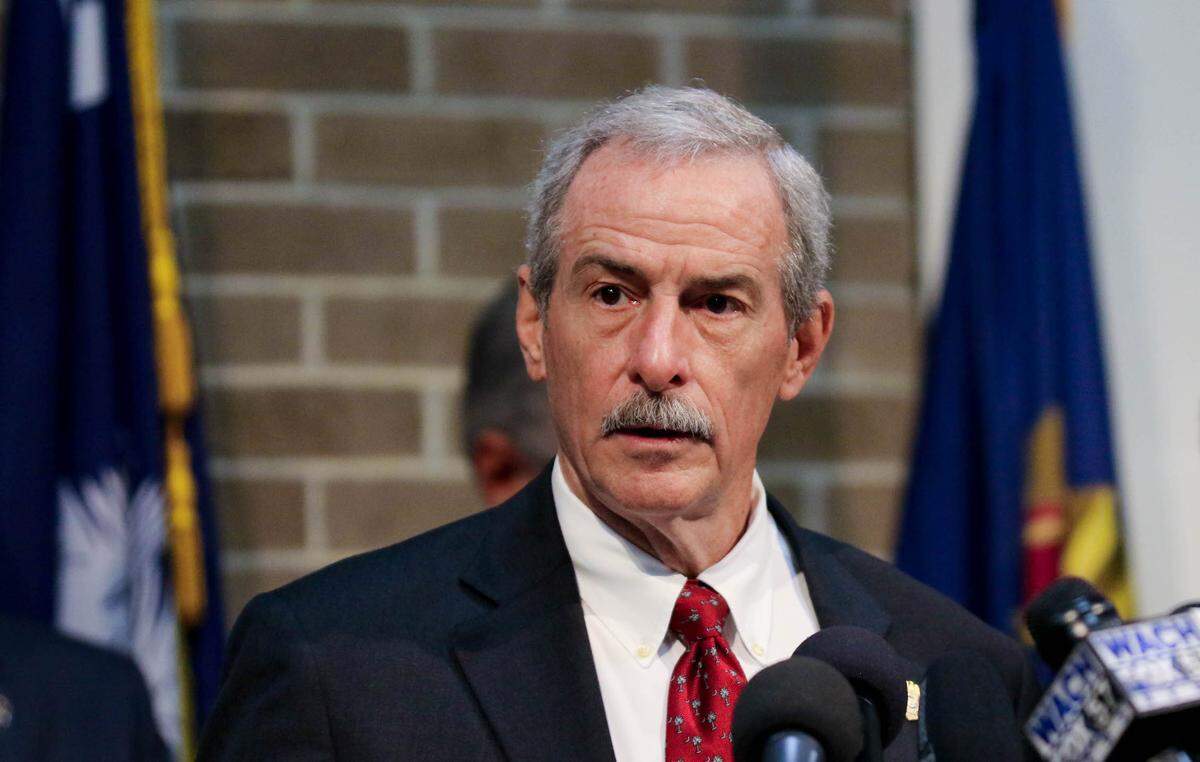
All three models serve as a “force multiplier” for immigration enforcement, SLED Chief Mark Keel said.
“There’s only so many federal law enforcement folks,” Keel said. “We have state and local folks that are out there on the streets every day that probably have more contact with those that violate our laws than our federal officials do.”
Laura Collins, the director of the George W. Bush Institute-SMU Economic Growth Initiative, said a vast majority of immigration enforcement lies with the federal government, but local and state law enforcement has a role when it comes to immigration, but the question is to what degree?
“Sometimes people who are foreign born get in trouble with the law,” Collins told reporters in May. “Sometimes they are convicted of crimes, and federal immigration enforcement doesn’t always know who they are, and so state and local law enforcement does have an important role to play, because they are policing all of us, not just native born people.”
She added the agreements aren’t necessarily bad.
“I think there is a tendency sometimes when we talk about immigration enforcement, to think of all of these as automatically a horrible thing,” Collins said. “There are degrees to this. Sometimes this is really necessary. Sometimes it’s not, and a lot of it is in the execution.”
287(g) is wrapped in politics
When Trump returned to the White House, only three South Carolina law enforcement agencies were involved in the 287(g) program: the Horry, Lexington and York County sheriffs’ offices, all of whom had Republican sheriffs.
With Trump in office, there was a renewed interest in the administration to increase participation as applications during the Obama and Biden administrations were paused.
Charleston County Sheriff’s participation ended in 2021 under then-Sheriff Kristin Graziano, a Democrat.
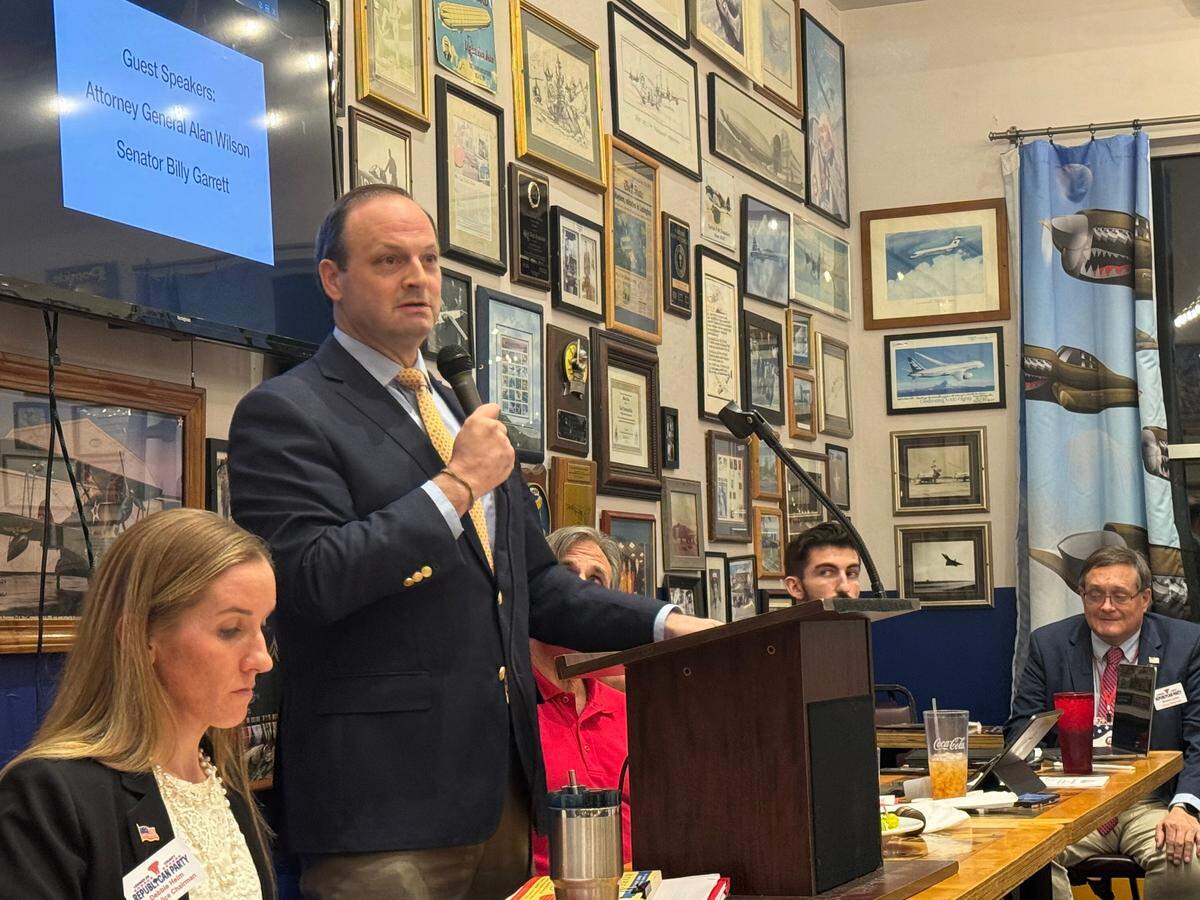
Among those encouraging sheriffs to join was South Carolina Attorney General Alan Wilson, who is considering a run for the Republican nomination for governor.
“As the chief prosecutor of South Carolina, I share the same sentiment as you about keeping our citizens and communities safe,” Wilson wrote in a letter sent to sheriffs around the state encouraging them to join the program. “This is an utmost priority, and we are called to faithfully uphold the laws and Constitutions of this State and the United States.”
Since Trump’s reelection, nine county sheriff’s offices, all with Republican sheriffs, have signed 287(g) agreements.
Among those to join was newly elected Charleston County Sheriff Carl Ritchie. The Charleston County Sheriff’s office declined to comment for this story.
Charleston County, last week while working with ICE agents, SLED and others carried out a raid of a night club near Charleston during what was described by law enforcement as a “cartel after party.” The raid was not through the 287(g) program.
Two municipalities’ police departments, Duncan and Holly Hill, and the Marlboro County Sheriff’s Office, have agreements pending. Marlboro County is the only county in South Carolina with a Democratic sheriff to participate in the program since Trump took office, according to ICE’s website. Trump lost the county in the 2024 election by 2 percentage points.
The participation of agencies comes as immigration and southern border security was the most important issue among South Carolina Republican presidential primary voters according to exit polling in February 2024. Security along the southern border has been a signature issue for Trump during his political career.
Lexington County Sheriff Jay Koon, who has signed on with the jail enforcement model, denies politics playing a role in his department’s participation.
“We sheriffs talk about this all the time, once we swear an oath to the people we don’t swear an oath to one party,” Koon said. “We have to (protect) our whole county of 300,000 plus people of Lexington, so I don’t make decisions of law enforcement matters on preference of politics.”
SLED, which signed its agreement in late February, has been statutorily required to join the 287(g) program since 2008, but hasn’t been able to until this year.
But law enforcement agencies can still work with ICE even if they don’t have an agreement to be a 287(g) program. The Richland County Sheriff’s office said it has a collaborative relationship with ICE despite not formally participating in the 287(g) program.
“We support ICE in all their duties within Richland County. ICE provides us assistance with illegal immigrants when we have criminal cases involving arrestees,” said Richland County Deputy Chief Maria Yturria.
Concerns from immigrant communities
Participating in the program can lead to distrust from the immigrant and Hispanic community, activists say.
That’s on top of other hurdles law enforcement and the Hispanic community face, such as a language barrier, cultural differences and looking different. Adding immigration enforcement may create distrust from immigrants who may be reluctant to call for help for fear of deportation.
“We understand sometimes they do work, maybe the background, but to establish that 287(g) means that you are telling your community, basically, yes, we will receive training as an immigration officer. We will collaborate with them. We will share information,” said longtime Midlands immigrant advocate Ivan Segura.
Segura added that when he and other immigrant advocates speak to sheriffs considering the program, they not only talk about the trust factor, but rather the potential financial costs of participating and holding people wanted by ICE.
“How much money are we going to spend on this? That’s something that we’ve been drilling on them,” Segura said.
Segura argued federal immigration officials should be the ones handling enforcement, not local law and state law enforcement.
“This is a federal issue. This should be dealt with by federal authorities. They are the ones that should be addressing this issue and applying the law,” Segura said.
Horry County’s sheriff’s office, which only participates in the jail enforcement model, holds meetings to educate the public about the program and its participation.
“We want people to feel safe reporting crimes, seeking help and working with law enforcement,” said Horry County Sheriff’s Office spokeswoman Brennan Cavanaugh. “This program is just one part of a broader effort to keep our communities secure.”
The South Carolina Law Enforcement Division’s agreement is to participate in the task force model.
Keel said he is concerned about those in the immigrant community not trusting SLED because of its involvement in immigration enforcement. His agency has a community relations unit which works to establish rapport with minority groups.
He also points to how migrants who are undocumented do have protections to stay in the country if they are a victim or a witness of a crime.
“We’re not going to turn our head to crimes committed against whoever’s here in our country because they may be illegal,” Keel said. “We’re gonna seek justice for them, just like we would anybody else.”
The carrot for agencies to participate
Agencies have the option to say how much they want to do. Some agencies, such as York, Lexington and Horry counties use the jail enforcement model, where they can identify people who have violated immigration law and notify federal immigration officials who they have in custody.
Between January and May, Horry County had five encounters with immigrants wanted by ICE. York County had four encounters, according to ICE records.
Berkeley, Kershaw and Pickens counties, along with South Carolina Law Enforcement Division are using the task force model which allows participating agencies to have limited immigration authority during routine police enforcement.
Charleston, Chester, Greenville, Lancaster, Oconee and Spartanburg counties have signed up to provide warrant service officer duties where agencies can execute immigration warrants on people in custody on behalf of ICE.
All the participation levels come with training where agencies’ personnel learn about immigration law.
When agencies agree to participate in and are approved by ICE, their personnel get access to federal training not necessarily available to everyone. They specifically learn about immigration law. During that training and while carrying out immigration enforcement duties, the local agencies are still responsible for the pay of its personnel.
For those in the jail enforcement program, ICE installs a fingerprint system and database at their jails to run people’s names to determine if a foreign-born person is wanted by immigration enforcement.
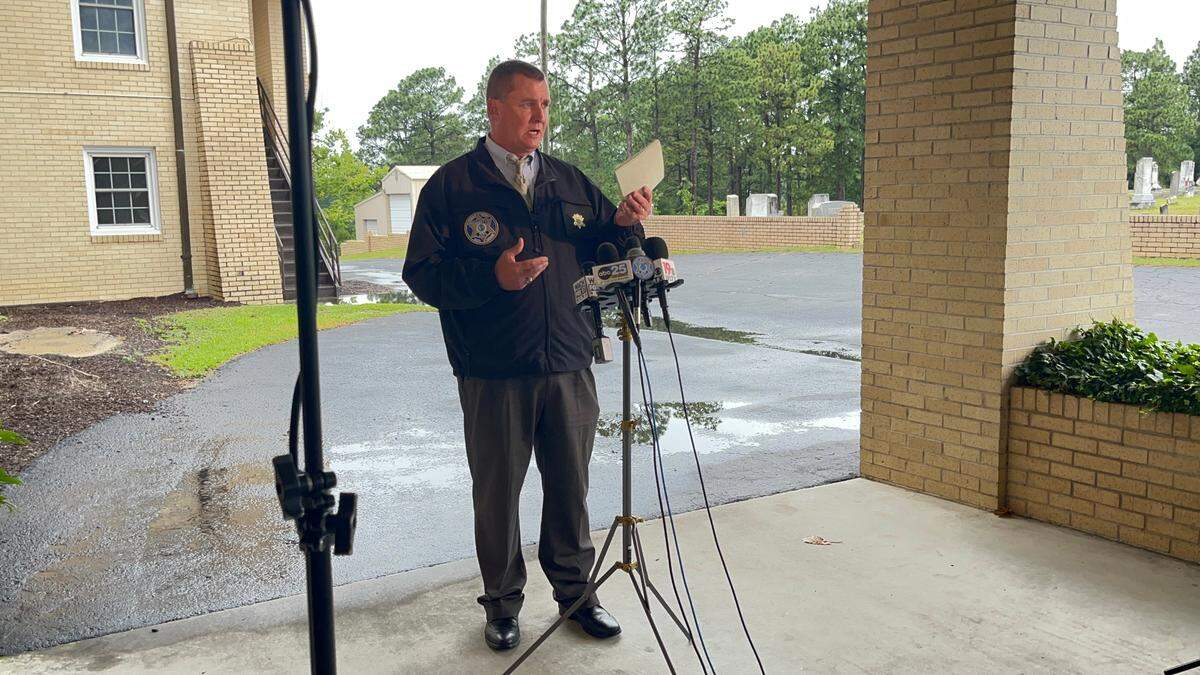
Horry County Chief Deputy Tom Fox said the training his jail officers received included learning interrogation and interview techniques and learning to identify who can be removed or not. Refreshers take place every two years.
SLED plans to have 47 agents in the program including members of its illegal immigration enforcement unit, narcotics, human trafficking, fugitive and gang units.
“The only way you can get this training is to be part of the program,” Keel said. “Nobody else offers this training. You can’t get this training from a private vendor.”
For local law enforcement, the carrot isn’t just training. They also receive additional legal authority.
For SLED, even though they have worked with ICE and Homeland Security Investigation agents in the past, state law enforcement didn’t have the authority to take certain actions.
“Now we have legal authority to detain people if we believe that they’re here in the United States illegally, we have the legal right to interview and interrogate folks or interview people about whether or not they are here in the country legally,” Keel said. “So it gives us that the same sort of authority that ICE and HSI has in some cases that we did not have the actual authority in the past.”
Horry County is seeing population growth and construction in its areas, which attracts workers of different nationalities.
If Horry County Sheriff’s Office, which first sought to join the program in 2009, identifies someone who should be removed, the jail officer send a report to an ICE supervisor, who determines whether the person needs to be taken to an ICE facility. ICE has 48 hours to come pick up the person from the Horry County jail who has been identified for possible removal.
“Everybody realizes that violent crime is in every community, but when you have an opportunity to remove somebody from the community that’s committed a violent crime in very quick fashion, all it does is help the community,” Fox said.
Fox said the sheriff’s office didn’t have the resources to carry out the other other models beyond the jail enforcement model.
“It’s a lot more easier to identify when they come in, number one, they’ve already been arrested and charged with a criminal offense, which makes them eligible to be detained and removed. And it’s as far as resources we could use current booking staff to have a dual role,” Fox said.
For Lexington County Sheriff Koon, the ultimate motivation to being a part of the program is about public safety.
“We deal with victims every day and when a person that’s not supposed to be in this country commits a crime against the victim, there’s no argument that that particular crime wouldn’t happen if that person was not in the country,” Koon said.
This story was originally published June 9, 2025 at 5:30 AM.