
Want better roads? It’ll cost another $1 billion annually, SC DOT says
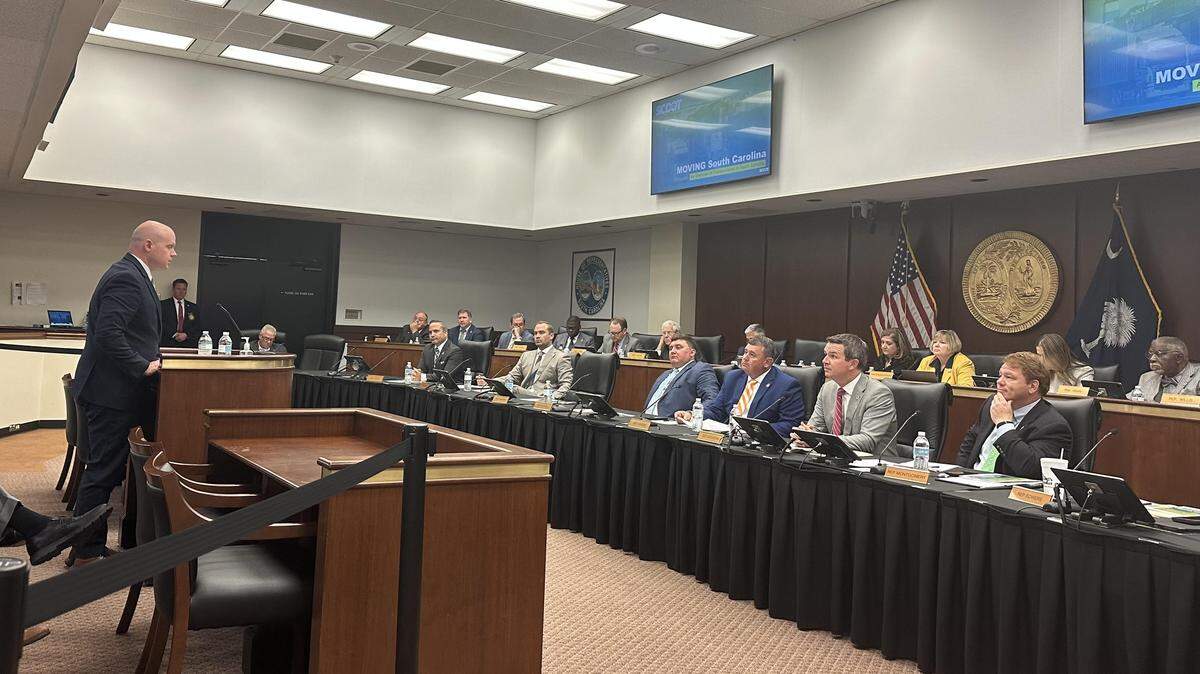
State lawmakers are looking for ways to pay for additional nearly $1 billion road and infrastructure improvements annually as South Carolina faces growing population and inflation.
South Carolina’s over 41,000 miles of state-maintained roads and infrastructure improvements will cost nearly an additional $1 billion annually, according to the state Department of Transportation. That’s up from its current roughly $2.8 billion budget.
The $1 billion is needed to implement goals of the department’s Momentum 2050, a plan for the next decade of highway, road and bridge maintenance, said Transportation Secretary Justin Powell. That dollar amount is based on expenditures from fiscal year 2023.
“The Momentum plan included a gap analysis of what would be needed to have to address the challenges of growth across the state,” Powell said Wednesday. “In total, nearly $1 billion annually would be needed for us to fully implement the Momentum plan by increasing investments in interstates, bridges and congestion projects.”
To fund the needed projects, Powell made several recommendations to a newly created House ad hoc committee Wednesday. He floated increasing the biannual registration fee for electric vehicles and DMV fee for new residents, but did not advocate for increasing the existing gas tax.
The meeting offered a preview of debates over how to fund road improvements. The goal of the committee is to find solutions quickly, state Rep. Shannon Erickson, R-Beaufort, said.
“This is a fast-moving piece of finding information, not a longtime study committee,” Erickson said. “Because South Carolina, we’re doing business. We’re doing business well, and we keep our citizens safe and keep commerce moving.”
Inflation, growing population and the proliferation of EVs have been challenges for the state’s Department of Transportation. Growing populations means more congestion and wear-and-tear on the roads. More electric vehicles mean fewer people paying the state’s gas tax. And inflation means construction projects are more costly. Plus, increases in federal funding, which made up just under 40% of the Department of Transportation’s budget last year, is less certain under the Trump administration, Powell said.
“The inflation is causing us to do fewer projects,” Powell said.
Fees and other funding boosts could be taken up by the General Assembly, possibly next year. The last major update to transportation funding came in 2017, when the gas tax was increased, Powell said. However, that legislation was aimed at fixing existing road conditions, and it didn’t account for the future challenges the department would face, he said.
“The South Carolina of 2025, the South Carolina that will be going beyond 2025 is very different than South Carolina in 2017,” Powell said.
South Carolina had the second deadliest roads in the nation last year, according to the U.S. Department of Transportation. But the No. 1 concern among South Carolinians was road congestion and delays, according to a survey from the department’s Momentum 2050 plan. The department hopes to improve congestion and safety with more money, Powell said.
Raising the electric vehicle registration fee from $60 to possibly $200 a year could be one way to bring in more funds, Powell said. While the state makes about 28 cents a gallon on cars that run on gas, EVs’ electricity does not generate any revenue. The department estimates it will make $802 million this fiscal year on the gas tax. An additional fee on electric vehicles could make the system more fair, Powell said.
“Considering the growth in electric vehicles from the plants that are opening up across South Carolina, it may be time for us to consider looking at equalizing for fairness who’s paying and maintaining our system,” Powell said.
By the end of 2023, South Carolina had 20,873 registered electric vehicles, according to the U.S. Department of Energy. That’s up from 2022, when the state registered 13,500 EVs. If 2023 EV drivers paid an additional $140 every year, the state would receive nearly $3 million annually.
Due to population growth and development, Powell also floated increasing the first time registration fee for people moving into the state and congestion mitigation fees on developers. He brought up adding “choice lanes” throughout the state, which are additional lanes that drivers can pay to use to bypass congestion.
The committee, made up of 23 state representatives, will travel the state to receive feedback from residents. The next meeting will be in Greenville on September 10.