What led Clemson to fire employees over Kirk posts and why did it take 5 days?

For five days, public pressure mounted on one of the state’s flagship universities, at least in the realm of social media to take action. Three staff members had been publicly outed by the College Republican group for posts they made appearing to mock or celebrate the assassination of conservative activist Charlie Kirk.
When the school didn’t immediately act publicly, social media chatter grew from hard-line conservative members of the House, other Republican state lawmakers, candidates for governor and even the President of the United States.
There were social media posts criticizing the school for not acting swiftly, with calls to take taxpayer funding away from the school, a push to end college tenure, a renewed insistence to end diversity, equity and inclusion initiatives, and demands for a special legislative session.
While the social media noise took place, high-ranking legislative leadership and statewide elected officials were in communication with the school about how to address the posts made Clemson employees, according to people with knowledge of the discussions.
The initial posts, reactions
On Thursday, Sept. 11, the Clemson College Republicans received a tip with a screen shot of one assistant professor’s post about Charlie Kirk’s assassination.
The members of the College Republicans didn’t initially share it, but instead worked to confirm the posts. When confirmed, they posted the information on the social media platform X, formerly known as Twitter.
“Why do @ClemsonUniv and @ClemsonPrez allow someone that publicly celebrated the death of a peaceful advocate of free speech to instruct students?” the group posted the afternoon of Thursday, Sept. 11.
“Twitter has always been our main vehicle to reach people, that’s the political social media platform in a way,” said Jackson Heaberlin, an 18-year-old freshmen from Lexington who is the acting social chair of the Clemson College Republicans. “It was best equipped for getting the story out there.”
Clemson, in an unsigned statement, called the remarks in response to Kirk’s death “deeply inappropriate” and said it would take “appropriate action for speech that constitutes a genuine threat which is not protected by the Constitution.”
“Clemson University unequivocally condemns any and all expressions that endorse, glorify or celebrate political violence,” the school’s first statement said, which it issued Friday.
As social media chatter was growing, the school was weighing a state law that said it is unlawful for a person to “discharge a citizen from employment or occupation, ... because of political opinions or the exercise of political rights and privileges guaranteed to every citizen by the Constitution and laws of the United States or by the Constitution and laws of this State.”

The initial statement wasn’t enough to stop critics from taking jabs at the school. Public pressure grew for action from the school, with federal elected officials and those seeking higher office in the 2026 elections piling on with social media posts and news releases.
What followed was several days of members of the hard-line conservative S.C. House Freedom Caucus calling for the ouster of three Clemson staff members, taking their campaign to social media to increase pressure by calling for Clemson to be defunded.
But the caucus, traditionally on their own within the legislature, wasn’t alone in their campaign. They found themselves in agreement with some House members who have been critical of their tactics in the past. Members of the traditional House GOP Caucus weighed in on social media calling for the school to lose money. A state senator running for Congress also posted on social media that he looked forward to seeing Clemson at its budget hearings next year.
And Republican candidates for governor weighed in.
Lt. Gov. Pamela Evette, who said she spoke to Clemson President Jim Clements and has a freshmen at the school, called on parents to demand refunds if their students had classes with the two assistant professors. U.S. Rep. Nancy Mace later called on the U.S. Department of Education to take away federal funding. Attorney General Alan Wilson said comments made by faculty and staff were disgusting and called Clemson’s initial statements “H.R. speak.”
U.S. Rep. Ralph Norman echoed calls by the S.C. House Freedom Caucus to recall the legislature for a special session to take money away from Clemson and end tenure at colleges.
State Sen. Josh Kimbrell, R-Spartanburg, said the statements made by the staff members were vile, and added Clemson’s initial statements calling the posts reprehensible, wasn’t sufficient.
Republican members of the U.S. House Judiciary Committee called for Clemson to be defunded, and President Donald Trump on Saturday went to Truth Social to share a post from S.C. House Freedom Caucus Chairman Jordan Pace.
“That’s it. Now Clemson faculty is inciting violence against conservatives,” Pace posted. “It’s time for a special session to end this.”
By Saturday, after a third employee’s posts were shared, the school released its second statement, saying one employee had been suspended for inappropriate social media posts.
Shortly before 12:30 p.m. Saturday the most eyebrow-raising statement came out.
It was a letter to Clemson signed by four powerful legislative leaders, including two lawmakers who run the state budget process, one of whom is a Clemson graduate and often ensures the school receives the dollars it needs.
Lines of communication
According to insiders with knowledge of discussions, on Friday and Saturday, phone calls took place between legislative leadership, the school and the attorney general’s office over how Clemson should address the situation.
Gov. Henry McMaster’s staff also had been touch with Clemson officials, as well as officials from other schools around the state. Wilson spoke to Clemson officials Friday who told the attorney general they were advised of the state law preventing firings for political opinions, said Robert Kittle, a spokesman for the attorney general’s office. Clemson also had spoken with House Speaker Murrell Smith and Senate President Thomas Alexander.
On Saturday morning, Smith and Alexander, a Clemson graduate, were talking about sending a joint letter to Clemson’s board.
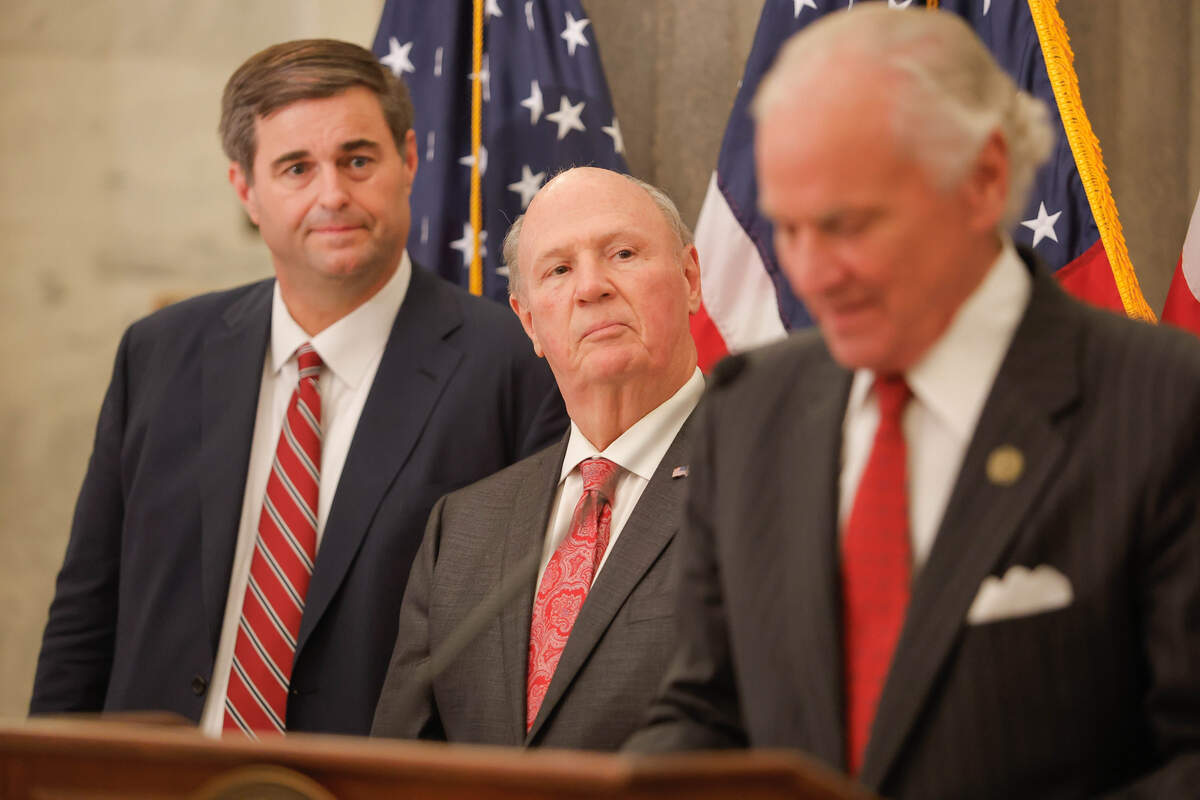
Smith’s office looped in Ways and Means Chairman Bruce Bannister and Alexander brought in Finance Committee Chairman Harvey Peeler. Bannister and Peeler oversee the annual state budget process and how much money the state’s research universities receive.
Peeler has fought for funding for Clemson, including for construction of the university’s new veterinary school, which is named after him.
All four lawmakers signed the joint letter urging the board of trustees to meet to consider the situation and take appropriate action. On Sunday, the Clemson Board of Trustees scheduled a special meeting for the next day.
“Folks that are the most directly engaged with what the university is doing would be the speaker of the House, and the president of the Senate, and finance chairs,” Bannister said in an interview. “Those four people have the most interaction with our research universities on a day-to-day basis. We hear what their plans are both public and confidentially on how they’re going to complete their missions in South Carolina. The four of us all agreeing you need to get together and make sure you’re addressing this properly is about as strong a message we can send saying ‘take this seriously.’”

The school has a $2 billion operating budget, with the state chipping in $219 million in annual money a year to help run the school, according to budget documents.
The letter from the four legislative leaders did not say a word about the school losing state dollars. It only said the Board of Trustees needed to review the matter and take appropriate action.
Over the weekend, Wilson studied the law Clemson officials had cited. On Monday, he sent a letter to Clemson with his opinion.
Wilson issued a statement saying state law allows the school to take corrective action for posts that can be seen as threats or glorifying violence and the school’s leadership would be protected from criminal liability. However, the employees in question still have the right to sue the school if they choose.
“Clemson, and any state university in South Carolina, should not be paralyzed by fear of prosecution when dealing with employees who publicly endorse political violence,” Wilson said.
Hours later, before the board convened, the school announced one employee had been terminated, and two faculty members removed from the classroom pending further review of social media posts.
The board then met for three hours in executive session Monday before having the board chairwoman read a prepared statement.
“The board supports President Clements in his efforts to take immediate and appropriate measures regarding the employees in question,” Board Chairwoman Kim Wilkerson said shortly before the meeting was adjourned.
The next day, Clemson announced it had terminated two faculty members, and in a statement acknowledged the move didn’t happen as quickly as those on social media demanded. The school implied it was following the correct procedures when making the terminations.
“We fully acknowledge the concerns raised regarding the timing of recent personnel decisions,” the school said in a statement. “Every deliberation reflects the University’s unwavering commitment to conduct all actions in full compliance with institutional policies, state and federal laws, and the foundational principles of due process.”
And like any controversy involving House members, the credit for who got Clemson to act will be debated over.
After the firings were announced, the Freedom Caucus celebrated on X.
“We won. Thanks to @ClemsonCRs, @realDonaldTrump, @RalphNorman and many others,” the group posted. “But this is only the beginning — defund DEI, end tenure (and) hold other colleges accountable.”
House Majority Leader Davey Hiott, a Republican from Pickens, gave credit to the speaker and senate president, and the top budget writers, for spurring the action by the school. He pointed to the Greenville County schools and Carolina Panthers for taking swifter action when faced with similar situations.
“It’s unfortunate that it took a joint letter from both House and Senate leadership to force Clemson University to take decisive action by removing faculty/staff for their outrageous comments over the death of Charlie Kirk,” Hiott said. “Mark my words, our conservative House Republican Caucus members will deal with how Clemson faltered on this issue and ensure it never is repeated.”