
Brookfield Assets picked to take over failed VC Summer nuclear project.
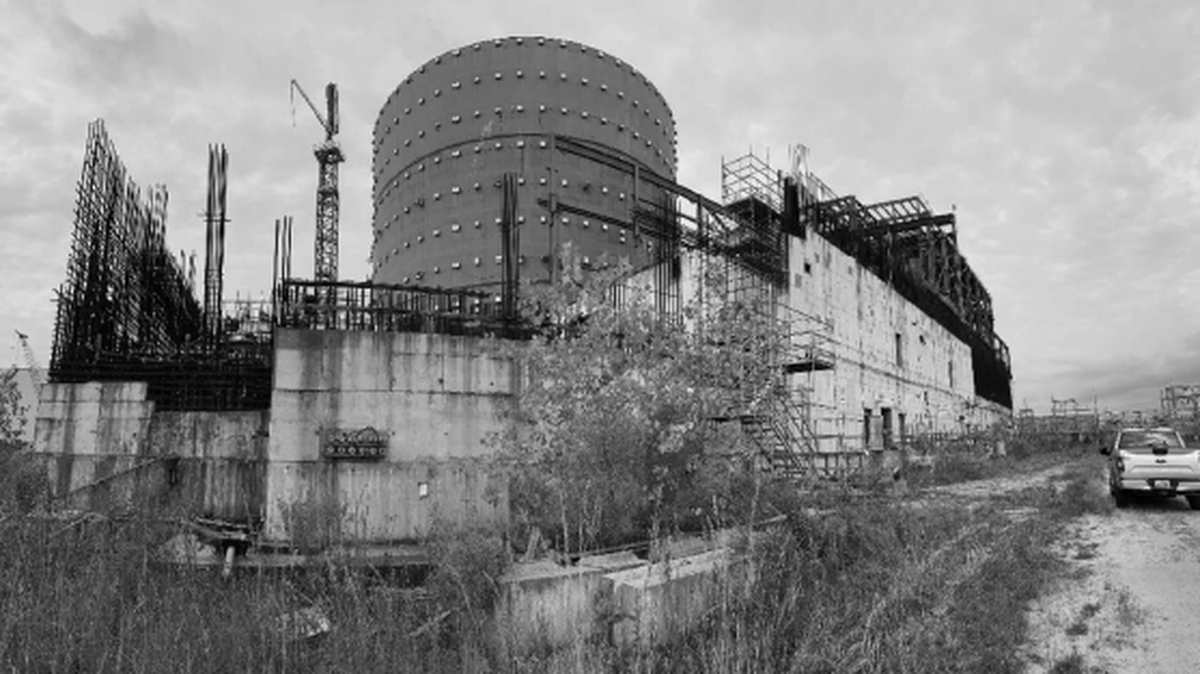
In the same office where a massive nuclear project was abandoned eight years ago, Brookfield Asset Management was selected to finish the two V.C. Summer nuclear reactors.
The Santee Cooper Board of Directors authorized the state-owned utility to sign a letter of intent to ask Brookfield to take over the partially built nuclear reactors, during a scheduled meeting Friday in downtown Columbia.
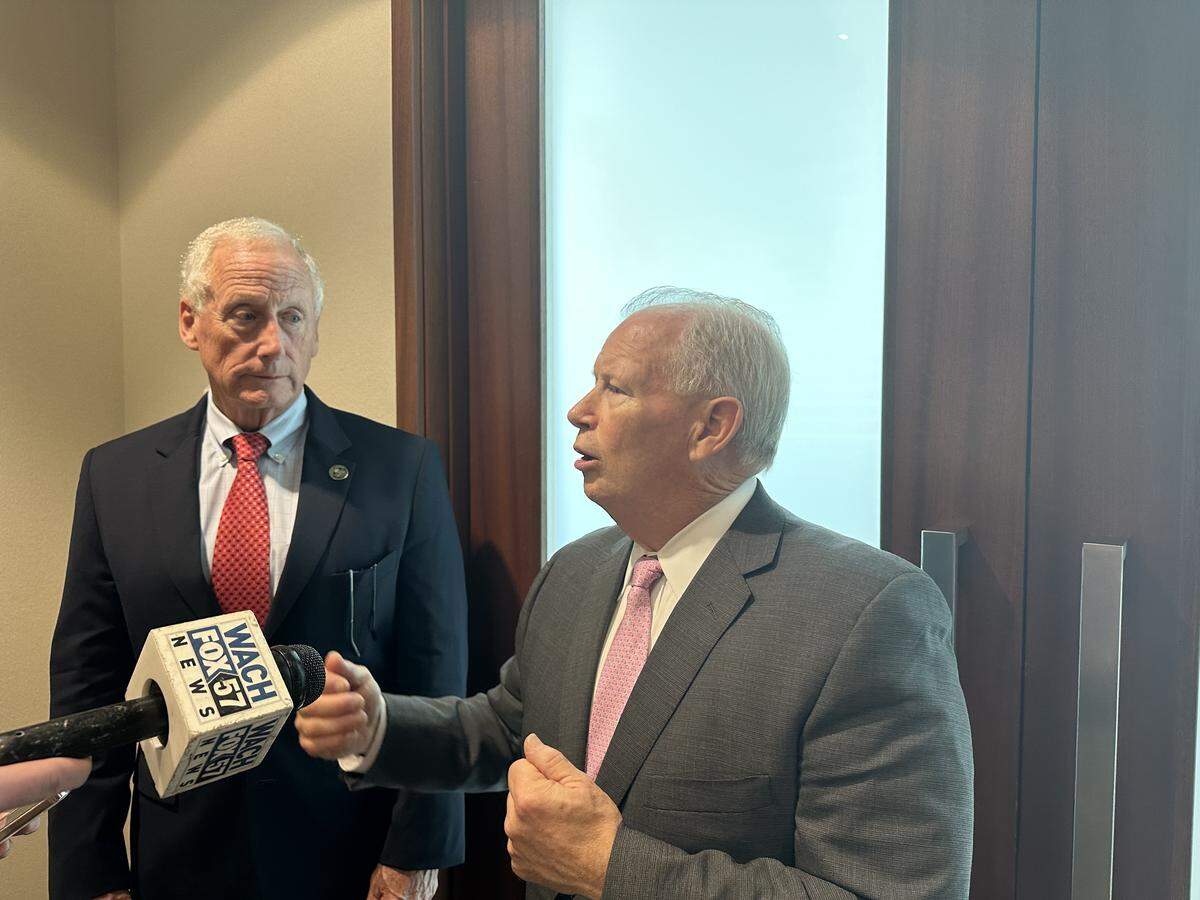
Santee Cooper CEO Jimmy Staton said completing the V.C. Summer nuclear reactors won’t cost ratepayers anything, while generating a maximum of 2,200 megawatts.
“There are no additional financial risks for our customers at all,” Staton said.
Santee Cooper would use any money made to pay off debt associated with the initial construction attempts, Staton told reporters after the meeting.
“We would use those proceeds, any proceeds, to retire debt associated with the nuclear facility,” he said.
The letter of intent is one of the first steps in the process to restart the nuclear reactors. Over the next six weeks, Santee Cooper will develop a memorandum of understanding, where more details on the financial agreement could be made public, Staton told reporters. Santee Cooper and Brookfield will select a project manager and look for buyers for the generated nuclear energy, according to a news release from the utility.
Brookfield is a company with extensive experience, officials said. It owns Westinghouse, the company that was involved in the original V.C. Summer project expansion.
After the memorandum of understanding is completed, the project will need to acquire permits from the Nuclear Regulatory Commission. Santee Cooper does not plan to hold the license, Staton said.
Construction on the two reactors could start in late 2027 or early 2028, Staton told reporters.
Agreement signals shift in direction
If the state does reach a point where it restarts the V.C. Summer plant expansion, it will mark a major reversal from its position in 2017 when utilities Santee Cooper and SCE&G walked away from the project amid rising costs and delays. Outraged legislators launched efforts to put greater controls on projects like that so that taxpayers and ratepayers are not soaked with high bills.
The V.C. Summer expansion effort from eight years ago is considered the greatest construction failure in state history. All told, ratepayers spent some $9 billion on the effort, seeing higher power bills to pay for a project that was never built. Dominion Energy customers are still paying about 5% of their monthly bills for the original expansion project. The Legislature had allowed the utilities to charge customers upfront for the costs of the plant expansion, rather than justify the costs after the work was finished and seek rate increases from the state Public Service Commission.
The original project was such a mess that some utility executives were charged criminally and sent to prison for failing to let shareholders, lawmakers and the public know about problems that had begun to develop during construction.
Demand for more power, especially from large consumers like data centers, and the federal government’s support of nuclear energy motivated the decision to continue construction on the reactors, Staton said during Friday’s meeting.
“We need this capacity,” Staton said after the meeting. “The level of data center growth in South Carolina is enormous. They want clean energy.”
The Trump administration signaled its support for nuclear energy development through four executive orders signed in May intended to ramp up domestic production. The budget reconciliation law passed this summer also left nuclear energy tax credits in place, but it cut incentives for other renewable energy, like solar or wind.
Santee Cooper said it vetted potential buyers on their ability to complete the two nuclear reactors at no additional capital cost to the utility’s customers, according to a letter sent to state Sen. Tom Davis, R-Beaufort. Davis posted the letter on his social media Wednesday. Davis has advocated for the restart in the state legislature, and he took “personal satisfaction” in seeing his work in the legislature take a step forward, he said Friday.
“It was a source of embarrassment for South Carolina, and we’re now converting it into something that is a source of pride,” Davis said in an interview with The State.
Finishing the V.C. Summer project would be done at roughly the same time Dominion Energy and Santee Cooper are working to convert a shuttered coal-fired power plant in Colleton County into a natural gas plant. The proposal has been questioned as too large and for having too great an impact on the environment. Some question whether South Carolina needs both projects, particularly when much of the growing demand for energy comes from data centers that employ relatively few people and suck up massive amounts of water.
The board also approved the construction of the 2,180 megawatt natural gas plant at Canadys on Friday.
Staton choked up while delivering final remarks on the project.
“The opportunity here is try to restart these facilities and remove that black eye,” he said. “Made me a little bit emotional.”
He received a standing ovation from Santee Cooper staff members in the room at the end of the meeting.
Nuclear restart not without critics
Moving ahead with the nuclear project is a bad idea to some of the original expansion effort’s harshest critics. Among them is Tom Clements, the Columbia atomic weapons and energy watchdog who for years has tracked nuclear issues in South Carolina and across the country.
Clements said getting the project off the ground could ultimately cost the public huge sums of money, despite assurances it would be a cost-effective effort. It’s hard to imagine public support would not be needed for the project, whether it is from ratepayers or state and federal taxpayers, he said. During the meeting, Staton promised no capital costs would be passed on to ratepayers
He disputed a Governor’s Nuclear Advisory Committee report from last year that said buildings and equipment at the site are in good shape. One reactor facility is about 40% complete, with the other about 20% complete, officials reported at the time. The report said there were 14 warehouses full of equipment, but Santee Cooper also said it had sold $100 million worth of equipment.
“They have reactor vessels in place, along with other equipment but the buildings have been exposed to the weather,’’ said Clements, who heads the non-profit SRS Watch group. “I don’t think they’ll be able to use any of that equipment.’’
One of the biggest obstacles to restarting the plant might lie with the Nuclear Regulatory Commission. A license that Santee Cooper and Dominion Energy’s predecessor, SCE&G, worked for years to obtain is no longer valid following the 2017 construction fiasco. The companies gave up the license. Obtaining a new license takes years and getting it could prove difficult and lengthy, Clements said.
From an environmental standpoint, restarting the Summer expansion project will eventually produce highly radioactive waste that must be dealt with. The existing Summer unit, which cranked up in the 1980s, stores the material in casks on the property, but that situation is not ideal. The material was supposed to be shipped to a high-level waste repository in Nevada that was never built, meaning nuclear plants across the country are stuck with their own dangerous waste.
Clements outlined many concerns in a report earlier this year addressing the restart issue.
.
This story was originally published October 24, 2025 at 1:13 PM.