
Audit demanded by SC Reps confirm problems at USC office. Who was held accountable?
For 13 years, Will “Bill” Kirkland led the University of South Carolina’s Office of Economic Engagement.
The little-known university department, known also as OEE, was intended to foster entrepreneurship, help monetize research from the university and develop the state’s workforce. But in 2024, an audit conducted by South Carolina’s Legislative Audit Council at the request of state representatives found that the organization was rife with mismanagement of grants, personnel and facilities.
Auditors found $1.7 million in “questionable transactions” from an educational grant. These included $635,000 for leases on computer labs that were never set up, $400,000 to a marketing firm with connections to an Office of Economic Engagement employee and roughly $4,500 worth of Apple Watches for staff members of an unrelated department.
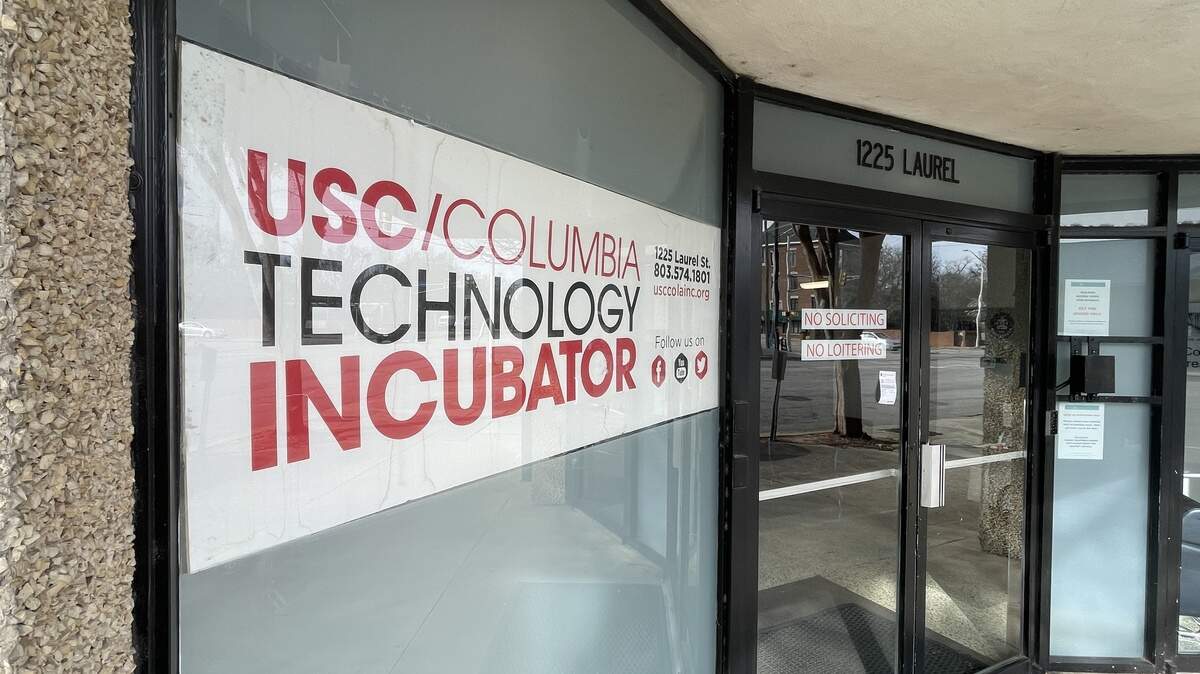
The USC/Columbia Technology Incubator, renamed this week to the Midlands Innovation X-Change, overseen by Kirkland that was meant to nurture a new generation of entrepreneurs was found by auditors to be full of mold and vermin. Despite being designed as a short-term program, startup tenants stuck around for years and the board exercised little oversight, according to the audit report.
Before the audit could conclude, Kirkland announced that he was “retiring” from his position, which paid a salary of more than $330,000, according to records obtained from the University.
In February 2025, Governor Henry McMaster appointed Kirkland interim president and CEO of the South Carolina Research Authority – a nonprofit corporation with a similar mission to OEE. The South Carolina Research Authority was chartered in 1983 by the state legislature with the mission to support entrepreneurs, startups and the transformation of academic research into money-making ventures.
State Sen. Wes Climer, R-York told The State newspaper that he believed the results of the investigation should be “disqualifying” for any further position in state government. Climer was one state representatives who requested that the Legislative Audit Council, an independent oversight agency of the state’s general assembly, undertake the audit in 2023.
In Kirkland’s new role, he oversees an organization with more than $101 million in assets and $16 million in revenue, according to tax filings from 2022. When contacted, Adrianne Grimes, director of marketing and communications at the Research Authority, declined to say what Kirkland’s salary is. However, his predecessor’s salary in 2022 was $326,141, according to tax records.
Grimes declined to answer questions on the record or make Kirkland available for an interview.
“We prefer to let the findings of that report speak for themselves, as there is nothing to add. Also, the relevant agencies have already recorded their positions, and Governor McMaster appointed Bill Kirkland, which gives us full confidence in his ability to move us forward,” Grimes wrote in an email to The State.
Brandon Charochak, communications director for Governor Henry McMaster, said that the governor was aware of the report and had “full confidence” in Kirkland.
“He’s an asset to the state of South Carolina and the right person to make them (the South Carolina Research Authority) stronger,” Charochak told The State.
The Research Authority’s exact purpose was a source of some “confusion,” Climer said, adding that Kirkland’s new position running the organization “did not go any ways towards mitigating that.”
Who is Bill Kirkland?
After serving four years in the Coast Guard and obtaining a bachelors of science degree in criminal justice, Kirkland spent two years as a narcotics officer with the South Carolina Law Enforcement Division before entering the private sector, according to a resume obtained from USC.
He worked for drug manufacturer Pfizer and technology company IBM before striking out on his own. Kirkland founded a firm called LK Global Consulting and later co-founded a company called Collexis Holdings, which provided software for academic research.
In 2013, Kirkland was hired by the university to serve as the executive director in 2013. His contract described his job as helping to develop and license the university’s intellectual property, build business partnerships, raise money and promote economic development at the university.
Between 2017 and 2022, while Kirkland was the executive director of OEE, the university fell behind in monetizing research, according to the audit. Part of OEE’s mission was to license and commercialize patents held by the university. Despite consistently being in the top 100 institutions globally for registering patents, from 2017 to 2022 the university only earned an average of $82,616 in licensing revenue and $38,161 in royalties, according to the report — only roughly 1% of the amount generated by royalties and licensing at similarly sized research institutions, according to auditors.
More than $1 million from grant used in “questionable” transactions
In 2021, as the COVID-19 pandemic raged, the US Department of Education provided South Carolina with more than $48 million in funds to provide educational assistance. The money was handed out as grants by the Governor’s Office as part of a program called “Governor’s Emergency Education Relief.”
Under Kirkland, the Office of Economic Engagement at USC received approximately $6 million grant from these funds to set up computer labs on USC campuses around the state. The main hub for the labs was supposed to be built in collaboration with Benedict College in the Bull Street district.
But the grant was plagued with problems, according to the audit. One of the computer labs, which was set to open in a technology incubator operated by OEE in Columbia never opened. Another lab was opened inside the McNair Center lab on USC’s Columbia campus. But auditors noted that the computer lab had no computers and that staff told them they had stopped offering classes.
Because the grant came from a federal agency, OEE was supposed to follow strict spending rules to ensure the money was only being spent on necessary and reasonable purchases.
But auditors found $635,000 spent on leases for the two Columbia computer labs. The labs had not opened by the time the report was published in December 2024. Apple Watches were also purchased for 11 staff members at USC’s Palmetto College, an offshoot of the USC system that offers flexible degree programs, and was not related to the grant.
According to the report, eight OEE employees who received $286,553 in salary and benefits from the grant money despite not working on it. Nearly $400,000 was spent purchasing access to a research database and expert portal as well as membership in a quantum computing system, which was not used by the computer labs.
Another $400,000 was spent on marketing services from an unnamed public relations firm. But instead of marketing the computer labs, as specified by the grant, the marketing firm put together just seven products, only two of which focused on the computer labs. Other marketing materials they produced included a “25-page booklet that focused on OEE and its accomplishments,” according to the report.
Defending the distribution of grant funds, the governor’s office pointed to a 2023 review conducted by the U.S. Department of Education that found that the “criteria” used by the Governor’s Office to select which educational entities received grant funds as well as their monitoring of the grant was appropriate. The letter did not reference Kirkland, USC or OEE specifically.
In a letter included with the audit, USC President Michael Amiridis defended many of the specific expenses as legitimate uses of the grant and disagreed with some of the audit’s findings. The characterization of the payments as “questionable” inappropriately created a negative impression of OEE’s actions, Amirides wrote.
However, the Amirides did note that on assuming the university’s top job he “quickly concluded” that OEE needed “contractual and personnel changes” in order to better accomplish its mission.
When contacted, Jeff Stensland, vice president for communications at USC, said that the university had nothing to add beyond the president’s response.
Technology Incubator problems: mold, broken elevators and a missing lease
Since 2004, personnel from the Office of Economic Engagement, including Kirkland, have run the incubator from a building on Laurel Street in downtown Columbia. While affiliated with USC, the incubator is an independent non-profit. The incubator describes its goal as helping businesses grow through education and mentorship. Its tenants included startups from the University of South Carolina and around the country.
But the report from the Legislative Audit Council found that in the years that Kirkland oversaw OEE, the incubator was beset by problems. Kirkland was simultaneously executive director of the incubator and OEE until 2017, when he took over as the chairman of the incubator’s board.
During that time, the incubator had what auditors called “an unusual hybrid” model of both providing services to university-based businesses and private businesses. As a result, auditors wrote that it was “difficult to discern boundaries between the University and the incubator,” which could have negatively impacted oversight and accountability.
It was discovered that the incubator’s lease with the City of Columbia, the building’s owner, had expired in 2011. For over a decade, the incubator had continued on a month-to-month lease. Incubator tenants told auditors about a range of problems with the building, including inoperable elevators, broken smoke alarms, water damage and mold.
OEE senior management spent $142,650 in grant money intended for the computer labs to renovate the incubator building. This included replacing light fixtures, adding a new drop ceiling, installing outlets and lockers and re-flooring part of the building, according to the report.
Problems of financial control at the incubator go deeper. The incubator never prepared a budget and staff did not have entrepreneurial skills, according to the audit. Despite bylaws limiting a startup’s residence at the incubator to three years, auditors found that in 2022 roughly three quarters of the tenants had been there longer. Approximately a third had been there more than 10 years.
Auditors described vague boundaries between OEE and the incubator, resulting in use of a university credit card to make purchases for the incubator and mixing of staff between OEE and the incubator. Auditors also noted in their report that the incubator did not follow nonprofit for best practices and that the organization’s tax forms were consistently late and contained discrepancies.
A lawsuit filed in federal court in 2017 alleged that as director of the incubator Kirkland also invested in startups that came through the program leading to allegations of a conflict of interest. In 2015, two startup founders who attended a brief residency claimed they were encouraged to use the services of another incubator startup, 52Inc, to develop their app. When an important database was deleted, the founders attempted to meet with Kirkland, according to a federal lawsuit naming Kirkland, other incubator leadership and the University of South Carolina.
During their meeting, Kirkland allegedly told the founders “You know we can do this without you,” according to the lawsuit. It was only later that the founders discovered that Kirkland had been an investor in 52Inc, according to the lawsuit.
The plaintiffs dropped the case in 2018.