SC’s Ellen Weaver wants cap on superintendent ‘golden parachutes.’ Here’s how
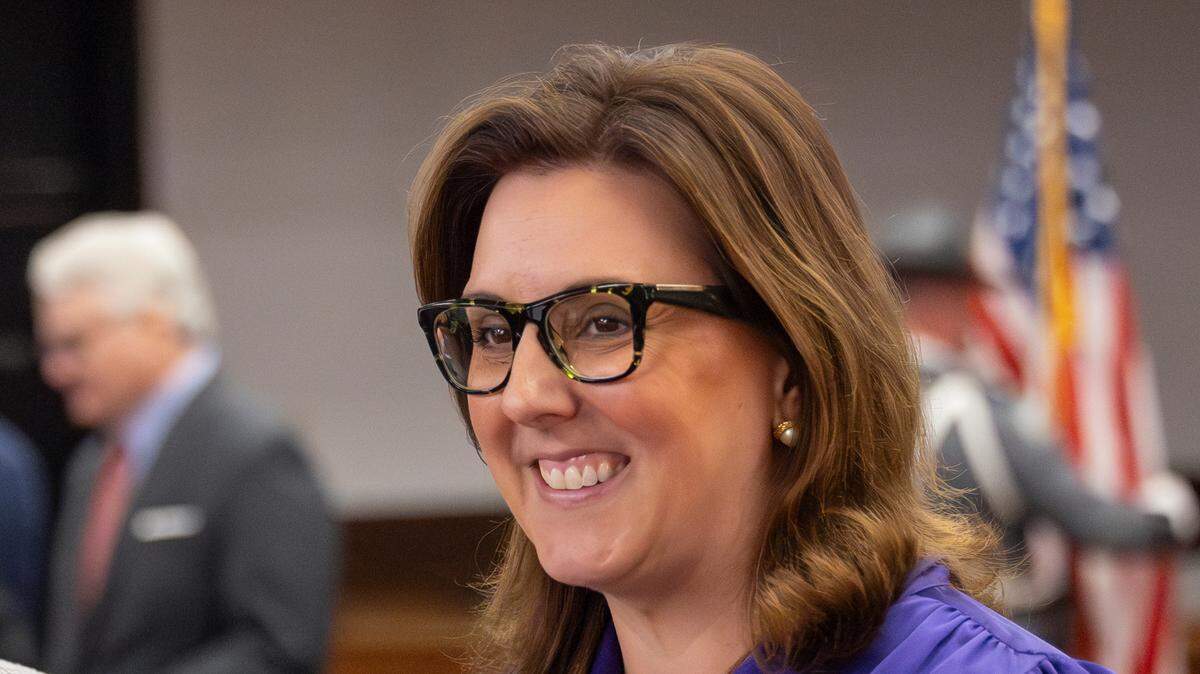
State Superintendent Ellen Weaver wants to cap the value of separation agreements between superintendents and school districts after several large payouts to get superintendents to leave their jobs.
Weaver proposed a rule to cap the value at one year’s salary or the remaining value of the contract, whichever is less. She proposed the rule as a proviso attached to the annual state spending plan.
Proviso, or one-year laws, are attached to the budget to direct how money can and can not be spent. Several provisos, especially policy positions, are attached one year and then renewed year after year.
Weaver’s proposal follows moves by school districts shelling out sizable payouts to superintendents under strained circumstances. Weaver pointed to how districts in the Midlands had a combined $1.3 million in payouts to get rid of superintendents in recent years.
Richland 2 gave former Superintendent Baron Davis a payout worth $615,000 in 2023. It included a lump sum of $415,518.68, $124,481.32 for accrued sick days and vacation leave and another $75,000 for “all disputed claims,” which was not further defined in his settlement agreement.
Davis received glowing performance reviews during his tenure, and his contract had just been extended with the district only months prior in September 2022 in a narrow 4-3 vote. But following the November 2022 election, his supporters were no longer on the board. Those who remained had been unhappy with him for some time, former board chair James Manning told The State, because he held them accountable.
Christina Melton, former superintendent of Lexington-Richland 5, was granted $226,368 to resign without a public vote in 2021. It was more than $44,000 higher than her annual salary.
Nicholas Wade, former superintendent of Lexington 2, received $240,000 to resign in 2022, $60,000 higher his annual salary. The district also paid $10,000 of Wade’s attorney’s fees.
Former Richland 1 superintendent Craig Witherspoon received a full year’s pay, about $258,000, when he agreed to resign at the end of the 2024-25 academic year, plus accrued paid time off and six months of health insurance.
“Recent articles have documented the increasing number of local superintendents receiving contract buyouts that exceed their annual salary,” Weaver wrote in her budget request. “The SCDE believes these taxpayer funds would better serve the students for whom they are intended by going to classroom instruction rather than golden parachutes.”
Quincee Moore, the executive director of the S.C. Association of School Administrators declined to comment for this story saying her organization has yet to have a discussion with Weaver and school district superintendents.
The South Carolina School Board Association did not have position on the proposal. It said several items can be negotiated when a school district brings in a superintendent, such as salary, sick time, vacation time, stipends for other expenses, and even buyout terms. However, if this proviso was put in place, it would put school districts on the same playing level.
However, it also could give pause to a candidate thinking about coming to South Carolina to be a district superintendent.
“What I would worry about would be if this would disadvantage us in terms of looking at somebody who might be a strong potential superintendent from another state,” said Scott Price, executive director of the School Board Association. “That would be a question that I would have. Is this something that could likely disadvantage South Carolina in looking at strong leadership in other states.”
The proposed rule also could be a factor if a candidate is weighing an offer in a state that may not have the limitation.
Price said buyouts longer than 12 months are rare.
So much can be negotiated in a superintendent’s contract and many factors can influence a candidate’s decision. Buyouts for highly-paid employees or top administrators also happen with county and city administrators, and college football coaches.
“Sometimes you get to the point where you just need to retreat to your respective corners,” Price said.