SC House rushes to keep secret some NIL deals between colleges, student athletes
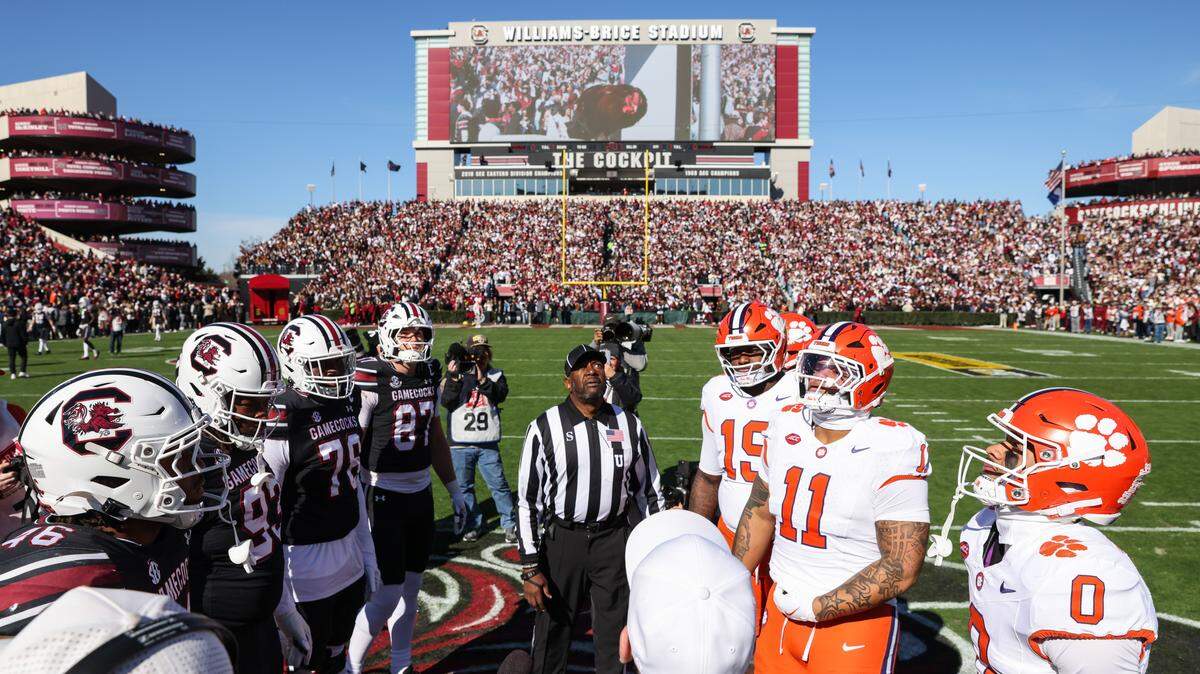
How much college athletes make from the divvying up of $20.5 million schools are allowed to share with its student-athletes in the wake of an NCAA settlement would be exempt from public records requests under a fast-tracked proposal by the state House.
The House on Thursday voted 111-2 to make revenue sharing contracts between schools and intercollegiate athletes not subject to the Freedom of Information Act.
House members passed the bill on the third day of the 2026 session and is set to send it to the Senate to potentially influence an upcoming hearing on a pending lawsuit.
The lawsuit was filed in Richland County against the University of South Carolina after the school denied a request to release how the school is spending its revenue sharing money. The next hearing is scheduled for Feb. 2.
As part of the NCAA settlement, each school that opts in is allowed to spend up to $20.5 million in the 2025-26 school year on payments to student athletes, but $2.5 million of that is designated to pay for increased scholarships.
Disclosing such information, especially on how much each individual athlete is making could put the state, and more specifically the USC and Clemson football programs, at competitive disadvantages with schools in other states.
“South Carolina’s 4-8 season, Clemson’s 7-6 season, will be pretty good seasons going forward,” said House Majority Leader Davey Hiott, R-Pickens. “We need to emphasize to the courts, to the judge that’s hearing this, that the intent and the accuracy of this money is it is not FOIA-able. It is private dollars raised by the university and required by the NCAA in revenue sharing.”
Hiott gave the example that a quarterback making $2 million from revenue sharing could be offered more money from another school if that information was disclosed and put South Carolina schools at a competitive disadvantage, and lead to athletes leaving the state for the highest bidder.
“One of these schools is going to come back next year and say, ‘I know what you’re making at Carolina, I’ll give you $2.5 (million),” Hiott said. “And pretty soon, you’re talking about everybody leaving this state, all the athletes leaving going to the highest bidder, and then we’ve got a bigger mess.”
Hiott said the money for revenue sharing is really private money raised by the athletic departments that comes from television deals and ticket sales.
State Rep. Justin Bamberg, D-Bamberg, also said keeping the individual deals private a safety issue.
“If everything is disclosed everyone knows exactly what individual player is getting what and that could be very dangerous for them, for their families for example,” Bamberg said. “That could subject them to extortion, or worse.”
Even though state Rep. Chris Hart, D-Richland voted for the bill, he had some reservations.
“I’m not necessarily opposed to this. I just want to know why we as a public body won’t let the sun shine in about private money that’s coming into our university, that gives me pause, that gives me concern,” Hart said.
Open records questions in revenue sharing era
Name, image and likeness deals between student athletes and private organizations, such as The Gamecock Club, are not subject to FOIA laws. However, the lawsuit filed by Frank Heindel is over whether USC has to disclose deals student athletes have directly with the school, which are currently subject to FOIA disclosure.
With the legislation pending in the General Assembly, USC has now asked for a continuance of the scheduled Feb. 2 hearing.
“Passage of this legislation would clarify that the contracts sought by Plaintiffs are not subject to disclosure under FOIA and would be dispositive of Plaintiffs’ pending request,” USC’s lawyers wrote in their request.
Heindel in a statement to The State newspaper took issue with that filing.
“USC is asking the court to pause a pending FOIA case so lawmakers can change the law midstream, rather than defending the exemptions it already claimed,” Heindel said. “Courts usually decide cases based on the law in effect when the request was made. USC is asking for an exception to that principle.”
Schools are not required to publicly disclose how they are divvying up the $20.5 million it received from the NCAA settlement. However, some athletic directors have been forthright about their spending. Iowa State Athletic Director Jamie Pollard, for example, said the Cyclones football team will receive $13 million, men’s basketball will get $5 million, wrestling will get $1 million while the women’s basketball team gets $750,000.
South Carolina has been unwilling to give a breakdown of how much revenue-sharing money each of its sport programs has been allotted.
Many schools, though, are expected to dole out their money using the formula provided in the House v. NCAA settlement. That calls for the football program to earn 75% of the revenue sharing money, while 15% goes to men’s basketball, 5% to women’s basketball and 5% to all other sports.
Clemson, like South Carolina, has declined to provide sport-by-sport spending and athletes’ revenue-sharing contracts, which are particularly of interest for football. The university has argued those records are “trade secrets” exempt from disclosure under state FOIA law .
Clemson has also argued that revenue-sharing contracts are “educational records” that fall under the Family Educational Rights and Privacy Act and releasing such information would “constitute unreasonable invasion of personal privacy.”
“My main concern is with Clemson and South Carolina, that we stay on a playing field, that we can compete with all these other people,” said state Rep. Jackie “Coach” Hayes, D-Dillon. “And you think about it, that sounds like a lot of money, but you go to Texas and Miami and Florida and all those, they probably spend it three times that much money they got all those other sources. This is the only way that I feel like we’ll still be able to compete.”
Sports reporters Jordan Kaye and Chapel Fowler contributed to this article.
This story was originally published January 15, 2026 at 5:17 PM.