A reform of SC income tax could be coupled with property tax changes for seniors
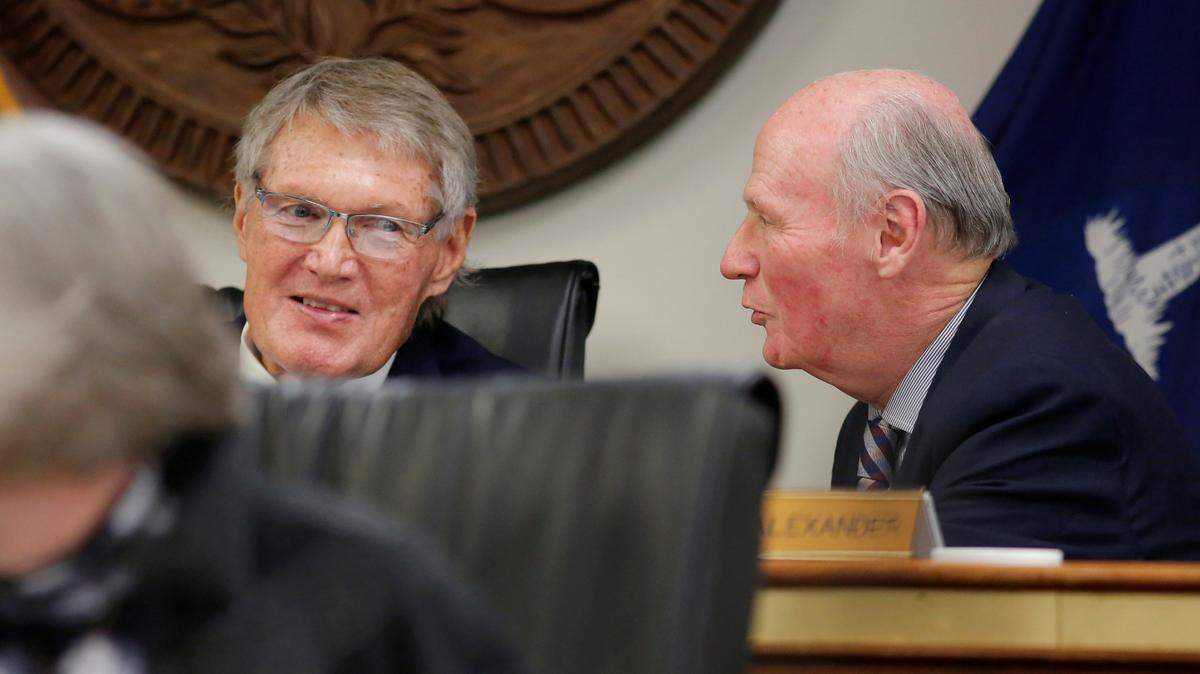
Senate Finance Committee Chairman Harvey Peeler doesn’t like anyone out tax cutting him.
So with the Finance Committee pushing through a House income tax reform plan, the upper chamber is poised to add a property tax cut for seniors.
The Senate Finance Committee on Tuesday approved the House’s income tax reform plan that aims to eventually phase out the state income tax, and also passed a separate increased property tax homestead exemption for state residents 65 and older.
“We went along with what the House did on income tax, understanding that our goal is to eliminate income tax, and it’s been proven with all the triggers you can,” Peeler told reporters Tuesday. “You can’t out tax cut Harvey Peeler. We see their cuts on income tax and now property tax, and that’s what we’ve heard so much from our constituents, is all of it is too high, but property tax is unfair.”
Whether the House will go along with the Senate’s property tax reduction remains to be seen.
Peeler said he’s optimistic the property tax plan will go through the House, “but I can’t speak for them, but if the Senate just passes the income tax. House’s income tax (as is), it goes straight to the governor.”
The income tax legislation would phase out the state’s income tax as long as revenues continue to be high enough. Under the proposal, the state would have a two-tiered system with the first $30,000 of a person’s taxable income taxed at 1.99%. The remaining income would be taxed at 5.39%.
The move would bring the state’s effective tax rate to 2.6% down from 2.7%.
Further cuts to that higher tax rate would be triggered if income tax revenue to the state grows by at least 5%. The plan would keep an additional $200 million out of state coffers each year.
Currently, the state’s highest income tax rate is 6%. But when people start calculating how much state income tax they owe, they start with the lower federal taxable income, instead of adjusted gross income.
The new plan would shift to starting that calculation with adjusted gross income.
The goal of going to a flat tax is meant to ensure more people pay income taxes to the state as 44% of filers don’t pay state income tax under the current system. The proposed new structure would decrease that share to 34.5% of filers.
This plan also would lead to 24% of filers seeing an initial tax increase.
Senate Finance Chief of Staff Quentin Hawkins said House and Senate budget staff did not find a way to prevent an income tax increase for some filers as the state switched to adjusted gross income from federal taxable income.
Those who have an adjusted gross income between $1 and $20,000 would see an average increase of $38. Those with an adjusted gross income between $20,001 and $30,000, would see an increase of $5, according to estimates from the Revenue and Fiscal Affairs office.
“I really appreciate that the bulk of this tax cut is targeted towards the middle class, those earning between $30,000 and $100,000 but, I still, nevertheless would like to think there’s a way we can hold harmless those earning between $0 and $30,000,” said state Sen. Wes Climer, R-York.
If the full Senate passes the plan without any changes, it would put the House and Senate on the same footing when writing the state budget. Even though lawmakers have $734 million in new annual money to allocate. That number shrinks with the income tax cut plan. The first year would mean $119 million less for lawmakers to spend.
But if the House agrees with a property tax cut pushed by Peeler, it would cost the state an additional $258.5 million.
The Senate Finance Committee bill increases the homestead exemption to $150,000 for seniors at least 65 years old. People would have to live in the state at least five years before receiving the increased exemption.
“The people that are here are the ones that are making those long-term investments in our communities,” said state Sen. Greg Hembree, R-Horry. “And then you have folks that moved in from out of state, and this is a problem we’re having in Horry County and many other counties in South Carolina, they’re moving in from out of state, and day one they get the benefit of this exemption without having put the first cent toward any sort of build up of our communities.”
The bill previously had a $100,000 exemption, while opening it up to people who are at least 60 years old.
Hembree, R-Horry, wanted a higher exemption and keep the 65-years-old minimum in place.
“The goal of this was to give people that were on fixed incomes or retirees the benefit of this property tax relief. Those are the ones that are suffering the most from this,” Hembree said. “Those that are still working and are still generating an income have the ability to absorb these property tax increases that we’re all seeing based mostly on the increases in value of property.”