
Trump wants SC’s personal voter info. McMaster stresses privacy in negotiations
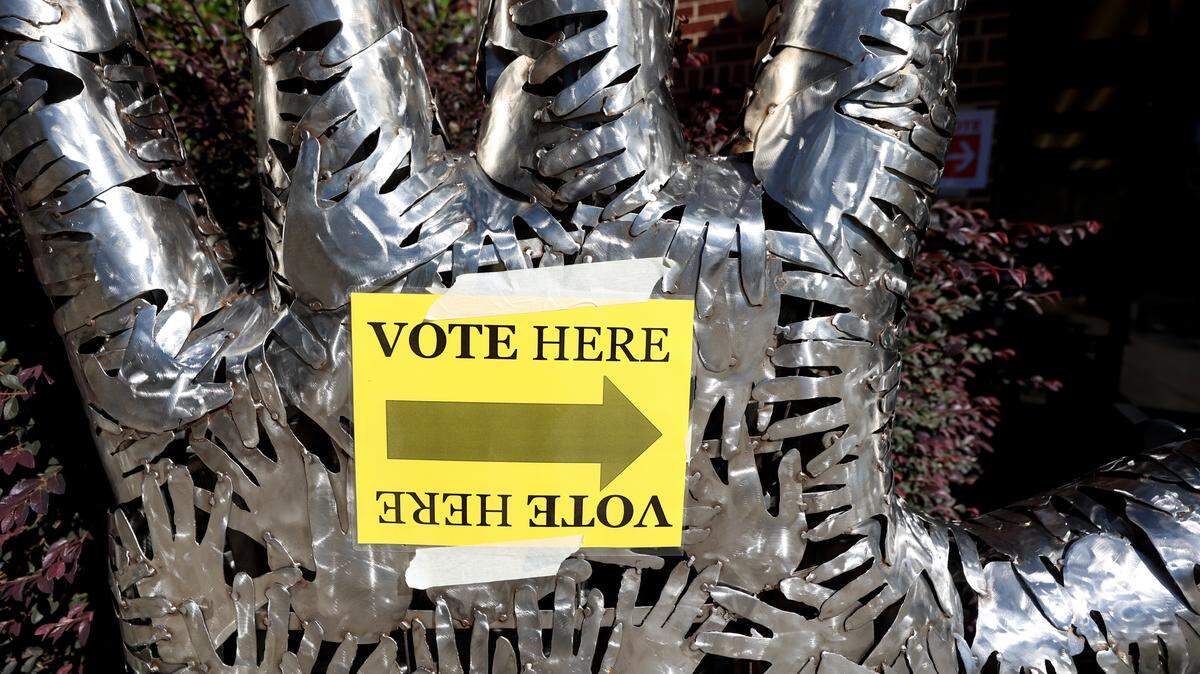
While South Carolina’s election agency negotiates handing over voter rolls to the U.S. Justice Department, Gov. Henry McMaster said the privacy of residents should be a priority in discussions.
“I want to be sure that our people’s business is not available to the world,” McMaster told reporters Thursday. “There’s some things that the federal government does not need to have. Some things that need to be very safely secure. I want to be sure that anything that we turn over is safely secure, and that’s what that memorandum of understanding is for.”
The U.S. Justice Department’s requested for the personal information of more than 3.3 million South Carolina voters, but what data the federal government asked for, how the information could be used and when their agreement will be made public is still under negotiation.
Outgoing chair Dennis Shedd said he is confident the South Carolina Election Commission will hold a public vote before sharing voter rolls with the Justice Department after confirming the commission is negotiating with the feds over the contract.
He said the state agency had some issues with the U.S. Justice Department’s initial memorandum of understanding, which will lay out the terms of the voter sharing agreement, but declined to explain any of the concerns.
The memorandum of understanding from the Trump administration has also not been made public by the state Election Commission.
“There’s some other issues that staff is still working through with them, and we are not ready at this point to have any more public discussion or a public vote,” Shedd said during Wednesday commission meeting, his final day on the board. His resignation and replacement were announced Wednesday.
The U.S. Justice Department’s Civil Rights division asked for South Carolina’s voter rolls in early August. It requested the full names, dates of births, home addresses and the last four digits of Social Security numbers or state drivers’ license numbers. The request has raised privacy concerns and a lawsuit.
McMaster has said the private information of citizens, like Social Security numbers, are already available to the federal government through other sources.
“A lot of that is available from other sources anyway,” McMaster said. “Those are the kind of questions that need to be answered and need to be negotiated. We need to stand fast with the constitution of South Carolina. We have no choice.” South Carolinians have a constitutional right to a privacy.
The Justice Department said it wanted to enforce federal voting laws using election data obtained from states, according to emails between officials at the agencies over the summer.
More than 40 states received requests from the Justice Department for voters’ private information. Some states have already sent their voter rolls, and more than 20 primarily Democrat-led states have been sued by the federal government for resisting the request.
Earlier this month, the Democratic National Committee also opposed South Carolina potentially turning over voter rolls to the Justice Department, arguing it could violate federal voting laws, in a letter to state Election Commission executive director Jenny Wooten.
Shedd said he had not read the letter and did not want to let partisan concerns impact discussions.
“I don’t really care about that letter or the Republican committee. I don’t care about any of that,” Shedd said.
The DNC said it was concerned South Carolina would give the federal government more power over voter registration, including the ability to remove voters from the list. Shedd said he has not discussed a purge.
“I think that’s something that would be discussed,” Shedd said.
Will agreement be made public?
The initial federal request prompted a lawsuit in state court from Orangeburg resident Anne Crook, who argued the data transfer would violate her constitutional right to privacy in South Carolina. But Judge Daniel Coble of Richland County denied a temporary injunction in October.
McMaster also asked Coble to dismiss the lawsuit entirely in October.
At the time, Election Commission attorney Elizabeth Crum told the circuit judge any contract, or memorandum of understanding, to send voter information would be discussed and voted on in an “open session.”
“If we get an MOU with the Department of Justice, it will be discussed in open session by the commission and any vote will taken in open session,” she said at a hearing in October.
Shedd has repeatedly promised to hold a public vote on sending voter rolls to the Justice Department. But Shedd announced his resignation Wednesday, and he will no longer serve on the Election Commission. However, he believes his successor, Robert Bolchoz, and the current commissioners will uphold the promise.
“We’ve always planned to talk about it in public, when we get to that point, where we have an agreement that we’re ready to vote on, then share that information, discuss it and then vote on it in public,” Shedd said. “And so nothing has changed. And I don’t control it, but I can’t believe the commission is going to do anything differently.”
South Carolina has a memorandum of understanding from the U.S. Justice Department, Shedd said. The details of the proposed agreement have not been disclosed publicly, but Shedd said agency staff are currently negotiating the details.
Shedd said the Justice Department did not request drivers’ license numbers in the MOU. He also said the information requested was less than what the Election Commission already shares with 25 other states.
The commission has some issues with the proposal from the Justice Department. Shedd would not say what concerns he or the commission had when asked at the scheduled January Election Commission meeting.
“We may have slightly different points we want to focus on,” Shedd said. “But, we just are still in that negotiation process.”
This story was originally published January 22, 2026 at 5:00 AM.