Wetlands work for Scout Motors site accounts for nearly half of SC’s cost overrun
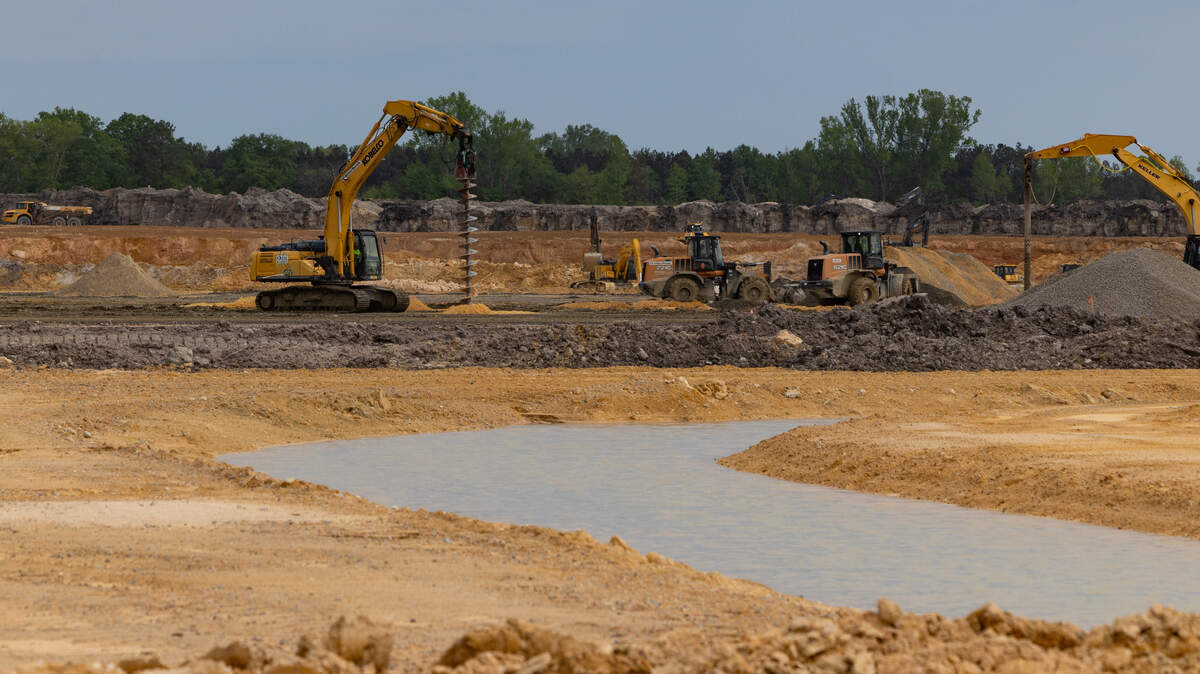
Nearly half of the $150 million in cost overruns to prepare the Scout Motors site for construction was related to environmental mitigation costs, South Carolina Secretary of Commerce Harry Lightsey told budget writers Tuesday.
Lightsey, during his budget presentation to a House Ways and Means subcommittee overseeing economic development, asked lawmakers to approve the additional one-time money to complete work the state committed to in 2023.
Budget writers have $1.7 billion in one-time money available to allocate when crafting a spending plan during this year’s legislative session.
“Look, (a) $150 million overrun is a substantial amount of money. It’s a serious thing for us here,” said state Rep. Leon Stavrinakis, D-Charleston. “If we fund this $150 million it impacts the state budget.”
The request for the additional money is on top of the $1.3 billion incentive package South Carolina lawmakers in 2023 approved to bring Scout Motors’ $3 billion factory to Blythewood.
The state’s work included building a railway bridge over Interstate 77 to the Blythewood industrial park site, building a new I-77 interchange to serve the eventual factory, additional road improvements, electrical work, and water and sewer infrastructure.
Lightsey said Commerce is working to prevent this size of overrun does not happen again especially on projects as large and complex as the Scout Motors project. He said Commerce is having regular communications with the Department of Natural Resources, Department of Environmental Services and Department of Transportation, and having a point of contact with the Army Corps of Engineers.
“We discuss what projects are underway in the state, but we also talk about projects that might locate in our state, where they might locate, what may be involved in terms of road work or utility infrastructure or wetlands mitigation,” Lightsey said.

About $72 million of the overrun was for wetlands mitigation as other land needed to be protected to make up for the land being developed in order to obtain a wetlands permit from the U.S. Army Corps of Engineers, and costs related to the stoppage because of the mitigation effort.
Commerce initially budgeted $50 million for mitigation efforts, and has already spent $55.5 million on those activities, the agency said.
“We discovered that we needed to acquire additional mitigation property in order to satisfy their requirements of approving a wetlands permit, we had to secure additional stream mitigation credits in addition to the wetlands mitigation credits that we originally proposed,” Lightsey told a House Ways and Means subcommittee that oversees economic development.
An additional $43 million in the overrun was for road work, $17 million to build permanent dams to handle storm water runoff, and $18 million was for delay related costs.
The dams themselves were not anticipated or budgeted for, Lightsey said.
Commerce also added that it built in a 10% contingency into the original construction budget for the project.
However, the money would not go to Scout Motors. Instead, the money would go to contractors hired by the state to prepare the site for development.
Lightsey told budget writers that Commerce kept equipment on site for work even when worked was stopped for five months.
“We didn’t know when we would receive the wetlands permit, we didn’t want to let go of that equipment, because we wanted to be ready to go to work as soon as we received the wetlands permit. And we were concerned that if we let go of that equipment, that it would take additional time and effort to get that equipment back on the site,” Lightsey said.
Commerce also had to pay money to make up for lost time.
“Once we got the wetlands permit, we were certainly trying to accelerate our activities to catch up, and we had additional cost related to that,” Lightsey said.
He added Commerce is working with counties about putting in infrastructure on potential development sites, “so that they don’t need the substantial amount of work that we encountered on the Scout site.”
Lightsey also conceded the mitigation package put together by Commerce for its wetlands permit was meant to eliminate the need for an environmental impact study, which could have taken two years, and gain approval from the Army Corps of Engineers and the Environmental Protection Agency.
“If we had to go through a two-year process, that would have killed the project, they couldn’t have met their construction schedule and their plans to produce vehicles, and so that would have killed the project,” Lightsey said.
Lightsey said he wouldn’t change the decision to going forward with the project.
“(I’m) sure you’re not happy about the overrun. We’re not happy about it. But if you knew two-and-a half-years ago that it would cost an extra $150 million would you still have recommended this project to the governor and to the General Assembly?” Stavrinakis asked Lightsey.
“Absolutely,” Lightsey responded.
This story was originally published January 28, 2026 at 11:09 AM.