
Court ruling, Trump influence makes SC House want to begin redrawing congressional maps
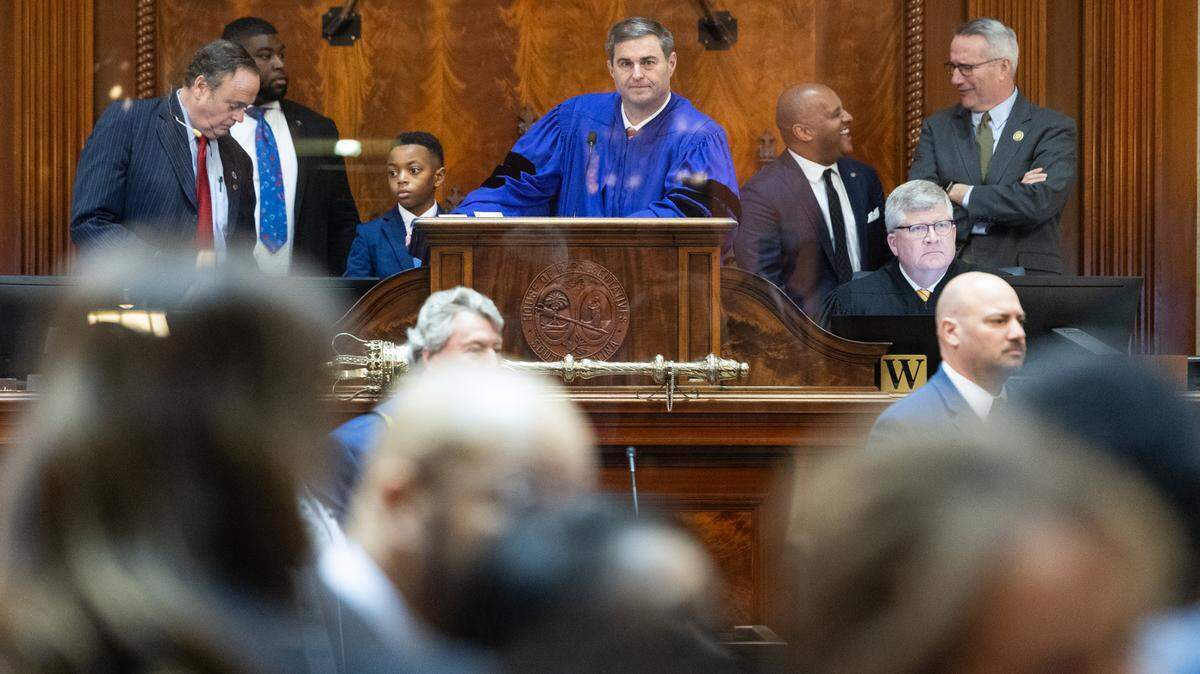
The South Carolina House lined up a chance to redraw its congressional maps Wednesday, joining an effort pushed by President Donald Trump to gain more reliably Republican seats in the South ahead of the 2026 midterms. Now, it is up to the state Senate to keep that chance alive.
The primary elections are scheduled to take place in 33 days, and the General Assembly has just four days before any incomplete bills will be dead.
Some lawmakers were also aiming to get out early of the State House early to spend Wednesday evening at the Riverbanks Zoo in Columbia with their families. Instead, House members debated and passed a resolution allowing them to redraw South Carolina’s congressional map after the legislative deadline.
“We’ve done our part,” said House Majority Leader Davey Hiott after the vote. “... See if they [the Senate] can get it passed as well, then we’ll begin the process.”
The vote shows the South Carolina House, which for months appeared skeptical of a redistricting effort, has an appetite to redraw the state’s congressional maps just more than a month before voters are scheduled to go to the polls. An effort from the S.C. House Freedom Caucus to redistrict stalled in an initial panel of lawmakers this February.
House lawmakers passed the amendment to the sine die resolution 87-27 Wednesday evening. Sine die, the official end of the legislative session, is at 5 p.m. the second Thursday of May. Most years, the General Assembly passes a resolution outlining any work they can do after the deadline, which typically includes the state budget and conference committees.
Democratic lawmakers broadly opposed the plan, arguing House Republicans were caving to the demands of Trump.
“What we have is an effort, in my view, to bring the national chaos down to South Carolina,” state Rep. Gilda Cobb-Hunter, D-Orangeburg.
A “clean” version of the sine die agreement, which included limited tasks for lawmakers to take up out of session, was sent to the House in early February. But the House voted on it Wednesday evening to include the process of congressional redistricting.
A U.S. Supreme Court decision spurred interest in redrawing the seats, House leaders said. The high court struck down a Louisiana congressional map, arguing a second majority Black district was illegal racial gerrymandering.
Senate Majority Leader Shane Massey, who has not supported redistricting middecade, said last week South Carolina should not be impacted by the Supreme Court’s decision, since the high court already ruled the current map was drawn on partisan lines, rather than race.
But House members said the court decision grew interest in reevaluating the state’s maps.
“When the court made their ruling, it kind of sped the process up,” Hiott said. “It took us to the next level.”
After the recent court ruling, discussions with the Republican caucus and the Senate pushed the House to start the redistricting process, he said.
“And that’s where we are tonight,” Hiott continued. “And by the way, we’re missing the zoo. But we saw the zoo in here.”
Did White House ask SC to redistrict?
Last week, both Hiott and Massey said they weren’t interested in redrawing the congressional maps this year.
When asked about the change this week, Hiott said the White House requested South Carolina look at its maps again.
“The White House asked us to take a look at it,” Hiott said Tuesday. “The speaker has been in communication with (them) quite a bit, and they just asked us take a look at it. They didn’t strong arm us or anything, just said, ’please take a look at it.’ That’s what we’re doing.”
Massey also said he spoke with Trump twice. Hiott said Wednesday he had not personally spoken to Trump, but the chamber had been in contact with the White House.
State Rep. Spencer Wetmore, D-Charleston, accused Republican lawmakers of taking up the “least helpful policies imaginable” at the request of party leadership or demands of primary voters.
“We’re so obsessed with abortion and bathrooms and monuments and Sharia law, we don’t take the time to work on real policies,” Wetmore said in a committee meeting Wednesday morning. “And now Daddy Trump calls and needs to grasp at some power, and once again, we jump and run.”
On the House floor, state Rep. Hamilton Grant, D-Richland, asked Rep. Micah Caskey, R-Lexington, why the chamber was considering redistricting now. Caskey chaired the committee responsible for amending the resolution.
“Is there a general consensus amongst the body to potentially take this issue up or because somebody from Washington, D.C., called this week and said we needed to do it?” Grant asked.
“I have not had conversations with,” Caskey began but trailed off after receiving a note.
“What was the question? I don’t know why we’re doing it. People wanted to do it, that’s why,” he finished.
Will SC get new maps before the primaries?
New maps are a long way from becoming a reality. Two-thirds of the Senate will also have to approve a sine die deal allowing the General Assembly to work on redistricting. Republicans have a supermajority in the Senate, but Massey said Tuesday he didn’t know where his chamber stood. The Senate GOP leader said he will more than likely not vote for the change.
If the General Assembly does come back, the legislature will have to craft and agree on new maps in time for the 2026 midterm elections, which are already underway. That process may begin late this week, said state Rep. Weston Newton, R-Beaufort. Newton chairs the Judiciary Committee, which will handle the redistricting effort.
“Nothing’s off the table, of course,” said state Rep. Brandon Newton, R-Lancaster, after the vote. “We could get in the process and not find a map that’s better. We could decide that the current map is appropriate, but we needed to make sure we at least could do the process.”
The General Assembly typically redraws its congressional maps every 10 years following the census. In 2021 and 2022, lawmakers took months to draw and approve new maps, which were challenged in court. The U.S. Supreme Court didn’t deem South Carolina’s current maps constitutional until May 2024.
Republicans hold six of the seven U.S. House seats in South Carolina. U.S. Rep. Jim Clyburn, who is running for reelection this year, is the only Democratic member of Congress from the state.
The resolution only starts the process of redrawing maps, Hiott said. It doesn’t push back primary elections, promise a redraw effort or propose any maps.
“Nothing here provides precisely the sorts of answers that I think you’re searching for,” Caskey told state Rep. Todd Rutherford, D-Richland, as he questioned the impact of the resolution.
Democratic lawmakers spoke on the floor for over an hour opposing the bill, with some arguing a redraw effort could create electoral confusion and disrupt campaigns.
“I just ask you to please consider the cost, the human cost for these good candidates, Republican and Democrat, who have been working their tails off and now what we’re proposing, they may not even be in the same district that they’ve been campaigning in for the past six months or eight months,” said state Rep. Roger Kirby, D-Florence. “How is that conscionable?”
Absentee ballots have already been sent and more than 200 were already returned by Wednesday early afternoon, said state Election Commission director Conway Belangia. Candidates in congressional districts have already spent thousands of dollars and hours of effort campaigning for an election they think will occur June 9, some Democratic lawmakers pointed out. Plus, if the state runs two separate primaries for congressional elections and other elections, it could cost the state north of a $1 million and potentially lead to voter fatigue, Belangia said.
“I think our voters are really smart,” said state Rep. Brandon Newton after the vote. “And I think they’ll understand the difference voting for local offices, legislative offices and statewide offices, and then voting for congressional offices on other days.”
Belangia said early Wednesday afternoon lawmakers had asked him a few questions, but they hadn’t communicated with him about the process in-depth. Belangia runs the agency responsible for conducting elections in South Carolina. Potential confusion from redrawing maps close to the midterm elections is “not something confidence is made of” for voters, Belangia said.