
Life at a distance: 24 hours in South Carolina during the coronavirus pandemic
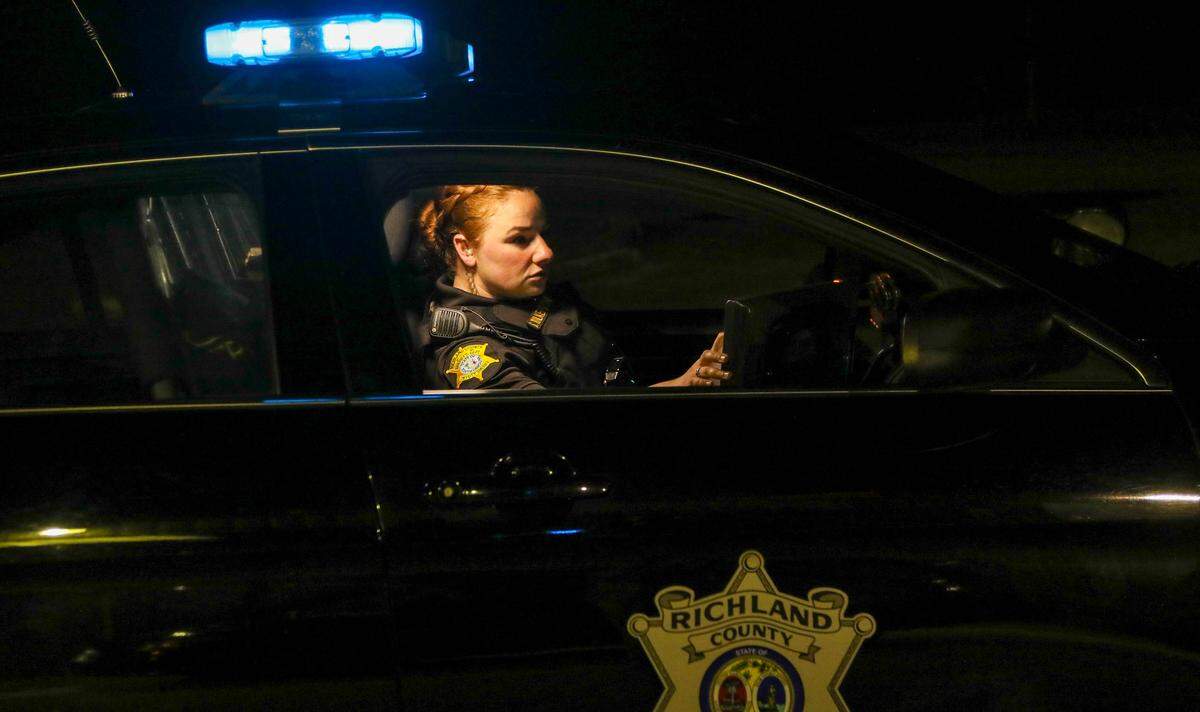
It’s midnight; Sierra Wilkerson’s 8-month-old is sleeping at home. But not everyone’s children are tucked in as a Tuesday morning unfurls.
In the middle of a 12-hour overnight patrol shift just outside of the capital city, Deputy Wilkerson of the Richland County Sheriff’s Department is on the lookout for “handle-pullers” — restless teenagers looting unlocked cars. It’s like summer vacation these days, she says.
Coronavirus has closed schools and businesses and kept people across the Palmetto State cooped up in close quarters. That means more petty crime calls for Wilkerson. More domestic dispute calls, too.
Almost two months since the fast-spreading, fear-inducing coronavirus took hold of South Carolina, each new day looks like the last — and yet almost nothing like the “normal” days of just a few weeks ago.
Normal is something else now, if normal is anything at all.
Normal is moving from one room of the house to another just to somehow break up another day of quarantine. It’s holding back the instinct to reach out a hand to a friend. It’s stripping off work clothes before coming into the house to protect children from an invisible danger. It’s going to bed each night wondering, “How long can this version of normal last?”
And then South Carolina wakes up, and does the day again.
On a recent Tuesday, reporters chronicled 24 hours of South Carolina’s “new normal” — from Wilkerson’s midnight patrol to bootcamp to homeschooling to an empty stage in a Greenville music club, and everything in between.
This new day of isolation will dawn across the state in about six hours. That’s when Wilkerson will pull her cruiser into her home’s garage and wipe down every surface.
She’ll strip off her deputy uniform in the garage, then throw it into the washer at a high temperature. She’ll shower herself and wash her hair before she hugs her daughter. She won’t take any chance that the coronavirus could be stuck on her when she reaches for her baby girl.
This is Tuesday, April 28.
5 a.m.
The newest soldiers at Fort Jackson awake in bunks now half empty, spread 12 feet apart, separated by 8-foot wall lockers. The Army calls it “the protective bubble.”
Senior drill sergeant Donald Castelow’s Alpha Company, 1st Battalion, 34th Infantry Regiment is the first group of trainees to arrive at the Columbia installation since the outbreak of coronavirus. They’re part of a pilot program on solider training during the pandemic.
Normally, there’d be 60 recruits standing at attention in front of their bunks, shoulder-to-shoulder. Today, there are just 30.
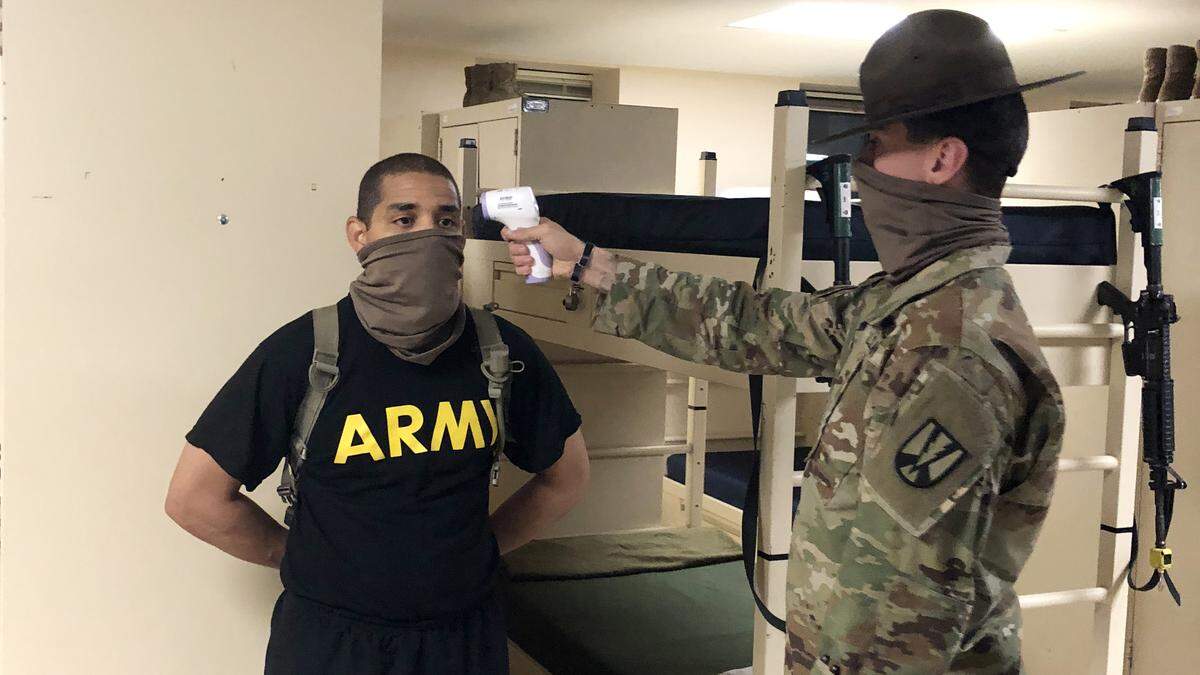
Castelow’s drill sergeants are taking the trainees’ temperatures, the first of two checks today. Any who register a temperature 100.4 or above or show any symptoms of the virus, such as a dry cough, are to be masked, gloved and taken to an on-post clinic.
Everyone wears a face mask. Doors are never closed so no one touches a door handle.
Despite all the precautions, Castelow is still concerned for the safety of his family he goes home to each night, a wife and two young daughters.
“Every single day, I take my uniform off in the garage and bag it up and go upstairs for a shower before I go around the kids,” he says. “I do all my laundry at work. I get my temperature taken every morning when I come on post so I get some real-time data.”
“So I’m feeling OK.”
6:20 a.m.
By the time Castelow’s soldiers have begun physical training, the sun is rising on Anthony Ward’s family farm in Florence County. He’s already busy, pumping water into a center pivot.
In a few days, cotton and soybean seeds will go into the ground, following a generations-old schedule that’s been used on the farm long before the pandemic raised concerns about falling commodity prices — especially for corn, Ward says.
He’s previously received some government assistance to account for falling prices. Today’s circumstances are just another bout of hardship. Year after year has brought events beyond Ward’s control, threatening his and other farmers’ livelihoods.
“This is sad to say, but I’ve actually gotten numb to the (point where) I just keep my head down and work,” he says, referring to the hurricanes, floods and droughts over the past few years.
“Does it affect me and my attitude and my behavior? Yeah, it is frustrating. But I just pray every night that it’s all going to work out, and that’s all you can do.”
7:35 a.m.
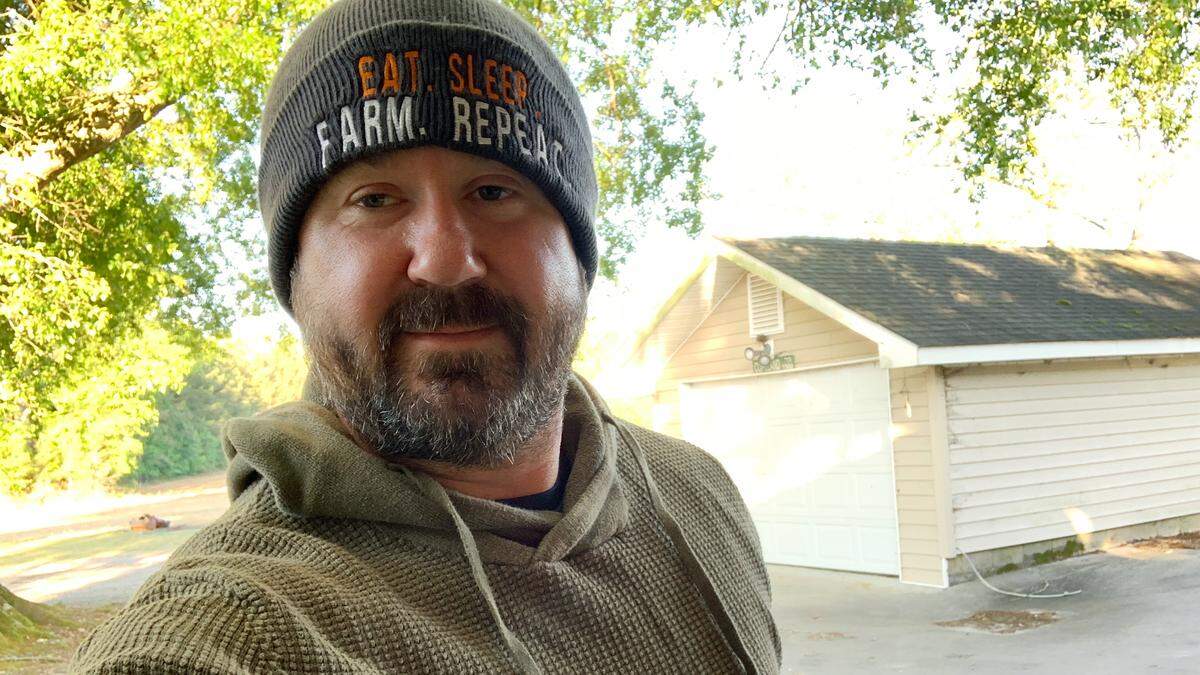
Morning sunlight filters through exposed timbers of the roof, catching Bill Patterson’s stubbled face.
He surveys the wreckage of his childhood home in Seneca, a small town in Oconee County. In the background, birds chirp from pine trees, snapped in two.
It’s been two weeks since a tornado pulled Patterson, his wife, Kelli and autistic son, Jude, from bed. The storm was a second hit to South Carolina, already weighed down by more than 200 coronavirus deaths, 400,000 lost jobs and a constantly hovering anxiety.
Patterson’s family had huddled in a coat closet that night, as 160 mph winds battered the house, lifting it 15 feet from its foundation. At least nine people were killed by tornadoes across South Carolina that night.
Patterson now glances where he’d normally be sitting down for work in front of his computer, through the space that once was a wall. He begins his new morning routine, crunching over debris thrown as far as a football field is long. He salvages tools and other possessions scattered in the storm.
“It tugs at my heart what we lost,” he says. The one-story house, home to generations of his family, is slated to be demolished within the week.
Tears well, and he pauses, wiping his eyes under the bill of his orange Clemson baseball cap. “It’s going to be tough, but it’ll be all right,” he says. “This is home.”
9 a.m.
It’s been a month since Stephanie Bridgers last opened her small Columbia cafe to customers.
Closed again today. She’s shouting to her kids — someone needs to clean the chicken cage.
Bridgers is well acquainted with a little bit of chaos on any normal day. She has four boys, three of whom live at home, and she babysits a friend’s daughter while her mom goes to work.
But the health crisis has taken daily commotion to another level. No one is at school, and everyone is stuck inside.
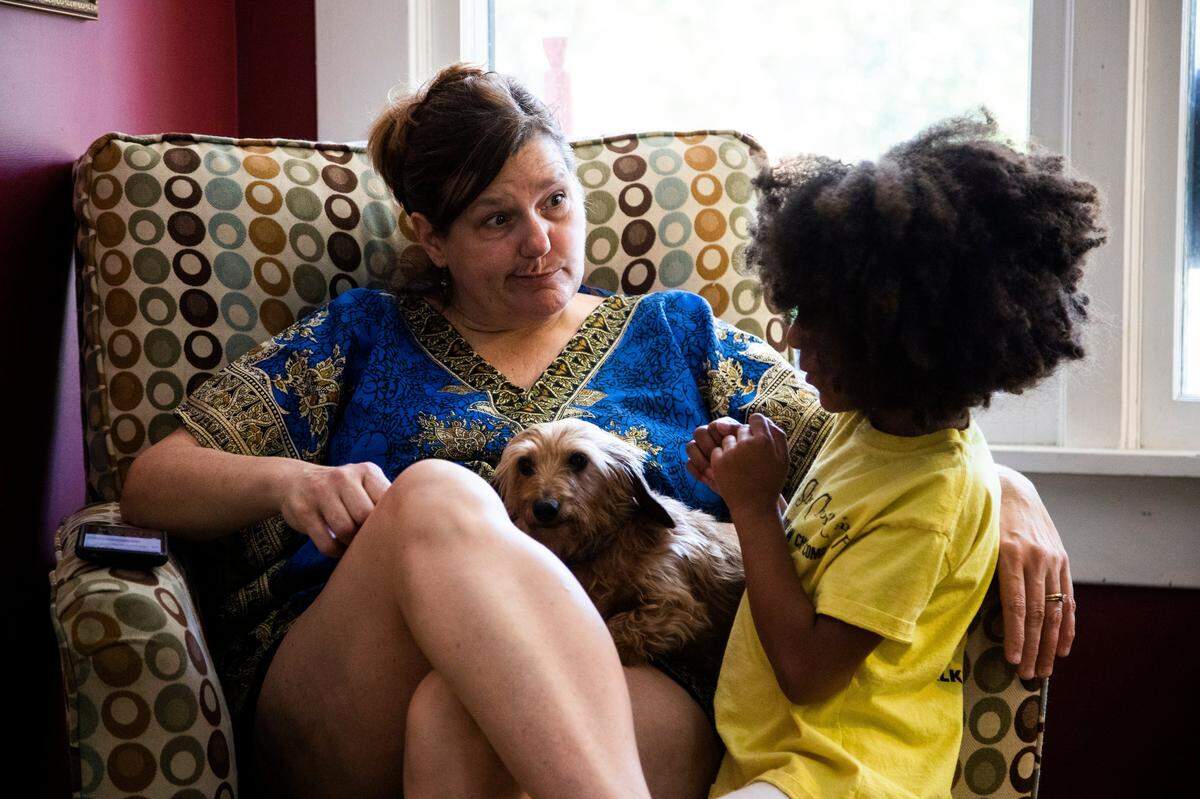
For a brief peace, Bridgers takes her morning ritual out on the porch with a cup of coffee. Her moment of quiet could be disrupted any second.
“I live with four men, and normally, it is pretty clean. But because of what’s going on, we have home schooling and so stuff is everywhere,” she says. “Board games are sitting out. We got a cotton candy machine. So, we have cotton candy on the porch this morning, sugar everywhere.”
***
One county over from where Bridgers sits on her porch, Veritas Health Group in Lexington is about to get busy. The morning lull is over.
Dr. Lachin Hatemi, bearded and wearing a beige checkered shirt, will spend 12 hours here today. He is, after all, the clinic’s only doctor, testing patients frequently for COVID-19. He’s had 50 positive patients since March.
“Initially, it was very difficult,” he says.
True, it’s been a tumultuous time for health care workers across South Carolina. Many have worked endless, exhausting hours while others have been furloughed or laid off — an ironic result of the spike in COVID-19 patients and sharp decline in income for medical practices and hospitals.
The daily flow of patients here is steady, Hatemi says. “It keeps us busy.”
Earlier in the crisis, Hatemi’s clinic turned to Facebook for donations of precious N95 respirator masks and used a manager’s connection to a restaurant supplier to buy gloves. Now, with the exception of protective gowns, the clinic is well supplied, Hatemi says.
He’s ready for the long day.
10:30 a.m.
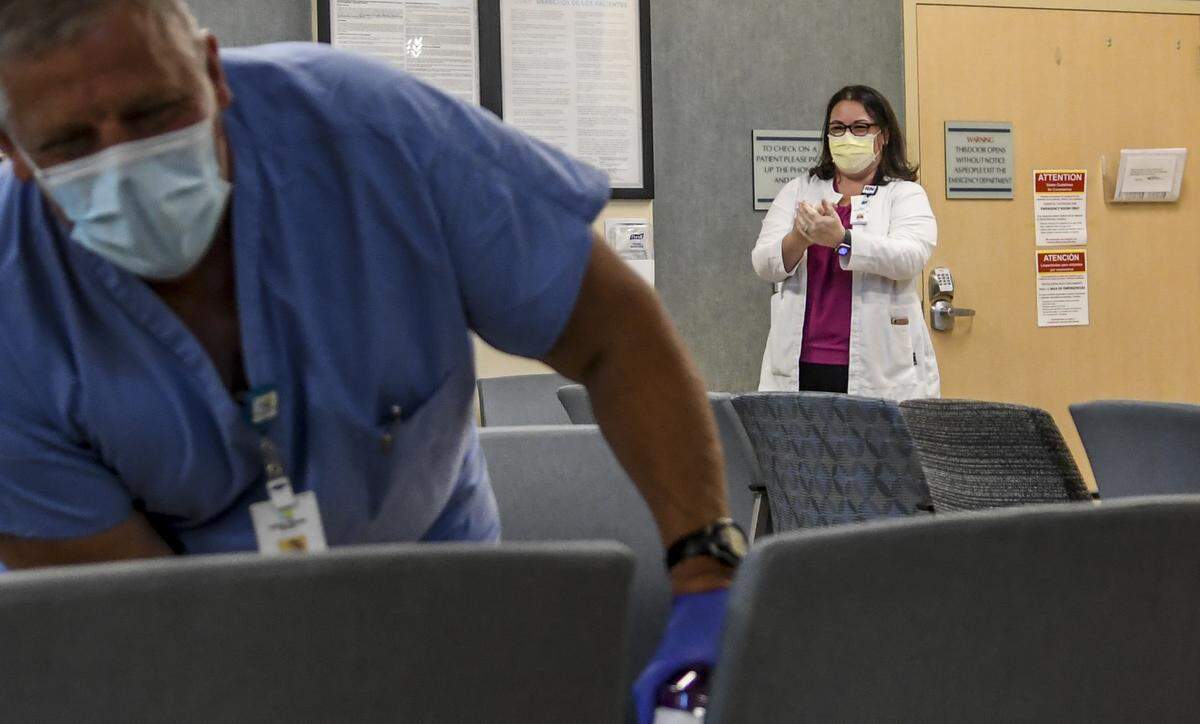
A hundred and forty miles away at Hardeeville’s Coastal Carolina Hospital, nurse Carlye Gilbert is starting a long day too.
As the Beaufort County hospital’s point person for infection control, she spends a good part of her mornings reviewing COVID-19 test results and phoning patients with the results.
“When you tell them, they’re relieved. They have an explanation. They know, and they don’t have to worry any more,” she says.
This morning, she’s reviewing plans to partition waiting rooms, enforcing six feet of distance between patients.
“We’re going to begin to try to head back to normal,” she says. “Normal’s going to look a little different.”
***
At this same time, “normal” for Cassidy Clark would be sitting at a desk, studying U.S. history and the Constitution at South Pointe High School in Rock Hill.
As senior class vice president, she’d be tinkering with all the activities her class was scheduling these last few months of the school year. She would go to her biology class then help organize the school newspaper as editor-in-chief.
But Clark, who just turned 18, is under quarantine this morning, same as every morning now, forced to finish her studies alone and graduate from home.
There is no classmate to turn to immediately when she needs help, or teacher at the front of the classroom motivating her.
“I honestly do (miss it), which is so crazy for me, because I feel like I was never in class,” she says. “I wish I could have those days back that I stayed home.”
The day before school closed, she found her senior prom dress, emerald green with crystals.
Now, Clark and her classmates are trying to plan a prom outside of school, maybe in early summer.
“It’s like heartbreak almost,” she says. “Obviously, we know there are bigger issues. Obviously, we know it’s for our safety. ... But it’s terrible because we are getting everything taken away from us. We had no idea our last day would be our last day. We weren’t really expecting it to go this far I think, either.”
11:07 a.m.
Her wedding would be less than a month away. Maris Burton should be finalizing the catering menu and the music for her wedding. Instead, she sits at her computer in her upstairs bedroom, searching for urns for her fiance’s ashes.
Burton, 61, found Tim Liszewski’s body on March 28, slumped on the downstairs couch of their Columbia home. The man she met 15 years ago, the man she loved, a kind-hearted activist with a zeal for community service, died from COVID-19 at 60 years old.
A week later, Burton learned she had COVID-19 herself. Her symptoms — loss of taste and smell, fatigue, a bout with pneumonia — have been mild compared to her grief. She’s had to mourn under quarantine; her sister, Barbara, lives in the same house. Yet they’ve communicated through text messages and yells down the hall.
Still, Burton finds reasons to smile: the gifts of food and flowers from face-masked neighbors, the mischievous squirrels sneaking into her bird feeders, the pictures of baby goats her coworker sends from her Orangeburg farm. A mental health counselor by trade, Burton knows positivity is a choice, and it’s a choice she makes as often as she can.
“With this, it certainly took me for a loop, and I get emotional,” she says, tears welling in her eyes. “But there are good things that are still happening.”
***
Tobie Pressler is sitting in her new office: the driveway of her Rock Hill home.
Leafy shadows dance around her and birds sing in a nearby tree as she stands at her computer on a video conference. It’s her new way of interacting with her young clients.
Ranging in age from 2 to 7, most of the children she works with at Chrysalis Autism Center do best with rigid schedules. Change can be particularly challenging for them.
Surprisingly, many are handling the disruption better than expected.
“We’ve been really surprised that some of the kids that we thought may not really be too hip on seeing us on the screen ... have responded better than we had imagined,” Pressler says.
But the adjustment has not come as easy for some parents, suddenly thrust into the role of 24/7 caretakers.
“We’ve had parents that have broken down the behavioral challenges that they’re facing, some of them now because it’s 24/7, where their child came to the clinic for eight hours a day, and they’re having some challenging emotional times.”
Noon
It’s chow time for Castelow’s soldiers. They sit outside where they can socially distance. Only 15 minutes to eat before it’s back to studying, back to well-spaced marching.
Meanwhile, lunch has just ended for Kali Mitchell and her kids, 7-year-old Ellie Rose and 4-year-old Everly.
Now, it’s time for “our shape scavenger hunt!” Ellie Rose exclaims, handing her mother a sheet of red construction paper.
“She found all the shapes? Whaaaat?” replies Mitchell, handing it back.
They’re on the back porch of their Ridgeville home in Dorchester County, the sun shining on the bushes.
The family was unusually ready for the lockdown. Mitchell homeschools her daughters. This morning, they covered prepositions, subtraction with double digits and a cursive lesson (the letter Z — it’s the end of the school year).
Mitchell is out of work as a hair stylist and will return to at least 80 clients waiting to reschedule, she says. For now, she’s with her daughters.
“I’m just trying to find some joy and focus on that,” she says.
A little later, Bridgers’ family is late getting lunch. But at least they are eating.
She’s about to start her second load of laundry — “We do at least one or two a day,” Bridgers says. “Once they clean their rooms, I always find about 12 towels.”
The dogs and chickens are fed. The family will continue to go through its new daily motions.
The weirdest part? “I don’t have anything on my schedule,” Bridgers says. “There’s a sense of peace, but there’s no sense of control.”

1:20 p.m.
“HEROES WORK HERE.”
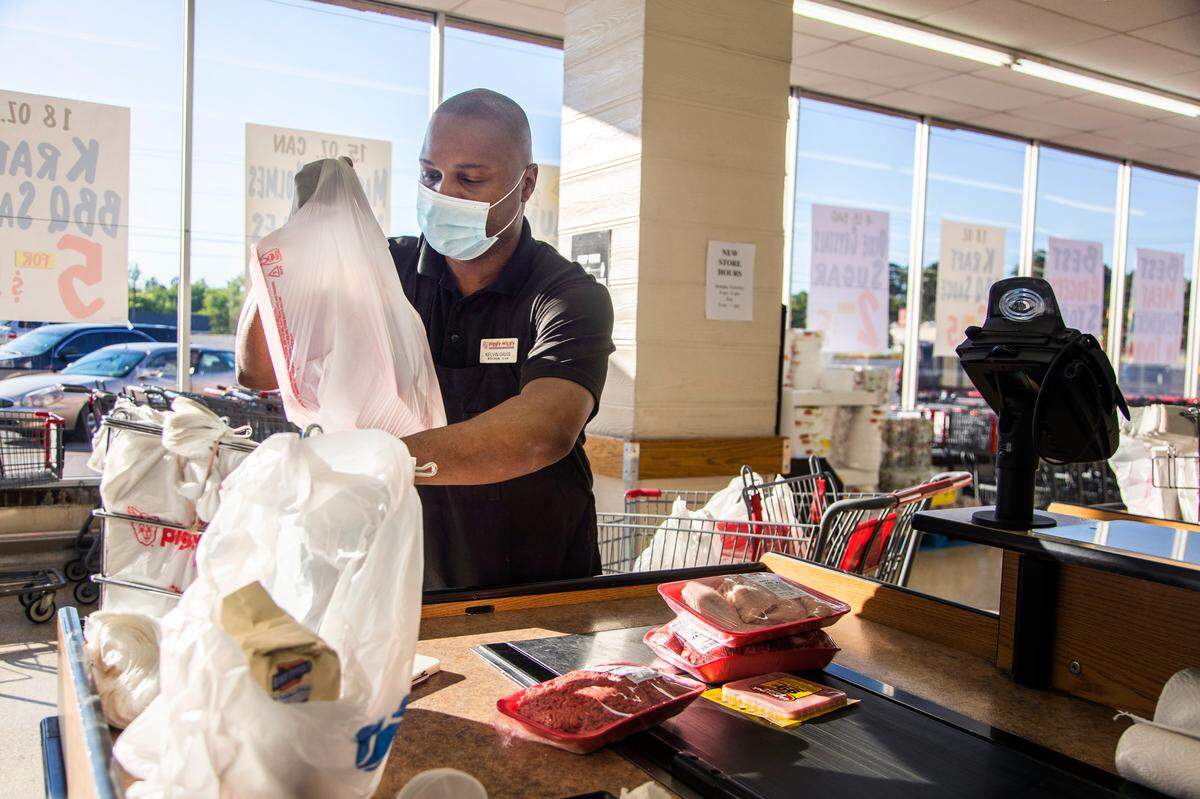
Those words, in big letters on a sign outside the Piggly Wiggly in north Columbia, mean something to the store’s 46-year-old assistant manager.
“A hero is someone who has courage, who is celebrated for their courage,” says Kelvin Davis, scanning the store with his eyes. “Everybody in here is actually a hero. You’re going against something that says, ‘Hey, I’m going to take you out.’”
Davis rallies his fellow employees. He oozes a relentless energy that propels him around the store, wearing a blue facemask and crisp white gloves, bouncing from cash register to cash register bagging groceries, chatting up customers, pushing carts to the parking lot and loading up shoppers’ vehicles.
Since the COVID-19 crisis began, Davis has worked at least a few hours every day of the week to ensure the shelves remain stocked with the supplies his community needs most.
Love, Davis says, is his No. 1 motivation. The people who shop here are his old schoolmates, his family, his friends.
“Hi, Mr. Davis,” two older women exclaim in unison as they enter the store. One of them asks Davis if he has any paper towels in stock.
Davis laughs.
“These are my aunties right here.”
2:20 p.m.
Business is much slower at Big Mike’s Soul Food in Myrtle Beach.
Just a pair of customers strolled in at lunchtime for pickup orders, and Big Mike himself, Michael Chestnut, takes a seat at one of his many empty tables.
“I do feel like it’s going to be a long time before we get back to normal normal,” Chestnut says, sighing. “This might be the new normal, the mask and the distance, those things, we’ve taken for granted for so long. It took something like this for us to realize, we aren’t in control.”
This soul food joint was a dream come true when Chestnut and his wife opened it in 2012. Now he’s had to cut his staff by half.
He’d come in early today to help prep meatloaf, but he just spent more than four hours on the phone fulfilling his other major duty: working as a city councilman.
The council had just voted during its virtual meeting to reopen the city’s beaches, with plans to vote on reopening hotels later in the week — two major steps in a return toward normalcy for a city with a tourism-based economy. But Chestnut admitted he has some reservations about the decisions.
“It weighs heavy,” he says. “We have a lot of retirees here, so quite naturally they’re going to be worried. How do you balance it all out?”
3:50 p.m.
Maris Burton takes a walk.
She can smell the flowers again.
For weeks, COVID-19 robbed Burton of that sense, but here she is, standing on the bank of the Broad River in Columbia, breathing in the woods around her. The aroma fills her heart with gratitude.
Burton walks here every day from her home, with her mask on. The 15-minute trek has become easier as her coronavirus symptoms gradually fade.
“The opportunity to soak in the pureness of the trees and the shrubs and being at peace with the world is what being out in nature does for me,” she says on her walk back home, “and does for us.”
When she gets home, she checks the progress of her memorial garden — white hyacinths, tulips and daffodils planted around a tree stump in memory of her beloved fiance. She’ll be able to smell them soon. And when they bloom, she’ll think of him.
5:36 p.m.
It’s been a productive day on the farm, and Anthony Ward heads home. This time a year ago, he’d probably head into town instead, grab a couple of beers and some Mexican food.
But thanks to coronavirus restrictions, he’ll make his own dinner and lie down to close his eyes shortly thereafter.
Meanwhile, restaurant owner Michael Chestnut is driving home hours earlier than he normally would on a weeknight.
It’s difficult for him not to think of how serving 150 meals on a weekend is now considered a success. He used to seeing double or even triple that amount of business on a weekday last year.
He’s thankful, though, that he’s able to continue running his restaurant at all.
6 p.m.
On Tuesdays, you could buy a $15 bottle of wine to go with your shrimp and grits or the evening special at Tombo Grille.
The popular restaurant outside of Columbia is where you’d find Sally Huguley and her husband of 41 years, Mark.
But not tonight.
Being over 65, they know just how serious the coronavirus can be. Folks of their generation have been hit hardest by the pandemic, being most likely to become seriously ill or die of the virus.
Missing meals out is just one part of the retiree’s new normal.
Sally has stopped shopping at big-box stores. She pulls on a face mask before entering her local Publix and keeps her distance from other. She orders a lot more items online these days.
And she’s thankful. She knows her hardships are small compared to many others.
“I feel for the young waiters we know — they are all out of work, and they need the money. And I worry about Tombo’s and what will happen to all the small local businesses who’ve been forced to close,” she says.
“For us, the shutdown is inconvenient, sometimes boring, but not a financial worry.
But for many, it was an economic bolt out of the blue. One day they had a job, the next, they didn’t, with no guarantee they’ll have one anytime soon.”
7:10 p.m.
Back in her room, the same spot where her day began, Cassidy Clark is winding down.
She’s eaten, watched some “Outer Banks” on Netflix, done some homework. And in a just a little while, she’ll see her friends through a Zoom videochat.
They’ll talk about schoolwork and their other friends and share the latest TikTok videos.
“It does weigh heavy,” Clark says of not being able to see her friends in person.
She’s headed to Lander University in the fall. But she’s is not entirely sure she’s well prepared.
“It scares me so much,” she says. “I just don’t know what’s going to happen. Now, I’m feeling like I didn’t get to end high school ... to move to the next level.”
Whenever she finds a sense of normalcy again, Clark says she thinks she’ll value life a little more.
“I took so many things for granted, and I’m pretty sure everybody did, those simple luxuries like going shopping or going to get food and stuff,” Clark says. “Just seeing my friends will make me more grateful for them.”
9 p.m.
By this time any other Tuesday night, Charles Hedgepath would have strummed his acoustic set at Smiley’s in downtown Greenville. He’d be setting up now with a blues and soul band, bantering with the usual crowd.
Tonight, though, the stage is his dining room. His walls are his audience.
The coronavirus shut down his Tuesday night gig, shaking “the bedrock” of Hedgepath’s week.
He’s been finding new ways to grow the record label he’s partnered with. He’s been teaching music lessons online.
But none of it compares to the taste of a metal microphone, the sting of striking his guitar strings.
“It’s guttural,” he says. “The response you get. The moments you have playing in a band when everything’s locking. … As people, as a society, it’s only very recent that we’ve been listening to music on our own without having to play with people.”
By midnight, he’d be playing his encore at Smiley’s.
But on this night — as Tuesday turns to Wednesday — Hedgepath’s playing online golf instead of playing guitar.
Soon, Sierra Wilkerson’s nightly patrol will bleed into another new day, performed with extra precautions. Kali Mitchell will wake up again to teach her daughters. Lachin Hatemi will put on a new mask and gloves and reopen his clinic doors. Michael Chestnut will serve another customer and hope for more. And Maris Burton will continue to grieve as she regains her strength.
And South Carolina will begin another new day in isolation.
This story was originally published May 2, 2020 at 5:00 AM.