
COVID-19 definitely increased 2020 voter turnout in NC. But did it swing any races?
Like the results of the 2020 general election itself, the question of what effect COVID-19 had on North Carolina’s voting process or its outcomes may be debated for a while.
The illness — or the threat of it — has pervaded nearly every aspect of life since it arrived in the state in March, prompting Gov. Roy Cooper to order the closure of businesses, schools and government operations from spring into summer. The extent of the restrictions, which have not been fully lifted as health officials track a new wave of illness, frustrated North Carolinians on both sides. Some thought they went too far, while others believed they didn’t go far enough.
Political observers say it’s clear the novel coronavirus indirectly helped push North Carolina to record-high voter participation, with nearly 75% of registered voters casting a ballot. What is less sure is whether voters’ perception of public officials’ response to the pandemic affected their choices once they got their hands on those ballots.
“In the end, my sense is that it had a greater effect on the process than on the outcome,” Andy Taylor, a political science professor at N.C. State University’s School of Public and International Affairs, said in a phone interview. “Despite this once-in-a-lifetime, earth-shattering event that we’re living through, it didn’t move the needle very much in either direction, which is kind of fascinating.”
Taylor points to the fact that in the two highest-profile races, for president and governor, North Carolina showed little change from 2016. That year, Republican Donald Trump carried the state with 49.8% of the vote, and Democrat Roy Cooper was elected governor with 49% of the vote. With 94% of the 2020 votes counted, Trump was leading in the state Friday afternoon with 50.1% of the vote, and Cooper was declared the winner of the governor’s race with 51.5% of votes.
It’s not unusual for North Carolina voters to support a Republican for president and a Democrat for governor. Since 1972, Republican presidential candidates have won the state in all but two elections, and Democrats have been elected governor in all but three.
It appeared at times that Cooper’s handling of COVID-19 in North Carolina would become an election issue.
In the early weeks of the pandemic, when Cooper discussed his executive orders forcing the shutdown of all but “essential” businesses, he repeatedly noted that he was following guidance coming from President Trump’s administration, though he later criticized the president for not acknowledging and working to fix problems with testing for the novel coronavirus.
Trump himself downplayed the threat of the virus and suggested that closing businesses and schools across the nation was unnecessary and might be more harmful than the illness it was trying to prevent.
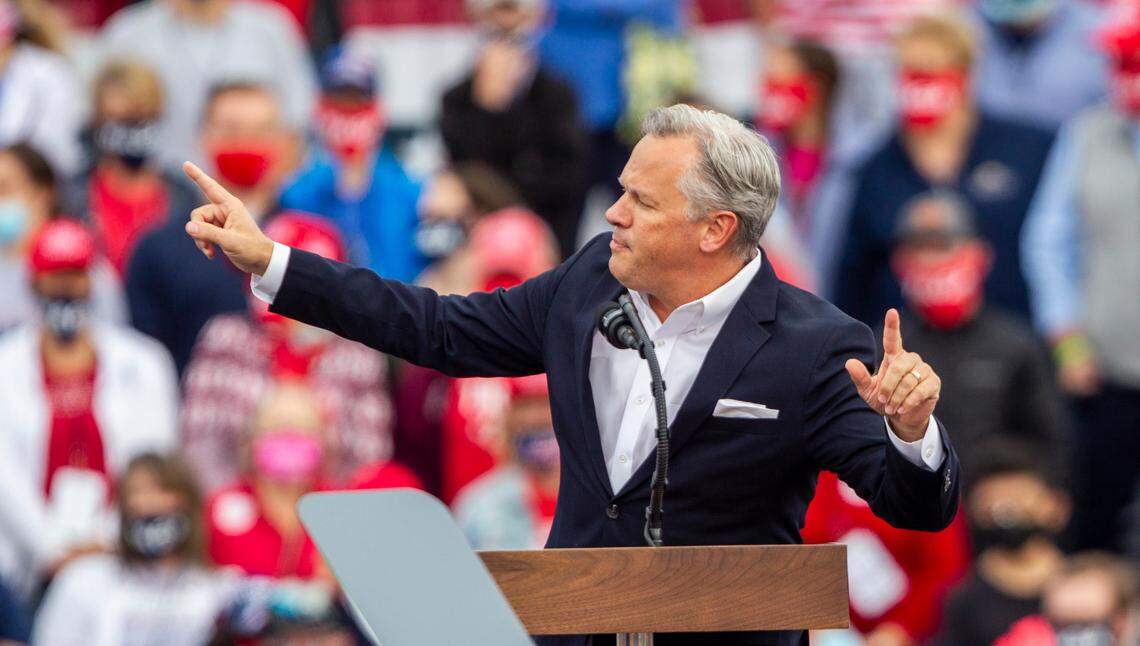
A COVID-19 problem for Forest
Cooper’s rival, Republic Lt. Gov. Dan Forest, sued Cooper in July over the shutdown, claiming the governor had overreached his authority.
Donald Bryson, executive director of the conservative think-tank Civitas, said the pandemic had the potential to affect Forest’s campaign more than Cooper’s. Cooper generally refrained from public campaigning but has appeared in news conferences almost weekly since March to talk about the pandemic. Forest, meanwhile, has relied on a robust grassroots strategy since he first ran for lieutenant governor eight years ago, Bryson said.
“But when you can’t get together in groups and create that enthusiasm that grassroots campaigns thrive off of, that’s a problem,” Bryson said. “The virus sort of foiled that strategy. And Forest wasn’t able to immediately launch a more traditional TV campaign that the Cooper campaign was already ready to do.”
Despite the governor’s and health officials’ admonishments against public events with large crowds, Forest held some indoor and outdoor campaign rallies into October, including one in Burnsville attended by someone who later tested positive for the virus. When the two candidates appeared together for a debate, Cooper said Forest had been reckless by holding events where people wearing no masks crowded together. Forest said masks should be a personal choice.
.JPG "Election2020GovernorNorthCarolina (5).JPG")
‘Largely a referendum on reopening’
Jason Husser, director of an October poll by Elon University, said in an interview that Forest had limited public support in his push to speed reopening of the state.
“Forest was the leader of the reopen movement and he performed the lowest in the state in a race that was largely a referendum on reopening,” Husser said.
Trump drew lower marks than Forest in the Elon poll for his handling of the pandemic. But Husser said the pandemic was less of an issue for North Carolina presidential voters than in the governor’s race.
Forest dropped his lawsuit in August. That day, he told his followers on Twitter: “I did my part. If y’all want your freedoms back you’ll have to make your voices heard in November.”
As it turned out, COVID-19 may have prompted more voters of all stripes to speak their minds in the election.

Mail-in ballot differences
Many in North Carolina voted early using ballots they mailed in or hand-delivered, or by going in person to sites that operated in every county from Oct. 15 to 31, including weekends. That, too, was politically fraught; some Republicans warned this year that mail-in ballots would likely disproportionately favor Democrats, though Science magazine reported that some studies show otherwise.
After Trump appointed a new postmaster general in June and postal service delivery began to show a marked slowdown, North Carolina’s Democrat-led state Board of Elections voted to extend the date by which mail-in ballots would be accepted from Nov. 6 to Nov. 12. The Trump campaign and some North Carolina Republicans sued to stop the change. The U.S. Supreme Court let the extension stand.
As the votes were counted, though, Taylor said the results indicate that what both Republicans and Democrats saw in the government’s handling of the pandemic only reinforced what they already believed.
If they supported Trump and they thought North Carolina was not on the right track with regard to the virus, they blamed Cooper. If they supported Cooper and they felt the handling of the pandemic wasn’t going well, they blamed Trump. And if they were satisfied with how the pandemic response was managed, they credited the candidate they liked best.
“I think overall it just reinforced people’s positions,” Taylor said. “People used the pandemic for justification for the vote they were going to make anyway.”
The effect on local races
Where a candidate’s response to the threat of COVID-19 may have made a bigger difference, some observers say, is in local races.
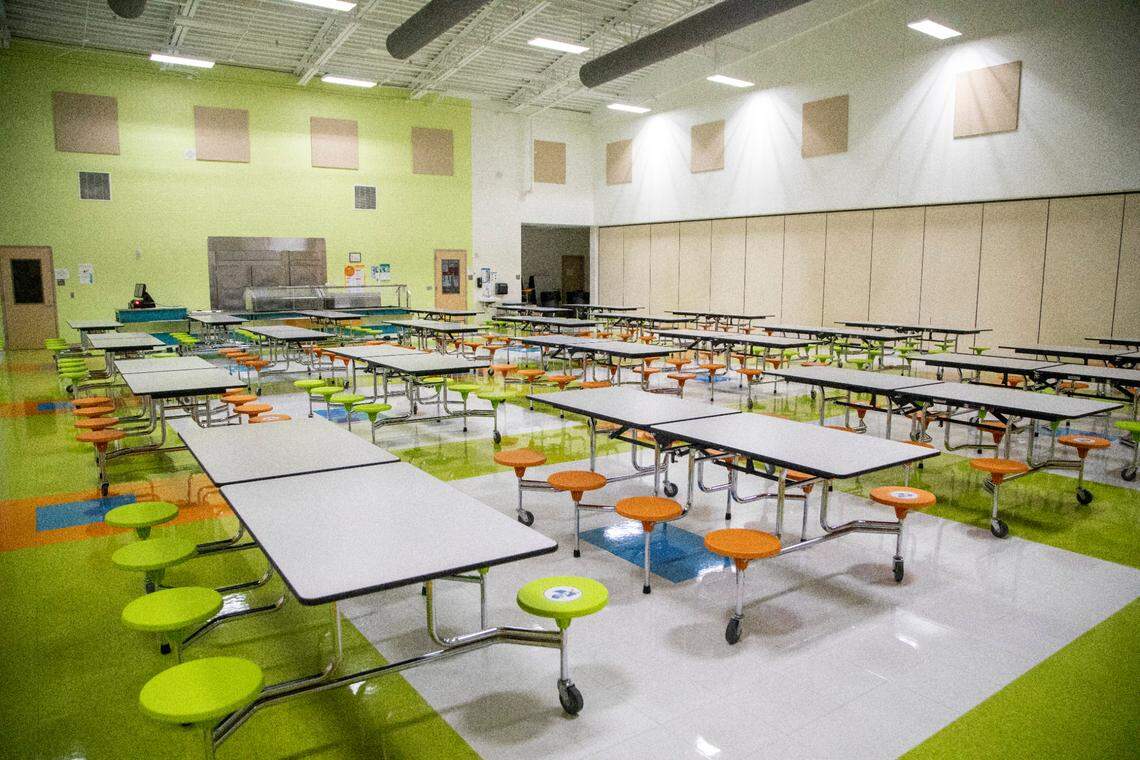
A coalition of six Republican-backed candidates tried to make school reopening an issue in Wake County’s school board races by saying it was going too slowly. But they only picked up one seat on the board.
The call to rapidly reopen schools didn’t resonate in Democratic-leaning Wake, where both Vice President Joe Biden and Gov. Roy Cooper received more than 60% of the vote in their races.
The Elon poll found that a majority of North Carolina residents backed using a go-slow approach to reopening the state during the pandemic.
“The pandemic did play a role in the governor’s race where many voters seem to be comfortable with the measures that the governor mandated for face masks and school closure,” Terry Stoops, vice president of research for the John Locke Foundation, said in an interview. “Forest didn’t seem to articulate a position on the pandemic that voters found compelling.”
In the race for state superintendent of public instruction, Republican Catherine Truitt had also been critical of the governor’s decision not to allow school districts to fully reopen their schools. But Truitt distanced herself from Forest on his opposition to requiring that face masks be worn at schools.
Stoops said Truitt benefitted from how voters went for Republicans in most of the other Council of State races. But now that she’s elected, Stoops said Truitt will have to deal with problems such as state budget challenges, a possible resurgence of COVID-19 spread and academic learning loss from not having in-person instruction.
“All of these issues are going to be piling up on her desk as soon as she walks through the door,” Stoops said. “I think she’s prepared to deal with the challenges and work with lawmakers to develop a Department of Public Instruction that’s responsive to meet the needs of families.”
Taylor, of NCSU, said there is one potentially lasting effect the pandemic could have on North Carolina: wider use of early voting and mail-in ballots. In the past, he said, many people might have been nervous about mail-in voting, especially, worrying that they might do something wrong and disqualify their ballot.
“It’s like anything in life,” Taylor said. “You’re often concerned about doing something the first time, but once you do it and it feels all right, you’re more likely to do it in the future.”
This story was originally published November 6, 2020 at 5:10 PM with the headline "COVID-19 definitely increased 2020 voter turnout in NC. But did it swing any races?."
